
Research ArticleHematologyImmunology
Open Access |  10.1172/jci.insight.201160
Killer-cell immunoglobulin-like receptors define a potent effector program in human γδ T cells
Mahya Razmi,1,2 Yeganeh Almasi,1,2 Marilee Larrivée,1,2 Jonathan B. Angel,1,3,4 Alexandre Blais,1,3,5,6,7 and Zakia Djaoud1,2,3
1Department of Biochemistry, Microbiology and Immunology, University of Ottawa, Ottawa, Ontario, Canada.
2Children’s Hospital of Eastern Ontario Research Institute, Ottawa, Ontario, Canada.
3University of Ottawa Centre for Inflammation, Immunity and Infection (CI3), Ottawa, Ontario, Canada.
4Inflammation and Chronic Disease Program, Ottawa Hospital Research Institute, Ottawa, Ontario, Canada.
5Ottawa Institute of Systems Biology, Ottawa, Ontario, Canada.
6Éric Poulin Centre for Neuromuscular Disease, Ottawa, Ontario, Canada.
7Ottawa Brain and Mind Research Institute, Ottawa, Ontario, Canada.
Address correspondence to: Zakia Djaoud, CHEO Research Institute, 401 Smyth Road, Ottawa, Ontario K1H 8L1, Canada. Phone: 613.737.7600 ext. 3920; Email: zdjaoud@uottawa.ca.
Authorship note: MR and YA contributed equally to this work and are co-first authors.
Find articles by Razmi, M. in: PubMed | Google Scholar
1Department of Biochemistry, Microbiology and Immunology, University of Ottawa, Ottawa, Ontario, Canada.
2Children’s Hospital of Eastern Ontario Research Institute, Ottawa, Ontario, Canada.
3University of Ottawa Centre for Inflammation, Immunity and Infection (CI3), Ottawa, Ontario, Canada.
4Inflammation and Chronic Disease Program, Ottawa Hospital Research Institute, Ottawa, Ontario, Canada.
5Ottawa Institute of Systems Biology, Ottawa, Ontario, Canada.
6Éric Poulin Centre for Neuromuscular Disease, Ottawa, Ontario, Canada.
7Ottawa Brain and Mind Research Institute, Ottawa, Ontario, Canada.
Address correspondence to: Zakia Djaoud, CHEO Research Institute, 401 Smyth Road, Ottawa, Ontario K1H 8L1, Canada. Phone: 613.737.7600 ext. 3920; Email: zdjaoud@uottawa.ca.
Authorship note: MR and YA contributed equally to this work and are co-first authors.
Find articles by Almasi, Y. in: PubMed | Google Scholar
1Department of Biochemistry, Microbiology and Immunology, University of Ottawa, Ottawa, Ontario, Canada.
2Children’s Hospital of Eastern Ontario Research Institute, Ottawa, Ontario, Canada.
3University of Ottawa Centre for Inflammation, Immunity and Infection (CI3), Ottawa, Ontario, Canada.
4Inflammation and Chronic Disease Program, Ottawa Hospital Research Institute, Ottawa, Ontario, Canada.
5Ottawa Institute of Systems Biology, Ottawa, Ontario, Canada.
6Éric Poulin Centre for Neuromuscular Disease, Ottawa, Ontario, Canada.
7Ottawa Brain and Mind Research Institute, Ottawa, Ontario, Canada.
Address correspondence to: Zakia Djaoud, CHEO Research Institute, 401 Smyth Road, Ottawa, Ontario K1H 8L1, Canada. Phone: 613.737.7600 ext. 3920; Email: zdjaoud@uottawa.ca.
Authorship note: MR and YA contributed equally to this work and are co-first authors.
Find articles by Larrivée, M. in: PubMed | Google Scholar
1Department of Biochemistry, Microbiology and Immunology, University of Ottawa, Ottawa, Ontario, Canada.
2Children’s Hospital of Eastern Ontario Research Institute, Ottawa, Ontario, Canada.
3University of Ottawa Centre for Inflammation, Immunity and Infection (CI3), Ottawa, Ontario, Canada.
4Inflammation and Chronic Disease Program, Ottawa Hospital Research Institute, Ottawa, Ontario, Canada.
5Ottawa Institute of Systems Biology, Ottawa, Ontario, Canada.
6Éric Poulin Centre for Neuromuscular Disease, Ottawa, Ontario, Canada.
7Ottawa Brain and Mind Research Institute, Ottawa, Ontario, Canada.
Address correspondence to: Zakia Djaoud, CHEO Research Institute, 401 Smyth Road, Ottawa, Ontario K1H 8L1, Canada. Phone: 613.737.7600 ext. 3920; Email: zdjaoud@uottawa.ca.
Authorship note: MR and YA contributed equally to this work and are co-first authors.
Find articles by Angel, J. in: PubMed | Google Scholar
1Department of Biochemistry, Microbiology and Immunology, University of Ottawa, Ottawa, Ontario, Canada.
2Children’s Hospital of Eastern Ontario Research Institute, Ottawa, Ontario, Canada.
3University of Ottawa Centre for Inflammation, Immunity and Infection (CI3), Ottawa, Ontario, Canada.
4Inflammation and Chronic Disease Program, Ottawa Hospital Research Institute, Ottawa, Ontario, Canada.
5Ottawa Institute of Systems Biology, Ottawa, Ontario, Canada.
6Éric Poulin Centre for Neuromuscular Disease, Ottawa, Ontario, Canada.
7Ottawa Brain and Mind Research Institute, Ottawa, Ontario, Canada.
Address correspondence to: Zakia Djaoud, CHEO Research Institute, 401 Smyth Road, Ottawa, Ontario K1H 8L1, Canada. Phone: 613.737.7600 ext. 3920; Email: zdjaoud@uottawa.ca.
Authorship note: MR and YA contributed equally to this work and are co-first authors.
Find articles by Blais, A. in: PubMed | Google Scholar
1Department of Biochemistry, Microbiology and Immunology, University of Ottawa, Ottawa, Ontario, Canada.
2Children’s Hospital of Eastern Ontario Research Institute, Ottawa, Ontario, Canada.
3University of Ottawa Centre for Inflammation, Immunity and Infection (CI3), Ottawa, Ontario, Canada.
4Inflammation and Chronic Disease Program, Ottawa Hospital Research Institute, Ottawa, Ontario, Canada.
5Ottawa Institute of Systems Biology, Ottawa, Ontario, Canada.
6Éric Poulin Centre for Neuromuscular Disease, Ottawa, Ontario, Canada.
7Ottawa Brain and Mind Research Institute, Ottawa, Ontario, Canada.
Address correspondence to: Zakia Djaoud, CHEO Research Institute, 401 Smyth Road, Ottawa, Ontario K1H 8L1, Canada. Phone: 613.737.7600 ext. 3920; Email: zdjaoud@uottawa.ca.
Authorship note: MR and YA contributed equally to this work and are co-first authors.
Find articles by Djaoud, Z. in: PubMed | Google Scholar
Published April 27, 2026 - More info
JCI Insight. 2026;11(11):e201160. https://doi.org/10.1172/jci.insight.201160.
© 2026 Razmi et al. This work is licensed under the Creative Commons Attribution 4.0 International License. To view a copy of this license, visit http://creativecommons.org/licenses/by/4.0/.
Received: October 13, 2025; Accepted: April 8, 2026


-
Results
CMV seropositivity is associated with KIR expression on γδ T cells. CMV drives a gradual expansion of epitope-specific T cell subsets over time in healthy individuals (37, 38). In CMV-seropositive (CMV+) individuals, NK cells acquire a distinct phenotype marked by an increased frequency of circulating CD56dimNK cells (39) and a highly differentiated, memory-like CD57+NKG2C+KIR+ profile (33–36). A similar adaptation is observed in the γδ T cell compartment, where CMV+ individuals display a shift toward an effector memory phenotype, including a higher proportion of Vδ1 T cells compared with CMV-seronegative (CMV–) individuals (15–19). Given the shared expression of NK cell markers by γδ T cells and the phenotypic parallels between these 2 compartments in the context of CMV, we examined whether CMV similarly influences the frequency of NKG2C+KIR+ γδ T cells by comparing CMV+ and CMV– individuals.
Due to their relatively low frequency, comprising only ~0.5%–5% of total peripheral blood mononuclear cells (PBMCs), γδ T cells are challenging to study. However, through the targeted depletion of αβ T cells, the proportion of γδ T cells can be dramatically enhanced to ~10%–45% (Figure 1A). This enrichment facilitates more robust flow cytometry analyses of γδ T cell subsets and allows for direct phenotypic comparison with NK cells, which remain present in the same cultures (Figure 1A). To further investigate this, we immunophenotyped αβ T cell–depleted (αβ T-depleted) PBMCs from 34 CMV– and 19 CMV+ healthy adult blood donors, including both males and females, and representing a range of ages and ethnic backgrounds. Although the age and sex differences between the 2 groups were not statistically significant, CMV prevalence was, as expected, lower among individuals of European origin compared with those from less industrialized regions with higher known seropositivity rates (40) (Supplemental Figure 1; supplemental material available online with this article; https://doi.org/10.1172/jci.insight.201160DS1).
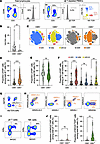 Figure 1
CMV-serostatus influences KIR expression by γδ T cells. (A) Representative pseudocolor plots show the frequencies of CD3+ and αβ TCR+ cells within PBMCs (left panel) and within αβ T cell–depleted PBMCs (right panel). Vδ1, Vδ2, and Vδ1/2– subsets are shown in the right panel, within αβ T cell–depleted PBMCs. (B) Violin plots depict Vδ2/Vδ1 ratios within γδ T cells from CMV– and CMV+ individuals. Each dot represents a donor. (C) Representative t-SNE plots show the distribution of Vδ1, Vδ2, and Vδ1/2– subsets (left), and of KIR– and KIR+ cells (right), among γδ T cells in 2 representative CMV– and CMV+ individuals. Vδ1, Vδ2, KIRs, CD56, and CD57 were used as input parameters to generate the t-SNE plots. Vδ1, Vδ2, and Vδ1/2– populations were manually overlaid on the left panel, while KIR expression was overlaid on the right panel. (D–F) Violin plots show the proportions of KIR+ cells among γδ T cells (D), NK cells (E), or γδ T cell subsets (F). (G) A representative pseudocolor plot and histogram show the proportion of Vγ9–Vδ2+ cells within the γδ T cell population and the proportion of KIR+ cells within this subset. (H) Representative pseudocolor plots illustrate the expression of selected KIRs on γδ T cells, including KIR2DL2/L3+, KIR2DL1+, KIR3DS1+, KIR3DL1+, and KIR2DS4+ populations. (I and J) Representative pseudocolor plots (I) and corresponding violin plots (J) compare the frequencies of KIR+NKG2C+ γδ T cells (orange) and KIR+NKG2C+ NK cells (green) in CMV– and CMV+ individuals. Each dot represents an individual donor. The flow cytometry analysis was performed on samples from 35 CMV– and 21 CMV+ individuals (A–E) and 15 CMV– and 15 CMV+ individuals (J). Statistical significance of the difference between CMV– and CMV+ individuals was assessed using the unpaired 2-tailed t test (**P < 0.005, ***P < 0.0008).
Consistent with previous studies (15–19), CMV+ individuals showed a marked increase in Vδ1 T cell frequencies compared with CMV– individuals, who predominantly exhibited Vδ2 T cells. Consequently, the Vδ2/Vδ1 ratio was markedly reduced in the CMV+ group (Figure 1B). CMV+ individuals also displayed higher frequencies of the Vδ1/2– subset (Figure 1C). Moreover, we found that CMV+ individuals exhibit significantly higher proportions of KIR+ γδ T cells (Figure 1, C and D), whereas the proportion of KIR+ NK cells remained unaffected by CMV serostatus (Figure 1E). A closer examination of the γδ T cell subsets revealed that this phenotypic shift was primarily driven by the Vδ1 and Vδ1/2– populations, while Vδ2 T cells remained unchanged (Figure 1F).
Davey et al. reported clonal expansion of Vγ9–Vδ2+ T cells during acute CMV infection (41). Our cohort comprises healthy individuals without active CMV infection, a setting in which the Vδ2+ compartment is largely dominated by Vγ9+Vδ2+ T cells. Accordingly, Vγ9–Vδ2+ T cells are either absent or present at very low frequencies. Specifically, this subset is absent in most CMV– individuals and represents, on average, only ~1.5% of total Vδ2+ T cells in CMV+ individuals, with minimal KIR expression (Figure 1G). Notably, only 1 CMV+ individual shows a marked expansion of Vγ9–Vδ2+ T cells (~10%), of which ~30% are KIR+. Among the remaining individuals, 2 display intermediate frequencies (~4%), whereas all others range between 0.1% and 3% and exhibit little to no KIR expression (Supplemental Figure 2).
Depending on each donor’s KIR gene repertoire, γδ T cells expressed both activating and inhibitory KIRs, with inhibitory KIRs being more predominant. Among these, KIR2DL2/L3 was the most highly expressed (Figure 1H). Notably, unlike NK cells from CMV+ individuals, which typically show high levels of KIR and NKG2C coexpression (33–36), γδ T cells did not exhibit elevated NKG2C expression, and the KIR+NKG2C+ subset was not prominent in either CMV– or CMV+ individuals (Figure 1, I and J).
Overall, these findings confirm previous reports of CMV-associated expansion of Vδ2– γδ T cells (15–19) and further show that CMV seropositivity is associated with a selective enrichment of the KIR+ subset within the γδ T cell compartment. While CMV-driven expansion in NK cells is marked by upregulation of both NKG2C and KIRs (33–36), the corresponding imprint in γδ T cells appears to be predominantly characterized by increased KIR expression. This implicates KIR+γδ T cells in CMV immune surveillance and suggests a role for CMV in driving γδ T cell differentiation.
KIRs define 2 distinct phenotypic signatures within γδ T cells. We investigated whether KIR expression marks a more mature stage of γδ T cell differentiation. To this end, we compared the phenotype of KIR– and KIR+ γδ T cells by analyzing the expression of selected surface and intracellular markers, using spectral flow cytometry. Our analysis demonstrated that KIR+ γδ T cells predominantly display a CD27–CD57+CX3CR1+ phenotype in both CMV– and CMV+ individuals, consistent with advanced maturation and a memory-like profile. In contrast, KIR– γδ T cells exhibit a CD27+CD57–CX3CR1– phenotype, indicative of a less differentiated state. KIR+ γδ T cells also show elevated expression of CX3CR1 and NK cell–associated receptors, including CD56, 2B4, LILRB1, and CD16. Additionally, they contain high levels of granzyme B and perforin, key effector molecules involved in cytotoxic activity (Figure 2A). Notably, NKG2A and NKG2C are consistently expressed at higher levels on KIR+ Vδ1 T cells compared with their KIR– counterparts; however, this pattern is not observed in the Vδ2 subset, and within the Vδ1/2– subset, only NKG2C is upregulated on KIR+ cells (Supplemental Figure 3A). In contrast, NKG2D expression remains comparable between KIR– and KIR+ cells across all subsets analyzed (Supplemental Figure 3B). We further observed that exhaustion markers such as LAG-3, CTLA-4, and TIM-3 are minimally expressed on γδ T cells, regardless of KIR status. While PD-1 is present, its expression is not enriched within the KIR+ population. TIGIT expression is notably higher on KIR+ γδ T cells relative to KIR– cells, aligning with a memory-like effector phenotype rather than exhaustion (Supplemental Figure 3C). This is consistent with TIGIT’s enrichment on effector memory T cells compared with naive cells and its association with enhanced cytotoxic potential (42, 43).
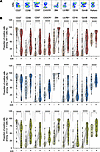 Figure 2
KIR+γδ T cells display enhanced maturity and cytotoxic potential compared with KIR– γδ T cells. (A) Representative pseudocolor plots show the expression of the indicated markers by total γδ T cells. (B) Violin plots compare the proportions of KIR– and KIR+ cells expressing the indicated markers within Vδ1 T cells (top panel), Vδ2 T cells (middle panel), and Vδ1/2– T cells (bottom panel). Each dot represents an individual donor. The flow cytometry analysis was performed on samples from 41 individuals, except for CX3CR1 and Perforin, which were assessed in 21 and 20 individuals, respectively. Statistical significance of the difference between KIR– and KIR+ cells was assessed using the paired 2-tailed t test (**P = 0.002, ****P < 0.0008).
The observed phenotypic distinction between KIR– and KIR+ cells was most evident within the Vδ2– subsets but was consistently observed across Vδ1, Vδ2, and Vδ1/2– γδ T cell populations when stratified by KIR expression (Figure 2B). Importantly, when these subsets were further analyzed according to CMV serostatus, a clear gradation in differentiation emerged across the 4 major groups (KIR–CMV–, KIR–CMV+, KIR+CMV–, and KIR+CMV+). Indeed, while the KIR-associated phenotypic dichotomy was detectable in both CMV– and CMV+ individuals, it was markedly amplified in the latter. γδ T cells from CMV+ donors exhibited higher KIR expression intensity (Figure 3A) and, in parallel, a more advanced differentiation profile characterized by further downregulation of CD27, increased CD57 expression, and enhanced granzyme B content (Figure 3B). Together, these data highlight a progressive phenotypic continuum across KIR-defined subsets shaped by CMV serostatus, with the most differentiated phenotype observed in KIR+ γδ T cells from CMV+ individuals.
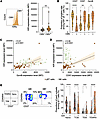 Figure 3
KIR+ γδ T cells have a TEMRA phenotype. (A) Representative histogram overlays (left panel) and corresponding violin plots (right panel) show KIR expression intensity by total γδ T cells from CMV− and CMV+ individuals (n = 56; 35 CMV–, 21 CMV+). (B) Violin plots show the proportions of KIR+ γδ T cells expressing CD27, CD57, and granzyme B in CMV– and CMV+ individuals. Each dot represents an individual donor (n = 56; 22 CMV–, 19 CMV+). Statistical significance of the difference between KIR– and KIR+ cells was assessed using the unpaired 2-tailed t test (*P = 0.01, **P ≤ 0.001, ****P < 0.0001). (C and D) Correlation between KIR and granzyme B (C), and KIR and CD57 (D) expression intensities in γδ T cells (orange) and NK cells (green). Each dot represents an individual donor (n = 41). Expression intensities were measured by flow cytometry. A simple linear regression fit line is shown, and Pearson correlation analysis was used to assess the associations between the indicated parameters. (E) Representative pseudocolor plots (left panel) and the corresponding violin plots (right panel) show the distribution of CD27/CD45RA-defined subsets among KIR– and KIR+ γδ T cells, including naive, central memory (TCM), effector memory (TEM), and terminally differentiated effector memory (TEMRA) populations. Each dot represents an individual donor (n = 40). Samples from CMV+ individuals are shown in red symbols. Statistical significance of the difference between KIR– and KIR+ cells was assessed using the paired 2-tailed t test (***P = 0.0004, ****P < 0.0001).
We next assessed the correlation between the expression intensity of KIRs and that of granzyme B and CD57, the latter being a marker of advanced differentiation and cytotoxic potential in NK cells (33, 44, 45). In γδ T cells, higher KIR expression intensity was associated with increased detection of granzyme B and CD57 (Figure 3, C and D). These associations were modest but statistically supported and were consistently observed across donors. Notably, comparable associations were not detected in NK cells analyzed in parallel (Figure 3, C and D). This distinction is of interest given that, in NK cells, KIR expression in combination with NKG2C defines a mature and highly cytotoxic subset characterized by elevated CD57 and granzyme B expression (33, 34, 44, 45). Together, these observations indicate that, in γδ T cells, KIR expression is associated with differentiation and cytotoxic features through mechanisms that differ from the canonical NKG2C-associated maturation pathway described in NK cells.
To further characterize the differentiation status of γδ T cells according to their expression of KIRs, we assessed the expression of CD27 and CD45RA to distinguish naive (CD45RA+CD27+), central memory (TCM; CD45RA–CD27+), effector memory (TEM; CD45RA–CD27–), and terminally differentiated effector memory (TEMRA; CD45RA+CD27–) subsets. We found that the majority of KIR+ γδ T cells exhibit a TEMRA phenotype, whereas KIR– γδ T cells are predominantly naive or display a TCM phenotype (Figure 3E). This phenotypic pattern is consistently observed across all Vδ1, Vδ2, and Vδ1/2– subsets (Supplemental Figure 4).
In conclusion, KIR expression identifies a highly differentiated cytotoxic subset of γδ T cells, particularly enriched in CMV+ individuals. These KIR+ γδ T cells exhibit a TEMRA phenotype and express high levels of CD57, CX3CR1, NK cell receptors, and cytotoxic molecules. However, unlike NK cells, where KIR and NKG2C coexpression defines a mature cytotoxic subset, γδ T cells show KIR-associated maturation independent of NKG2C. This highlights a distinct, adaptive-like differentiation pathway in γδ T cells, positioning KIRs as key markers of their functional maturation.
KIR-associated dichotomy revealed at the epigenetic and transcriptomic levels. To further investigate the molecular basis of the KIR-associated phenotypic signature, we performed ATAC-seq as previously described (46, 47). Chromatin accessibility was analyzed in γδ T cells isolated from the blood of 6 CMV+ donors, 4 of whom were also included in bulk RNA-seq analysis. For both ATAC-seq and RNA-seq, analyses were performed on 50,000 sorted KIR– and KIR+ γδ T cells per sample to ensure sufficient coverage. Donors were selected based on sufficient representation of KIR+ γδ T cells to ensure robust profiling of both subsets. In all donors, the analysis identified approximately 2,000 differentially accessible regions between KIR– and KIR+ γδ T cells (Figure 4A), with chromatin accessibility patterns closely aligning with the flow cytometry data. No differences were observed based on the sex of the donors, indicating that the epigenetic landscape distinguishing KIR– and KIR+ γδ T cells is consistent across male and female individuals. Differential accessibility within KIR genes was observed for KIR2DL2, KIR2DL3, KIR2DL4, KIR3DL2, and KIR3DL3. Notably, KIR+ γδ T cells exhibited increased chromatin accessibility at key effector loci, including genes encoding NK cell–associated receptors, such as KLRF1 (NKp80), KLRG1, KLRK1 (NKG2D), and FCGR3 (CD16), as well as genes involved in cytotoxic functions and effector differentiation, including IFNG, IFNGR1, GZMB, GZMH, PRF1, TBX21 (T-bet), STAT3, and CX3CR1. In contrast, KIR– γδ T cells exhibited greater chromatin accessibility at loci associated with naive T cell markers such as CD27, CD28, and CCR7, as well as genes linked to IL-17 biology. These included IL17F and IL17RE, which are implicated in protumorigenic inflammation (27). Accessibility was also increased at AREG, which encodes AREG, a tissue-repair factor secreted by IL-17–producing γδ T cells (11) (Figure 4B).
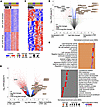 Figure 4
Epigenetic and transcriptomic profiling of γδ T cells reveals a KIR associated divergence. (A) Heatmap of differentially accessible regions (DARs) identified by ATAC-seq between KIR+ and KIR– γδ T cells. Sex, cell type (KIR– versus KIR+), and dominant subsets are provided. Rows (regions of differential accessibility) were ordered by hierarchical clustering. (B) Volcano plot of differential DNA accessibility in KIR+ and KIR– γδ T cells. Genomic windows with significantly different accessibility and located near genes of interest are labeled with the symbol and colored based on the γδ T cell subset showing higher accessibility. (C) Heatmap of gene expression differences between KIR+ and KIR– γδ T cells, organized as in A. (D) Volcano plot of differences in gene expression between KIR+ and KIR– γδ T cells. Select genes are labeled and colored by the direction of expression difference. (E) Results of gene set enrichment analysis using MSigDB Gene Ontology, Reactome and “Hallmark” gene sets. Only selected sets are shown. Node size is proportional to the number of genes contributing to the “core enrichment” of each set, while the adjusted P value (P < 0.05) is encoded by color. Samples from 6 individuals were used for both ATAC-seq and RNA-seq analysis.
Transcriptomic analyses also conducted on samples from 6 CMV+ donors further revealed distinct gene expression profiles between KIR– and KIR+ γδ T cells (Figure 4C). KIR+ cells exhibited upregulation of cytotoxicity-related genes such as GZMB, GZMH, PRF1, CX3CR1, and TBX21, as well as NK cell–associated genes including NCR1 (NKp46), KLRC2 (NKG2C), KLRC3 (NKG2E), KLRC4 (NKG2F), and NCAM1 (CD56). Multiple KIR genes, including KIR2DL1, KIR2DL2, KIR2DL3, KIR2DL4, KIR2DS4, KIR3DL1, KIR3DL2, and KIR3DL3, were also upregulated in the KIR+ subset (Figure 4D). In line with the epigenetic findings, CD27, CCR7, and CD28 were more highly expressed in KIR– γδ T cells. This subset also exhibited upregulation of genes characteristic of IL-17–producing γδ T cells, including RORC (encoding the IL-17–lineage-defining transcription factor RORγt) (48, 49), AREG, IL23R (required for IL-17 polarization) (9), and the chemokine receptor-ligand pair CCR6 and CCL20, which are essential for trafficking IL-17–producing γδ T cells to inflamed tissues such as skin and liver (10, 50, 51) (Figure 4D).
Given that the majority of KIR+ γδ T cells were Vδ2– in many individuals of our cohort (Figure 1F), we considered whether the observed transcriptional and epigenetic dichotomy might simply reflect the distribution of Vδ2+ and Vδ2– cells between KIR+ and KIR– subsets. However, both ATAC-seq and RNA-seq analyses included samples in which KIR– γδ T cells contained a substantial proportion of Vδ2– cells (Figure 4, A and C). This supports the conclusion that the observed molecular differences are indeed associated with KIR expression status rather than TCRδ chain usage.
To identify gene sets that were enriched either in KIR+ or KIR– γδ T cells, we conducted gene set enrichment analysis (GSEA) (52, 53). In KIR+ γδ T cells, we observed significant enrichment of gene sets associated with immune activation, effector function, and adaptive immunity. Specifically, gene sets linked to leukocyte activation, immune effector processes, NK cell–mediated cytotoxicity, and antigen response were all enriched, indicating that these cells are transcriptionally primed for rapid and robust immune responses. Additionally, elevated expression of genes involved in vesicle-mediated transport, lysosomal function, and lipid transporter activity further supports a transcriptional profile consistent with cytotoxicity and intercellular communication, all of which are hallmarks of an effector-like immune state (Figure 4E). In contrast, KIR– γδ T cells showed enrichment for gene sets linked to ribosome biogenesis, cytoplasmic translation, RNA metabolism, and mitochondrial gene expression. This enrichment pattern indicates a regulatory landscape geared toward biosynthetic and translational processes, suggesting that these cells are transcriptionally poised for protein production and cellular growth rather than immediate effector function (Figure 4E).
Collectively, these results reveal a previously unrecognized epigenetic and transcriptional bifurcation within human γδ T cells defined by KIR expression, with KIR+ cells exhibiting features of highly functional effector cells, and KIR– cells displaying a gene expression program suggestive of a more naive, proliferative, or IL-17–biased phenotype.
Functional divergence of γδ T cells with IFN-γ–producing KIR+ cells versus IL-17–producing KIR– cells. While we have shown that KIR+ γδ T cells contain higher levels of cytotoxic granules (Figure 2), it remained unclear whether the 2 subsets differ in their cytokine responses to stimulation. ATAC-seq revealed greater chromatin accessibility at the IFNG locus in KIR+ γδ T cells, and transcriptomic analysis showed higher expression of this gene in the same subset. However, both analyses were conducted on freshly sorted resting cells. To determine whether these distinct epigenetic and transcriptomic profiles translate into functional differences under stimulatory conditions, we stimulated αβ T cell–depleted PBMCs with PMA/ionomycin for 4 hours, a short time frame designed to capture early activation events. We then assessed intracellular production of IFN-γ, TNF-α, and CCL5 in KIR– and KIR+ γδ T cell subsets, with NK cells included for comparison. Within this brief stimulation window, KIR+ γδ T cells produced significantly higher levels of all 3 cytokines compared with their KIR– counterparts (Figure 5A), indicating a rapid and heightened response. In contrast, no significant differences in cytokine production were observed between KIR– and KIR+ NK cells (Figure 5B). This differential capacity to produce IFN-γ, TNF-α, and CCL5 between KIR– and KIR+ γδ T cells was consistently observed across Vδ1, Vδ2, and Vδ1/2– γδ T cell subsets (Supplemental Figure 5).
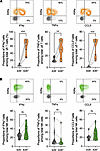 Figure 5
KIR+ γδ T cells exhibit elevated levels of cytokine production following activation. (A) Representative overlaid contour plots (top panel) and corresponding violin plots (bottom panel) compare the proportions of KIR– (grey) and KIR+ (orange) γδ T cells producing IFN-γ, TNF-α, and CCL5, after 4 hours of stimulation with PMA/ionomycin. (B) Representative overlaid contour plots (top panel) and corresponding violin plots (bottom panel) compare the proportions of KIR– (gray) and KIR+ (green) NK cells producing IFN-γ, TNF-α, and CCL5 under the same stimulation conditions. Each dot represents an individual donor. The flow cytometry analysis was performed on samples from 4 CMV– and 4 CMV+ individuals. Statistical significance of the difference between KIR– and KIR+ subsets was assessed using the paired 2-tailed t test (**P < 0.005, ***P < 0.0001).
When evaluating antibody-dependent cellular cytotoxicity (ADCC) against Rituximab-coated Raji cells, Vδ1 and Vδ1/2– γδ T cell subsets displayed comparable cytotoxic responses regardless of KIR expression. In contrast, within the Vδ2 γδ T cell subset, KIR expression was consistently associated with a marked increase in ADCC, accompanied by enhanced IFN-γ production (Supplemental Figure 6A). This selective enhancement observed in KIR+ Vδ2 γδ T cells could not be explained by differences in CD16 expression intensity among the Vδ1, Vδ2, and Vδ1/2– γδ T cell subsets (Supplemental Figure 6B). These findings indicate that the functional association between KIR expression and ADCC is not uniform across γδ T cell subsets but is selectively evident within the Vδ2 γδ T cell compartment.
We next investigated whether the epigenetic data indicating that IL-17–producing γδ T cells reside predominantly within the KIR– subset could be confirmed functionally. To do this, we polarized γδ T cells for 4 days in the presence of IL-23, IL-6, IL-1β, and TGF-β, followed by activation with PMA/ionomycin. The results show a clear upregulation of RORγt in all KIR– subsets (Figure 6A), which consistently displayed a higher proportion of IL-17–producing cells than their KIR+ counterparts. Of note, while a significantly higher fraction of KIR– cells produced detectable IL-17 compared with their KIR+ counterparts across γδ T cell subsets, the overall level of IL-17 expression remained modest (Figure 6B). Moreover, extended culture for 10 days under these IL-17–polarizing conditions led to a progressive loss of KIR expression in γδ T cells (Figure 6C), suggesting that KIR– γδ T cells are preferentially maintained in this environment.
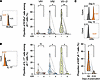 Figure 6
KIR– γδ T cells show increased RORγt and IL-17 expression after polarization. (A–C) αβ T cell–depleted PBMCs were cultured for 4 days with IL-1β, IL-6, IL-23, and TGF-β (A and B) or for 10 days in the same cytokine cocktail supplemented with irradiated allogeneic PBMC feeder cells (C). (A and B) Representative overlaid histograms (left panels) and corresponding violin plots (right panels) compare RORγt and IL-17 expression between KIR– and KIR+ γδ T cells after 4 days of polarization. (C) Representative overlaid histograms (top panels) and corresponding violin plots (bottom panel) show KIR expression at Day 0 and Day 10 of polarization. Each dot represents an individual donor (n = 12, A; n = 8, B and C). Statistical significance of the difference between KIR– and KIR+ subsets was assessed using the paired 2-tailed t test (*P < 0.05, **P < 0.005).
In conclusion, our data establish KIR expression as a robust marker linked to enhanced effector functions in γδ T cells. The elevated production of IFN-γ, TNF-α, and CCL5 following stimulation across all γδ T cell subsets aligns with the distinct epigenetic and transcriptomic signatures of KIR+ γδ T cells. Conversely, the preferential polarization and maintenance of IL-17–producing γδ T cells within the KIR– compartment further emphasize the functional divergence marked by KIR expression, underscoring the complexity of γδ T cell specialization.


