
Review
Open Access |  10.1172/jci.insight.199693
New approaches to uncover COPD pathobiology and develop therapies
Yohannes Tesfaigzi,1 Ali Önder Yildirim,2,3,4 Francesca Polverino,5 Thomas M. Conlon,2 Venkataramana Sidhaye,6 Maor Sauler,7 S. Vamsee Raju,8 Renata Z. Jurkowska,9 Divay Chandra,10 Michael H. Cho,1,11 Edwin K. Silverman,11 Ramon C. Sun,12 Peter Castaldi,11 Purushothama Rao Tata,13 Kambez H. Benam,14 Linto Antony,8 Mareike Lehmann,2,15,16 Beata Kosmider,17 Karim Bahmed,17 Zerihun H. Negasi,1 Kamakshi Bankoti,1 Carter Swaby,4,18 Dave A. Lagowala,19 Yeşim Vural,4,10 Hasan Bayram,4,20,21 Rosa Faner,22 George Washko,1 Dinh Son Bui,23 Bartolome Celli,1 Roxana Maria Wasnick,2 and Enid Neptune6
1Division of Pulmonary and Critical Care Medicine, Department of Medicine, Mass General Brigham and Harvard Medical School, Boston, Massachusetts, USA.
2Institute of Lung Health and Immunity (LHI), Helmholtz Munich, Comprehensive Pneumology Center (CPC-M), Member of the German Center for Lung Research (DZL), Munich, Germany.
3Institute of Experimental Pneumology, LMU University Hospital, Ludwig-Maximilian’s University, Munich, Germany.
4Koc University Research Center for Translational Medicine (KUTTAM), Istanbul, Turkey.
5Pulmonary and Critical Care Medicine, Baylor College of Medicine, Houston, Texas, USA.
6Department of Medicine, Division of Pulmonary and Critical Care Medicine, Johns Hopkins University School of Medicine, Baltimore, Maryland, USA.
7Division of Pulmonary, Critical Care, and Sleep Medicine, Yale School of Medicine, New Haven, Connecticut, USA.
8Department of Medicine, Division of Pulmonary, Allergy and Critical Care Medicine, The University of Alabama at Birmingham, Birmingham, Alabama, USA.
9Division of Biomedicine, School of Biosciences, Cardiff University, Cardiff, United Kingdom.
10Division of Pulmonary, Allergy, Sleep and Critical Care Medicine, Department of Medicine, University of Pittsburgh, Pittsburgh, Pennsylvania, USA.
11Channing Division of Network Medicine, Brigham and Women’s Hospital and Harvard Medical School, Boston, Massachusetts, USA.
12Department of Biochemistry and Molecular Biology, College of Medicine, University of Florida, Gainesville, Florida, USA.
13Departments of Cell Biology and Medicine, Duke University School of Medicine, Durham, North Carolina, USA.
14Department of Medicine, Bioengineering, University of Pittsburgh, Pittsburgh, Pennsylvania, USA.
15Lung Aging and Regeneration, Institute for Lung Health (ILH), Giessen, Germany.
16Institute for Lung Research, Philipps-University Marburg, Universities of Giessen and Marburg Lung Center, German Center for Lung Research (DZL), Marburg, Germany.
17Department of Microbiology, Immunology and Inflammation, Center for Inflammation and Lung Research, Temple University, Philadelphia, Pennsylvania, USA.
18Department of Cell Biology, and
19Department of Environmental Health and Engineering, Johns Hopkins University School of Medicine, Baltimore, Maryland, USA.
20Department of Cellular and Molecular Medicine, Graduate School of Health Sciences, and
21Department of Pulmonary Medicine, School of Medicine, Koc University, Istanbul, Turkey.
22Biomedicine Department, University of Barcelona, IDIBAPS, CIBER, Barcelona, Spain.
23Center for Epidemiology and Biostatistics, University of Melbourne, Melbourne, Victoria, Australia.
Address correspondence to: Yohannes Tesfaigzi, Pulmonary and Critical Care Medicine, Harvard Medical School, 75 Francis St, Boston, Massachusetts 02115, USA. Email: ytesfaigzi@bwh.harvard.edu.
Find articles by
Tesfaigzi, Y.
in:
PubMed
|
Google Scholar
|

1Division of Pulmonary and Critical Care Medicine, Department of Medicine, Mass General Brigham and Harvard Medical School, Boston, Massachusetts, USA.
2Institute of Lung Health and Immunity (LHI), Helmholtz Munich, Comprehensive Pneumology Center (CPC-M), Member of the German Center for Lung Research (DZL), Munich, Germany.
3Institute of Experimental Pneumology, LMU University Hospital, Ludwig-Maximilian’s University, Munich, Germany.
4Koc University Research Center for Translational Medicine (KUTTAM), Istanbul, Turkey.
5Pulmonary and Critical Care Medicine, Baylor College of Medicine, Houston, Texas, USA.
6Department of Medicine, Division of Pulmonary and Critical Care Medicine, Johns Hopkins University School of Medicine, Baltimore, Maryland, USA.
7Division of Pulmonary, Critical Care, and Sleep Medicine, Yale School of Medicine, New Haven, Connecticut, USA.
8Department of Medicine, Division of Pulmonary, Allergy and Critical Care Medicine, The University of Alabama at Birmingham, Birmingham, Alabama, USA.
9Division of Biomedicine, School of Biosciences, Cardiff University, Cardiff, United Kingdom.
10Division of Pulmonary, Allergy, Sleep and Critical Care Medicine, Department of Medicine, University of Pittsburgh, Pittsburgh, Pennsylvania, USA.
11Channing Division of Network Medicine, Brigham and Women’s Hospital and Harvard Medical School, Boston, Massachusetts, USA.
12Department of Biochemistry and Molecular Biology, College of Medicine, University of Florida, Gainesville, Florida, USA.
13Departments of Cell Biology and Medicine, Duke University School of Medicine, Durham, North Carolina, USA.
14Department of Medicine, Bioengineering, University of Pittsburgh, Pittsburgh, Pennsylvania, USA.
15Lung Aging and Regeneration, Institute for Lung Health (ILH), Giessen, Germany.
16Institute for Lung Research, Philipps-University Marburg, Universities of Giessen and Marburg Lung Center, German Center for Lung Research (DZL), Marburg, Germany.
17Department of Microbiology, Immunology and Inflammation, Center for Inflammation and Lung Research, Temple University, Philadelphia, Pennsylvania, USA.
18Department of Cell Biology, and
19Department of Environmental Health and Engineering, Johns Hopkins University School of Medicine, Baltimore, Maryland, USA.
20Department of Cellular and Molecular Medicine, Graduate School of Health Sciences, and
21Department of Pulmonary Medicine, School of Medicine, Koc University, Istanbul, Turkey.
22Biomedicine Department, University of Barcelona, IDIBAPS, CIBER, Barcelona, Spain.
23Center for Epidemiology and Biostatistics, University of Melbourne, Melbourne, Victoria, Australia.
Address correspondence to: Yohannes Tesfaigzi, Pulmonary and Critical Care Medicine, Harvard Medical School, 75 Francis St, Boston, Massachusetts 02115, USA. Email: ytesfaigzi@bwh.harvard.edu.
Find articles by Yildirim, A. in: PubMed | Google Scholar
1Division of Pulmonary and Critical Care Medicine, Department of Medicine, Mass General Brigham and Harvard Medical School, Boston, Massachusetts, USA.
2Institute of Lung Health and Immunity (LHI), Helmholtz Munich, Comprehensive Pneumology Center (CPC-M), Member of the German Center for Lung Research (DZL), Munich, Germany.
3Institute of Experimental Pneumology, LMU University Hospital, Ludwig-Maximilian’s University, Munich, Germany.
4Koc University Research Center for Translational Medicine (KUTTAM), Istanbul, Turkey.
5Pulmonary and Critical Care Medicine, Baylor College of Medicine, Houston, Texas, USA.
6Department of Medicine, Division of Pulmonary and Critical Care Medicine, Johns Hopkins University School of Medicine, Baltimore, Maryland, USA.
7Division of Pulmonary, Critical Care, and Sleep Medicine, Yale School of Medicine, New Haven, Connecticut, USA.
8Department of Medicine, Division of Pulmonary, Allergy and Critical Care Medicine, The University of Alabama at Birmingham, Birmingham, Alabama, USA.
9Division of Biomedicine, School of Biosciences, Cardiff University, Cardiff, United Kingdom.
10Division of Pulmonary, Allergy, Sleep and Critical Care Medicine, Department of Medicine, University of Pittsburgh, Pittsburgh, Pennsylvania, USA.
11Channing Division of Network Medicine, Brigham and Women’s Hospital and Harvard Medical School, Boston, Massachusetts, USA.
12Department of Biochemistry and Molecular Biology, College of Medicine, University of Florida, Gainesville, Florida, USA.
13Departments of Cell Biology and Medicine, Duke University School of Medicine, Durham, North Carolina, USA.
14Department of Medicine, Bioengineering, University of Pittsburgh, Pittsburgh, Pennsylvania, USA.
15Lung Aging and Regeneration, Institute for Lung Health (ILH), Giessen, Germany.
16Institute for Lung Research, Philipps-University Marburg, Universities of Giessen and Marburg Lung Center, German Center for Lung Research (DZL), Marburg, Germany.
17Department of Microbiology, Immunology and Inflammation, Center for Inflammation and Lung Research, Temple University, Philadelphia, Pennsylvania, USA.
18Department of Cell Biology, and
19Department of Environmental Health and Engineering, Johns Hopkins University School of Medicine, Baltimore, Maryland, USA.
20Department of Cellular and Molecular Medicine, Graduate School of Health Sciences, and
21Department of Pulmonary Medicine, School of Medicine, Koc University, Istanbul, Turkey.
22Biomedicine Department, University of Barcelona, IDIBAPS, CIBER, Barcelona, Spain.
23Center for Epidemiology and Biostatistics, University of Melbourne, Melbourne, Victoria, Australia.
Address correspondence to: Yohannes Tesfaigzi, Pulmonary and Critical Care Medicine, Harvard Medical School, 75 Francis St, Boston, Massachusetts 02115, USA. Email: ytesfaigzi@bwh.harvard.edu.
Find articles by
Polverino, F.
in:
PubMed
|
Google Scholar
|
1Division of Pulmonary and Critical Care Medicine, Department of Medicine, Mass General Brigham and Harvard Medical School, Boston, Massachusetts, USA.
2Institute of Lung Health and Immunity (LHI), Helmholtz Munich, Comprehensive Pneumology Center (CPC-M), Member of the German Center for Lung Research (DZL), Munich, Germany.
3Institute of Experimental Pneumology, LMU University Hospital, Ludwig-Maximilian’s University, Munich, Germany.
4Koc University Research Center for Translational Medicine (KUTTAM), Istanbul, Turkey.
5Pulmonary and Critical Care Medicine, Baylor College of Medicine, Houston, Texas, USA.
6Department of Medicine, Division of Pulmonary and Critical Care Medicine, Johns Hopkins University School of Medicine, Baltimore, Maryland, USA.
7Division of Pulmonary, Critical Care, and Sleep Medicine, Yale School of Medicine, New Haven, Connecticut, USA.
8Department of Medicine, Division of Pulmonary, Allergy and Critical Care Medicine, The University of Alabama at Birmingham, Birmingham, Alabama, USA.
9Division of Biomedicine, School of Biosciences, Cardiff University, Cardiff, United Kingdom.
10Division of Pulmonary, Allergy, Sleep and Critical Care Medicine, Department of Medicine, University of Pittsburgh, Pittsburgh, Pennsylvania, USA.
11Channing Division of Network Medicine, Brigham and Women’s Hospital and Harvard Medical School, Boston, Massachusetts, USA.
12Department of Biochemistry and Molecular Biology, College of Medicine, University of Florida, Gainesville, Florida, USA.
13Departments of Cell Biology and Medicine, Duke University School of Medicine, Durham, North Carolina, USA.
14Department of Medicine, Bioengineering, University of Pittsburgh, Pittsburgh, Pennsylvania, USA.
15Lung Aging and Regeneration, Institute for Lung Health (ILH), Giessen, Germany.
16Institute for Lung Research, Philipps-University Marburg, Universities of Giessen and Marburg Lung Center, German Center for Lung Research (DZL), Marburg, Germany.
17Department of Microbiology, Immunology and Inflammation, Center for Inflammation and Lung Research, Temple University, Philadelphia, Pennsylvania, USA.
18Department of Cell Biology, and
19Department of Environmental Health and Engineering, Johns Hopkins University School of Medicine, Baltimore, Maryland, USA.
20Department of Cellular and Molecular Medicine, Graduate School of Health Sciences, and
21Department of Pulmonary Medicine, School of Medicine, Koc University, Istanbul, Turkey.
22Biomedicine Department, University of Barcelona, IDIBAPS, CIBER, Barcelona, Spain.
23Center for Epidemiology and Biostatistics, University of Melbourne, Melbourne, Victoria, Australia.
Address correspondence to: Yohannes Tesfaigzi, Pulmonary and Critical Care Medicine, Harvard Medical School, 75 Francis St, Boston, Massachusetts 02115, USA. Email: ytesfaigzi@bwh.harvard.edu.
Find articles by
Conlon, T.
in:
PubMed
|
Google Scholar
|
1Division of Pulmonary and Critical Care Medicine, Department of Medicine, Mass General Brigham and Harvard Medical School, Boston, Massachusetts, USA.
2Institute of Lung Health and Immunity (LHI), Helmholtz Munich, Comprehensive Pneumology Center (CPC-M), Member of the German Center for Lung Research (DZL), Munich, Germany.
3Institute of Experimental Pneumology, LMU University Hospital, Ludwig-Maximilian’s University, Munich, Germany.
4Koc University Research Center for Translational Medicine (KUTTAM), Istanbul, Turkey.
5Pulmonary and Critical Care Medicine, Baylor College of Medicine, Houston, Texas, USA.
6Department of Medicine, Division of Pulmonary and Critical Care Medicine, Johns Hopkins University School of Medicine, Baltimore, Maryland, USA.
7Division of Pulmonary, Critical Care, and Sleep Medicine, Yale School of Medicine, New Haven, Connecticut, USA.
8Department of Medicine, Division of Pulmonary, Allergy and Critical Care Medicine, The University of Alabama at Birmingham, Birmingham, Alabama, USA.
9Division of Biomedicine, School of Biosciences, Cardiff University, Cardiff, United Kingdom.
10Division of Pulmonary, Allergy, Sleep and Critical Care Medicine, Department of Medicine, University of Pittsburgh, Pittsburgh, Pennsylvania, USA.
11Channing Division of Network Medicine, Brigham and Women’s Hospital and Harvard Medical School, Boston, Massachusetts, USA.
12Department of Biochemistry and Molecular Biology, College of Medicine, University of Florida, Gainesville, Florida, USA.
13Departments of Cell Biology and Medicine, Duke University School of Medicine, Durham, North Carolina, USA.
14Department of Medicine, Bioengineering, University of Pittsburgh, Pittsburgh, Pennsylvania, USA.
15Lung Aging and Regeneration, Institute for Lung Health (ILH), Giessen, Germany.
16Institute for Lung Research, Philipps-University Marburg, Universities of Giessen and Marburg Lung Center, German Center for Lung Research (DZL), Marburg, Germany.
17Department of Microbiology, Immunology and Inflammation, Center for Inflammation and Lung Research, Temple University, Philadelphia, Pennsylvania, USA.
18Department of Cell Biology, and
19Department of Environmental Health and Engineering, Johns Hopkins University School of Medicine, Baltimore, Maryland, USA.
20Department of Cellular and Molecular Medicine, Graduate School of Health Sciences, and
21Department of Pulmonary Medicine, School of Medicine, Koc University, Istanbul, Turkey.
22Biomedicine Department, University of Barcelona, IDIBAPS, CIBER, Barcelona, Spain.
23Center for Epidemiology and Biostatistics, University of Melbourne, Melbourne, Victoria, Australia.
Address correspondence to: Yohannes Tesfaigzi, Pulmonary and Critical Care Medicine, Harvard Medical School, 75 Francis St, Boston, Massachusetts 02115, USA. Email: ytesfaigzi@bwh.harvard.edu.
Find articles by Sidhaye, V. in: PubMed | Google Scholar
1Division of Pulmonary and Critical Care Medicine, Department of Medicine, Mass General Brigham and Harvard Medical School, Boston, Massachusetts, USA.
2Institute of Lung Health and Immunity (LHI), Helmholtz Munich, Comprehensive Pneumology Center (CPC-M), Member of the German Center for Lung Research (DZL), Munich, Germany.
3Institute of Experimental Pneumology, LMU University Hospital, Ludwig-Maximilian’s University, Munich, Germany.
4Koc University Research Center for Translational Medicine (KUTTAM), Istanbul, Turkey.
5Pulmonary and Critical Care Medicine, Baylor College of Medicine, Houston, Texas, USA.
6Department of Medicine, Division of Pulmonary and Critical Care Medicine, Johns Hopkins University School of Medicine, Baltimore, Maryland, USA.
7Division of Pulmonary, Critical Care, and Sleep Medicine, Yale School of Medicine, New Haven, Connecticut, USA.
8Department of Medicine, Division of Pulmonary, Allergy and Critical Care Medicine, The University of Alabama at Birmingham, Birmingham, Alabama, USA.
9Division of Biomedicine, School of Biosciences, Cardiff University, Cardiff, United Kingdom.
10Division of Pulmonary, Allergy, Sleep and Critical Care Medicine, Department of Medicine, University of Pittsburgh, Pittsburgh, Pennsylvania, USA.
11Channing Division of Network Medicine, Brigham and Women’s Hospital and Harvard Medical School, Boston, Massachusetts, USA.
12Department of Biochemistry and Molecular Biology, College of Medicine, University of Florida, Gainesville, Florida, USA.
13Departments of Cell Biology and Medicine, Duke University School of Medicine, Durham, North Carolina, USA.
14Department of Medicine, Bioengineering, University of Pittsburgh, Pittsburgh, Pennsylvania, USA.
15Lung Aging and Regeneration, Institute for Lung Health (ILH), Giessen, Germany.
16Institute for Lung Research, Philipps-University Marburg, Universities of Giessen and Marburg Lung Center, German Center for Lung Research (DZL), Marburg, Germany.
17Department of Microbiology, Immunology and Inflammation, Center for Inflammation and Lung Research, Temple University, Philadelphia, Pennsylvania, USA.
18Department of Cell Biology, and
19Department of Environmental Health and Engineering, Johns Hopkins University School of Medicine, Baltimore, Maryland, USA.
20Department of Cellular and Molecular Medicine, Graduate School of Health Sciences, and
21Department of Pulmonary Medicine, School of Medicine, Koc University, Istanbul, Turkey.
22Biomedicine Department, University of Barcelona, IDIBAPS, CIBER, Barcelona, Spain.
23Center for Epidemiology and Biostatistics, University of Melbourne, Melbourne, Victoria, Australia.
Address correspondence to: Yohannes Tesfaigzi, Pulmonary and Critical Care Medicine, Harvard Medical School, 75 Francis St, Boston, Massachusetts 02115, USA. Email: ytesfaigzi@bwh.harvard.edu.
Find articles by
Sauler, M.
in:
PubMed
|
Google Scholar
|
1Division of Pulmonary and Critical Care Medicine, Department of Medicine, Mass General Brigham and Harvard Medical School, Boston, Massachusetts, USA.
2Institute of Lung Health and Immunity (LHI), Helmholtz Munich, Comprehensive Pneumology Center (CPC-M), Member of the German Center for Lung Research (DZL), Munich, Germany.
3Institute of Experimental Pneumology, LMU University Hospital, Ludwig-Maximilian’s University, Munich, Germany.
4Koc University Research Center for Translational Medicine (KUTTAM), Istanbul, Turkey.
5Pulmonary and Critical Care Medicine, Baylor College of Medicine, Houston, Texas, USA.
6Department of Medicine, Division of Pulmonary and Critical Care Medicine, Johns Hopkins University School of Medicine, Baltimore, Maryland, USA.
7Division of Pulmonary, Critical Care, and Sleep Medicine, Yale School of Medicine, New Haven, Connecticut, USA.
8Department of Medicine, Division of Pulmonary, Allergy and Critical Care Medicine, The University of Alabama at Birmingham, Birmingham, Alabama, USA.
9Division of Biomedicine, School of Biosciences, Cardiff University, Cardiff, United Kingdom.
10Division of Pulmonary, Allergy, Sleep and Critical Care Medicine, Department of Medicine, University of Pittsburgh, Pittsburgh, Pennsylvania, USA.
11Channing Division of Network Medicine, Brigham and Women’s Hospital and Harvard Medical School, Boston, Massachusetts, USA.
12Department of Biochemistry and Molecular Biology, College of Medicine, University of Florida, Gainesville, Florida, USA.
13Departments of Cell Biology and Medicine, Duke University School of Medicine, Durham, North Carolina, USA.
14Department of Medicine, Bioengineering, University of Pittsburgh, Pittsburgh, Pennsylvania, USA.
15Lung Aging and Regeneration, Institute for Lung Health (ILH), Giessen, Germany.
16Institute for Lung Research, Philipps-University Marburg, Universities of Giessen and Marburg Lung Center, German Center for Lung Research (DZL), Marburg, Germany.
17Department of Microbiology, Immunology and Inflammation, Center for Inflammation and Lung Research, Temple University, Philadelphia, Pennsylvania, USA.
18Department of Cell Biology, and
19Department of Environmental Health and Engineering, Johns Hopkins University School of Medicine, Baltimore, Maryland, USA.
20Department of Cellular and Molecular Medicine, Graduate School of Health Sciences, and
21Department of Pulmonary Medicine, School of Medicine, Koc University, Istanbul, Turkey.
22Biomedicine Department, University of Barcelona, IDIBAPS, CIBER, Barcelona, Spain.
23Center for Epidemiology and Biostatistics, University of Melbourne, Melbourne, Victoria, Australia.
Address correspondence to: Yohannes Tesfaigzi, Pulmonary and Critical Care Medicine, Harvard Medical School, 75 Francis St, Boston, Massachusetts 02115, USA. Email: ytesfaigzi@bwh.harvard.edu.
Find articles by
Raju, S.
in:
PubMed
|
Google Scholar
|
1Division of Pulmonary and Critical Care Medicine, Department of Medicine, Mass General Brigham and Harvard Medical School, Boston, Massachusetts, USA.
2Institute of Lung Health and Immunity (LHI), Helmholtz Munich, Comprehensive Pneumology Center (CPC-M), Member of the German Center for Lung Research (DZL), Munich, Germany.
3Institute of Experimental Pneumology, LMU University Hospital, Ludwig-Maximilian’s University, Munich, Germany.
4Koc University Research Center for Translational Medicine (KUTTAM), Istanbul, Turkey.
5Pulmonary and Critical Care Medicine, Baylor College of Medicine, Houston, Texas, USA.
6Department of Medicine, Division of Pulmonary and Critical Care Medicine, Johns Hopkins University School of Medicine, Baltimore, Maryland, USA.
7Division of Pulmonary, Critical Care, and Sleep Medicine, Yale School of Medicine, New Haven, Connecticut, USA.
8Department of Medicine, Division of Pulmonary, Allergy and Critical Care Medicine, The University of Alabama at Birmingham, Birmingham, Alabama, USA.
9Division of Biomedicine, School of Biosciences, Cardiff University, Cardiff, United Kingdom.
10Division of Pulmonary, Allergy, Sleep and Critical Care Medicine, Department of Medicine, University of Pittsburgh, Pittsburgh, Pennsylvania, USA.
11Channing Division of Network Medicine, Brigham and Women’s Hospital and Harvard Medical School, Boston, Massachusetts, USA.
12Department of Biochemistry and Molecular Biology, College of Medicine, University of Florida, Gainesville, Florida, USA.
13Departments of Cell Biology and Medicine, Duke University School of Medicine, Durham, North Carolina, USA.
14Department of Medicine, Bioengineering, University of Pittsburgh, Pittsburgh, Pennsylvania, USA.
15Lung Aging and Regeneration, Institute for Lung Health (ILH), Giessen, Germany.
16Institute for Lung Research, Philipps-University Marburg, Universities of Giessen and Marburg Lung Center, German Center for Lung Research (DZL), Marburg, Germany.
17Department of Microbiology, Immunology and Inflammation, Center for Inflammation and Lung Research, Temple University, Philadelphia, Pennsylvania, USA.
18Department of Cell Biology, and
19Department of Environmental Health and Engineering, Johns Hopkins University School of Medicine, Baltimore, Maryland, USA.
20Department of Cellular and Molecular Medicine, Graduate School of Health Sciences, and
21Department of Pulmonary Medicine, School of Medicine, Koc University, Istanbul, Turkey.
22Biomedicine Department, University of Barcelona, IDIBAPS, CIBER, Barcelona, Spain.
23Center for Epidemiology and Biostatistics, University of Melbourne, Melbourne, Victoria, Australia.
Address correspondence to: Yohannes Tesfaigzi, Pulmonary and Critical Care Medicine, Harvard Medical School, 75 Francis St, Boston, Massachusetts 02115, USA. Email: ytesfaigzi@bwh.harvard.edu.
Find articles by
Jurkowska, R.
in:
PubMed
|
Google Scholar
|
1Division of Pulmonary and Critical Care Medicine, Department of Medicine, Mass General Brigham and Harvard Medical School, Boston, Massachusetts, USA.
2Institute of Lung Health and Immunity (LHI), Helmholtz Munich, Comprehensive Pneumology Center (CPC-M), Member of the German Center for Lung Research (DZL), Munich, Germany.
3Institute of Experimental Pneumology, LMU University Hospital, Ludwig-Maximilian’s University, Munich, Germany.
4Koc University Research Center for Translational Medicine (KUTTAM), Istanbul, Turkey.
5Pulmonary and Critical Care Medicine, Baylor College of Medicine, Houston, Texas, USA.
6Department of Medicine, Division of Pulmonary and Critical Care Medicine, Johns Hopkins University School of Medicine, Baltimore, Maryland, USA.
7Division of Pulmonary, Critical Care, and Sleep Medicine, Yale School of Medicine, New Haven, Connecticut, USA.
8Department of Medicine, Division of Pulmonary, Allergy and Critical Care Medicine, The University of Alabama at Birmingham, Birmingham, Alabama, USA.
9Division of Biomedicine, School of Biosciences, Cardiff University, Cardiff, United Kingdom.
10Division of Pulmonary, Allergy, Sleep and Critical Care Medicine, Department of Medicine, University of Pittsburgh, Pittsburgh, Pennsylvania, USA.
11Channing Division of Network Medicine, Brigham and Women’s Hospital and Harvard Medical School, Boston, Massachusetts, USA.
12Department of Biochemistry and Molecular Biology, College of Medicine, University of Florida, Gainesville, Florida, USA.
13Departments of Cell Biology and Medicine, Duke University School of Medicine, Durham, North Carolina, USA.
14Department of Medicine, Bioengineering, University of Pittsburgh, Pittsburgh, Pennsylvania, USA.
15Lung Aging and Regeneration, Institute for Lung Health (ILH), Giessen, Germany.
16Institute for Lung Research, Philipps-University Marburg, Universities of Giessen and Marburg Lung Center, German Center for Lung Research (DZL), Marburg, Germany.
17Department of Microbiology, Immunology and Inflammation, Center for Inflammation and Lung Research, Temple University, Philadelphia, Pennsylvania, USA.
18Department of Cell Biology, and
19Department of Environmental Health and Engineering, Johns Hopkins University School of Medicine, Baltimore, Maryland, USA.
20Department of Cellular and Molecular Medicine, Graduate School of Health Sciences, and
21Department of Pulmonary Medicine, School of Medicine, Koc University, Istanbul, Turkey.
22Biomedicine Department, University of Barcelona, IDIBAPS, CIBER, Barcelona, Spain.
23Center for Epidemiology and Biostatistics, University of Melbourne, Melbourne, Victoria, Australia.
Address correspondence to: Yohannes Tesfaigzi, Pulmonary and Critical Care Medicine, Harvard Medical School, 75 Francis St, Boston, Massachusetts 02115, USA. Email: ytesfaigzi@bwh.harvard.edu.
Find articles by Chandra, D. in: PubMed | Google Scholar
1Division of Pulmonary and Critical Care Medicine, Department of Medicine, Mass General Brigham and Harvard Medical School, Boston, Massachusetts, USA.
2Institute of Lung Health and Immunity (LHI), Helmholtz Munich, Comprehensive Pneumology Center (CPC-M), Member of the German Center for Lung Research (DZL), Munich, Germany.
3Institute of Experimental Pneumology, LMU University Hospital, Ludwig-Maximilian’s University, Munich, Germany.
4Koc University Research Center for Translational Medicine (KUTTAM), Istanbul, Turkey.
5Pulmonary and Critical Care Medicine, Baylor College of Medicine, Houston, Texas, USA.
6Department of Medicine, Division of Pulmonary and Critical Care Medicine, Johns Hopkins University School of Medicine, Baltimore, Maryland, USA.
7Division of Pulmonary, Critical Care, and Sleep Medicine, Yale School of Medicine, New Haven, Connecticut, USA.
8Department of Medicine, Division of Pulmonary, Allergy and Critical Care Medicine, The University of Alabama at Birmingham, Birmingham, Alabama, USA.
9Division of Biomedicine, School of Biosciences, Cardiff University, Cardiff, United Kingdom.
10Division of Pulmonary, Allergy, Sleep and Critical Care Medicine, Department of Medicine, University of Pittsburgh, Pittsburgh, Pennsylvania, USA.
11Channing Division of Network Medicine, Brigham and Women’s Hospital and Harvard Medical School, Boston, Massachusetts, USA.
12Department of Biochemistry and Molecular Biology, College of Medicine, University of Florida, Gainesville, Florida, USA.
13Departments of Cell Biology and Medicine, Duke University School of Medicine, Durham, North Carolina, USA.
14Department of Medicine, Bioengineering, University of Pittsburgh, Pittsburgh, Pennsylvania, USA.
15Lung Aging and Regeneration, Institute for Lung Health (ILH), Giessen, Germany.
16Institute for Lung Research, Philipps-University Marburg, Universities of Giessen and Marburg Lung Center, German Center for Lung Research (DZL), Marburg, Germany.
17Department of Microbiology, Immunology and Inflammation, Center for Inflammation and Lung Research, Temple University, Philadelphia, Pennsylvania, USA.
18Department of Cell Biology, and
19Department of Environmental Health and Engineering, Johns Hopkins University School of Medicine, Baltimore, Maryland, USA.
20Department of Cellular and Molecular Medicine, Graduate School of Health Sciences, and
21Department of Pulmonary Medicine, School of Medicine, Koc University, Istanbul, Turkey.
22Biomedicine Department, University of Barcelona, IDIBAPS, CIBER, Barcelona, Spain.
23Center for Epidemiology and Biostatistics, University of Melbourne, Melbourne, Victoria, Australia.
Address correspondence to: Yohannes Tesfaigzi, Pulmonary and Critical Care Medicine, Harvard Medical School, 75 Francis St, Boston, Massachusetts 02115, USA. Email: ytesfaigzi@bwh.harvard.edu.
Find articles by Cho, M. in: PubMed | Google Scholar
1Division of Pulmonary and Critical Care Medicine, Department of Medicine, Mass General Brigham and Harvard Medical School, Boston, Massachusetts, USA.
2Institute of Lung Health and Immunity (LHI), Helmholtz Munich, Comprehensive Pneumology Center (CPC-M), Member of the German Center for Lung Research (DZL), Munich, Germany.
3Institute of Experimental Pneumology, LMU University Hospital, Ludwig-Maximilian’s University, Munich, Germany.
4Koc University Research Center for Translational Medicine (KUTTAM), Istanbul, Turkey.
5Pulmonary and Critical Care Medicine, Baylor College of Medicine, Houston, Texas, USA.
6Department of Medicine, Division of Pulmonary and Critical Care Medicine, Johns Hopkins University School of Medicine, Baltimore, Maryland, USA.
7Division of Pulmonary, Critical Care, and Sleep Medicine, Yale School of Medicine, New Haven, Connecticut, USA.
8Department of Medicine, Division of Pulmonary, Allergy and Critical Care Medicine, The University of Alabama at Birmingham, Birmingham, Alabama, USA.
9Division of Biomedicine, School of Biosciences, Cardiff University, Cardiff, United Kingdom.
10Division of Pulmonary, Allergy, Sleep and Critical Care Medicine, Department of Medicine, University of Pittsburgh, Pittsburgh, Pennsylvania, USA.
11Channing Division of Network Medicine, Brigham and Women’s Hospital and Harvard Medical School, Boston, Massachusetts, USA.
12Department of Biochemistry and Molecular Biology, College of Medicine, University of Florida, Gainesville, Florida, USA.
13Departments of Cell Biology and Medicine, Duke University School of Medicine, Durham, North Carolina, USA.
14Department of Medicine, Bioengineering, University of Pittsburgh, Pittsburgh, Pennsylvania, USA.
15Lung Aging and Regeneration, Institute for Lung Health (ILH), Giessen, Germany.
16Institute for Lung Research, Philipps-University Marburg, Universities of Giessen and Marburg Lung Center, German Center for Lung Research (DZL), Marburg, Germany.
17Department of Microbiology, Immunology and Inflammation, Center for Inflammation and Lung Research, Temple University, Philadelphia, Pennsylvania, USA.
18Department of Cell Biology, and
19Department of Environmental Health and Engineering, Johns Hopkins University School of Medicine, Baltimore, Maryland, USA.
20Department of Cellular and Molecular Medicine, Graduate School of Health Sciences, and
21Department of Pulmonary Medicine, School of Medicine, Koc University, Istanbul, Turkey.
22Biomedicine Department, University of Barcelona, IDIBAPS, CIBER, Barcelona, Spain.
23Center for Epidemiology and Biostatistics, University of Melbourne, Melbourne, Victoria, Australia.
Address correspondence to: Yohannes Tesfaigzi, Pulmonary and Critical Care Medicine, Harvard Medical School, 75 Francis St, Boston, Massachusetts 02115, USA. Email: ytesfaigzi@bwh.harvard.edu.
Find articles by Silverman, E. in: PubMed | Google Scholar
1Division of Pulmonary and Critical Care Medicine, Department of Medicine, Mass General Brigham and Harvard Medical School, Boston, Massachusetts, USA.
2Institute of Lung Health and Immunity (LHI), Helmholtz Munich, Comprehensive Pneumology Center (CPC-M), Member of the German Center for Lung Research (DZL), Munich, Germany.
3Institute of Experimental Pneumology, LMU University Hospital, Ludwig-Maximilian’s University, Munich, Germany.
4Koc University Research Center for Translational Medicine (KUTTAM), Istanbul, Turkey.
5Pulmonary and Critical Care Medicine, Baylor College of Medicine, Houston, Texas, USA.
6Department of Medicine, Division of Pulmonary and Critical Care Medicine, Johns Hopkins University School of Medicine, Baltimore, Maryland, USA.
7Division of Pulmonary, Critical Care, and Sleep Medicine, Yale School of Medicine, New Haven, Connecticut, USA.
8Department of Medicine, Division of Pulmonary, Allergy and Critical Care Medicine, The University of Alabama at Birmingham, Birmingham, Alabama, USA.
9Division of Biomedicine, School of Biosciences, Cardiff University, Cardiff, United Kingdom.
10Division of Pulmonary, Allergy, Sleep and Critical Care Medicine, Department of Medicine, University of Pittsburgh, Pittsburgh, Pennsylvania, USA.
11Channing Division of Network Medicine, Brigham and Women’s Hospital and Harvard Medical School, Boston, Massachusetts, USA.
12Department of Biochemistry and Molecular Biology, College of Medicine, University of Florida, Gainesville, Florida, USA.
13Departments of Cell Biology and Medicine, Duke University School of Medicine, Durham, North Carolina, USA.
14Department of Medicine, Bioengineering, University of Pittsburgh, Pittsburgh, Pennsylvania, USA.
15Lung Aging and Regeneration, Institute for Lung Health (ILH), Giessen, Germany.
16Institute for Lung Research, Philipps-University Marburg, Universities of Giessen and Marburg Lung Center, German Center for Lung Research (DZL), Marburg, Germany.
17Department of Microbiology, Immunology and Inflammation, Center for Inflammation and Lung Research, Temple University, Philadelphia, Pennsylvania, USA.
18Department of Cell Biology, and
19Department of Environmental Health and Engineering, Johns Hopkins University School of Medicine, Baltimore, Maryland, USA.
20Department of Cellular and Molecular Medicine, Graduate School of Health Sciences, and
21Department of Pulmonary Medicine, School of Medicine, Koc University, Istanbul, Turkey.
22Biomedicine Department, University of Barcelona, IDIBAPS, CIBER, Barcelona, Spain.
23Center for Epidemiology and Biostatistics, University of Melbourne, Melbourne, Victoria, Australia.
Address correspondence to: Yohannes Tesfaigzi, Pulmonary and Critical Care Medicine, Harvard Medical School, 75 Francis St, Boston, Massachusetts 02115, USA. Email: ytesfaigzi@bwh.harvard.edu.
Find articles by Sun, R. in: PubMed | Google Scholar
1Division of Pulmonary and Critical Care Medicine, Department of Medicine, Mass General Brigham and Harvard Medical School, Boston, Massachusetts, USA.
2Institute of Lung Health and Immunity (LHI), Helmholtz Munich, Comprehensive Pneumology Center (CPC-M), Member of the German Center for Lung Research (DZL), Munich, Germany.
3Institute of Experimental Pneumology, LMU University Hospital, Ludwig-Maximilian’s University, Munich, Germany.
4Koc University Research Center for Translational Medicine (KUTTAM), Istanbul, Turkey.
5Pulmonary and Critical Care Medicine, Baylor College of Medicine, Houston, Texas, USA.
6Department of Medicine, Division of Pulmonary and Critical Care Medicine, Johns Hopkins University School of Medicine, Baltimore, Maryland, USA.
7Division of Pulmonary, Critical Care, and Sleep Medicine, Yale School of Medicine, New Haven, Connecticut, USA.
8Department of Medicine, Division of Pulmonary, Allergy and Critical Care Medicine, The University of Alabama at Birmingham, Birmingham, Alabama, USA.
9Division of Biomedicine, School of Biosciences, Cardiff University, Cardiff, United Kingdom.
10Division of Pulmonary, Allergy, Sleep and Critical Care Medicine, Department of Medicine, University of Pittsburgh, Pittsburgh, Pennsylvania, USA.
11Channing Division of Network Medicine, Brigham and Women’s Hospital and Harvard Medical School, Boston, Massachusetts, USA.
12Department of Biochemistry and Molecular Biology, College of Medicine, University of Florida, Gainesville, Florida, USA.
13Departments of Cell Biology and Medicine, Duke University School of Medicine, Durham, North Carolina, USA.
14Department of Medicine, Bioengineering, University of Pittsburgh, Pittsburgh, Pennsylvania, USA.
15Lung Aging and Regeneration, Institute for Lung Health (ILH), Giessen, Germany.
16Institute for Lung Research, Philipps-University Marburg, Universities of Giessen and Marburg Lung Center, German Center for Lung Research (DZL), Marburg, Germany.
17Department of Microbiology, Immunology and Inflammation, Center for Inflammation and Lung Research, Temple University, Philadelphia, Pennsylvania, USA.
18Department of Cell Biology, and
19Department of Environmental Health and Engineering, Johns Hopkins University School of Medicine, Baltimore, Maryland, USA.
20Department of Cellular and Molecular Medicine, Graduate School of Health Sciences, and
21Department of Pulmonary Medicine, School of Medicine, Koc University, Istanbul, Turkey.
22Biomedicine Department, University of Barcelona, IDIBAPS, CIBER, Barcelona, Spain.
23Center for Epidemiology and Biostatistics, University of Melbourne, Melbourne, Victoria, Australia.
Address correspondence to: Yohannes Tesfaigzi, Pulmonary and Critical Care Medicine, Harvard Medical School, 75 Francis St, Boston, Massachusetts 02115, USA. Email: ytesfaigzi@bwh.harvard.edu.
Find articles by Castaldi, P. in: PubMed | Google Scholar
1Division of Pulmonary and Critical Care Medicine, Department of Medicine, Mass General Brigham and Harvard Medical School, Boston, Massachusetts, USA.
2Institute of Lung Health and Immunity (LHI), Helmholtz Munich, Comprehensive Pneumology Center (CPC-M), Member of the German Center for Lung Research (DZL), Munich, Germany.
3Institute of Experimental Pneumology, LMU University Hospital, Ludwig-Maximilian’s University, Munich, Germany.
4Koc University Research Center for Translational Medicine (KUTTAM), Istanbul, Turkey.
5Pulmonary and Critical Care Medicine, Baylor College of Medicine, Houston, Texas, USA.
6Department of Medicine, Division of Pulmonary and Critical Care Medicine, Johns Hopkins University School of Medicine, Baltimore, Maryland, USA.
7Division of Pulmonary, Critical Care, and Sleep Medicine, Yale School of Medicine, New Haven, Connecticut, USA.
8Department of Medicine, Division of Pulmonary, Allergy and Critical Care Medicine, The University of Alabama at Birmingham, Birmingham, Alabama, USA.
9Division of Biomedicine, School of Biosciences, Cardiff University, Cardiff, United Kingdom.
10Division of Pulmonary, Allergy, Sleep and Critical Care Medicine, Department of Medicine, University of Pittsburgh, Pittsburgh, Pennsylvania, USA.
11Channing Division of Network Medicine, Brigham and Women’s Hospital and Harvard Medical School, Boston, Massachusetts, USA.
12Department of Biochemistry and Molecular Biology, College of Medicine, University of Florida, Gainesville, Florida, USA.
13Departments of Cell Biology and Medicine, Duke University School of Medicine, Durham, North Carolina, USA.
14Department of Medicine, Bioengineering, University of Pittsburgh, Pittsburgh, Pennsylvania, USA.
15Lung Aging and Regeneration, Institute for Lung Health (ILH), Giessen, Germany.
16Institute for Lung Research, Philipps-University Marburg, Universities of Giessen and Marburg Lung Center, German Center for Lung Research (DZL), Marburg, Germany.
17Department of Microbiology, Immunology and Inflammation, Center for Inflammation and Lung Research, Temple University, Philadelphia, Pennsylvania, USA.
18Department of Cell Biology, and
19Department of Environmental Health and Engineering, Johns Hopkins University School of Medicine, Baltimore, Maryland, USA.
20Department of Cellular and Molecular Medicine, Graduate School of Health Sciences, and
21Department of Pulmonary Medicine, School of Medicine, Koc University, Istanbul, Turkey.
22Biomedicine Department, University of Barcelona, IDIBAPS, CIBER, Barcelona, Spain.
23Center for Epidemiology and Biostatistics, University of Melbourne, Melbourne, Victoria, Australia.
Address correspondence to: Yohannes Tesfaigzi, Pulmonary and Critical Care Medicine, Harvard Medical School, 75 Francis St, Boston, Massachusetts 02115, USA. Email: ytesfaigzi@bwh.harvard.edu.
Find articles by Tata, P. in: PubMed | Google Scholar
1Division of Pulmonary and Critical Care Medicine, Department of Medicine, Mass General Brigham and Harvard Medical School, Boston, Massachusetts, USA.
2Institute of Lung Health and Immunity (LHI), Helmholtz Munich, Comprehensive Pneumology Center (CPC-M), Member of the German Center for Lung Research (DZL), Munich, Germany.
3Institute of Experimental Pneumology, LMU University Hospital, Ludwig-Maximilian’s University, Munich, Germany.
4Koc University Research Center for Translational Medicine (KUTTAM), Istanbul, Turkey.
5Pulmonary and Critical Care Medicine, Baylor College of Medicine, Houston, Texas, USA.
6Department of Medicine, Division of Pulmonary and Critical Care Medicine, Johns Hopkins University School of Medicine, Baltimore, Maryland, USA.
7Division of Pulmonary, Critical Care, and Sleep Medicine, Yale School of Medicine, New Haven, Connecticut, USA.
8Department of Medicine, Division of Pulmonary, Allergy and Critical Care Medicine, The University of Alabama at Birmingham, Birmingham, Alabama, USA.
9Division of Biomedicine, School of Biosciences, Cardiff University, Cardiff, United Kingdom.
10Division of Pulmonary, Allergy, Sleep and Critical Care Medicine, Department of Medicine, University of Pittsburgh, Pittsburgh, Pennsylvania, USA.
11Channing Division of Network Medicine, Brigham and Women’s Hospital and Harvard Medical School, Boston, Massachusetts, USA.
12Department of Biochemistry and Molecular Biology, College of Medicine, University of Florida, Gainesville, Florida, USA.
13Departments of Cell Biology and Medicine, Duke University School of Medicine, Durham, North Carolina, USA.
14Department of Medicine, Bioengineering, University of Pittsburgh, Pittsburgh, Pennsylvania, USA.
15Lung Aging and Regeneration, Institute for Lung Health (ILH), Giessen, Germany.
16Institute for Lung Research, Philipps-University Marburg, Universities of Giessen and Marburg Lung Center, German Center for Lung Research (DZL), Marburg, Germany.
17Department of Microbiology, Immunology and Inflammation, Center for Inflammation and Lung Research, Temple University, Philadelphia, Pennsylvania, USA.
18Department of Cell Biology, and
19Department of Environmental Health and Engineering, Johns Hopkins University School of Medicine, Baltimore, Maryland, USA.
20Department of Cellular and Molecular Medicine, Graduate School of Health Sciences, and
21Department of Pulmonary Medicine, School of Medicine, Koc University, Istanbul, Turkey.
22Biomedicine Department, University of Barcelona, IDIBAPS, CIBER, Barcelona, Spain.
23Center for Epidemiology and Biostatistics, University of Melbourne, Melbourne, Victoria, Australia.
Address correspondence to: Yohannes Tesfaigzi, Pulmonary and Critical Care Medicine, Harvard Medical School, 75 Francis St, Boston, Massachusetts 02115, USA. Email: ytesfaigzi@bwh.harvard.edu.
Find articles by
Benam, K.
in:
PubMed
|
Google Scholar
|
1Division of Pulmonary and Critical Care Medicine, Department of Medicine, Mass General Brigham and Harvard Medical School, Boston, Massachusetts, USA.
2Institute of Lung Health and Immunity (LHI), Helmholtz Munich, Comprehensive Pneumology Center (CPC-M), Member of the German Center for Lung Research (DZL), Munich, Germany.
3Institute of Experimental Pneumology, LMU University Hospital, Ludwig-Maximilian’s University, Munich, Germany.
4Koc University Research Center for Translational Medicine (KUTTAM), Istanbul, Turkey.
5Pulmonary and Critical Care Medicine, Baylor College of Medicine, Houston, Texas, USA.
6Department of Medicine, Division of Pulmonary and Critical Care Medicine, Johns Hopkins University School of Medicine, Baltimore, Maryland, USA.
7Division of Pulmonary, Critical Care, and Sleep Medicine, Yale School of Medicine, New Haven, Connecticut, USA.
8Department of Medicine, Division of Pulmonary, Allergy and Critical Care Medicine, The University of Alabama at Birmingham, Birmingham, Alabama, USA.
9Division of Biomedicine, School of Biosciences, Cardiff University, Cardiff, United Kingdom.
10Division of Pulmonary, Allergy, Sleep and Critical Care Medicine, Department of Medicine, University of Pittsburgh, Pittsburgh, Pennsylvania, USA.
11Channing Division of Network Medicine, Brigham and Women’s Hospital and Harvard Medical School, Boston, Massachusetts, USA.
12Department of Biochemistry and Molecular Biology, College of Medicine, University of Florida, Gainesville, Florida, USA.
13Departments of Cell Biology and Medicine, Duke University School of Medicine, Durham, North Carolina, USA.
14Department of Medicine, Bioengineering, University of Pittsburgh, Pittsburgh, Pennsylvania, USA.
15Lung Aging and Regeneration, Institute for Lung Health (ILH), Giessen, Germany.
16Institute for Lung Research, Philipps-University Marburg, Universities of Giessen and Marburg Lung Center, German Center for Lung Research (DZL), Marburg, Germany.
17Department of Microbiology, Immunology and Inflammation, Center for Inflammation and Lung Research, Temple University, Philadelphia, Pennsylvania, USA.
18Department of Cell Biology, and
19Department of Environmental Health and Engineering, Johns Hopkins University School of Medicine, Baltimore, Maryland, USA.
20Department of Cellular and Molecular Medicine, Graduate School of Health Sciences, and
21Department of Pulmonary Medicine, School of Medicine, Koc University, Istanbul, Turkey.
22Biomedicine Department, University of Barcelona, IDIBAPS, CIBER, Barcelona, Spain.
23Center for Epidemiology and Biostatistics, University of Melbourne, Melbourne, Victoria, Australia.
Address correspondence to: Yohannes Tesfaigzi, Pulmonary and Critical Care Medicine, Harvard Medical School, 75 Francis St, Boston, Massachusetts 02115, USA. Email: ytesfaigzi@bwh.harvard.edu.
Find articles by Antony, L. in: PubMed | Google Scholar
1Division of Pulmonary and Critical Care Medicine, Department of Medicine, Mass General Brigham and Harvard Medical School, Boston, Massachusetts, USA.
2Institute of Lung Health and Immunity (LHI), Helmholtz Munich, Comprehensive Pneumology Center (CPC-M), Member of the German Center for Lung Research (DZL), Munich, Germany.
3Institute of Experimental Pneumology, LMU University Hospital, Ludwig-Maximilian’s University, Munich, Germany.
4Koc University Research Center for Translational Medicine (KUTTAM), Istanbul, Turkey.
5Pulmonary and Critical Care Medicine, Baylor College of Medicine, Houston, Texas, USA.
6Department of Medicine, Division of Pulmonary and Critical Care Medicine, Johns Hopkins University School of Medicine, Baltimore, Maryland, USA.
7Division of Pulmonary, Critical Care, and Sleep Medicine, Yale School of Medicine, New Haven, Connecticut, USA.
8Department of Medicine, Division of Pulmonary, Allergy and Critical Care Medicine, The University of Alabama at Birmingham, Birmingham, Alabama, USA.
9Division of Biomedicine, School of Biosciences, Cardiff University, Cardiff, United Kingdom.
10Division of Pulmonary, Allergy, Sleep and Critical Care Medicine, Department of Medicine, University of Pittsburgh, Pittsburgh, Pennsylvania, USA.
11Channing Division of Network Medicine, Brigham and Women’s Hospital and Harvard Medical School, Boston, Massachusetts, USA.
12Department of Biochemistry and Molecular Biology, College of Medicine, University of Florida, Gainesville, Florida, USA.
13Departments of Cell Biology and Medicine, Duke University School of Medicine, Durham, North Carolina, USA.
14Department of Medicine, Bioengineering, University of Pittsburgh, Pittsburgh, Pennsylvania, USA.
15Lung Aging and Regeneration, Institute for Lung Health (ILH), Giessen, Germany.
16Institute for Lung Research, Philipps-University Marburg, Universities of Giessen and Marburg Lung Center, German Center for Lung Research (DZL), Marburg, Germany.
17Department of Microbiology, Immunology and Inflammation, Center for Inflammation and Lung Research, Temple University, Philadelphia, Pennsylvania, USA.
18Department of Cell Biology, and
19Department of Environmental Health and Engineering, Johns Hopkins University School of Medicine, Baltimore, Maryland, USA.
20Department of Cellular and Molecular Medicine, Graduate School of Health Sciences, and
21Department of Pulmonary Medicine, School of Medicine, Koc University, Istanbul, Turkey.
22Biomedicine Department, University of Barcelona, IDIBAPS, CIBER, Barcelona, Spain.
23Center for Epidemiology and Biostatistics, University of Melbourne, Melbourne, Victoria, Australia.
Address correspondence to: Yohannes Tesfaigzi, Pulmonary and Critical Care Medicine, Harvard Medical School, 75 Francis St, Boston, Massachusetts 02115, USA. Email: ytesfaigzi@bwh.harvard.edu.
Find articles by Lehmann, M. in: PubMed | Google Scholar
1Division of Pulmonary and Critical Care Medicine, Department of Medicine, Mass General Brigham and Harvard Medical School, Boston, Massachusetts, USA.
2Institute of Lung Health and Immunity (LHI), Helmholtz Munich, Comprehensive Pneumology Center (CPC-M), Member of the German Center for Lung Research (DZL), Munich, Germany.
3Institute of Experimental Pneumology, LMU University Hospital, Ludwig-Maximilian’s University, Munich, Germany.
4Koc University Research Center for Translational Medicine (KUTTAM), Istanbul, Turkey.
5Pulmonary and Critical Care Medicine, Baylor College of Medicine, Houston, Texas, USA.
6Department of Medicine, Division of Pulmonary and Critical Care Medicine, Johns Hopkins University School of Medicine, Baltimore, Maryland, USA.
7Division of Pulmonary, Critical Care, and Sleep Medicine, Yale School of Medicine, New Haven, Connecticut, USA.
8Department of Medicine, Division of Pulmonary, Allergy and Critical Care Medicine, The University of Alabama at Birmingham, Birmingham, Alabama, USA.
9Division of Biomedicine, School of Biosciences, Cardiff University, Cardiff, United Kingdom.
10Division of Pulmonary, Allergy, Sleep and Critical Care Medicine, Department of Medicine, University of Pittsburgh, Pittsburgh, Pennsylvania, USA.
11Channing Division of Network Medicine, Brigham and Women’s Hospital and Harvard Medical School, Boston, Massachusetts, USA.
12Department of Biochemistry and Molecular Biology, College of Medicine, University of Florida, Gainesville, Florida, USA.
13Departments of Cell Biology and Medicine, Duke University School of Medicine, Durham, North Carolina, USA.
14Department of Medicine, Bioengineering, University of Pittsburgh, Pittsburgh, Pennsylvania, USA.
15Lung Aging and Regeneration, Institute for Lung Health (ILH), Giessen, Germany.
16Institute for Lung Research, Philipps-University Marburg, Universities of Giessen and Marburg Lung Center, German Center for Lung Research (DZL), Marburg, Germany.
17Department of Microbiology, Immunology and Inflammation, Center for Inflammation and Lung Research, Temple University, Philadelphia, Pennsylvania, USA.
18Department of Cell Biology, and
19Department of Environmental Health and Engineering, Johns Hopkins University School of Medicine, Baltimore, Maryland, USA.
20Department of Cellular and Molecular Medicine, Graduate School of Health Sciences, and
21Department of Pulmonary Medicine, School of Medicine, Koc University, Istanbul, Turkey.
22Biomedicine Department, University of Barcelona, IDIBAPS, CIBER, Barcelona, Spain.
23Center for Epidemiology and Biostatistics, University of Melbourne, Melbourne, Victoria, Australia.
Address correspondence to: Yohannes Tesfaigzi, Pulmonary and Critical Care Medicine, Harvard Medical School, 75 Francis St, Boston, Massachusetts 02115, USA. Email: ytesfaigzi@bwh.harvard.edu.
Find articles by Kosmider, B. in: PubMed | Google Scholar
1Division of Pulmonary and Critical Care Medicine, Department of Medicine, Mass General Brigham and Harvard Medical School, Boston, Massachusetts, USA.
2Institute of Lung Health and Immunity (LHI), Helmholtz Munich, Comprehensive Pneumology Center (CPC-M), Member of the German Center for Lung Research (DZL), Munich, Germany.
3Institute of Experimental Pneumology, LMU University Hospital, Ludwig-Maximilian’s University, Munich, Germany.
4Koc University Research Center for Translational Medicine (KUTTAM), Istanbul, Turkey.
5Pulmonary and Critical Care Medicine, Baylor College of Medicine, Houston, Texas, USA.
6Department of Medicine, Division of Pulmonary and Critical Care Medicine, Johns Hopkins University School of Medicine, Baltimore, Maryland, USA.
7Division of Pulmonary, Critical Care, and Sleep Medicine, Yale School of Medicine, New Haven, Connecticut, USA.
8Department of Medicine, Division of Pulmonary, Allergy and Critical Care Medicine, The University of Alabama at Birmingham, Birmingham, Alabama, USA.
9Division of Biomedicine, School of Biosciences, Cardiff University, Cardiff, United Kingdom.
10Division of Pulmonary, Allergy, Sleep and Critical Care Medicine, Department of Medicine, University of Pittsburgh, Pittsburgh, Pennsylvania, USA.
11Channing Division of Network Medicine, Brigham and Women’s Hospital and Harvard Medical School, Boston, Massachusetts, USA.
12Department of Biochemistry and Molecular Biology, College of Medicine, University of Florida, Gainesville, Florida, USA.
13Departments of Cell Biology and Medicine, Duke University School of Medicine, Durham, North Carolina, USA.
14Department of Medicine, Bioengineering, University of Pittsburgh, Pittsburgh, Pennsylvania, USA.
15Lung Aging and Regeneration, Institute for Lung Health (ILH), Giessen, Germany.
16Institute for Lung Research, Philipps-University Marburg, Universities of Giessen and Marburg Lung Center, German Center for Lung Research (DZL), Marburg, Germany.
17Department of Microbiology, Immunology and Inflammation, Center for Inflammation and Lung Research, Temple University, Philadelphia, Pennsylvania, USA.
18Department of Cell Biology, and
19Department of Environmental Health and Engineering, Johns Hopkins University School of Medicine, Baltimore, Maryland, USA.
20Department of Cellular and Molecular Medicine, Graduate School of Health Sciences, and
21Department of Pulmonary Medicine, School of Medicine, Koc University, Istanbul, Turkey.
22Biomedicine Department, University of Barcelona, IDIBAPS, CIBER, Barcelona, Spain.
23Center for Epidemiology and Biostatistics, University of Melbourne, Melbourne, Victoria, Australia.
Address correspondence to: Yohannes Tesfaigzi, Pulmonary and Critical Care Medicine, Harvard Medical School, 75 Francis St, Boston, Massachusetts 02115, USA. Email: ytesfaigzi@bwh.harvard.edu.
Find articles by Bahmed, K. in: PubMed | Google Scholar
1Division of Pulmonary and Critical Care Medicine, Department of Medicine, Mass General Brigham and Harvard Medical School, Boston, Massachusetts, USA.
2Institute of Lung Health and Immunity (LHI), Helmholtz Munich, Comprehensive Pneumology Center (CPC-M), Member of the German Center for Lung Research (DZL), Munich, Germany.
3Institute of Experimental Pneumology, LMU University Hospital, Ludwig-Maximilian’s University, Munich, Germany.
4Koc University Research Center for Translational Medicine (KUTTAM), Istanbul, Turkey.
5Pulmonary and Critical Care Medicine, Baylor College of Medicine, Houston, Texas, USA.
6Department of Medicine, Division of Pulmonary and Critical Care Medicine, Johns Hopkins University School of Medicine, Baltimore, Maryland, USA.
7Division of Pulmonary, Critical Care, and Sleep Medicine, Yale School of Medicine, New Haven, Connecticut, USA.
8Department of Medicine, Division of Pulmonary, Allergy and Critical Care Medicine, The University of Alabama at Birmingham, Birmingham, Alabama, USA.
9Division of Biomedicine, School of Biosciences, Cardiff University, Cardiff, United Kingdom.
10Division of Pulmonary, Allergy, Sleep and Critical Care Medicine, Department of Medicine, University of Pittsburgh, Pittsburgh, Pennsylvania, USA.
11Channing Division of Network Medicine, Brigham and Women’s Hospital and Harvard Medical School, Boston, Massachusetts, USA.
12Department of Biochemistry and Molecular Biology, College of Medicine, University of Florida, Gainesville, Florida, USA.
13Departments of Cell Biology and Medicine, Duke University School of Medicine, Durham, North Carolina, USA.
14Department of Medicine, Bioengineering, University of Pittsburgh, Pittsburgh, Pennsylvania, USA.
15Lung Aging and Regeneration, Institute for Lung Health (ILH), Giessen, Germany.
16Institute for Lung Research, Philipps-University Marburg, Universities of Giessen and Marburg Lung Center, German Center for Lung Research (DZL), Marburg, Germany.
17Department of Microbiology, Immunology and Inflammation, Center for Inflammation and Lung Research, Temple University, Philadelphia, Pennsylvania, USA.
18Department of Cell Biology, and
19Department of Environmental Health and Engineering, Johns Hopkins University School of Medicine, Baltimore, Maryland, USA.
20Department of Cellular and Molecular Medicine, Graduate School of Health Sciences, and
21Department of Pulmonary Medicine, School of Medicine, Koc University, Istanbul, Turkey.
22Biomedicine Department, University of Barcelona, IDIBAPS, CIBER, Barcelona, Spain.
23Center for Epidemiology and Biostatistics, University of Melbourne, Melbourne, Victoria, Australia.
Address correspondence to: Yohannes Tesfaigzi, Pulmonary and Critical Care Medicine, Harvard Medical School, 75 Francis St, Boston, Massachusetts 02115, USA. Email: ytesfaigzi@bwh.harvard.edu.
Find articles by Negasi, Z. in: PubMed | Google Scholar
1Division of Pulmonary and Critical Care Medicine, Department of Medicine, Mass General Brigham and Harvard Medical School, Boston, Massachusetts, USA.
2Institute of Lung Health and Immunity (LHI), Helmholtz Munich, Comprehensive Pneumology Center (CPC-M), Member of the German Center for Lung Research (DZL), Munich, Germany.
3Institute of Experimental Pneumology, LMU University Hospital, Ludwig-Maximilian’s University, Munich, Germany.
4Koc University Research Center for Translational Medicine (KUTTAM), Istanbul, Turkey.
5Pulmonary and Critical Care Medicine, Baylor College of Medicine, Houston, Texas, USA.
6Department of Medicine, Division of Pulmonary and Critical Care Medicine, Johns Hopkins University School of Medicine, Baltimore, Maryland, USA.
7Division of Pulmonary, Critical Care, and Sleep Medicine, Yale School of Medicine, New Haven, Connecticut, USA.
8Department of Medicine, Division of Pulmonary, Allergy and Critical Care Medicine, The University of Alabama at Birmingham, Birmingham, Alabama, USA.
9Division of Biomedicine, School of Biosciences, Cardiff University, Cardiff, United Kingdom.
10Division of Pulmonary, Allergy, Sleep and Critical Care Medicine, Department of Medicine, University of Pittsburgh, Pittsburgh, Pennsylvania, USA.
11Channing Division of Network Medicine, Brigham and Women’s Hospital and Harvard Medical School, Boston, Massachusetts, USA.
12Department of Biochemistry and Molecular Biology, College of Medicine, University of Florida, Gainesville, Florida, USA.
13Departments of Cell Biology and Medicine, Duke University School of Medicine, Durham, North Carolina, USA.
14Department of Medicine, Bioengineering, University of Pittsburgh, Pittsburgh, Pennsylvania, USA.
15Lung Aging and Regeneration, Institute for Lung Health (ILH), Giessen, Germany.
16Institute for Lung Research, Philipps-University Marburg, Universities of Giessen and Marburg Lung Center, German Center for Lung Research (DZL), Marburg, Germany.
17Department of Microbiology, Immunology and Inflammation, Center for Inflammation and Lung Research, Temple University, Philadelphia, Pennsylvania, USA.
18Department of Cell Biology, and
19Department of Environmental Health and Engineering, Johns Hopkins University School of Medicine, Baltimore, Maryland, USA.
20Department of Cellular and Molecular Medicine, Graduate School of Health Sciences, and
21Department of Pulmonary Medicine, School of Medicine, Koc University, Istanbul, Turkey.
22Biomedicine Department, University of Barcelona, IDIBAPS, CIBER, Barcelona, Spain.
23Center for Epidemiology and Biostatistics, University of Melbourne, Melbourne, Victoria, Australia.
Address correspondence to: Yohannes Tesfaigzi, Pulmonary and Critical Care Medicine, Harvard Medical School, 75 Francis St, Boston, Massachusetts 02115, USA. Email: ytesfaigzi@bwh.harvard.edu.
Find articles by Bankoti, K. in: PubMed | Google Scholar
1Division of Pulmonary and Critical Care Medicine, Department of Medicine, Mass General Brigham and Harvard Medical School, Boston, Massachusetts, USA.
2Institute of Lung Health and Immunity (LHI), Helmholtz Munich, Comprehensive Pneumology Center (CPC-M), Member of the German Center for Lung Research (DZL), Munich, Germany.
3Institute of Experimental Pneumology, LMU University Hospital, Ludwig-Maximilian’s University, Munich, Germany.
4Koc University Research Center for Translational Medicine (KUTTAM), Istanbul, Turkey.
5Pulmonary and Critical Care Medicine, Baylor College of Medicine, Houston, Texas, USA.
6Department of Medicine, Division of Pulmonary and Critical Care Medicine, Johns Hopkins University School of Medicine, Baltimore, Maryland, USA.
7Division of Pulmonary, Critical Care, and Sleep Medicine, Yale School of Medicine, New Haven, Connecticut, USA.
8Department of Medicine, Division of Pulmonary, Allergy and Critical Care Medicine, The University of Alabama at Birmingham, Birmingham, Alabama, USA.
9Division of Biomedicine, School of Biosciences, Cardiff University, Cardiff, United Kingdom.
10Division of Pulmonary, Allergy, Sleep and Critical Care Medicine, Department of Medicine, University of Pittsburgh, Pittsburgh, Pennsylvania, USA.
11Channing Division of Network Medicine, Brigham and Women’s Hospital and Harvard Medical School, Boston, Massachusetts, USA.
12Department of Biochemistry and Molecular Biology, College of Medicine, University of Florida, Gainesville, Florida, USA.
13Departments of Cell Biology and Medicine, Duke University School of Medicine, Durham, North Carolina, USA.
14Department of Medicine, Bioengineering, University of Pittsburgh, Pittsburgh, Pennsylvania, USA.
15Lung Aging and Regeneration, Institute for Lung Health (ILH), Giessen, Germany.
16Institute for Lung Research, Philipps-University Marburg, Universities of Giessen and Marburg Lung Center, German Center for Lung Research (DZL), Marburg, Germany.
17Department of Microbiology, Immunology and Inflammation, Center for Inflammation and Lung Research, Temple University, Philadelphia, Pennsylvania, USA.
18Department of Cell Biology, and
19Department of Environmental Health and Engineering, Johns Hopkins University School of Medicine, Baltimore, Maryland, USA.
20Department of Cellular and Molecular Medicine, Graduate School of Health Sciences, and
21Department of Pulmonary Medicine, School of Medicine, Koc University, Istanbul, Turkey.
22Biomedicine Department, University of Barcelona, IDIBAPS, CIBER, Barcelona, Spain.
23Center for Epidemiology and Biostatistics, University of Melbourne, Melbourne, Victoria, Australia.
Address correspondence to: Yohannes Tesfaigzi, Pulmonary and Critical Care Medicine, Harvard Medical School, 75 Francis St, Boston, Massachusetts 02115, USA. Email: ytesfaigzi@bwh.harvard.edu.
Find articles by Swaby, C. in: PubMed | Google Scholar
1Division of Pulmonary and Critical Care Medicine, Department of Medicine, Mass General Brigham and Harvard Medical School, Boston, Massachusetts, USA.
2Institute of Lung Health and Immunity (LHI), Helmholtz Munich, Comprehensive Pneumology Center (CPC-M), Member of the German Center for Lung Research (DZL), Munich, Germany.
3Institute of Experimental Pneumology, LMU University Hospital, Ludwig-Maximilian’s University, Munich, Germany.
4Koc University Research Center for Translational Medicine (KUTTAM), Istanbul, Turkey.
5Pulmonary and Critical Care Medicine, Baylor College of Medicine, Houston, Texas, USA.
6Department of Medicine, Division of Pulmonary and Critical Care Medicine, Johns Hopkins University School of Medicine, Baltimore, Maryland, USA.
7Division of Pulmonary, Critical Care, and Sleep Medicine, Yale School of Medicine, New Haven, Connecticut, USA.
8Department of Medicine, Division of Pulmonary, Allergy and Critical Care Medicine, The University of Alabama at Birmingham, Birmingham, Alabama, USA.
9Division of Biomedicine, School of Biosciences, Cardiff University, Cardiff, United Kingdom.
10Division of Pulmonary, Allergy, Sleep and Critical Care Medicine, Department of Medicine, University of Pittsburgh, Pittsburgh, Pennsylvania, USA.
11Channing Division of Network Medicine, Brigham and Women’s Hospital and Harvard Medical School, Boston, Massachusetts, USA.
12Department of Biochemistry and Molecular Biology, College of Medicine, University of Florida, Gainesville, Florida, USA.
13Departments of Cell Biology and Medicine, Duke University School of Medicine, Durham, North Carolina, USA.
14Department of Medicine, Bioengineering, University of Pittsburgh, Pittsburgh, Pennsylvania, USA.
15Lung Aging and Regeneration, Institute for Lung Health (ILH), Giessen, Germany.
16Institute for Lung Research, Philipps-University Marburg, Universities of Giessen and Marburg Lung Center, German Center for Lung Research (DZL), Marburg, Germany.
17Department of Microbiology, Immunology and Inflammation, Center for Inflammation and Lung Research, Temple University, Philadelphia, Pennsylvania, USA.
18Department of Cell Biology, and
19Department of Environmental Health and Engineering, Johns Hopkins University School of Medicine, Baltimore, Maryland, USA.
20Department of Cellular and Molecular Medicine, Graduate School of Health Sciences, and
21Department of Pulmonary Medicine, School of Medicine, Koc University, Istanbul, Turkey.
22Biomedicine Department, University of Barcelona, IDIBAPS, CIBER, Barcelona, Spain.
23Center for Epidemiology and Biostatistics, University of Melbourne, Melbourne, Victoria, Australia.
Address correspondence to: Yohannes Tesfaigzi, Pulmonary and Critical Care Medicine, Harvard Medical School, 75 Francis St, Boston, Massachusetts 02115, USA. Email: ytesfaigzi@bwh.harvard.edu.
Find articles by Lagowala, D. in: PubMed | Google Scholar
1Division of Pulmonary and Critical Care Medicine, Department of Medicine, Mass General Brigham and Harvard Medical School, Boston, Massachusetts, USA.
2Institute of Lung Health and Immunity (LHI), Helmholtz Munich, Comprehensive Pneumology Center (CPC-M), Member of the German Center for Lung Research (DZL), Munich, Germany.
3Institute of Experimental Pneumology, LMU University Hospital, Ludwig-Maximilian’s University, Munich, Germany.
4Koc University Research Center for Translational Medicine (KUTTAM), Istanbul, Turkey.
5Pulmonary and Critical Care Medicine, Baylor College of Medicine, Houston, Texas, USA.
6Department of Medicine, Division of Pulmonary and Critical Care Medicine, Johns Hopkins University School of Medicine, Baltimore, Maryland, USA.
7Division of Pulmonary, Critical Care, and Sleep Medicine, Yale School of Medicine, New Haven, Connecticut, USA.
8Department of Medicine, Division of Pulmonary, Allergy and Critical Care Medicine, The University of Alabama at Birmingham, Birmingham, Alabama, USA.
9Division of Biomedicine, School of Biosciences, Cardiff University, Cardiff, United Kingdom.
10Division of Pulmonary, Allergy, Sleep and Critical Care Medicine, Department of Medicine, University of Pittsburgh, Pittsburgh, Pennsylvania, USA.
11Channing Division of Network Medicine, Brigham and Women’s Hospital and Harvard Medical School, Boston, Massachusetts, USA.
12Department of Biochemistry and Molecular Biology, College of Medicine, University of Florida, Gainesville, Florida, USA.
13Departments of Cell Biology and Medicine, Duke University School of Medicine, Durham, North Carolina, USA.
14Department of Medicine, Bioengineering, University of Pittsburgh, Pittsburgh, Pennsylvania, USA.
15Lung Aging and Regeneration, Institute for Lung Health (ILH), Giessen, Germany.
16Institute for Lung Research, Philipps-University Marburg, Universities of Giessen and Marburg Lung Center, German Center for Lung Research (DZL), Marburg, Germany.
17Department of Microbiology, Immunology and Inflammation, Center for Inflammation and Lung Research, Temple University, Philadelphia, Pennsylvania, USA.
18Department of Cell Biology, and
19Department of Environmental Health and Engineering, Johns Hopkins University School of Medicine, Baltimore, Maryland, USA.
20Department of Cellular and Molecular Medicine, Graduate School of Health Sciences, and
21Department of Pulmonary Medicine, School of Medicine, Koc University, Istanbul, Turkey.
22Biomedicine Department, University of Barcelona, IDIBAPS, CIBER, Barcelona, Spain.
23Center for Epidemiology and Biostatistics, University of Melbourne, Melbourne, Victoria, Australia.
Address correspondence to: Yohannes Tesfaigzi, Pulmonary and Critical Care Medicine, Harvard Medical School, 75 Francis St, Boston, Massachusetts 02115, USA. Email: ytesfaigzi@bwh.harvard.edu.
Find articles by Vural, Y. in: PubMed | Google Scholar
1Division of Pulmonary and Critical Care Medicine, Department of Medicine, Mass General Brigham and Harvard Medical School, Boston, Massachusetts, USA.
2Institute of Lung Health and Immunity (LHI), Helmholtz Munich, Comprehensive Pneumology Center (CPC-M), Member of the German Center for Lung Research (DZL), Munich, Germany.
3Institute of Experimental Pneumology, LMU University Hospital, Ludwig-Maximilian’s University, Munich, Germany.
4Koc University Research Center for Translational Medicine (KUTTAM), Istanbul, Turkey.
5Pulmonary and Critical Care Medicine, Baylor College of Medicine, Houston, Texas, USA.
6Department of Medicine, Division of Pulmonary and Critical Care Medicine, Johns Hopkins University School of Medicine, Baltimore, Maryland, USA.
7Division of Pulmonary, Critical Care, and Sleep Medicine, Yale School of Medicine, New Haven, Connecticut, USA.
8Department of Medicine, Division of Pulmonary, Allergy and Critical Care Medicine, The University of Alabama at Birmingham, Birmingham, Alabama, USA.
9Division of Biomedicine, School of Biosciences, Cardiff University, Cardiff, United Kingdom.
10Division of Pulmonary, Allergy, Sleep and Critical Care Medicine, Department of Medicine, University of Pittsburgh, Pittsburgh, Pennsylvania, USA.
11Channing Division of Network Medicine, Brigham and Women’s Hospital and Harvard Medical School, Boston, Massachusetts, USA.
12Department of Biochemistry and Molecular Biology, College of Medicine, University of Florida, Gainesville, Florida, USA.
13Departments of Cell Biology and Medicine, Duke University School of Medicine, Durham, North Carolina, USA.
14Department of Medicine, Bioengineering, University of Pittsburgh, Pittsburgh, Pennsylvania, USA.
15Lung Aging and Regeneration, Institute for Lung Health (ILH), Giessen, Germany.
16Institute for Lung Research, Philipps-University Marburg, Universities of Giessen and Marburg Lung Center, German Center for Lung Research (DZL), Marburg, Germany.
17Department of Microbiology, Immunology and Inflammation, Center for Inflammation and Lung Research, Temple University, Philadelphia, Pennsylvania, USA.
18Department of Cell Biology, and
19Department of Environmental Health and Engineering, Johns Hopkins University School of Medicine, Baltimore, Maryland, USA.
20Department of Cellular and Molecular Medicine, Graduate School of Health Sciences, and
21Department of Pulmonary Medicine, School of Medicine, Koc University, Istanbul, Turkey.
22Biomedicine Department, University of Barcelona, IDIBAPS, CIBER, Barcelona, Spain.
23Center for Epidemiology and Biostatistics, University of Melbourne, Melbourne, Victoria, Australia.
Address correspondence to: Yohannes Tesfaigzi, Pulmonary and Critical Care Medicine, Harvard Medical School, 75 Francis St, Boston, Massachusetts 02115, USA. Email: ytesfaigzi@bwh.harvard.edu.
Find articles by Bayram, H. in: PubMed | Google Scholar
1Division of Pulmonary and Critical Care Medicine, Department of Medicine, Mass General Brigham and Harvard Medical School, Boston, Massachusetts, USA.
2Institute of Lung Health and Immunity (LHI), Helmholtz Munich, Comprehensive Pneumology Center (CPC-M), Member of the German Center for Lung Research (DZL), Munich, Germany.
3Institute of Experimental Pneumology, LMU University Hospital, Ludwig-Maximilian’s University, Munich, Germany.
4Koc University Research Center for Translational Medicine (KUTTAM), Istanbul, Turkey.
5Pulmonary and Critical Care Medicine, Baylor College of Medicine, Houston, Texas, USA.
6Department of Medicine, Division of Pulmonary and Critical Care Medicine, Johns Hopkins University School of Medicine, Baltimore, Maryland, USA.
7Division of Pulmonary, Critical Care, and Sleep Medicine, Yale School of Medicine, New Haven, Connecticut, USA.
8Department of Medicine, Division of Pulmonary, Allergy and Critical Care Medicine, The University of Alabama at Birmingham, Birmingham, Alabama, USA.
9Division of Biomedicine, School of Biosciences, Cardiff University, Cardiff, United Kingdom.
10Division of Pulmonary, Allergy, Sleep and Critical Care Medicine, Department of Medicine, University of Pittsburgh, Pittsburgh, Pennsylvania, USA.
11Channing Division of Network Medicine, Brigham and Women’s Hospital and Harvard Medical School, Boston, Massachusetts, USA.
12Department of Biochemistry and Molecular Biology, College of Medicine, University of Florida, Gainesville, Florida, USA.
13Departments of Cell Biology and Medicine, Duke University School of Medicine, Durham, North Carolina, USA.
14Department of Medicine, Bioengineering, University of Pittsburgh, Pittsburgh, Pennsylvania, USA.
15Lung Aging and Regeneration, Institute for Lung Health (ILH), Giessen, Germany.
16Institute for Lung Research, Philipps-University Marburg, Universities of Giessen and Marburg Lung Center, German Center for Lung Research (DZL), Marburg, Germany.
17Department of Microbiology, Immunology and Inflammation, Center for Inflammation and Lung Research, Temple University, Philadelphia, Pennsylvania, USA.
18Department of Cell Biology, and
19Department of Environmental Health and Engineering, Johns Hopkins University School of Medicine, Baltimore, Maryland, USA.
20Department of Cellular and Molecular Medicine, Graduate School of Health Sciences, and
21Department of Pulmonary Medicine, School of Medicine, Koc University, Istanbul, Turkey.
22Biomedicine Department, University of Barcelona, IDIBAPS, CIBER, Barcelona, Spain.
23Center for Epidemiology and Biostatistics, University of Melbourne, Melbourne, Victoria, Australia.
Address correspondence to: Yohannes Tesfaigzi, Pulmonary and Critical Care Medicine, Harvard Medical School, 75 Francis St, Boston, Massachusetts 02115, USA. Email: ytesfaigzi@bwh.harvard.edu.
Find articles by Faner, R. in: PubMed | Google Scholar
1Division of Pulmonary and Critical Care Medicine, Department of Medicine, Mass General Brigham and Harvard Medical School, Boston, Massachusetts, USA.
2Institute of Lung Health and Immunity (LHI), Helmholtz Munich, Comprehensive Pneumology Center (CPC-M), Member of the German Center for Lung Research (DZL), Munich, Germany.
3Institute of Experimental Pneumology, LMU University Hospital, Ludwig-Maximilian’s University, Munich, Germany.
4Koc University Research Center for Translational Medicine (KUTTAM), Istanbul, Turkey.
5Pulmonary and Critical Care Medicine, Baylor College of Medicine, Houston, Texas, USA.
6Department of Medicine, Division of Pulmonary and Critical Care Medicine, Johns Hopkins University School of Medicine, Baltimore, Maryland, USA.
7Division of Pulmonary, Critical Care, and Sleep Medicine, Yale School of Medicine, New Haven, Connecticut, USA.
8Department of Medicine, Division of Pulmonary, Allergy and Critical Care Medicine, The University of Alabama at Birmingham, Birmingham, Alabama, USA.
9Division of Biomedicine, School of Biosciences, Cardiff University, Cardiff, United Kingdom.
10Division of Pulmonary, Allergy, Sleep and Critical Care Medicine, Department of Medicine, University of Pittsburgh, Pittsburgh, Pennsylvania, USA.
11Channing Division of Network Medicine, Brigham and Women’s Hospital and Harvard Medical School, Boston, Massachusetts, USA.
12Department of Biochemistry and Molecular Biology, College of Medicine, University of Florida, Gainesville, Florida, USA.
13Departments of Cell Biology and Medicine, Duke University School of Medicine, Durham, North Carolina, USA.
14Department of Medicine, Bioengineering, University of Pittsburgh, Pittsburgh, Pennsylvania, USA.
15Lung Aging and Regeneration, Institute for Lung Health (ILH), Giessen, Germany.
16Institute for Lung Research, Philipps-University Marburg, Universities of Giessen and Marburg Lung Center, German Center for Lung Research (DZL), Marburg, Germany.
17Department of Microbiology, Immunology and Inflammation, Center for Inflammation and Lung Research, Temple University, Philadelphia, Pennsylvania, USA.
18Department of Cell Biology, and
19Department of Environmental Health and Engineering, Johns Hopkins University School of Medicine, Baltimore, Maryland, USA.
20Department of Cellular and Molecular Medicine, Graduate School of Health Sciences, and
21Department of Pulmonary Medicine, School of Medicine, Koc University, Istanbul, Turkey.
22Biomedicine Department, University of Barcelona, IDIBAPS, CIBER, Barcelona, Spain.
23Center for Epidemiology and Biostatistics, University of Melbourne, Melbourne, Victoria, Australia.
Address correspondence to: Yohannes Tesfaigzi, Pulmonary and Critical Care Medicine, Harvard Medical School, 75 Francis St, Boston, Massachusetts 02115, USA. Email: ytesfaigzi@bwh.harvard.edu.
Find articles by Washko, G. in: PubMed | Google Scholar
1Division of Pulmonary and Critical Care Medicine, Department of Medicine, Mass General Brigham and Harvard Medical School, Boston, Massachusetts, USA.
2Institute of Lung Health and Immunity (LHI), Helmholtz Munich, Comprehensive Pneumology Center (CPC-M), Member of the German Center for Lung Research (DZL), Munich, Germany.
3Institute of Experimental Pneumology, LMU University Hospital, Ludwig-Maximilian’s University, Munich, Germany.
4Koc University Research Center for Translational Medicine (KUTTAM), Istanbul, Turkey.
5Pulmonary and Critical Care Medicine, Baylor College of Medicine, Houston, Texas, USA.
6Department of Medicine, Division of Pulmonary and Critical Care Medicine, Johns Hopkins University School of Medicine, Baltimore, Maryland, USA.
7Division of Pulmonary, Critical Care, and Sleep Medicine, Yale School of Medicine, New Haven, Connecticut, USA.
8Department of Medicine, Division of Pulmonary, Allergy and Critical Care Medicine, The University of Alabama at Birmingham, Birmingham, Alabama, USA.
9Division of Biomedicine, School of Biosciences, Cardiff University, Cardiff, United Kingdom.
10Division of Pulmonary, Allergy, Sleep and Critical Care Medicine, Department of Medicine, University of Pittsburgh, Pittsburgh, Pennsylvania, USA.
11Channing Division of Network Medicine, Brigham and Women’s Hospital and Harvard Medical School, Boston, Massachusetts, USA.
12Department of Biochemistry and Molecular Biology, College of Medicine, University of Florida, Gainesville, Florida, USA.
13Departments of Cell Biology and Medicine, Duke University School of Medicine, Durham, North Carolina, USA.
14Department of Medicine, Bioengineering, University of Pittsburgh, Pittsburgh, Pennsylvania, USA.
15Lung Aging and Regeneration, Institute for Lung Health (ILH), Giessen, Germany.
16Institute for Lung Research, Philipps-University Marburg, Universities of Giessen and Marburg Lung Center, German Center for Lung Research (DZL), Marburg, Germany.
17Department of Microbiology, Immunology and Inflammation, Center for Inflammation and Lung Research, Temple University, Philadelphia, Pennsylvania, USA.
18Department of Cell Biology, and
19Department of Environmental Health and Engineering, Johns Hopkins University School of Medicine, Baltimore, Maryland, USA.
20Department of Cellular and Molecular Medicine, Graduate School of Health Sciences, and
21Department of Pulmonary Medicine, School of Medicine, Koc University, Istanbul, Turkey.
22Biomedicine Department, University of Barcelona, IDIBAPS, CIBER, Barcelona, Spain.
23Center for Epidemiology and Biostatistics, University of Melbourne, Melbourne, Victoria, Australia.
Address correspondence to: Yohannes Tesfaigzi, Pulmonary and Critical Care Medicine, Harvard Medical School, 75 Francis St, Boston, Massachusetts 02115, USA. Email: ytesfaigzi@bwh.harvard.edu.
Find articles by Bui, D. in: PubMed | Google Scholar
1Division of Pulmonary and Critical Care Medicine, Department of Medicine, Mass General Brigham and Harvard Medical School, Boston, Massachusetts, USA.
2Institute of Lung Health and Immunity (LHI), Helmholtz Munich, Comprehensive Pneumology Center (CPC-M), Member of the German Center for Lung Research (DZL), Munich, Germany.
3Institute of Experimental Pneumology, LMU University Hospital, Ludwig-Maximilian’s University, Munich, Germany.
4Koc University Research Center for Translational Medicine (KUTTAM), Istanbul, Turkey.
5Pulmonary and Critical Care Medicine, Baylor College of Medicine, Houston, Texas, USA.
6Department of Medicine, Division of Pulmonary and Critical Care Medicine, Johns Hopkins University School of Medicine, Baltimore, Maryland, USA.
7Division of Pulmonary, Critical Care, and Sleep Medicine, Yale School of Medicine, New Haven, Connecticut, USA.
8Department of Medicine, Division of Pulmonary, Allergy and Critical Care Medicine, The University of Alabama at Birmingham, Birmingham, Alabama, USA.
9Division of Biomedicine, School of Biosciences, Cardiff University, Cardiff, United Kingdom.
10Division of Pulmonary, Allergy, Sleep and Critical Care Medicine, Department of Medicine, University of Pittsburgh, Pittsburgh, Pennsylvania, USA.
11Channing Division of Network Medicine, Brigham and Women’s Hospital and Harvard Medical School, Boston, Massachusetts, USA.
12Department of Biochemistry and Molecular Biology, College of Medicine, University of Florida, Gainesville, Florida, USA.
13Departments of Cell Biology and Medicine, Duke University School of Medicine, Durham, North Carolina, USA.
14Department of Medicine, Bioengineering, University of Pittsburgh, Pittsburgh, Pennsylvania, USA.
15Lung Aging and Regeneration, Institute for Lung Health (ILH), Giessen, Germany.
16Institute for Lung Research, Philipps-University Marburg, Universities of Giessen and Marburg Lung Center, German Center for Lung Research (DZL), Marburg, Germany.
17Department of Microbiology, Immunology and Inflammation, Center for Inflammation and Lung Research, Temple University, Philadelphia, Pennsylvania, USA.
18Department of Cell Biology, and
19Department of Environmental Health and Engineering, Johns Hopkins University School of Medicine, Baltimore, Maryland, USA.
20Department of Cellular and Molecular Medicine, Graduate School of Health Sciences, and
21Department of Pulmonary Medicine, School of Medicine, Koc University, Istanbul, Turkey.
22Biomedicine Department, University of Barcelona, IDIBAPS, CIBER, Barcelona, Spain.
23Center for Epidemiology and Biostatistics, University of Melbourne, Melbourne, Victoria, Australia.
Address correspondence to: Yohannes Tesfaigzi, Pulmonary and Critical Care Medicine, Harvard Medical School, 75 Francis St, Boston, Massachusetts 02115, USA. Email: ytesfaigzi@bwh.harvard.edu.
Find articles by Celli, B. in: PubMed | Google Scholar
1Division of Pulmonary and Critical Care Medicine, Department of Medicine, Mass General Brigham and Harvard Medical School, Boston, Massachusetts, USA.
2Institute of Lung Health and Immunity (LHI), Helmholtz Munich, Comprehensive Pneumology Center (CPC-M), Member of the German Center for Lung Research (DZL), Munich, Germany.
3Institute of Experimental Pneumology, LMU University Hospital, Ludwig-Maximilian’s University, Munich, Germany.
4Koc University Research Center for Translational Medicine (KUTTAM), Istanbul, Turkey.
5Pulmonary and Critical Care Medicine, Baylor College of Medicine, Houston, Texas, USA.
6Department of Medicine, Division of Pulmonary and Critical Care Medicine, Johns Hopkins University School of Medicine, Baltimore, Maryland, USA.
7Division of Pulmonary, Critical Care, and Sleep Medicine, Yale School of Medicine, New Haven, Connecticut, USA.
8Department of Medicine, Division of Pulmonary, Allergy and Critical Care Medicine, The University of Alabama at Birmingham, Birmingham, Alabama, USA.
9Division of Biomedicine, School of Biosciences, Cardiff University, Cardiff, United Kingdom.
10Division of Pulmonary, Allergy, Sleep and Critical Care Medicine, Department of Medicine, University of Pittsburgh, Pittsburgh, Pennsylvania, USA.
11Channing Division of Network Medicine, Brigham and Women’s Hospital and Harvard Medical School, Boston, Massachusetts, USA.
12Department of Biochemistry and Molecular Biology, College of Medicine, University of Florida, Gainesville, Florida, USA.
13Departments of Cell Biology and Medicine, Duke University School of Medicine, Durham, North Carolina, USA.
14Department of Medicine, Bioengineering, University of Pittsburgh, Pittsburgh, Pennsylvania, USA.
15Lung Aging and Regeneration, Institute for Lung Health (ILH), Giessen, Germany.
16Institute for Lung Research, Philipps-University Marburg, Universities of Giessen and Marburg Lung Center, German Center for Lung Research (DZL), Marburg, Germany.
17Department of Microbiology, Immunology and Inflammation, Center for Inflammation and Lung Research, Temple University, Philadelphia, Pennsylvania, USA.
18Department of Cell Biology, and
19Department of Environmental Health and Engineering, Johns Hopkins University School of Medicine, Baltimore, Maryland, USA.
20Department of Cellular and Molecular Medicine, Graduate School of Health Sciences, and
21Department of Pulmonary Medicine, School of Medicine, Koc University, Istanbul, Turkey.
22Biomedicine Department, University of Barcelona, IDIBAPS, CIBER, Barcelona, Spain.
23Center for Epidemiology and Biostatistics, University of Melbourne, Melbourne, Victoria, Australia.
Address correspondence to: Yohannes Tesfaigzi, Pulmonary and Critical Care Medicine, Harvard Medical School, 75 Francis St, Boston, Massachusetts 02115, USA. Email: ytesfaigzi@bwh.harvard.edu.
Find articles by Wasnick, R. in: PubMed | Google Scholar
1Division of Pulmonary and Critical Care Medicine, Department of Medicine, Mass General Brigham and Harvard Medical School, Boston, Massachusetts, USA.
2Institute of Lung Health and Immunity (LHI), Helmholtz Munich, Comprehensive Pneumology Center (CPC-M), Member of the German Center for Lung Research (DZL), Munich, Germany.
3Institute of Experimental Pneumology, LMU University Hospital, Ludwig-Maximilian’s University, Munich, Germany.
4Koc University Research Center for Translational Medicine (KUTTAM), Istanbul, Turkey.
5Pulmonary and Critical Care Medicine, Baylor College of Medicine, Houston, Texas, USA.
6Department of Medicine, Division of Pulmonary and Critical Care Medicine, Johns Hopkins University School of Medicine, Baltimore, Maryland, USA.
7Division of Pulmonary, Critical Care, and Sleep Medicine, Yale School of Medicine, New Haven, Connecticut, USA.
8Department of Medicine, Division of Pulmonary, Allergy and Critical Care Medicine, The University of Alabama at Birmingham, Birmingham, Alabama, USA.
9Division of Biomedicine, School of Biosciences, Cardiff University, Cardiff, United Kingdom.
10Division of Pulmonary, Allergy, Sleep and Critical Care Medicine, Department of Medicine, University of Pittsburgh, Pittsburgh, Pennsylvania, USA.
11Channing Division of Network Medicine, Brigham and Women’s Hospital and Harvard Medical School, Boston, Massachusetts, USA.
12Department of Biochemistry and Molecular Biology, College of Medicine, University of Florida, Gainesville, Florida, USA.
13Departments of Cell Biology and Medicine, Duke University School of Medicine, Durham, North Carolina, USA.
14Department of Medicine, Bioengineering, University of Pittsburgh, Pittsburgh, Pennsylvania, USA.
15Lung Aging and Regeneration, Institute for Lung Health (ILH), Giessen, Germany.
16Institute for Lung Research, Philipps-University Marburg, Universities of Giessen and Marburg Lung Center, German Center for Lung Research (DZL), Marburg, Germany.
17Department of Microbiology, Immunology and Inflammation, Center for Inflammation and Lung Research, Temple University, Philadelphia, Pennsylvania, USA.
18Department of Cell Biology, and
19Department of Environmental Health and Engineering, Johns Hopkins University School of Medicine, Baltimore, Maryland, USA.
20Department of Cellular and Molecular Medicine, Graduate School of Health Sciences, and
21Department of Pulmonary Medicine, School of Medicine, Koc University, Istanbul, Turkey.
22Biomedicine Department, University of Barcelona, IDIBAPS, CIBER, Barcelona, Spain.
23Center for Epidemiology and Biostatistics, University of Melbourne, Melbourne, Victoria, Australia.
Address correspondence to: Yohannes Tesfaigzi, Pulmonary and Critical Care Medicine, Harvard Medical School, 75 Francis St, Boston, Massachusetts 02115, USA. Email: ytesfaigzi@bwh.harvard.edu.
Find articles by Neptune, E. in: PubMed | Google Scholar
Published February 23, 2026 - More info
JCI Insight. 2026;11(4):e199693. https://doi.org/10.1172/jci.insight.199693.
© 2026 Tesfaigzi et al. This work is licensed under the Creative Commons Attribution 4.0 International License. To view a copy of this license, visit http://creativecommons.org/licenses/by/4.0/.

-
The worldwide burden of chronic obstructive pulmonary disease
Worldwide, chronic obstructive pulmonary disease (COPD) affects approximately 400–600 million people, significantly strains health care systems (1), and is the third leading cause of death (2–4). What is less emphasized is that the definition of COPD as a clinical disorder has evolved. Beyond tobacco exposure, the recognition of early life events, distinct permissive or directive immune responses to environmental triggers, and a staged evolution in the disorder reflects nuances delivered by the intensive clinical translational and basic research efforts pursued over the past 25 years. Despite the profound disease burden, compared with other less common lung diseases, COPD research has historically received limited attention and resources (5, 6).
What is achievable for COPD in 2026? Efficient, integrative, and respectful use of advanced in vitro and in vivo testing modalities informed by in silico datasets cohere into a standard of team science providing mechanistic validation for therapeutic targets. Candidate therapeutics are fueled by promising delivery systems and highly targeted agents, such as nanobodies, customized vectors, small molecules with defined spectra of activity, and repurposed pharmacologics capable of accelerated approval for use. Clinical trials can adopt the creativity of COVID-era studies that incorporate multiple agents, shorter time scales, and both surrogate and definitive readouts. The cures are ready for launch. This Review will focus on the current frontier of COPD investigations that have the potential to transform COPD research.
Why this, why now? In response to the great need to accelerate progress in COPD research, an international network of basic and translational researchers has formed the COPD-iNET consortium to facilitate knowledge exchange and form new research collaborations (7). The second annual COPD-iNET symposium brought together leading experts in the field to explore and discuss the latest findings, align research priorities, and integrate findings toward developing reliable diagnostics and treatments for COPD. The symposium, held in Boston, Massachusetts, was generously supported by the American Lung Association (ALA). Over 115 participants gathered in person to address five key COPD research areas (Figure 1) — genetics, environmental factors, model systems, drug development, and new technologies. The goal of COPD-iNET is to provide a platform that facilitates multidisciplinary research involving basic, translational, and clinical data to be harmonized for meta-analyses. This platform will accelerate the drug development pipeline and increase the success rate of efficacy in COPD subtypes. This Review summarizes key insights across these domains and outlines key challenges and future directions to study the molecular mechanisms and development of therapies for COPD. Certain areas of interest in COPD are beyond the scope of this Review and are best served by more intensive and detailed articles.
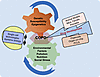 Figure 1
COPD-iNET symposium focused on five key areas critical to understanding the mechanistic underpinnings of COPD. Genetic and environmental factors drive each other to cause disease progression. Cohorts with early-stage COPD help unravel the complex interactions leading to disease. Advances in single-cell technologies offer detailed insights into cellular changes. At the same time, improved preclinical models support the development and screening of therapeutic candidates capable of interrupting the cycle of gene-and-environment interaction to halt COPD progression.
-
COPD definition and subtypes
In the late 1990s and early 2000s, COPD classification was significantly transformed due to efforts of the American Thoracic Society and the European Respiratory Society, who published the first guidelines aimed at improving COPD diagnosis, classification, and management (8). Next, the Global Initiative for Chronic Obstructive Lung Disease (GOLD) established worldwide recommendations to standardize COPD diagnosis and management (9). Together, with the classical 4 stages (stage 1–4) of spirometrically recognized airflow obstruction severity, GOLD introduced the concept of “GOLD stages,” with stage 0 defined as individuals experiencing chronic respiratory symptoms, but with normal spirometry. Abnormal spirometry is defined by a ratio of forced expiratory volume in one second to forced vital capacity (FEV1/FVC) of less than 0.7 and severity defined by reduced FEV1 (10) (Table 1).
Clinically, COPD is a progressive disorder characterized by largely irreversible airflow limitation. COPD encompasses two major histological variants: emphysema, characterized by alveolar destruction; and chronic bronchitis, defined by mucus hypersecretion, chronic inflammation, airway wall thickening, and alveolar remodeling, all of which reduce quality of life (11). Most patients have a combination of these manifestations, and disease heterogeneity creates a challenge to classify COPD into distinct subtypes. Recently dupilumab, an IL-4/IL-13 receptor–targeting mAb, reduced exacerbations and improved lung function (12) in patients with COPD who also had a high eosinophil count; however, this success is limited to a small percentage of patients. The advancement of disease-modifying therapies for COPD is still required, as the mortality rate remains high.

-
“Pre-COPD” as an entity and available cohorts
Observational studies of long-term smokers consistently show a constellation of respiratory symptomatology that precedes obstructive lung physiology (13). The “pre-COPD” concept emerged (14) for certain clinical respiratory symptoms and physiological and imaging abnormalities in a heterogeneous group of individuals at high risk of developing clinical overt COPD (15). Early and pre-COPD risk factors often overlap and are based on their strong links to early lung function decline and disease progression and highlights a growing recognition that COPD develops long before spirometric obstruction and clinical symptoms become apparent (16, 17).
Several methods are now established and used to define changes in the lung to detect pre-COPD. Oscillometry requires minimal patient cooperation, making it particularly well suited for pediatric use (18). Computerized CT scans identify structural abnormalities and CT remains one of the most potent tools in the early detection of pre-COPD (19). MRI offers a radiation-free approach that is exceptionally sensitive to soft-tissue changes. Hyperpolarized helium or xenon MRI can detect lung ventilation abnormalities, even when CT scans and spirometry appear normal (20). Analyses of electronic health records, imaging data, and wearable device data may allow continuous monitoring in real-time and help clinicians to predict which individuals at risk to progress to COPD (21–23) (Figure 2).
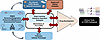 Figure 2
Evolving landscape of COPD research. GWAS provide information on susceptibility genes and DNA methylation. ChIP-seq and ATAC-seq from appropriate tissues provide epigenetic modifications that are associated with environmental factors. Data from specific tissues and cell types generate QTL information that points to genes and reliable information on pathways involved in affecting cellular phenotypes and pathways that could be initiators of disease. This in turn can be used to develop appropriate preclinical COPD models that capture the gene-and-environment interaction. Applying deep learning algorithms to scRNA-seq and spatial RNA-seq data from preclinical and pre-COPD cohort samples, together with the GWAS and QTL data, can be used to understand COPD heterogeneity. An iterative process of data analysis and retesting in experimental models and findings from pre-COPD cohorts helps to prioritize for testing appropriate drugs that will be successful in clinical trials and have minimal side effects.
A landmark study analyzed lung function trajectories of individuals between ages 25 and 75 from three independent cohorts — the Framingham Offspring Cohort, the Copenhagen City Heart Study, and the Lovelace Smokers Cohort. While some individuals reached 100% predicted FEV1 in early adulthood, others only reached 75%, with both groups showing either stable or rapidly declining lung function (24). Those with low baseline lung function and rapid decline had a 35-fold higher risk of developing COPD within 18 months and a 2.5-fold higher mortality risk compared with those with higher lung function (16). In the CARDIA Lung Study, longitudinal lung function trajectories were linked to COPD development or pre-COPD (25). Preserved ratio impaired spirometry (PRISm) — defined as a reduced FEV1 with preserved FEV1/FVC ratio (26) — is prevalent (13% of the COPDGene cohort and 7.1% in the general population of adults >45 years of age) and associated with increased respiratory symptoms, systemic inflammation, and a cardiovascular mortality rate of 18.7% (27).
ALA launched the Lung Health Cohort, a new, population-based study focused on characterizing lung health in millennials (ages 25–35) without diagnosed severe respiratory disease (28). The Ghana randomized air pollution and health study (GRAPHS) enrolled 1,414 nonsmoking pregnant women and has followed their children for over eight years. Early findings show that high prenatal exposure to household air pollution is linked to impaired lung function in infancy and early childhood (29). The Tasmanian longitudinal health study (TAHS) identified three of six trajectories with increased COPD risk as measured at 7, 13, 18, 45, 50, and 53 years of age (30, 31).
The Subpopulations and Intermediate Outcome Measures in COPD Study (SPIROMICS) cohort showed that elevated MUC5AC, but not MUC5B, in sputum is a biomarker for pre-COPD. Genetic and proteomic studies continue to explore reliable biomarkers to identify pre-COPD (32–34). Inflammatory markers in blood (35), sputum (36), and exhaled breath condensate have shown promise for detecting early inflammatory changes prior to spirometric decline. Notably, lower circulating CC16 levels and higher MMP levels have been associated with early lung function impairment. In the COPDGene study, both low CC16 (37) and soluble RAGE (38) were linked to increased risk of disease progression and poor outcomes. In COPDGene, individuals with high polygenic risk score (PRS) were more likely to exhibit early airflow limitations, even in the absence of spirometrically defined COPD (39, 40).
-
COPD-associated risk factors
Infants born prematurely with underdeveloped lungs have an increased COPD risk. These infants may experience reduced lung growth, airway obstruction, and impaired lung function that persist into childhood and adulthood (30, 41, 42) (Figure 2). Furthermore, frequent or severe respiratory tract infections in childhood, including influenza, respiratory syncytial virus (RSV), and bacterial infections, that cause bronchitis, pneumonia, and recurrent wheezing episodes can cause lasting damage to developing airways and lungs, leading to changes that prevent normal lung growth and accelerate age-related lung function decline, especially when combined with other risk factors, such as smoking or other environmental exposures (30, 41, 42). Childhood asthma has also been linked to developing early COPD, as persistent airway inflammation and recurrent obstruction can lead to long-term lung damage, especially when combined with other risk factors (42, 43).
This Review will primarily focus on the most recent concepts in COPD-related genetic risk factors, epigenetics, and gene-environment interactions, as these topics have previously been well covered (44–46).
COPD susceptibility genes. The most widely described genetic factor contributing to COPD development, particularly emphysema, is α-1 antitrypsin deficiency (AATD), a hereditary condition first described in 1963 (47). AATD is usually caused by homozygosity at the SNP rs28929474 in serpin family A member 1 (SERPINA1), which encodes a missense variant of the AAT protein. Other loss-of-function alleles, including rare nonsense variants, can exist as homozygotes or complex heterozygotes and associate with COPD. AAT primarily functions to inactivate neutrophil elastase (48). The prevalence of severe AATD is estimated at 1%–2% of the population (49). As with other susceptibilities, smoking increases the risk of COPD in AATD, and this exacerbation is an early example of gene-by-environment interaction (50).
GWAS has successfully identified thousands of genetic risk loci for human traits and chronic diseases (51) by scanning the entire genome of many individuals to find genetic differences (typically SNPs) that correlate with a particular condition or phenotype. For COPD, GWAS has identified SNPs in or near HHIP, FAM13A, and MFAP2 (52–54), and numerous genome-wide loci associated with FEV1/FVC ratio and FEV1 have been identified (55, 56) (Figure 2).
While the contribution of genetic variants to COPD development is well established, functional validation remains challenging. First, many analyses have focused on cohorts of patients with late-stage COPD, a point by which it is unclear what effect a genetic variant had on disease initiation in the early stages and what is the result of secondary damage at later stages. Because patients at early COPD stages do not present with respiratory symptoms, it is difficult to obtain cells initially affected by the variant. Second, GWAS results alone usually do not provide definitive information on functional mechanisms. Third, determination of the genes affected by GWAS loci (target genes) can be challenging, as most of the causal variants are located in noncoding sections of genome (57) (intergenic or intragenic regions) (58), indicating that these loci may regulate gene expression via complex interactions with distal regulatory elements. A molecular understanding of causative SNPs has been challenging, because a single SNP or multiple SNPs can affect one or multiple cell types, and each can amplify the response to pollutants and the resulting cellular interactions in the lung (59).
The ability to combine multiple genetic variants into a PRS can generate a numerical value that reflects an individual’s predictive risk of developing COPD independent of clinical risk factors (40, 60). Although powerful, genetic predisposition alone is not enough; interactions between genes and environmental factors must be considered. Indeed, integrating information from inherited (genetic) and environmental (epigenetic) DNA and chromatin changes can point to key genes and pathways associated with COPD development and progression (Figure 2).
Additional -omics approaches can also be integrated with genetics to investigate the molecular heterogeneity in COPD. For example, integration of transcriptomics, DNA methylation, and miRNA profiles was recently used to identify disease endotypes associated with clinical COPD characteristics, such as FEV1 or blood eosinophils (61). When undertaking such approaches it is important to consider that unsupervised clustering across cohorts to identify COPD subtypes may show modest reproducibility (62): however, trajectory analyses are more promising, as they integrate additional factors such as longitudinal lung function (63).
A successful strategy to identify GWAS target genes is to combine GWAS and expression quantitative trait locus (eQTL) studies, which test the association between genetic variants and RNA levels of nearby genes (Figure 2). These combined analyses identify genomic regions where GWAS and eQTL association signals coincide, and colocalization methods apply statistical analyses that distinguish causal from chance or correlational (linkage disequilbrium) GWAS-eQTL overlap by estimating the probability that both signals are caused by the same functional variant(s). QTLs at single-cell resolution could provide insight into molecular mechanisms underlying the pathobiology of COPD by exploring the interface of altered gene expression and the resulting biological consequence (64).
Environmental factors. COPD-associated genetic factors likely interact with environmental factors, such as smoking, occupational exposures, and air pollution, to cause disease. However, research on the cellular pathways and mechanisms that link environmental factors to genetic variants to drive disease is in its infancy. It is of great importance to understand the mechanisms underlying environmental factors that drive COPD development to ultimately develop therapies. Studies on the effects of different types of particulate matter (PM) derived from air pollution, cigarette smoke (CS), wood smoke (WS), and gases, including ozone (O3) and nitrogen oxides on cellular systems is complex. In addition, how societal stress conditions and fitness interact with genetic and epigenetic susceptibility factors have not been explored (Figure 3).
 Figure 3
Risk factors and pathomechanisms driving COPD development. Starting from the early stages of embryonic development throughout growth into adulthood, the lung is exposed to many risk factors. Many of these risk factors can affect individuals to different extents and in different combinations, as do the many pathomechanisms that comprise a wide range of cellular pathways. More importantly, these pathomechanisms are also affected by comorbidities that enhance disease progression.
PM is a category of inhalable particles classified by size rather than chemical composition. PM is a complex mixture from both natural sources, such as vegetation and dust, and combustion emissions from cooking or heating stoves, wildfires, and other human activities, including cigarette smoking and industrial emissions (65). Localization of these particles in lung tissue largely depends on size — particles larger than 10 μm (PM10) typically settle in the nose and throat, those between 2.5 and 10 μm (PM2.5–10) deposit in larger airways, particles less than 2.5 μm (PM2.5) reach lower airways, and nanoparticles (<0.1 micrometers, PM0.1) can be internalized into the alveoli (66). While in high-income countries, PM from CS is the primary cause for COPD, in both high- and low-income countries, PM from biomass smoke from cooking or heating stoves, dust storms, traffic, and wildfires contribute to the onset and progression of COPD (67, 68),
Long-term exposure to even low air pollutant levels can increase COPD incidence (69). The Framingham Heart Study showed a correlation between PM2.5 exposure and reduced lung function metrics like FEV1 and FVC (70). PM2.5 reduces FEV1, increases COPD risk (71), and caused lung function decline both in the Lovelace Smokers Cohort (72) and the SPIROMICS cohort (73). Additionally, a retrospective Korean cohort study found a significant association between long-term PM2.5 exposure and COPD development (66). Table 2 summarizes environmental factors, their main sources, and roles in COPD development. Gaseous pollutants, including nitrogen dioxide (NO2), O3, and sulfur dioxide (SO2), primarily originate from fossil fuel combustion.
Exposure of cells to pollution and the inflammatory milieu enhances oxidative damage, promoting cellular apoptosis, senescence, and destruction of alveolar walls. Airway remodeling is the persistent change in lung structures due to repeated epithelial damage, including goblet cell hyperplasia, which causes persistent and increased mucus production. Furthermore, inflammatory stressors can cause extensive changes to genomic structures, including epigenetic reprogramming of many lung cells, such as the airway epithelium, fibroblasts, and inflammatory cells. Importantly, small airway pathologies, such as narrowing of airways and thickening of airway walls due to smooth muscle hypertrophy and fibrosis, are thought to occur before the loss of alveolar tissue and lung function decline (74).
Populations from low- and high-income countries are exposed to biomass fuel smoke from open wood or dung fires, stoves to cook or heat homes, and from recent increased occurrences of wildfires (75, 76). While some wildfire pollutants are short-lived and disperse quickly from the fire site, PM can travel vast distances, far exceeding the size of the original fire area (77). Dust storms from the Middle East and Sahara Desert are associated with an increased hospitalization risk for patients with COPD (78).
Wildfires also have adverse effects on birth weight, respiratory, cardiovascular, and other diseases (79, 80). Systematic meta-analyses concluded that pollution from WS not only increases the risk for COPD exacerbations (81, 82) and pneumonia (83), but more than doubles the risk of COPD and chronic bronchitis (84–86), and increases emergency room visits, hospitalizations, and mortality (87–89). Coarse PM (PM2.5–10) extracted from the 2008 California wildfires rapidly induced cell death in murine macrophages in vitro, with significantly higher cytotoxicity than coarse PM collected from ambient air (90). Similar rapid cytotoxic effects on alveolar macrophages were observed using bronchoalveolar lavage in a murine model following intratracheal instillation of wildfire coarse PM (91).
Daily or occasional E-cigarette users have higher odds of developing COPD compared with non-users (92). A long-term cohort study of 10,326 Chinese adults reinforced this risk, with a significant correlation between E-cigarette use and respiratory symptoms or COPD, especially with concurrent combustible cigarette use (93). Waterpipe exposure elicits an inflammatory response similar to that of conventional smoking (94), and in vitro studies indicate that it causes epithelial barrier dysfunction and reduces lung cell proliferation, while increasing markers of cellular senescence (95, 96).
Combined effects of ambient air pollution on lung health. Population studies have demonstrated that PM2.5 from CS and WS have an additive effect on reducing lung function and risk for COPD (71), an effect that has also been validated in animal studies (97, 98). Therefore, stratifying PM2.5 into specific, relevant environmental exposures such as tobacco and wildfire smoke may be important to fully understand the effect of various sources of PM2.5.


-
Advances in preclinical COPD models
Effective drug development requires laboratory models that closely recapitulate the complexity of multifactorial etiology and patient heterogeneity to increase the likelihood for effective clinical translation (123). Table 3 highlights current and emerging preclinical models, including in vitro/ex vivo and animal models for COPD research and lists their strengths and weaknesses.

Article tools
- Download citation information
- Send a comment
- Terms of use
- Standard abbreviations
- Need help? Email the journal
Metrics
Go to
- Top
- Abstract
- The worldwide burden of chronic obstructive pulmonary disease
- COPD definition and subtypes
- “Pre-COPD” as an entity and available cohorts
- COPD-associated risk factors
- Gene-by-environment interaction
- Advances in preclinical COPD models
- In vitro and ex vivo models
- Animal COPD models
- Pathomechanisms of COPD
- Translational considerations
- Conclusions
- Funding support
- Acknowledgments
- Footnotes
- References
- Version history


