
Clinical Research and Public HealthAIDS/HIVImmunologyInfectious disease
Open Access |  10.1172/jci.insight.199232
High-dose influenza vaccine augments serological and cellular immunity of older people with HIV
Jonah Kupritz,1 Sheldon Davis,1 TianHao Liu,2 Prabhsimran Singh,1 Daniel Andrés Díaz-Pachón,2 Allan Rodriguez,3 Scott D. Boyd,4 Rajendra Pahwa,1 Suresh Pallikkuth,1 and Savita G. Pahwa1
1Department of Microbiology and Immunology,
2Division of Biostatistics, Department of Public Health Sciences; and
3Division of Infectious Diseases, Department of Medicine, University of Miami Miller School of Medicine, Miami, Florida, USA.
4Department of Pathology, Stanford University School of Medicine, Stanford, California, USA.
Address correspondence to: Savita G. Pahwa or Suresh Pallikkuth, University of Miami Miller School of Medicine, 1580 NW 10th Avenue, BCRI 712, Miami, Florida 33136, USA. Phone: 305.243.7732; Email: spahwa@med.miami.edu (SGP). Phone: 305.243.5315; Email: spallikkuth@med.miami.edu (SP).
Authorship note: JK and SD are
Find articles by Kupritz, J. in: PubMed | Google Scholar
1Department of Microbiology and Immunology,
2Division of Biostatistics, Department of Public Health Sciences; and
3Division of Infectious Diseases, Department of Medicine, University of Miami Miller School of Medicine, Miami, Florida, USA.
4Department of Pathology, Stanford University School of Medicine, Stanford, California, USA.
Address correspondence to: Savita G. Pahwa or Suresh Pallikkuth, University of Miami Miller School of Medicine, 1580 NW 10th Avenue, BCRI 712, Miami, Florida 33136, USA. Phone: 305.243.7732; Email: spahwa@med.miami.edu (SGP). Phone: 305.243.5315; Email: spallikkuth@med.miami.edu (SP).
Authorship note: JK and SD are
Find articles by Davis, S. in: PubMed | Google Scholar
1Department of Microbiology and Immunology,
2Division of Biostatistics, Department of Public Health Sciences; and
3Division of Infectious Diseases, Department of Medicine, University of Miami Miller School of Medicine, Miami, Florida, USA.
4Department of Pathology, Stanford University School of Medicine, Stanford, California, USA.
Address correspondence to: Savita G. Pahwa or Suresh Pallikkuth, University of Miami Miller School of Medicine, 1580 NW 10th Avenue, BCRI 712, Miami, Florida 33136, USA. Phone: 305.243.7732; Email: spahwa@med.miami.edu (SGP). Phone: 305.243.5315; Email: spallikkuth@med.miami.edu (SP).
Authorship note: JK and SD are
Find articles by Liu, T. in: PubMed | Google Scholar
1Department of Microbiology and Immunology,
2Division of Biostatistics, Department of Public Health Sciences; and
3Division of Infectious Diseases, Department of Medicine, University of Miami Miller School of Medicine, Miami, Florida, USA.
4Department of Pathology, Stanford University School of Medicine, Stanford, California, USA.
Address correspondence to: Savita G. Pahwa or Suresh Pallikkuth, University of Miami Miller School of Medicine, 1580 NW 10th Avenue, BCRI 712, Miami, Florida 33136, USA. Phone: 305.243.7732; Email: spahwa@med.miami.edu (SGP). Phone: 305.243.5315; Email: spallikkuth@med.miami.edu (SP).
Authorship note: JK and SD are
Find articles by Singh, P. in: PubMed | Google Scholar
1Department of Microbiology and Immunology,
2Division of Biostatistics, Department of Public Health Sciences; and
3Division of Infectious Diseases, Department of Medicine, University of Miami Miller School of Medicine, Miami, Florida, USA.
4Department of Pathology, Stanford University School of Medicine, Stanford, California, USA.
Address correspondence to: Savita G. Pahwa or Suresh Pallikkuth, University of Miami Miller School of Medicine, 1580 NW 10th Avenue, BCRI 712, Miami, Florida 33136, USA. Phone: 305.243.7732; Email: spahwa@med.miami.edu (SGP). Phone: 305.243.5315; Email: spallikkuth@med.miami.edu (SP).
Authorship note: JK and SD are
Find articles by Díaz-Pachón, D. in: PubMed | Google Scholar
1Department of Microbiology and Immunology,
2Division of Biostatistics, Department of Public Health Sciences; and
3Division of Infectious Diseases, Department of Medicine, University of Miami Miller School of Medicine, Miami, Florida, USA.
4Department of Pathology, Stanford University School of Medicine, Stanford, California, USA.
Address correspondence to: Savita G. Pahwa or Suresh Pallikkuth, University of Miami Miller School of Medicine, 1580 NW 10th Avenue, BCRI 712, Miami, Florida 33136, USA. Phone: 305.243.7732; Email: spahwa@med.miami.edu (SGP). Phone: 305.243.5315; Email: spallikkuth@med.miami.edu (SP).
Authorship note: JK and SD are
Find articles by Rodriguez, A. in: PubMed | Google Scholar
1Department of Microbiology and Immunology,
2Division of Biostatistics, Department of Public Health Sciences; and
3Division of Infectious Diseases, Department of Medicine, University of Miami Miller School of Medicine, Miami, Florida, USA.
4Department of Pathology, Stanford University School of Medicine, Stanford, California, USA.
Address correspondence to: Savita G. Pahwa or Suresh Pallikkuth, University of Miami Miller School of Medicine, 1580 NW 10th Avenue, BCRI 712, Miami, Florida 33136, USA. Phone: 305.243.7732; Email: spahwa@med.miami.edu (SGP). Phone: 305.243.5315; Email: spallikkuth@med.miami.edu (SP).
Authorship note: JK and SD are
Find articles by Boyd, S. in: PubMed | Google Scholar
1Department of Microbiology and Immunology,
2Division of Biostatistics, Department of Public Health Sciences; and
3Division of Infectious Diseases, Department of Medicine, University of Miami Miller School of Medicine, Miami, Florida, USA.
4Department of Pathology, Stanford University School of Medicine, Stanford, California, USA.
Address correspondence to: Savita G. Pahwa or Suresh Pallikkuth, University of Miami Miller School of Medicine, 1580 NW 10th Avenue, BCRI 712, Miami, Florida 33136, USA. Phone: 305.243.7732; Email: spahwa@med.miami.edu (SGP). Phone: 305.243.5315; Email: spallikkuth@med.miami.edu (SP).
Authorship note: JK and SD are
Find articles by Pahwa, R. in: PubMed | Google Scholar
1Department of Microbiology and Immunology,
2Division of Biostatistics, Department of Public Health Sciences; and
3Division of Infectious Diseases, Department of Medicine, University of Miami Miller School of Medicine, Miami, Florida, USA.
4Department of Pathology, Stanford University School of Medicine, Stanford, California, USA.
Address correspondence to: Savita G. Pahwa or Suresh Pallikkuth, University of Miami Miller School of Medicine, 1580 NW 10th Avenue, BCRI 712, Miami, Florida 33136, USA. Phone: 305.243.7732; Email: spahwa@med.miami.edu (SGP). Phone: 305.243.5315; Email: spallikkuth@med.miami.edu (SP).
Authorship note: JK and SD are
Find articles by
Pallikkuth, S.
in:
PubMed
|
Google Scholar
|

1Department of Microbiology and Immunology,
2Division of Biostatistics, Department of Public Health Sciences; and
3Division of Infectious Diseases, Department of Medicine, University of Miami Miller School of Medicine, Miami, Florida, USA.
4Department of Pathology, Stanford University School of Medicine, Stanford, California, USA.
Address correspondence to: Savita G. Pahwa or Suresh Pallikkuth, University of Miami Miller School of Medicine, 1580 NW 10th Avenue, BCRI 712, Miami, Florida 33136, USA. Phone: 305.243.7732; Email: spahwa@med.miami.edu (SGP). Phone: 305.243.5315; Email: spallikkuth@med.miami.edu (SP).
Authorship note: JK and SD are
Find articles by
Pahwa, S.
in:
PubMed
|
Google Scholar
|
Published March 5, 2026 - More info
JCI Insight. 2026;11(8):e199232. https://doi.org/10.1172/jci.insight.199232.
© 2026 Kupritz et al. This work is licensed under the Creative Commons Attribution 4.0 International License. To view a copy of this license, visit http://creativecommons.org/licenses/by/4.0/.
Received: August 20, 2025; Accepted: February 26, 2026

-
Results
Standard-dose influenza vaccination drives a robust serum response to influenza antigens, which wanes from 28 to 180 dpv. In total, 231 participants were enrolled in the study and received a standard-dose influenza vaccine. Young (18–40 years) PWoH (n = 55) and PWH (n = 37) along with older (≥60 years) PWoH (n = 72) and PWH (n = 67) were administered a standard-dose vaccine during one of the 2020–2024 influenza seasons (Figure 1 and Table 1). Median ages were similar across HIV status within each age group: 30 versus 34 years for young PWoH and PWH, respectively, and 63 versus 64 years for older PWoH and PWH, respectively (Supplemental Figure 1; supplemental material available online with this article; https://doi.org/10.1172/jci.insight.199232DS1). Influenza vaccination at any time point prior to study enrollment was reported by more than 60% of participants in each group (young PWoH, 64%; young PWH, 70%; older PWoH, 68%; and older PWH, 88%; P = 0.27). Female participants comprised the majority (58%) of the young PWoH group, and 27%–30% of the other 3 groups (P = 0.002). Median time since HIV-1 diagnosis was 7.3 and 20.7 years and median duration of ART was 6.5 and 20.0 years for young and older PWH, respectively. All PWH had an undetectable HIV-1 viral load for at least 1 year prior to study enrollment. All groups, including young and older PWH, had a mean absolute CD4+ T cell count greater than 500 and mean CD4/CD8 ratio greater than 1. Self-reported cardiometabolic comorbidity data were available for most participants (young PWoH, n = 52; young PWH, n = 28; older PWoH, n = 52; older PWH, n = 52), revealing an expected age-associated increase in hypertension, diabetes, hyperlipidemia, and cardiovascular disease prevalence and no clear differences between participants with and without HIV (Supplemental Table 1).
At baseline, we observed higher frequencies of seroprotective titers (≥1:40) across all groups against B/Yamagata (89%–99%) and A/H1N1 (90%–94%) strains, compared with B/Victoria (60%–79%), with no significant intergroup differences. Titers against A/H3N2 were available only for a subset of participants (n = 115) vaccinated during the 2020–2021 and 2021–2022 influenza seasons due to technical limitations of the A/H3N2 HAI assay during recent seasons (27); among these individuals, 75%–94% had seroprotective A/H3N2 titers at baseline (Supplemental Table 2).
HAI titers against individual and whole vaccine antigens increased as early as 7 dpv and generally peaked by 14 dpv, at which point all participant groups exhibited significantly above-baseline responses to all vaccine antigens (Figure 2A and Supplemental Table 3). Given the limited A/H3N2 HAI dataset, we sought to infer seroprotection against this strain based on A/H3N2 HA-specific IgG levels. We observed a moderately strong correlation between A/H3N2 HAI titer and A/H3N2-specific IgG levels at 28 dpv (r = 0.58 [95% CI: 0.44–0.69], P < 0.001, Supplemental Figure 2). A/H3N2 HA-specific IgG levels markedly increased from 0 to 28 dpv across the 4 groups (Figure 2B). Similarly, HA IgG specific to A/H1N1, B/Victoria, and B/Yamagata antigens universally increased from 0 to 28 days after standard-dose vaccination, across all groups (Supplemental Figure 3).
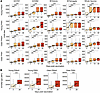 Figure 2
HAI responses rise sharply in the first month after standard-dose influenza vaccination, independent of age group and HIV status. (A) HAI titer against A/H1N1, B/Victoria, B/Yamagata, and whole vaccine antigens were assessed in young PWoH (n = 42, top row), young PWH (n = 30, second row from top), older PWoH (n = 60, second row from bottom), and older PWH (n = 51, bottom row) at 0, 7, 14, and 28 dpv (standard dose). A/H3N2 HAI titers were available for a subset of participants. (B) A/H3N2 HA-specific IgG (MFI) at 0 versus 28 days after standard-dose vaccination; young PWoH (n = 50), young PWH (n = 36), older PWoH (n = 68), and older PWH (n = 65). Box plots display the median and IQR, with whiskers extending to 1.5 × IQR and outliers excluded. P values are from Wilcoxon signed-rank tests for the 7–28 versus 0 dpv time points, adjusted for multiple comparisons by the Benjamini-Hochberg method. *P < 0.05; **P < 0.01; ***P < 0.001.
We next assessed the durability of vaccine responses in a subset of participants who provided both 0 and 28 dpv samples and who returned for follow-up at 6 months (180 days) after standard-dose vaccination (young PWoH, n = 20; young PWH, n = 18; older PWoH, n = 22; and older PWH, n = 44). From 28 to 180 dpv, HAI titers against A/H1N1 and B/Victoria declined significantly across all groups. Titers against B/Yamagata declined among young PWoH and older PWH, and whole vaccine titers declined across all groups except older PWH (Figure 3A). Small reductions in the proportion of individuals with seroprotective HAI titers against A/H1N1, B/Victoria, and B/Yamagata antigens were also evident across the groups (Supplemental Table 4) Despite the pattern of decline, titers at 180 dpv remained significantly elevated above prevaccination levels for A/H1N1 (all groups), B/Victoria (older PWH only), B/Yamagata (older PWoH and older PWH), and whole vaccine (young PWoH and older PWH). Levels of A/H3N2-specific IgG declined sharply from 28 to 180 dpv but remained elevated above baseline levels at 180 dpv across the 4 groups (Figure 3B). Similarly, IgG specific to A/H1N1, B/Victoria, and B/Yamagata strains declined significantly from 28 to 180 dpv. Above-baseline A/H1N1-specific IgG levels persisted among all groups except older PWH, and B/Victoria-specific and B/Yamagata-specific IgG levels returned to baseline at 180 dpv across the 4 groups (Supplemental Figure 3).
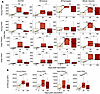 Figure 3
Seroprotective responses wane in the first 6 months after standard-dose influenza vaccination. In a subset of participants who returned for follow-up at 180 dpv after standard-dose influenza vaccination, antigen-specific serum responses were measured and compared with baseline (0 dpv) and peak (28 dpv) levels. (A) HAI titer against A/H1N1, B/Victoria, B/Yamagata, and whole vaccine for young PWoH (n = 20), young PWH (n = 18), older PWoH (n = 22), and older PWH (n = 44). (B) A/H3N2 HA-specific IgG levels (MFI); young PWoH, n = 31; young PWH, n = 20; older PWoH, n = 35; older PWH, n = 49. Box plots display the median and IQR, with whiskers extending to 1.5 × IQR and outliers excluded. P values are from Wilcoxon signed-rank tests between the 3 time points, adjusted for multiple comparisons by the Benjamini-Hochberg method. *P < 0.05; **P < 0.01; ***P < 0.001; unlabeled comparisons are not significant.
Aging with HIV infection is associated with diminished influenza A/H1N1 responses. Given the heterogeneous composition of the 4 groups, we conducted a multivariate analysis to determine the effects of aging and HIV infection on vaccine responses while controlling for the effects of self-reported demographic variables, self-reported influenza vaccination history, and prevaccination serological responses, which differed between the groups. Self-reported influenza vaccination at any time point prior to study enrollment was associated with reduced A/H1N1-specific (β = –8512, P = 0.005), B/Victoria-specific (β = –9357, P < 0.001), and B/Yamagata-specific (β = –11,234, P < 0.001) IgG levels and reduced HAI titer against B/Yamagata (OR = 0.36 [0.19–0.68], P = 0.002). Participant sex was not associated with HAI titer or HA-specific IgG responses to standard-dose vaccination (Supplemental Table 5).
Regression analysis of HAI responses at 28 dpv revealed no differences between the groups in HA-specific IgG levels or HAI titer against B/Victoria or B/Yamagata antigens. In contrast, older PWH showed markedly reduced HAI titer against A/H1N1 compared with young PWoH (OR = 0.31, P = 0.021), whereas a similar impairment was not observed among young PWH or older PWoH (Figure 4). Regression of age group and HIV status as individual covariates revealed a significant impact of older age on A/H1N1 HAI responses (OR = 0.53, P = 0.016), and the presence of HIV infection was independently associated with trends of lower A/H1N1 HAI titer (OR: 0.61, P = 0.055) and B/Victoria IgG (β= –4332, P = 0.051) responses (Supplemental Table 6). Consistent with the multivariate age group findings, univariate correlational analysis revealed negative associations between chronological age and A/H1N1 HAI titer at 28 dpv among PWoH (ρ = –0.18, P = 0.048) and PWH (ρ = –0.18, P = 0.075), which were not evident at the prevaccination time point (Supplemental Figures 4 and 5).
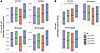 Figure 4
Serum A/H1N1 responses are reduced among older PWH at 28 days after standard-dose influenza vaccination. Multivariate comparison of (A) strain HA-specific IgG levels and (B) influenza HAI titer at 28 days after standard-dose vaccination for young PWoH (n = 50, blue), young PWH (n = 35, red), older PWoH (n = 68, green), and older PWH (n = 63–64, purple). Box plots display estimated marginal means from a linear regression model controlling for the effects of baseline vaccine responses, previous influenza vaccine history, and demographic variables. *P < 0.05.
In summary, all groups responded well to standard-dose influenza vaccination, and significant reductions in the magnitude (HAI titer) and durability (HA-specific IgG) of seroprotective influenza A/H1N1-specific responses were observed among older PWH.
High-dose vaccination improves influenza B/Victoria and A/H3N2 IgG responses of older individuals regardless of HIV status, and A/H1N1-specific serological responses are unchanged. Among participants who received standard-dose vaccination, 123 returned for high-dose vaccination in the consecutive season (young PWoH, n = 17; young PWH, n = 16; older PWoH, n = 49; older PWH, n = 41). Among high-dose recipients, participant groups were well balanced in terms of demographic data and pre-study influenza vaccination (Table 2).
At the high-dose season baseline, a similar frequency of study participants had seroprotective HAI titer levels against A/H1N1 (95% vs. 93%, P = 0.50), B/Victoria (82% vs. 73%, P = 0.051), and B/Yamagata (90% vs. 94%, P = 0.25) compared with at the time point of study entry (standard dose, 0 dpv), and the frequency of seroprotective titers at the baseline time point of the high-dose season did not differ between the groups (Supplemental Table 7). As observed after standard-dose vaccination, high-dose vaccination drove marked HAI and HA-specific IgG responses as early as 7 dpv. HAI titers against A/H1N1 and B/Victoria, along with A/H3N2-specific IgG, significantly increased from 0 to 28 dpv across the 4 groups, and whole vaccine HAI titers increased in all groups except young PWH (Figure 5). At 28 days after high-dose vaccination, seroprotective titers against A/H1N1, B/Victoria, and B/Yamagata were present in nearly all participants (Supplemental Table 8).
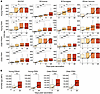 Figure 5
Seroprotective responses rise sharply in the first month after high-dose influenza vaccination. Analysis includes participants who attended all follow-up visits in the first month after high-dose vaccination. (A) HAI titer against A/H1N1, B/Victoria, B/Yamagata, and whole vaccine antigens were assessed in young PWoH (n = 13, top row), young PWH (n = 11, second row from top), older PWoH (n = 41, second row from bottom), and older PWH (n = 36, bottom row) at 0, 7, 14, and 28 dpv (high-dose). B/Yamagata HAI titers were not assessed in participants administered trivalent vaccine during the 2024–2025 flu season (young PWoH, n = 2; young PWH, n = 2; older PWoH, n = 12; older PWH, n = 10). (B) A/H3N2 HA-specific IgG (MFI) at 0 versus 28 days after high-dose vaccination; young PWoH (n = 17), young PWH (n = 15), older PWoH (n = 47), and older PWH (n = 40). Box plots display the median and IQR, with whiskers extending to 1.5 × IQR. P values are from Wilcoxon signed-rank tests for the 7–28 dpv versus 0 dpv time points, adjusted for multiple comparisons by the Benjamini-Hochberg method. *P < 0.05; **P < 0.01; ***P < 0.001.
Similar to the standard-dose analyses, multivariate analyses of high-dose responses at 28 dpv revealed no effect of sex on HAI titer or HA-specific IgG responses (Supplemental Table 9). After controlling for covariates, we observed higher B/Yamagata and lower B/Victoria responses among young PWoH compared with older PWoH, and impairment in A/H1N1 HAI titer among older PWH was not evident after high-dose vaccination (Supplemental Figure 6). These differences appeared to be driven largely by age group, rather than HIV status (Supplemental Table 10).
As with standard-dose vaccination, we evaluated longitudinal responses to influenza antigens in a subset of participants who provided samples at 0, 28, and 180 days after high-dose vaccination. Sample sizes for longitudinal comparisons were sufficiently large for older PWoH (n = 25) and older PWH (n = 24), but too few young PWoH or young PWH provided longitudinal samples during the high-dose season to reliably gauge the durability of responses. Among both of the older groups, HAI titers and HA IgG specific to all vaccine components significantly declined from 28 to 180 dpv. At 180 days after high-dose vaccination, HAI titers against A/H1N1, B/Victoria, and whole vaccine returned to baseline levels for both groups, and elevated IgG responses were maintained for A/H3N2 (older PWoH and older PWH) and B/Victoria (older PWoH only) antigens (Figure 6, Supplemental Figure 7, and Supplemental Table 11).
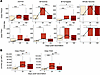 Figure 6
Serologic responses decline in the first 6 months after high-dose influenza vaccination. In a subset of participants who returned for follow-up at 180 dpv (high-dose vaccine), antigen-specific responses were measured and compared with baseline (0 dpv) and peak (28 dpv) levels. (A) HAI titer against A/H1N1, B/Victoria, B/Yamagata, and whole vaccine in older PWoH (n = 25) and older PWH (n = 24). B/Yamagata HAI titers were not assessed in participants administered trivalent vaccine during the 2024–2025 influenza season (older PWoH, n = 12; older PWH, n = 10). (B) A/H3N2-specific IgG (MFI) at 0, 28, and 180 dpv; older PWoH, n = 26; older PWH, n = 25. Box plots display the median and IQR, with whiskers extending to 1.5 × IQR and outliers excluded. P values are from Wilcoxon signed-rank tests between the 3 time points, adjusted for multiple comparisons by the Benjamini-Hochberg method. *P < 0.05; **P < 0.01; ***P < 0.001; unlabeled comparisons are not significant.
Given the number of participants who provided both 0 and 28 dpv serum samples for consecutive standard- and high-dose influenza seasons, we determined that regression analyses of high- versus standard-dose responses (evaluating the effect of vaccine dose while controlling for prevaccination immune responses) were sufficiently powered for both of the older groups (older PWoH, n = 40 and older PWH, n = 30). Among older PWoH and older PWH alike, IgG responses specific to A/H3N2 and B/Victoria antigens were significantly greater at 28 dpv for the high-dose versus standard-dose influenza vaccination. Improvements in B/Victoria HAI responses were observed among older PWoH but not older PWH, and neither IgG nor HAI responses specific to A/H1N1 differed between the 2 doses in either group. Conversely, we observed a nonsignificant trend of lower A/H1N1 HAI responses among older PWoH after high-dose versus standard-dose vaccination (P = 0.08, Figure 7).
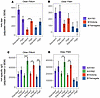 Figure 7
High-dose influenza vaccination improves A/H3N2-specific and B/Victoria-specific IgG responses of older people with and without HIV. Bar graphs depict estimated marginal means (EMMs) and standard errors of high-dose (“High”) versus standard-dose (“Standard”) influenza vaccine responses at 28 dpv. EMMs are from a mixed-effects model controlling for baseline (prevaccination) immune responses. (A and B) HAI titer against A/H1N1, B/Victoria (older PWoH, n = 40; older PWH, n = 30), and B/Yamagata (older PWoH, n = 32; older PWH, n = 26). (C and D) HA IgG specific to A/H1N1, A/H3N2, B/Victoria (older PWoH, n = 40; older PWH, n = 32) and B/Yamagata (older PWoH, n = 32; older PWH, n = 28). *P < 0.05; **P < 0.01; ***P < 0.001.
In an exploratory analysis, we considered the effects of vaccine dose on immune responses of the combined younger cohorts (young PWoH and young PWH), providing sufficient power (n = 24–27) to detect interseasonal differences. Similar to what was observed among the older groups, vaccine dose was not associated with differences in A/H1N1-specific responses among the younger cohort, whereas B/Victoria-specific IgG levels were improved after high-dose vaccination. In contrast, A/H3N2-specific IgG responses were not improved among younger participants after high-dose vaccination, as was observed among the older cohorts, and prevaccination A/H3N2-specific responses were generally higher among the young participants (Supplemental Figure 8).
High-dose influenza vaccination improves CD4+ T cell antigen-specific responses among older PWH. To examine cellular mechanisms underlying influenza vaccine responses in aging and HIV, we assessed CD4+ and CD8+ T cell immunity in 0 and 14 dpv samples in a subset of participants (n = 59) selected from the larger cohort based on matching of group, age, and sex characteristics (Table 3). Prior influenza vaccination frequency was similar across the participant groups selected for cell-based analyses. An activation-induced marker (AIM) assay using CD69/CD40L (CD4+) or CD69/CD137 (CD8+) was used to evaluate total memory CD4+, peripheral T follicular helper (pTfh), and CD8+ T cell responses (see Supplemental Figure 9 for gating strategy and representative flow cytometry plots), as previously described (28).
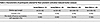 Table 3
Characteristics of participants selected for flow cytometric activation-induced marker analyses
Among older PWoH, the absolute change in B/Victoria-specific CD4+ T cell responses from 0 to 14 dpv (Δ14–0 dpv) correlated with serological responses (28/0 dpv fold-change) after both standard- and high-dose vaccination, whereas A/H1N1-specific CD4+ T cell responses correlated with serological responses only after high-dose vaccination. In contrast, no correlations were observed between CD4+ T cell AIM and antibody responses among older PWH after either vaccine dose (Figure 8). Correlations among younger participants were nonsignificant but generally limited by small sample sizes (n = 9–10 per group, Supplemental Figure 10).
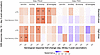 Figure 8
CD4+ T cell and pTfh AIM responses correlate with influenza seroprotection among older adults without, but not with, HIV. Heatmap showing Spearman’s correlations between AIM responses in peripheral T follicular helper (pTfh) cells and total memory CD4+ T cells, and serological vaccine responses in older PWoH (n = 20) and older PWH (n = 20). AIM responses were calculated as the media-adjusted, batched-normalized frequencies of CD69+CD40L+ cells at day 14 after vaccination relative to baseline (day 0). Serological responses were quantified as HAI titer or HA-specific IgG fold-change from day 0 to day 28, after standard- or high-dose influenza vaccination. *P < 0.05; **P < 0.01; unlabeled correlations are not significant.
From 0 to 14 days after standard-dose vaccination, A/H3N2- and B/Victoria-specific total memory CD4+ T cells increased in older PWoH but not older PWH (Figure 9). After high-dose vaccination, older PWH showed significant responses only to B/Victoria, and significant changes were no longer observed among older PWoH. CD4+ pTfh and CD8+ T cell AIM responses did not increase among older PWH or older PWoH after either dose (Supplemental Figures 11 and 12).
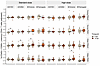 Figure 9
Memory CD4+ T cell antigen-induced marker responses after standard- and high-dose influenza vaccination. Media-adjusted, batch-normalized frequencies of CD40L+CD69+CD45RO+ memory CD4+ T cells are shown at 0 and 14 dpv. AIM responses were assessed in young PWoH (n = 9), young PWH (n = 10), older PWoH (n = 20), and older PWH (n = 20) after 12-hour stimulation of PBMCs with media or influenza antigens matched to the participants’ particular seasonal influenza vaccine strains. P values are from Wilcoxon signed-rank tests; *P < 0.05.
To evaluate the cellular-level benefit of the high-dose vaccine, we compared the absolute change in response (Δ14–0 dpv) between seasons. Among older PWH, high-dose vaccination elicited greater total memory CD4+ T cell responses to A/H1N1, A/H3N2, B/Victoria, and B/Yamagata antigens compared with standard-dose vaccination (Figure 10). Among older PWoH, high-dose total memory CD4+ T cell and pTfh responses were either unchanged or reduced (A/H1N1), and CD8+ T cell responses did not differ between the 2 vaccine doses in any group (Supplemental Figures 13 and 14).
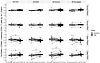 Figure 10
Change in memory CD4+ T cell antigen-induced marker responses after standard- versus high-dose influenza vaccination. Media-adjusted, batch-normalized frequencies of CD40L+CD69+ CD45RO+ memory CD4+ T cells were measured at 0 and 14 dpv (standard- and high-dose), and the change (Δ14–0 dpv) is plotted and compared between the 2 seasons. AIM responses were assessed in young PWoH (n = 9), young PWH (n = 10), older PWoH (n = 20), and older PWH (n = 20) after 12-hour stimulation of PBMCs with media or influenza antigens matched to the participants’ seasonal vaccine strain. P values are from Wilcoxon signed-rank tests; *P < 0.05.


-
Methods
Sex as a biological variable. Our study examined male and female younger and older people with and without HIV. Multivariate analyses evaluated and controlled for the effects of sex on influenza vaccine responses.
Setting and participants. The current study was conducted during the influenza seasons of 2020–2021, 2021–2022, 2022–2023, 2023–2024, and 2024–2025. Participants provided written informed consent and were recruited at the University of Miami clinics into the HIV and Aging study cohort (NCT04487041). Participants were grouped by age as young (≤40 years) and older (≥60 years) PWoH or PWH. All PWH were on ART with a plasma viral load of less than 40 copies/mL for at least 1 year prior to study entry. Median duration of ART was 6.5 and 20.0 years for the young PWH and older PWH groups, respectively. Participants receiving hormone therapy, steroids, or immunosuppressant medications or who had diagnoses of malignancies or other non-HIV immunodeficiency disorders were excluded from the study. Additional information on the study protocol and selection criteria can be found at the ClinicalTrials.gov website.
At study entry, each participant received a single intramuscular standard-dose quadrivalent influenza vaccine (QIV; 15 μg HA per strain). During the 2021–2022 through 2024–2025 seasons, all administered vaccines were egg-based (Fluzone, Sanofi Pasteur; see Table 4 for vaccine composition). In the 2020–2021 season, the vaccine platform varied because of reduced availability of egg-based vaccine during the COVID-19 pandemic: 12 participants received cell-based vaccine (Flucelvax, Seqirus), 14 received Fluzone, and for 5 participants the vaccine product could not be confirmed. Peripheral venous blood was collected at prevaccination and postvaccination time points, including 7, 14, 28, and 180 dpv. In the consecutive influenza vaccination season (approximately 1 year after standard-dose vaccination), a subset of participants returned to receive a single Fluzone high-dose QIV (60 μg of HA antigen per strain), and blood was collected at the same pre- and postvaccination time points. Participants vaccinated during the 2024–2025 influenza season received trivalent vaccine (no B/Yamagata component). Participant phlebotomy, serum separation, and isolation of PBMCs by density gradient centrifugation were performed on the same day and stored at −80 °C (serum) or in a cryogenic liquid nitrogen freezer (PBMCs) until further use.
Serologic responses to influenza vaccination. Serologic responses to season-specific influenza whole vaccine, A/H1N1, A/H3N2, B/Victoria, and B/Yamagata antigens were measured by HAI assay (28) and by an HA-specific influenza antibody detection multiplex Luminex assay on serum from each of the previously described standard- and high-dose time points. The HAI assay was performed over 2 days; first, the serum was incubated with receptor-destroying enzyme overnight, then 2-fold serial dilutions of 1:10 diluted serum were incubated with recombinant influenza antigens (Sino Biological) for 1 hour. After incubation, 1:100 diluted chicken RBCs were added to each serum titration for at least 2 hours before reading results. Given that A/H3N2 HA antigen from the most recent influenza seasons was unable to effectively agglutinate RBCs, A/H3N2-specific HAI data could only be collected during the 2020–2021 and 2021–2022 seasons. For the HA Luminex assay, 1:200-diluted serum was incubated with HA-coupled xMAP beads (DiaSorin) on a shaker overnight at 4°C. Bead coupling was performed by a 2-step carbodiimide conjugation as previously described (52). PE-conjugated anti-human IgG secondary antibodies were added to the serum-bead mixture and incubated on a shaker for 1 hour. MFI of PE was read on the Flex MAP instrument (Thermo Fisher Scientific) and averaged across technical duplicates as a relative quantitative readout of the antigen-specific IgG level.
Cellular responses to influenza vaccination. Among participants who provided 0 and 14 dpv PBMC samples during both the standard- and high-dose seasons, a subset of 59 participants was selected for analysis of T cell responses to vaccination. Samples were processed using a previously described combined AIM/intracellular cytokine staining assay (28). For the present study, analyses were restricted to the AIM component, identifying antigen-responsive total CD45RO+ memory and CD45RO+CXCR5+ pTfh CD4+ T cells expressing CD40L and CD69 and antigen-responsive CD8+ T cells expressing CD137 and CD69. Participants were selected from the 4 groups with matching based on sex (younger PWoH/PWH, n = 9–10; older PWoH/PWH, n = 20). Cellular responses were assessed in cryopreserved PBMCs, which were thawed and rested for 3 hours at 37°C w/5% CO2 in R10 media (Gibco RPMI 1640 + 10% FBS + 100 U/mL penicillin-streptomycin + 2 mM l-glutamine) prior to stimulation. After resting, PBMCs (1 million per condition) were incubated with 2 μg/mL influenza antigen (A/H1N1, A/H3N2, B/Victoria, B/Yamagata) matched to the participants’ seasonal influenza vaccine or media in the presence of 1 μg/mL anti-CD28 costimulation (BD Biosciences) for 12 hours at 37°C w/5% CO2, with the addition of 0.4 mg/mL brefeldin A (MilliporeSigma) after 3 hours to block cytokine secretion. After stimulation, cells were resuspended in PBS containing 50 μL/mL Human TruStain FcX Receptor Blocking solution (BioLegend) and 0.5 μL/mL Live/Dead Fixable blue (Thermo Fisher Scientific) for 15 minutes at 4°C. Surface staining was performed in 100 μL PBS with 0.5% FBS containing the following antibodies: CD45-BV570, CD3-BUV395, CD4-BUV805, CD8-BUV563, CD45RO-BV650, and CD69-BUV737 at optimally titrated concentrations for 30 minutes at room temperature (Supplemental Table 12). Cells were permeabilized with Cytofix/Cytoperm solution (BD Biosciences) and incubated with Perm Wash buffer containing CD40L-FITC and CD137-APC-Cy7 antibodies for 30 minutes at room temperature. Cells were fixed in 1% paraformaldehyde and acquired on the Aurora cytometer (Cytek Biosciences). Compensation and gating were performed using OMIQ software, and frequencies were normalized across batches (each batch containing PBMCs from 4 participants distributed across dose, time point, and stimulation conditions) using the ComBat function in R, including participant group, vaccine dose, and time point as covariates. For each batch, we included a gating control, which contained only CD45-BV570, CD3-BUV395, CD4-BUV805, CD8-BUV563, and CD45RO-BV650 without AIM antibodies. To account for nonspecific background, responses to media were subtracted from the corresponding antigen-stimulated values for each participant, matched by vaccine dose and time point, prior to batch normalization. Vaccine-induced AIM responses were defined as the absolute change (Δ) between 14 and 0 dpv (Δ14–0 dpv). See Supplemental Table 12 for information on all antibodies used.
Statistics. A minimal sample size criterion of n greater than 10/p (where p is the number of predictors) was used to ensure sufficient power for regression analysis of vaccine dose. Analysis of titer and HA antibody data was performed using 2-sided, nonparametric tests, as titer data were observed to follow a non-normal distribution in agreement with prior reports (53, 54). For comparisons between time point (e.g., 0 vs. 28 dpv) paired, Wilcoxon signed-rank testing was used. In the case of multiple comparisons, P values were adjusted using the Benjamini-Hochberg procedure for controlling the FDR. Correlation of cellular and serologic vaccine response data was performed using Spearman’s correlation testing. For categorical data (e.g., sex, race, and frequency of seroprotective titer levels), χ2 or Fisher’s exact testing were performed. The study employed a multivariate analysis approach to evaluate and control for the effects of age, HIV status, demographic variables, vaccination history, and baseline immunity on vaccine-induced immune responses when comparing groups with heterogenous composition. When comparing participants’ paired high-dose versus standard-dose vaccine responses at 28 dpv, regression models controlled for differences in the seasons’ baseline (prevaccination) HAI titer and HA-specific IgG levels. Ordinal regression models were used for HAI titers, and ordinary linear regression was applied to HA-specific IgG analyses. Group contrasts, including differences between age groups and HIV status, were assessed using marginal means estimation derived from the regression models. Statistical analyses and graphing were performed in R and in GraphPad Prism. Adjusted P values less than or equal to 0.05 were considered statistically significant.
Study approval. The study was approved by the IRB at the University of Miami (IRB 20200752). Written informed consent was provided by all participants prior to their enrollment in the study.
Data availability. Numerical data underlying figures are reported in the Supporting Data Values file. Analytic code and underlying data required to reproduce the multivariate analyses are publicly available (github.com/TH20255/High-Dose-vs-Standard-Dose-Influenza-Vaccine-Analysis-in-HIV.git) (commit ID: f52610e).


