
Research ArticleAIDS/HIVImmunologyInfectious disease
Open Access |  10.1172/jci.insight.199217
Modulation of pulmonary IL-21 expression during latent TB and M. tuberculosis/SIV coinfection
Vinay Shivanna,1 Renee D. Escalona,1 Colin Chuba,1 Shashi Prakash Singh,1 Ahmed A. Moustafa,2,3 J. Quincy Brown,4 Chenyao Xiao,2 Sangkyu Kim,2 Edward J. Dick Jr.,1 Smriti Mehra,1 Mirko Paiardini,5,6 and Riti Sharan1
1Southwest National Primate Research Center, Texas Biomedical Research Institute, San Antonio, Texas, USA.
2Department of Medicine, Tulane Center for Aging, Tulane University Health Science Center, New Orleans, Louisiana, USA.
3Department of Zoology and Entomology, Faculty of Science, Capitol University, Cairo, Egypt.
4Tulane School of Science & Engineering, Tulane Cancer Center, Tulane University School of Medicine, New Orleans, Louisiana, USA.
5Division of Microbiology & Immunology, Emory National Primate Research Center, and
6Department of Pathology and Laboratory Medicine, Emory University School of Medicine, Atlanta, Georgia, USA.
Address correspondence to: Riti Sharan, Southwest National Primate Research Center, Texas Biomedical Research Institute, 8715 W. Military Drive, San Antonio, Texas 78227, USA. Phone: 210.258.9161; Email: rsharan@txbiomed.org.
Find articles by
Shivanna, V.
in:
PubMed
|
Google Scholar
|

1Southwest National Primate Research Center, Texas Biomedical Research Institute, San Antonio, Texas, USA.
2Department of Medicine, Tulane Center for Aging, Tulane University Health Science Center, New Orleans, Louisiana, USA.
3Department of Zoology and Entomology, Faculty of Science, Capitol University, Cairo, Egypt.
4Tulane School of Science & Engineering, Tulane Cancer Center, Tulane University School of Medicine, New Orleans, Louisiana, USA.
5Division of Microbiology & Immunology, Emory National Primate Research Center, and
6Department of Pathology and Laboratory Medicine, Emory University School of Medicine, Atlanta, Georgia, USA.
Address correspondence to: Riti Sharan, Southwest National Primate Research Center, Texas Biomedical Research Institute, 8715 W. Military Drive, San Antonio, Texas 78227, USA. Phone: 210.258.9161; Email: rsharan@txbiomed.org.
Find articles by Escalona, R. in: PubMed | Google Scholar
1Southwest National Primate Research Center, Texas Biomedical Research Institute, San Antonio, Texas, USA.
2Department of Medicine, Tulane Center for Aging, Tulane University Health Science Center, New Orleans, Louisiana, USA.
3Department of Zoology and Entomology, Faculty of Science, Capitol University, Cairo, Egypt.
4Tulane School of Science & Engineering, Tulane Cancer Center, Tulane University School of Medicine, New Orleans, Louisiana, USA.
5Division of Microbiology & Immunology, Emory National Primate Research Center, and
6Department of Pathology and Laboratory Medicine, Emory University School of Medicine, Atlanta, Georgia, USA.
Address correspondence to: Riti Sharan, Southwest National Primate Research Center, Texas Biomedical Research Institute, 8715 W. Military Drive, San Antonio, Texas 78227, USA. Phone: 210.258.9161; Email: rsharan@txbiomed.org.
Find articles by Chuba, C. in: PubMed | Google Scholar
1Southwest National Primate Research Center, Texas Biomedical Research Institute, San Antonio, Texas, USA.
2Department of Medicine, Tulane Center for Aging, Tulane University Health Science Center, New Orleans, Louisiana, USA.
3Department of Zoology and Entomology, Faculty of Science, Capitol University, Cairo, Egypt.
4Tulane School of Science & Engineering, Tulane Cancer Center, Tulane University School of Medicine, New Orleans, Louisiana, USA.
5Division of Microbiology & Immunology, Emory National Primate Research Center, and
6Department of Pathology and Laboratory Medicine, Emory University School of Medicine, Atlanta, Georgia, USA.
Address correspondence to: Riti Sharan, Southwest National Primate Research Center, Texas Biomedical Research Institute, 8715 W. Military Drive, San Antonio, Texas 78227, USA. Phone: 210.258.9161; Email: rsharan@txbiomed.org.
Find articles by Singh, S. in: PubMed | Google Scholar
1Southwest National Primate Research Center, Texas Biomedical Research Institute, San Antonio, Texas, USA.
2Department of Medicine, Tulane Center for Aging, Tulane University Health Science Center, New Orleans, Louisiana, USA.
3Department of Zoology and Entomology, Faculty of Science, Capitol University, Cairo, Egypt.
4Tulane School of Science & Engineering, Tulane Cancer Center, Tulane University School of Medicine, New Orleans, Louisiana, USA.
5Division of Microbiology & Immunology, Emory National Primate Research Center, and
6Department of Pathology and Laboratory Medicine, Emory University School of Medicine, Atlanta, Georgia, USA.
Address correspondence to: Riti Sharan, Southwest National Primate Research Center, Texas Biomedical Research Institute, 8715 W. Military Drive, San Antonio, Texas 78227, USA. Phone: 210.258.9161; Email: rsharan@txbiomed.org.
Find articles by Moustafa, A. in: PubMed | Google Scholar
1Southwest National Primate Research Center, Texas Biomedical Research Institute, San Antonio, Texas, USA.
2Department of Medicine, Tulane Center for Aging, Tulane University Health Science Center, New Orleans, Louisiana, USA.
3Department of Zoology and Entomology, Faculty of Science, Capitol University, Cairo, Egypt.
4Tulane School of Science & Engineering, Tulane Cancer Center, Tulane University School of Medicine, New Orleans, Louisiana, USA.
5Division of Microbiology & Immunology, Emory National Primate Research Center, and
6Department of Pathology and Laboratory Medicine, Emory University School of Medicine, Atlanta, Georgia, USA.
Address correspondence to: Riti Sharan, Southwest National Primate Research Center, Texas Biomedical Research Institute, 8715 W. Military Drive, San Antonio, Texas 78227, USA. Phone: 210.258.9161; Email: rsharan@txbiomed.org.
Find articles by Brown, J. in: PubMed | Google Scholar
1Southwest National Primate Research Center, Texas Biomedical Research Institute, San Antonio, Texas, USA.
2Department of Medicine, Tulane Center for Aging, Tulane University Health Science Center, New Orleans, Louisiana, USA.
3Department of Zoology and Entomology, Faculty of Science, Capitol University, Cairo, Egypt.
4Tulane School of Science & Engineering, Tulane Cancer Center, Tulane University School of Medicine, New Orleans, Louisiana, USA.
5Division of Microbiology & Immunology, Emory National Primate Research Center, and
6Department of Pathology and Laboratory Medicine, Emory University School of Medicine, Atlanta, Georgia, USA.
Address correspondence to: Riti Sharan, Southwest National Primate Research Center, Texas Biomedical Research Institute, 8715 W. Military Drive, San Antonio, Texas 78227, USA. Phone: 210.258.9161; Email: rsharan@txbiomed.org.
Find articles by Xiao, C. in: PubMed | Google Scholar
1Southwest National Primate Research Center, Texas Biomedical Research Institute, San Antonio, Texas, USA.
2Department of Medicine, Tulane Center for Aging, Tulane University Health Science Center, New Orleans, Louisiana, USA.
3Department of Zoology and Entomology, Faculty of Science, Capitol University, Cairo, Egypt.
4Tulane School of Science & Engineering, Tulane Cancer Center, Tulane University School of Medicine, New Orleans, Louisiana, USA.
5Division of Microbiology & Immunology, Emory National Primate Research Center, and
6Department of Pathology and Laboratory Medicine, Emory University School of Medicine, Atlanta, Georgia, USA.
Address correspondence to: Riti Sharan, Southwest National Primate Research Center, Texas Biomedical Research Institute, 8715 W. Military Drive, San Antonio, Texas 78227, USA. Phone: 210.258.9161; Email: rsharan@txbiomed.org.
Find articles by Kim, S. in: PubMed | Google Scholar
1Southwest National Primate Research Center, Texas Biomedical Research Institute, San Antonio, Texas, USA.
2Department of Medicine, Tulane Center for Aging, Tulane University Health Science Center, New Orleans, Louisiana, USA.
3Department of Zoology and Entomology, Faculty of Science, Capitol University, Cairo, Egypt.
4Tulane School of Science & Engineering, Tulane Cancer Center, Tulane University School of Medicine, New Orleans, Louisiana, USA.
5Division of Microbiology & Immunology, Emory National Primate Research Center, and
6Department of Pathology and Laboratory Medicine, Emory University School of Medicine, Atlanta, Georgia, USA.
Address correspondence to: Riti Sharan, Southwest National Primate Research Center, Texas Biomedical Research Institute, 8715 W. Military Drive, San Antonio, Texas 78227, USA. Phone: 210.258.9161; Email: rsharan@txbiomed.org.
Find articles by
Dick, E.
in:
PubMed
|
Google Scholar
|
1Southwest National Primate Research Center, Texas Biomedical Research Institute, San Antonio, Texas, USA.
2Department of Medicine, Tulane Center for Aging, Tulane University Health Science Center, New Orleans, Louisiana, USA.
3Department of Zoology and Entomology, Faculty of Science, Capitol University, Cairo, Egypt.
4Tulane School of Science & Engineering, Tulane Cancer Center, Tulane University School of Medicine, New Orleans, Louisiana, USA.
5Division of Microbiology & Immunology, Emory National Primate Research Center, and
6Department of Pathology and Laboratory Medicine, Emory University School of Medicine, Atlanta, Georgia, USA.
Address correspondence to: Riti Sharan, Southwest National Primate Research Center, Texas Biomedical Research Institute, 8715 W. Military Drive, San Antonio, Texas 78227, USA. Phone: 210.258.9161; Email: rsharan@txbiomed.org.
Find articles by Mehra, S. in: PubMed | Google Scholar
1Southwest National Primate Research Center, Texas Biomedical Research Institute, San Antonio, Texas, USA.
2Department of Medicine, Tulane Center for Aging, Tulane University Health Science Center, New Orleans, Louisiana, USA.
3Department of Zoology and Entomology, Faculty of Science, Capitol University, Cairo, Egypt.
4Tulane School of Science & Engineering, Tulane Cancer Center, Tulane University School of Medicine, New Orleans, Louisiana, USA.
5Division of Microbiology & Immunology, Emory National Primate Research Center, and
6Department of Pathology and Laboratory Medicine, Emory University School of Medicine, Atlanta, Georgia, USA.
Address correspondence to: Riti Sharan, Southwest National Primate Research Center, Texas Biomedical Research Institute, 8715 W. Military Drive, San Antonio, Texas 78227, USA. Phone: 210.258.9161; Email: rsharan@txbiomed.org.
Find articles by Paiardini, M. in: PubMed | Google Scholar
1Southwest National Primate Research Center, Texas Biomedical Research Institute, San Antonio, Texas, USA.
2Department of Medicine, Tulane Center for Aging, Tulane University Health Science Center, New Orleans, Louisiana, USA.
3Department of Zoology and Entomology, Faculty of Science, Capitol University, Cairo, Egypt.
4Tulane School of Science & Engineering, Tulane Cancer Center, Tulane University School of Medicine, New Orleans, Louisiana, USA.
5Division of Microbiology & Immunology, Emory National Primate Research Center, and
6Department of Pathology and Laboratory Medicine, Emory University School of Medicine, Atlanta, Georgia, USA.
Address correspondence to: Riti Sharan, Southwest National Primate Research Center, Texas Biomedical Research Institute, 8715 W. Military Drive, San Antonio, Texas 78227, USA. Phone: 210.258.9161; Email: rsharan@txbiomed.org.
Find articles by Sharan, R. in: PubMed | Google Scholar
Published May 5, 2026 - More info
JCI Insight. 2026;11(12):e199217. https://doi.org/10.1172/jci.insight.199217.
© 2026 Shivanna et al. This work is licensed under the Creative Commons Attribution 4.0 International License. To view a copy of this license, visit http://creativecommons.org/licenses/by/4.0/.
Received: August 15, 2025; Accepted: April 30, 2026

Related video:
Pulmonary IL-21 expression is modulated during latent coinfection
In this episode, Riti Sharan explains that these results highlight a compartment-specific deficit in immune reconstitution and suggest that IL-21–associated pathways may warrant further investigation as potential targets for host-directed therapeutic strategies.

-
Results
Evaluation of clinical outcomes in LTBI and M. tuberculosis/SIV coinfected RMs treated with cART or cART+3HP. To report the effects of cART and cART+3HP (3HP = isoniazid+rifapentine) therapy on clinical and pathological outcome in RMs coinfected with M. tuberculosis/SIV, we utilized our previously published cohorts (11, 12, 23). Specifically, we measured CRP levels, changes in weight, and temperature across the following groups: LTBI (n = 4), cART-naive coinfected RMs (n = 8), cART-treated RMs (n = 4), and cART+3HP-treated RMs (n = 6), at predetermined time points (12) (Figure 1A). We reevaluated previously reported comparative clinical and pathological responses in the 4 study groups (11, 12, 23). Development of LTBI was confirmed by culturable bacilli in the bronchoalveolar lavage (BAL) sample (fewer than 1–2 Log10CFU) (11, 12), serum C-reactive protein (CRP) levels of ≤ 5 μg/mL and no more than 20% body weight loss or change in body temperature up to week 9 after infection (11, 12, 23). Body weight remained stable overall, with only modest (generally < 5%) and nonsignificant changes from baseline across treatment groups. CRP levels of RMs in the cART+3HP group were significantly lower compared with both cART-naive (P<0.0001) and cART-treated RMs (P<0.001) (Figure 1B). Furthermore, CRP levels in cART+3HP RMs were not significantly different from LTBI RMs (P = 0.44). While the cART naive group exhibited the most change in weight compared with baseline, it was not stastically significantly different from other study groups (Figure 1C). There was no marked change in body temperature (Figure 1D) across all study groups throughout the study period.
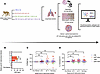 Figure 1
Clinical outcome in LTBI, cART naive, cART-, and cART+3HP–treated RMs. (A) Study design outlining the study groups and the downstream pipeline of staining of tissues and analysis. (B) Serum CRP levels were measured in LTBI (n = 4), cART naive (n = 8), cART (n = 4), and cART+3HP (n = 6) at preinfection, weeks 3, 9, 11, 13, 15,17, 19, 21, and 23 after M. tuberculosis infection. Nonparametric Mann-Whitney U test was used to compare 2 groups at individual time points. Dotted lines represent cART+3HP treatment (weeks 11–23 after M. tuberculosis infection). (C and D) Percentage change in body weight in kg and percentage temperature change in degrees fahrenheit and at preinfection, week 3, week 11, and necropsy in LTBI (n = 4), cART naive (n = 8), cART (n = 4), and cART+3HP (n = 6). Nonparametric Mann-Whitney U test was used to compare 2 groups at a single time point. **P < 0.01; ***P < 0.001. Data are presented as mean with SD. Made with BioRender.
We evaluated the effect of cART and cART+3HP on M. tuberculosis burden by plating the lung tissue (Supplemental Figure 1A; supplemental material available online with this article; https://doi.org/10.1172/jci.insight.199217DS1), lung granulomas (Supplemental Figure 1B), BAL (Supplemental Figure 1C), and spleen (Supplemental Figure 1D) on 7H11 agar plates (14, 15, 17, 20). These data have been reported in our previous publications and are leveraged here to provide clinical context (11, 12, 23). In the cART+3HP group, 5 of 6 RMs had no detectable bacterial load in the lungs at necropsy, compared with only 1 of 4 cART-treated RMs and 2 of 14 cART-naive RMs, with both comparisons yielding statistically significant differences (Supplemental Figure 1A). Notably, the bacterial burdens in the cART+3HP and LTBI (SIV-uninfected) group were comparable (P = 0.07), wherein 87.5% and 75% of lung samples were sterile, respectively (Supplemental Figure 1A). Additionally, all 6 RMs in the cART+3HP group had no detectable bacilli in lung granulomas (Supplemental Figure 1B), BAL (Supplemental Figure 1C), or spleen (Supplemental Figure 1D) at necropsy. Furthermore, bacterial burden was significantly lower in the cART+3HP RMs compared with cART-only RMs in both lung tissue (P = 0.01) and lung granulomas (P = 0.001). In summary, our previously published cohorts show that cART and cART+3HP therapies markedly improve clinical outcomes in RMs coinfected with M. tuberculosis/SIV. These findings also suggest that cART+3HP is more effective than standard cART therapy in reducing M. tuberculosis infection and inflammation (11, 23).
Differential lung pathology in M. tuberculosis/SIV coinfected RMs across treatment regimens. Pathological evaluation of lung tissue from LTBI, cART-naive, cART-treated, and cART+3HP RMs from our published cohorts (11, 23) revealed marked differences in gross pathology among the groups (Supplemental Figure 2). A low-dose M. tuberculosis infection resulted in minimal granuloma formation (Supplemental Figure 2A). Additionally, the LTBI group demonstrated markedly reduced pathology, including (a) less pronounced signs of edema, (b) pneumonia, and (c) localized inflammatory foci (Supplemental Figure 2A, indicated by black arrows). In contrast, the cART-naive group displayed distinct pathological features consistent with SIV-induced lung disease, which were more severe than those observed in the LTBI group (Supplemental Figure 2B, indicated by black arrows). These lesions included interstitial pneumonia, marked by inflammation and thickening of the alveolar septa, resulting in impaired pulmonary function. The RMs in the cART-treated group exhibited rare, small granulomas indicating resolution of SIV-driven inflammation (Supplemental Figure 2C, indicated by black arrows). These findings suggest that cART treatment had a stabilizing effect on the disease progression and was effective in controlling the associated pathological lung damage. The RMs in cART+3HP group harbored small, scattered, nonnecrotizing granulomas in the lung lobes (Supplemental Figure 2D, indicated by black arrows). Additionally, rare small aggregates of lymphocytes and macrophages were observed in certain lung sections, suggesting a mild inflammatory response. Overall, the lungs of the cART+3HP-treated RMs exhibited fewer lesions, suggesting that cART+3HP effectively mitigated the severity of pulmonary pathology compared with untreated or less intensively treated groups.
The findings were supported by quantifying the extent of lung involvement across the 4 groups (Supplemental Figure 2E). In the LTBI group, lung involvement was minimal, averaging only 4%–5% of the total lung tissue, consistent with the typically asymptomatic nature of LTBI and effective immune control of bacterial replication. In contrast, lung involvement was significantly greater in the cART-naive group compared with LTBI animals (P = 0.03). While cART-treated RMs showed a reduction in lung involvement relative to the cART-naive group, this difference was not statistically significant. Notably, RMs receiving combined cART and 3HP treatment exhibited significantly less lung involvement compared with both the cART-treated (P = 0.002) and cART-naive groups (P = 0.01). Notably, the combination of cART with 3HP provided the greatest protection, substantially reducing lung involvement and preserving pulmonary architecture to a degree comparable with LTBI alone.
Impaired IL-21+CD4+ T cell recovery in lung tissue highlights immune dysregulation during M. tuberculosis/SIV coinfection. We used multiplex chromogenic staining with rhesus-specific antibodies according to the workflow provided in Figure 2 to evaluate IL-21 biology in RM FFPE lung sections of LTBI (n = 3) (Figure 3A and Supplemental Figure 3), cART naive (n = 3) (Figure 3B and Supplemental Figure 4), cART (n = 3) (Figure 3C and Supplemental Figure 5), and cART+3HP-treated RMs (n = 3) (Figure 3D and Supplemental Figure 6). We used n = 3 animals per group, randomly selected from a larger cohort, to evaluate cell counts (Figure 3E) and frequency (Figure 3F) of CD4+ T cells producing IL-21. This sample size provides sufficient biological replicates (granulomas) to capture key trends. We propose that each granuloma should be considered an independent biological entity, forming organically and independently of others within the same host. The number of cells positive for either CD4, IL-21, or both CD4 and IL-21 were quantified. While we observe differences in total cell counts between groups, these differences were not statistically significant (Figure 3, A–E). This is likely influenced by the limited sample size (n = 3 animals per group) and interanimal variability in cellular responses between study macaques. As shown in the data, individual animals within the same group can exhibit variable total cellularity, which reduces statistical power. To further contextualize these findings, we compared total cell counts from each experimental group to baseline (normal lung tissue) (Supplemental Figure 7A). This comparison demonstrates that, relative to baseline lung tissue, there is evidence of increased cellularity across disease groups, even though differences between experimental groups at necropsy are not statistically significant. Notably, while anti-TB treatment does not restore CD4+IL-21+ T cell frequencies in lung tissue of M. tuberculosis/SIV coinfected animals to levels observed in LTBI, systemic IL-21 levels are reconstituted to levels comparable to LTBI following treatment (Supplemental Figure 7B). Together, these findings indicate that IL-21 dysregulation in M. tuberculosis/SIV coinfection is predominantly lung specific and persists locally despite systemic immune reconstitution.
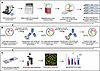 Figure 2
Schematic representing the chromogenic staining workflow. (A) Tissue sections were prepared at a standard thickness, mounted on slides, and allowed to dry. Slides were then processed using an automated staining system for the detection of multiple protein markers. The protocol included deparaffinization, antigen retrieval, and blocking of endogenous enzymes. (B) Each target protein was detected sequentially. For each marker, the slides were incubated with a primary antibody, followed by detection using a secondary system, and visualized with a chromogenic substrate. Between each marker, a denaturation step was performed to prepare the tissue for subsequent staining. (C) After the final staining step, the slides were counterstained to highlight tissue morphology, then prepared for analysis. Made with BioRender.
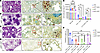 Figure 3
Assessment of IL-21–producing lung CD4+ T cells in M. tuberculosis/SIV coinfected macaques with and without treatment. (A–D) Formalin-fixed, paraffin-embedded (FFPE) lung sections from rhesus macaques in 4 experimental groups: LTBI (n = 3), cART-naive (n = 3), cART-treated (n = 3), and cART+3HP-treated (n = 3) were stained using a multiplex chromogenic protocol. CD4+ T cells (red) and IL-21+ cells (yellow) were identified, along with double-positive populations: CD4+IL-21+ cells (orange; indicated by black arrows). Cell quantification was performed using HALO 4.0 image analysis software (Indica Labs), enabling accurate identification and enumeration of single- and double-positive cells. Scale bars, left and center: 500 μm; scale bars, right: 50 μm. (E) Cell density (cells/μm² of lung tissue) for total cells, CD4+ T cells, and CD4+IL-21+ T cells. (F) Cell frequency (% cells/μm² of lung tissue) for CD4+ T cells and CD4+IL-21+ T cells. Significance was determined using multiple 2-tailed t tests using Holm-Sidak method. *P < 0.05; **P < 0.01; ***P < 0.001. Data are presented as mean ± SEM. Made with BioRender.
A marked difference in CD4+ T cell counts was observed in the lungs across the 4 groups. Compared with the LTBI group (Figure 3, A and E), RMs in the cART-naive (Figure 3B) (P = 0.03), cART (Figure 3C) (P = 0.04), and cART+3HP groups (P = 0.04) (Figure 3D) exhibited significantly lower numbers of CD4+ T cells. These findings are consistent with our previous flow cytometry data, which shows that SIV coinfection in LTBI RMs leads to substantial depletion of CD4+ T cells in both BAL and lung tissues (12). Notably, treatment with cART alone or in combination with 3HP resulted in partial restoration of these cells, though levels remained below those seen in LTBI animals (12, 23). The significant reduction of IL-21+CD4+ T cells in the cART-naive (Figure 3B) (P = 0.002), cART (Figure 3C) (P = 0.03), and cART+3HP groups (P = 0.03) (Figure 3D) versus the LTBI group (Figure 3, A and E) aligns with reports of lower IL-21 in TB patients (25) and SIV-infected RMs (22), highlighting the potential role of IL-21 in M. tuberculosis and SIV immunity and disease progression. Animals with LTBI exhibit readily detectable frequencies of IL-21+CD4+ T cells in the lung (approximately ~6%–7% of CD4+ T cells). Following SIV coinfection, the frequency of IL-21+CD4+ T cells is markedly reduced (to ~0.2%–0.5%), representing a disproportionate decline relative to the reduction in total CD4+ T cell frequencies (Figure 3F). Notably, despite partial recovery of overall CD4+ T cells with cART, IL-21+CD4+ T cell frequencies remain low and are not restored to LTBI levels, indicating selective and persistent impairment of this subset. We normalized IL-21 expression to CD4+ T cells by calculating the IL-21+CD4+/CD4+ ratio for each animal. Using this approach, LTBI animals exhibited IL-21/CD4 ratios of 0.20–0.38 (mean, 0.28), whereas cART-naive animals showed markedly reduced ratios of 0.05–0.16 (mean, 0.10), indicating impaired IL-21 expression on a per-CD4+ cell basis. Animals receiving cART alone exhibited intermediate ratios (0.12–0.19; mean, 0.14) that remained below LTBI levels while cART+3HP animals demonstrated partial restoration of the IL-21/CD4 ratio (0.15–0.28; mean, 0.23). Notably, despite partial or complete systemic reconstitution of IL-21/CD4 ratios following treatment, lung CD4+IL-21+ T cell frequencies were not restored to LTBI levels. Together, these data indicate that IL-21 dysregulation in M. tuberculosis/SIV coinfection is not solely attributable to numerical CD4+ T cell loss but reflects a qualitative, lung-localized defect in IL-21 expression that persists despite systemic immune reconstitution.
To determine whether this effect reflects global CD4+ T cell dysfunction or subset-specific dysregulation, we examined additional CD4+ effector populations (Supplemental Figure 8). IFN-γ+CD4+ T cell responses increased from ~0%–0.5% preinfection to ~1.5%–3% during LTBI and SIV infection, with partial maintenance or recovery following cART. Similarly, TNF-α+CD4+ T cells were present at ~1.5%–3.5% during LTBI and SIV coinfection and, although reduced with cART, remained detectable (~0.5%–1.5%). IL-17+CD4+ T cells showed more modest changes, with frequencies generally remaining below ~1% across groups. In contrast, IL-21–producing CD4+ T cells showed a greater magnitude of loss and failed to recover with cART, despite relative preservation of other effector CD4+ T cell subsets. To further determine whether pulmonary CD4+ T cells exhibit characteristics consistent with tissue retention, we quantified expression of markers CD103 (Supplemental Figure 9, A–D and I) and CD69 (Supplemental Figure 9, E–H and J). Across groups, a distinct subset (~20%–35%) coexpressed CD103 (Supplemental Figure 9, A–D and I). A proportion of lung CD4+ T cells expressed CD69 (Supplemental Figure 9, E–H and J), comprising approximately 55%–70% of total CD4+ T cells, with the highest frequencies observed in LTBI animals (Supplemental Figure 9, E and J). Although overall CD4+ T cell numbers were reduced in M. tuberculosis/SIV-coinfected macaques (Supplemental Figure 9, I and J), the relative frequency of CD4+CD69+ and CD4+CD103+ T cells within the lung parenchyma and granulomatous regions remains detectable. Notably, cART or cART+3HP did not change the proportion of CD103+ T cells (Supplemental Figure 9I) but partially restored the CD69+ subset compared with untreated M. tuberculosis/SIV animals (Supplemental Figure 9J).
A linear regression analysis was conducted to evaluate the relationship between the frequency of IL-21+CD4+ T cells and lung bacterial burden (Supplemental Figure 10A) and percentage lung pathology (Supplemental Figure 10B) in cART naive macaques. The variable, Log10 IL-21+CD4+ T cells, was found to be a critical predictor of lung burden. The regression model was statistically significant, P = 0.025, indicating that variation in IL-21+CD4+ T cell levels explains variability in lung bacterial load. To determine whether the observed association was specific to IL-21+CD4+ T cells or simply reflected global CD4+ T cell depletion, we performed additional linear regression analyses examining total CD4+ T cell frequencies in relation to lung bacterial burden and lung pathology. Notably, total CD4+ T cell counts did not correlate with either lung bacterial burden (Supplemental Figure 11A) or percent lung pathology (Supplemental Figure 11B). These data support the interpretation that IL-21 expression represents a qualitative functional deficit rather than simply a quantitative reduction in CD4+ T cell numbers. Future studies with larger cohorts and broader subset-specific quantification will allow more comprehensive comparative analyses. Overall, treatment of M. tuberculosis/SIV coinfected RMs with cART alone or concurrent cART+3HP treatment, is insufficient in restoring IL-21 levels in the lung.
Differential IL-21 expression by CD4+ T cells in granulomatous versus nongranulomatous lung tissue. We further investigated IL-21 production by CD4+ T cells in granuloma-associated regions of lung tissue of M. tuberculosis/SIV coinfected, cART naive RMs (KG40, KR44, JF47) compared with nongranulomatous areas (Supplemental Figure 12, A and B). While the role of Th1-associated cytokines in granuloma formation, especially in LTBI, is well documented (25, 26), the contribution of the Th17 cytokine, IL-21, to granuloma dynamics in TB and TB/HIV coinfection remains unclear. Our use of a NHP model, combined with multiplex chromogenic staining and HALO quantification, provides an ideal framework for examining IL-21 production in lungs of M. tuberculosis/SIV coinfected RMs. A higher percentage of CD4+IL-21+ T cells (except in KG40) (Supplemental Figure 12C) associated with nongranulomatous regions in all M. tuberculosis/SIV coinfected RMs. Analysis of individual animals in the cART-naive group demonstrates that CD4+IL-21+ T cells are present in both granulomatous and nongranulomatous lung regions, indicating that these cells can access granulomatous tissue (Supplemental Figure 12C). However, there is a consistent intraanimal trend toward higher frequencies of CD4+IL-21+ T cells in nongranulomatous regions. This pattern suggests that, while IL-21–producing CD4+ T cells are not excluded from granulomas, they may preferentially be retained in less organized inflammatory environments. Nongranulomatous regions may provide a microenvironment more permissive for sustained IL-21 expression, whereas granulomas characterized by dense macrophage cores, hypoxia, and high local inflammatory pressure may limit either the differentiation or persistence of IL-21–producing CD4+ T cells. In Supplemental Figure 12D, this trend reaches statistical significance in select treatment groups but not others, likely reflecting lesion heterogeneity and interanimal variability. Accordingly, we interpret these data as supporting a model in which CD4+IL-21+ T cells contribute to immune regulation in the lung primarily outside mature granulomas, while still being capable of entering granulomatous regions.
Recovery of colonic CD4+ and IL-21+CD4+ T cells following cART or cART+3HP in M. tuberculosis/SIV coinfection. HIV infection causes a marked depletion of both the absolute number and percentage of CD4+ T cells, particularly in the gut, during the acute phase of infection. Limited access to human colon tissue samples has created substantial gaps in our understanding of CD4+ T cell dynamics during M. tuberculosis/HIV coinfection. Evaluating IL-21+CD4+ T cell recovery in the colon of RMs complements our lung findings by determining whether treatment restores this functionally important subset across distinct mucosal sites.
To this end, we quantified the total number of CD4+ T and CD4+ IL-21+ T cells in the colon sections from 3 groups of M. tuberculosis/SIV-coinfected RMs using chromogenic staining: cART naive (Figure 4A), cART (Figure 4B), and cART+3HP treated (Figure 4C). The primary objective was to evaluate the effect of treatment on reconstitution of total CD4+ T cells and their subset producing IL-21, compared with untreated cART naive RMs. There was no significant difference in total cells in the 3 study groups (cART naive, cART-treated, and cART+3HP-treated) (Figure 4D). Expectedly, cART-treated (P = 0.001) and cART+3HP-treated (P = 0.001) RMs showed significantly higher total CD4+ T cell count in the colon compared with cART naive RMs (Figure 4D). Both treatment regimens reconstituted CD4+ T cells to similar levels with no significant difference between these 2 groups (P = 0.07). A significantly higher number of CD4+ IL-21+ T cells was seen in cART+3HP-treated RMs compared with cART naive RMs (P = 0.02) (Figure 4D). Overall, initiating cART or cART+3HP early in coinfection enabled reconstitution of CD4+ T cells and their subset, producing IL-21 in colon compared with untreated RMs. However, whether this reconstitution is long -term, functional, and metabolically active remains to be studied.
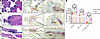 Figure 4
Chromogenic staining and quantification of CD4+ T cells and CD4+IL-21+ T cells in colon tissue. (A–C) Representative images of colon sections from cART naive (n = 3), cART (n = 3), and cART+3HP (n = 3) stained for CD4+ T cells and dual-positive CD4+IL-21+ T cells (marked with black arrows) using chromogenic IHC. (D) Quantification of total cells, CD4+ T cells, and CD4+IL-21+ T cells, represented as the number of positive cells per μm² of colon tissue. Data are presented as mean ± SEM. Significance was determined using multiple 2-tailed t tests using Holm-Sidak method. *P < 0.05; **P < 0.01. Data are presented as mean ± SEM. Made with BioRender. Scale bars, left and center: 500 μm; scale bars, right: 100 μm.
Mapping the spatial immune landscape of lung tissue in M. tuberculosis/SIV coinfection. We examined IL-21, CD4, CD56, Th1-, and Th17-associated gene expression patterns within the context of tissue architecture. To this end, we performed Xenium spatial transcriptomics (Supplemental Figure 13) on lung tissue section from RM in LTBI, cART naive, cART-treated, and cART+3HP-treated groups (Supplemental Table 1). We selected the region for analysis in Xenium based on quality control metrics provided in the Xenium Analysis Summary, ensuring optimal data integrity and signal quality (Supplemental Figure 14). The overlaid H&E and Xenium images from RM in LTBI (Figure 5A), cART naive (Figure 5B), cART (Figure 5C), and cART+3HP (Figure 5D) were used to visually identify and annotate key anatomical and pathological features within the lung tissue. Granulomas were identified as dense, rounded immune cell aggregates with defined borders, often corresponding to transcriptionally active clusters in Xenium. Necrotic zones within granulomas appeared as central pale or acellular regions in H&E, often surrounded by a dense rim of immune cells, suggesting immune-mediated tissue damage; these zones often showed reduced transcript density in Xenium. Immune cell-rich areas were characterized by dense nuclei in H&E and high expression of immune markers in Xenium, typically forming clusters suggestive of localized immune responses.
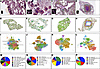 Figure 5
Spatial transcriptomic profiling of lung tissue from RMs across LTBI and HIV treatment conditions using Xenium. Xenium transcriptomics was performed on lung tissue sections from RM from (LTBI), cART-naive, cART-treated, and cART+3HP-treated groups. (A–D) Representative region of lung tissue from RM in LTBI (n = 1, 2 regions) (A), cART naive (n = 1, 2 regions) (B), cART (n = 1, 3 regions) (C), and cART+3HP (n = 1, 4 regions) (D) showing H&E staining overlaid with spatial transcriptomic data acquired using the Xenium platform. H&E staining provides morphological context, with nuclei stained in blue/purple (hematoxylin) and cytoplasm/extracellular matrix in pink (eosin). Xenium signals represent the spatial distribution of custom panel genes, shown as colored spots overlaid on the histological image. Scale bar: 2,000 μm. (E–H) Dim plots showing transcriptional profiles of ROIs derived from spatial transcriptomic analysis of lung tissues in LTBI (n = 1, 2 regions) (E), cART-naive (n = 1, 2 regions) (F), cART (n = 1, 3 regions) (G), and cART+3HP (n = 1, 4 regions) (H) RM. Each point represents a spatially defined ROI, with color coding indicating group identity or unsupervised clustering based on transcriptomic similarity. Plots illustrate distinct transcriptional landscapes associated with disease state and treatment regimen. (I–L) Uniform Manifold Approximation and Projection (UMAP) plot displaying transcriptionally distinct cell clusters derived from spatial transcriptomic profiling of lung tissue from LTBI (n = 1, 2 regions) (I), cART-naive (n = 1, 2 regions) (J), cART (n = 1, 3 regions) (K), and cART+3HP (n = 1, 4 regions) (L) RM. Each point represents an individual cell or transcriptomic feature, colored by cluster identity. Clusters were identified through unsupervised clustering and annotated based on expression of canonical marker genes. (M–P)Parts-of-whole graph illustrating the relative abundance of transcriptionally defined cell clusters identified in lung tissue from LTBI (n = 1, 2 regions) (M), cART-naive (n = 1, 2 regions) (N), cART (n = 1, 3 regions) (O), and cART+3HP (n = 1, 4 regions) (P) RM using Xenium analysis. Each segment represents a distinct cell cluster, with size corresponding to the number of cells within that cluster. Made with BioRender.
Xenium spatial transcriptomic data from all regions were imported into Seurat for visualization and downstream analysis using unsupervised clustering. K-means clustering results (K = 10) from the original Xenium output were added to the Seurat object as metadata. After preprocessing using Seurat SCTransform workflow, to determine cell type identities, cluster-specific marker genes were extracted using the FindAllMarkers function with the following parameters (min.pct = 0.1, logfc.threshold = 0.1). The resulting marker gene lists were compared against known reference markers (Supplemental Table 2) to assign cell type annotations for each cluster. A custom 176-plex Xenium gene panel exhibited high sensitivity and specificity for IL-21, CD4, NCAM1, Th1-, and Th17-associated gene expression patterns. The granuloma-associated regions were chosen in the LTBI (Figure 5E), cART naive (Figure 5F), cART (Figure 5G), and cART+3HP (Figure 5H) to map gene expression. Uniform Manifold Approximation and Projection (UMAP) clustering was performed to identify and visualize cell clusters in regions of interest (ROI) in the lung tissue section from RM in LTBI (Figure 5I), cART naive (Figure 5J), cART (Figure 5K), and cART+3HP (Figure 5L) groups based on their gene expression. Overall, the common cell subsets detected in each ROI include monocytes, macrophages, CD4+ T cells, CD8+ T cells, B cells, and NK cells (Figure 5, M–P). In addition to the expected subsets, ROI from lung tissue section of the LTBI RM exhibited inflammatory monocytes and Type I IFN-responsive macrophages (Figure 5M). Coinfection with SIV led to a pronounced presence of Th17 CD4+ T cells and proinflammatory macrophages (Figure 5N). Treatment with cART elevated the Th17-like response in CD8+ T cells but exhibited continued expression of markers associated with viral infection (S100A9, IL1R1, TMPRSS2, ICAM1) (Figure 5O). cART+3HP-treated RMs showed presence of mast cells and myeloid dendritic cells that were not seen in other groups pointing to a potential role of inflammatory response to enable bacterial clearance (Figure 5P). In our spatial transcriptomics analysis (Figure 5O), inflammatory monocytes were not detected above threshold levels in lung sections from animals receiving cART. We interpret this finding as biologically meaningful and consistent with reduced pulmonary inflammation following effective antiviral therapy. Importantly, spatial transcriptomics detects cell populations based on their transcriptional signatures within the sampled regions; therefore, the absence of a detectable inflammatory monocyte cluster likely reflects their low abundance or absence in these treated lungs.
We quantified transcript counts of CD4, IL-21, NCAM1, STAT1 (Th1-associated), and STAT3 (Th17-associated) within the same ROI in lung tissue sections used for cluster annotation. In lung tissue from the LTBI RM, CD4, IL-21, and NCAM1 transcripts displayed a uniform spatial distribution (Figure 6, A and E), accompanied by a balanced expression of STAT1 and STAT3 and moderate transcript counts of CD4, IL-21, and NCAM1, suggesting a mixed Th1/Th17 immune profile. In contrast, the cART-naive RM exhibited elevated STAT3 transcript counts and reduced CD4, IL-21, NCAM1, and STAT1 counts compared with LTBI (Figure 6, B and E), consistent with previous cluster analyses (Figure 5N). The cART-treated RM showed reduced transcript counts of CD4, STAT1, IL-21, and NCAM1 compared with LTBI, though the spatial distribution remained similar (Figure 6, C and E). Notably, the cART+3HP group demonstrated the lowest STAT3 transcript counts among all groups (Figure 6, D and E), while STAT1 levels were comparable with LTBI. However, despite concurrent viral and bacterial treatment, Th1-associated transcripts in cART+3HP remained lower than in LTBI (Figure 6, D and E). Overall, these findings suggest an imbalanced Th17/Th1 response in cART-naive macaques, characterized by elevated STAT3 and diminished Th1-associated gene expression, a dysregulation not fully corrected by cART alone. While cART+3HP appears more effective in mitigating Th17 dominance and partially restoring immune balance, Th1 transcript counts, particularly IL-21, remain lower than those in LTBI animals, indicating persistent IL-21 dysregulation in the lung microenvironment despite treatment.
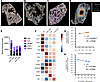 Figure 6
Quantification of Th1 and Th17 response associated transcript counts in lung tissue. (A–D) Representative dimensionality reduction (dim) plots from Xenium spatial transcriptomics show the spatial distribution and expression intensity of CD4, IL21, and NCAM1 transcripts within selected ROIs from LTBI (n = 1, 2 regions) (A), cART naive (n = 1, 2 regions) (B), cART (n = 1, 3 regions) (C), and cART+3HP (n = 1, 4 regions) (D) RM. Each point represents a detected transcript, with color intensity reflecting relative abundance. (E) Stacked bar plots show the total transcript counts for CD4, IL21, NCAM1, STAT1, and STAT3 within defined regions of interest (ROIs) in lung tissue sections from RMs across 4 experimental groups. Data were obtained from Xenium spatial transcriptomics analysis, with transcript abundance reflecting localized gene expression in the lung microenvironment. Comparisons across groups highlight changes in immune cell presence (CD4, NCAM1), cytokine signaling (IL21), and transcriptional regulation (STAT1, STAT3) in response to M. tuberculosis/SIV infection and treatment. (F) Log2 fold change of Th1 associated genes (IL-21, STAT1, TBX21, CD4, IFNG), Th17 associated genes (STAT3, IRF4, JAK1), viral infection associated genes (S100A9, TMPRSS2, ICAM1), and IFN response associated genes (IFNAR1, IRF1) in LTBI (n = 1, 2 regions), cART naive (n = 1, 2 regions), cART (n = 1, 3 regions), and cART+3HP (n = 1, 4 regions) RM. (G and H) Linear regression analysis of IL-21+CD4+ T cell count vs IFNγ+CD4+ T cell count in response to ESAT-6/CFP-10 in lung tissue (n = 3) in cART-treated RMs (G) and in LTBI RMs (n = 3) (H). Statistical significance was assessed by calculating the P value for the slope coefficient in a linear regression model, with significance defined as P < 0.05, using R version 4.2.2. Made with BioRender.
Xenium-based analysis of differential gene expression in CD4+ T cell clusters from lung tissues of RM from LTBI, cART-naive, cART-treated, and cART+3HP-treated groups revealed distinct transcriptional profiles associated with disease and treatment status (Figure 6F). LTBI RM exhibited higher expression of IL21 and Th1-associated genes, including STAT1, TBX21, CD4, and IFNG, compared with all SIV-infected groups (Figure 6F). In contrast, cART-naive RM showed elevated expression of Th17-associated genes (STAT3 and IRF4) relative to LTBI, cART, and cART+3HP groups (Figure 6F). Notably, STAT3 transcripts in cART-naive animals were predominantly localized around granulomatous regions, suggesting spatial enrichment of Th17-type responses in areas of active inflammation. Furthermore, cART-naive RM exhibited higher expression of genes associated with viral infection and inflammation, including S100A9, TMPRSS2, and ICAM1, compared with cART+3HP-treated animals (Figure 6F). Elevated expression of these viral-associated genes was also observed in cART-treated RMs (Figure 6F), indicating persistence of viral transcriptional activity in the lung despite reduced viral titers (12). To assess whether IL-21+CD4+ T cells contribute to M. tuberculosis–specific effector responses, a linear regression analysis was performed to examine whether the frequency of IL-21+CD4+ T cells in the lungs predicts the frequency of M. tuberculosis–specific IFN-γ+CD4+ T cells in cART-treated RM (Figure 6G), LTBI RM (Figure 6H), cART naive (Supplemental Figure 15A), and cART+3HP-treated RM (Supplemental Figure 15B), following ex vivo stimulation of lung cells with ESAT-6/CFP-10 (E/C). The analysis revealed that IL-21+CD4+ T cell counts were a predictor of IFN-γ+CD4+ T cell responses in LTBI (P = 0.02) and cART-treated RM (P = 0.006). This indicates a statistically significant linear relationship between the 2 cell populations, suggesting that IL-21+CD4+ T cells may play a key role in supporting or correlating with M. tuberculosis–specific IFN-γ responses in the lung during antiretroviral therapy. There was no significant relationship between frequency of IL-21+CD4+ T cells in the lungs and M. tuberculosis–specific IFN-γ+CD4+ T cells in cART naive (P = 0.43) or cART+3HP-treated RM (P = 0.52). Together, these results demonstrate that, in M. tuberculosis+SIV coinfected animals that were cART-naive or treated with cART+3HP, there was no linear association between IL-21+CD4+ T cells and M. tuberculosis–specific IFN-γ+CD4+ T cells, indicating that IL-21–producing CD4+ T cells do not quantitatively track with Th1 effector function in these settings.


