
Research ArticleGastroenterologyImmunologyOncology
Open Access |  10.1172/jci.insight.198489
Antibody subclass deficiency accelerates tumorigenesis in genetically engineered mouse models of pancreatic cancer
Jeremy B. Foote,1 Sujith Sarvesh,2 Sameer Al Diffalha,3 David K. Crossman,4 Changde Cheng,2,5,6 Myung-Hee Kim,1 Cherlene Hardy,1 Julienne L. Carstens,2 Kyoko Kojima,1 Bart J. Rose,7 and Christopher A. Klug1,3,4
1Department of Microbiology,
2Division of Hematology and Oncology, School of Medicine,
3Department of Pathology,
4Department of Genetics,
5Department of Biomedical Informatics and Data Science,
6Institute for Cancer Outcomes and Survivorship, and
7Department of Surgery, University of Alabama at Birmingham, Birmingham, Alabama, USA.
Address correspondence to: Jeremy Foote, Department of Microbiology and Animal Resources Program, Director of Comparative Pathology Lab, University of Alabama at Birmingham, Research Support Building, Room 250G, 1800 9th Ave. South, Birmingham, Alabama, 35294, USA. Phone: 205.975.0688; Email: jbf130@uab.edu.
Find articles by
Foote, J.
in:
PubMed
|
Google Scholar
|

1Department of Microbiology,
2Division of Hematology and Oncology, School of Medicine,
3Department of Pathology,
4Department of Genetics,
5Department of Biomedical Informatics and Data Science,
6Institute for Cancer Outcomes and Survivorship, and
7Department of Surgery, University of Alabama at Birmingham, Birmingham, Alabama, USA.
Address correspondence to: Jeremy Foote, Department of Microbiology and Animal Resources Program, Director of Comparative Pathology Lab, University of Alabama at Birmingham, Research Support Building, Room 250G, 1800 9th Ave. South, Birmingham, Alabama, 35294, USA. Phone: 205.975.0688; Email: jbf130@uab.edu.
Find articles by Sarvesh, S. in: PubMed | Google Scholar
1Department of Microbiology,
2Division of Hematology and Oncology, School of Medicine,
3Department of Pathology,
4Department of Genetics,
5Department of Biomedical Informatics and Data Science,
6Institute for Cancer Outcomes and Survivorship, and
7Department of Surgery, University of Alabama at Birmingham, Birmingham, Alabama, USA.
Address correspondence to: Jeremy Foote, Department of Microbiology and Animal Resources Program, Director of Comparative Pathology Lab, University of Alabama at Birmingham, Research Support Building, Room 250G, 1800 9th Ave. South, Birmingham, Alabama, 35294, USA. Phone: 205.975.0688; Email: jbf130@uab.edu.
Find articles by Al Diffalha, S. in: PubMed | Google Scholar
1Department of Microbiology,
2Division of Hematology and Oncology, School of Medicine,
3Department of Pathology,
4Department of Genetics,
5Department of Biomedical Informatics and Data Science,
6Institute for Cancer Outcomes and Survivorship, and
7Department of Surgery, University of Alabama at Birmingham, Birmingham, Alabama, USA.
Address correspondence to: Jeremy Foote, Department of Microbiology and Animal Resources Program, Director of Comparative Pathology Lab, University of Alabama at Birmingham, Research Support Building, Room 250G, 1800 9th Ave. South, Birmingham, Alabama, 35294, USA. Phone: 205.975.0688; Email: jbf130@uab.edu.
Find articles by
Crossman, D.
in:
PubMed
|
Google Scholar
|
1Department of Microbiology,
2Division of Hematology and Oncology, School of Medicine,
3Department of Pathology,
4Department of Genetics,
5Department of Biomedical Informatics and Data Science,
6Institute for Cancer Outcomes and Survivorship, and
7Department of Surgery, University of Alabama at Birmingham, Birmingham, Alabama, USA.
Address correspondence to: Jeremy Foote, Department of Microbiology and Animal Resources Program, Director of Comparative Pathology Lab, University of Alabama at Birmingham, Research Support Building, Room 250G, 1800 9th Ave. South, Birmingham, Alabama, 35294, USA. Phone: 205.975.0688; Email: jbf130@uab.edu.
Find articles by Cheng, C. in: PubMed | Google Scholar
1Department of Microbiology,
2Division of Hematology and Oncology, School of Medicine,
3Department of Pathology,
4Department of Genetics,
5Department of Biomedical Informatics and Data Science,
6Institute for Cancer Outcomes and Survivorship, and
7Department of Surgery, University of Alabama at Birmingham, Birmingham, Alabama, USA.
Address correspondence to: Jeremy Foote, Department of Microbiology and Animal Resources Program, Director of Comparative Pathology Lab, University of Alabama at Birmingham, Research Support Building, Room 250G, 1800 9th Ave. South, Birmingham, Alabama, 35294, USA. Phone: 205.975.0688; Email: jbf130@uab.edu.
Find articles by Kim, M. in: PubMed | Google Scholar
1Department of Microbiology,
2Division of Hematology and Oncology, School of Medicine,
3Department of Pathology,
4Department of Genetics,
5Department of Biomedical Informatics and Data Science,
6Institute for Cancer Outcomes and Survivorship, and
7Department of Surgery, University of Alabama at Birmingham, Birmingham, Alabama, USA.
Address correspondence to: Jeremy Foote, Department of Microbiology and Animal Resources Program, Director of Comparative Pathology Lab, University of Alabama at Birmingham, Research Support Building, Room 250G, 1800 9th Ave. South, Birmingham, Alabama, 35294, USA. Phone: 205.975.0688; Email: jbf130@uab.edu.
Find articles by Hardy, C. in: PubMed | Google Scholar
1Department of Microbiology,
2Division of Hematology and Oncology, School of Medicine,
3Department of Pathology,
4Department of Genetics,
5Department of Biomedical Informatics and Data Science,
6Institute for Cancer Outcomes and Survivorship, and
7Department of Surgery, University of Alabama at Birmingham, Birmingham, Alabama, USA.
Address correspondence to: Jeremy Foote, Department of Microbiology and Animal Resources Program, Director of Comparative Pathology Lab, University of Alabama at Birmingham, Research Support Building, Room 250G, 1800 9th Ave. South, Birmingham, Alabama, 35294, USA. Phone: 205.975.0688; Email: jbf130@uab.edu.
Find articles by Carstens, J. in: PubMed | Google Scholar
1Department of Microbiology,
2Division of Hematology and Oncology, School of Medicine,
3Department of Pathology,
4Department of Genetics,
5Department of Biomedical Informatics and Data Science,
6Institute for Cancer Outcomes and Survivorship, and
7Department of Surgery, University of Alabama at Birmingham, Birmingham, Alabama, USA.
Address correspondence to: Jeremy Foote, Department of Microbiology and Animal Resources Program, Director of Comparative Pathology Lab, University of Alabama at Birmingham, Research Support Building, Room 250G, 1800 9th Ave. South, Birmingham, Alabama, 35294, USA. Phone: 205.975.0688; Email: jbf130@uab.edu.
Find articles by Kojima, K. in: PubMed | Google Scholar
1Department of Microbiology,
2Division of Hematology and Oncology, School of Medicine,
3Department of Pathology,
4Department of Genetics,
5Department of Biomedical Informatics and Data Science,
6Institute for Cancer Outcomes and Survivorship, and
7Department of Surgery, University of Alabama at Birmingham, Birmingham, Alabama, USA.
Address correspondence to: Jeremy Foote, Department of Microbiology and Animal Resources Program, Director of Comparative Pathology Lab, University of Alabama at Birmingham, Research Support Building, Room 250G, 1800 9th Ave. South, Birmingham, Alabama, 35294, USA. Phone: 205.975.0688; Email: jbf130@uab.edu.
Find articles by Rose, B. in: PubMed | Google Scholar
1Department of Microbiology,
2Division of Hematology and Oncology, School of Medicine,
3Department of Pathology,
4Department of Genetics,
5Department of Biomedical Informatics and Data Science,
6Institute for Cancer Outcomes and Survivorship, and
7Department of Surgery, University of Alabama at Birmingham, Birmingham, Alabama, USA.
Address correspondence to: Jeremy Foote, Department of Microbiology and Animal Resources Program, Director of Comparative Pathology Lab, University of Alabama at Birmingham, Research Support Building, Room 250G, 1800 9th Ave. South, Birmingham, Alabama, 35294, USA. Phone: 205.975.0688; Email: jbf130@uab.edu.
Find articles by Klug, C. in: PubMed | Google Scholar
Published May 11, 2026 - More info
JCI Insight. 2026;11(13):e198489. https://doi.org/10.1172/jci.insight.198489.
© 2026 Foote et al. This work is licensed under the Creative Commons Attribution 4.0 International License. To view a copy of this license, visit http://creativecommons.org/licenses/by/4.0/.
Received: August 20, 2025; Accepted: April 24, 2026

-
Results
Antibody deficiency accelerates pancreatic tumorigenesis and lethality in KPC mice. To dissociate the contributions of multiple distinct B cell effector functions from the unique role(s) of antibody in regulating pancreatic cancer progression, we crossed KC- and KPC-WT mice with animals that retain mature B cells that lack the ability to secrete antibody of all Ig isotypes due to deletions of both Ig heavy chain secretory domain (μS) and the gene encoding AID, which is essential for class-switch recombination from IgM to all other Ig isotypes (KC- and KPC-μSAID) (23). Resulting KC- and KPC-μSAID mice lacked all circulating Ig based on serum ELISA (Supplemental Figure 1, A and B; supplemental material available online with this article; https://doi.org/10.1172/jci.insight.198489DS1). Assessment of pathologic changes in pancreata of early-stage, 5-month-old Pdx1-Cre-WT, KC-WT, and KC-μSAID mice revealed a significant decrease in early mPanIn1 (2.7 versus 8.4/10 high-power fields (HPF), P < 0.0001), an increase in mPanIn3 (9.9 versus 6.2/10 HPF, P = 0.034) in KC-μSAID versus KC-WT mice (Figure 1, A and B), suggesting accelerated preneoplastic progression. Interestingly, the overall area of affected pancreas, which includes the combination of the fibroinflammatory response, acinar-to-ductal metaplasia, and preneoplastic transformation was reduced in 5-month-old KC-μSAID mice (Supplemental Figure 1C). However, evaluation of 10-month-old KC-WT and KC-μSAID pancreata revealed significant differences in pancreatic weights, indicative of greater pancreas involvement resulting from antibody deficiency (Supplemental Figure 1D). These findings indicate delayed involvement of the entire pancreas in this process, despite clear indications of acceleration through preneoplastic stages. Analysis of survival of KC-WT and KC-μSAID mice where tumor progression was the attributed cause of death/euthanasia over a 10-month interval revealed a decrease in survival in antibody-deficient KC-μSAID mice, with KC-μSAID mice exhibiting a median survival of 9.1 months versus KC-WT mice, which did not reach the median survival over the observed 10-month interval (Supplemental Figure 1E). Furthermore, evaluation of available H&E-stained sections of KC-WT (n = 3) and KC-μSAID pancreata (n = 5) revealed a greater degree of involvement in KC-μSAID, with most tumors appearing as well differentiated (Supplemental Figure 1E). This indicates that, despite reduced area of affected pancreas at 5 months, antibody deficiency accelerated cancer development and lethality in older KC-μSAID mice.
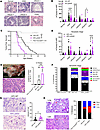 Figure 1
Antibody deficiency accelerates tumorigenesis in the KC and KPC models of pancreatic cancer. (A) Representative H&E images of various stages of preinvasive neoplasia, 400X magnification. (B) The proportion of normal, acinar-to-ductal metaplasia (ADM), mPanIn1, mPanIn2, and mPanIn3 ducts were assessed in 5-month-old Pdx1-Cre, KC-WT, and KC-μSAID mice by blinded assessment, n = 10–34 mice/genotype, *P < 0.05, ****P < 0.0001; 2-way ANOVA with Šídák’s multiple-comparison test. (C) Kaplan-Meier survival curve of KPC-WT, KPC-μSAID, and Pdx1-Cre;Tp53FL/+ WT control mice, n = 23–31 mice/genotype. ***P < 0.001; log rank test. (D) The proportion of normal, acinar-to-ductal metaplasia (ADM), mPanIn1, mPanIn2, and mPanIn3 ducts were assessed in 5-month-old Pdx1-Cre, KPC-WT and KPC-μSAID mice by blinded assessment, n = 37–52 mice/genotype, ****P < 0.0001; 2-way ANOVA with Šídák’s multiple-comparison test. (E) Representative gross image of a pancreatic tumor (left panel, top) that exhibited a well-differentiated phenotype (left panel, bottom). Incidence of PDAC in 12-week-old Pdx1-Cre;Tp53FL/+ control, KPC-WT, and KPC-μSAID mice was based on analysis of H&E-stained pancreatic tissue sections, n = 10–63 mice/genotype, mean ± SEM, ***P < 0.001; Welch’s t test. (F) Stacked bar graphs depicting extent of tumor progression in 12-week-old Pdx1-Cre;Tp53FL/+ WT control, KPC-WT, and KPC-μSAID mice based on a blinded assessment of the abundance of normal, premalignant (ADM + mPanIn1-3), or locally invasive malignant cells, H&E 40x + 20x, n = 30–61 mice/genotype, ***P < 0.001, ****P < 0.0001; mean ± SEM. Two-way ANOVA with Tukey’s multiple-comparison test. (G) Left panel: Mitotic figures (arrow) in 10, 40x fields. Right panel: number of mitotic figures were summed from 10 (40×) high-power fields. *P < 0.05; Welch’s t test. (H) Enhanced liver metastases in KPC-μSAID mice. Left panel: H&E-stained image of lung and liver with intralesional tumor cells (red asterisk) consistent with microscopic metastases (40X). Right panel: Proportions of mice exhibiting microscopic evidence of lung and liver metastases in 12-week-old Pdx1-Cre;Tp53FL/+ (n = 10), KPC-WT (n = 18), and KPC-μSAID mice (n = 18) mice. The number mice/lesion is shown as a percentage.
To better understand the roles of antibody in progression to malignant cancer, we next examined the effect of antibody deficiency in KPC mice. KPC-WT mice with a heterozygous floxed, null allele of Tp53 develop PDAC with complete penetrance, resulting in a median survival of ~5 months (24). At necropsy, gross and histologic evidence of tumor burden is locoregional with invasion in the abdominal region through seeding of tumor cells (carcinomatosis) often resulting in ascites, yet with minimal evidence of metastases to lungs and liver that is consistent with the Tp53FL/+ model (24, 25). Comparatively, median survival of KPC-μSAID mice, where tumor progression was the attributed cause of death/euthanasia, was significantly reduced compared with KPC-WT mice (Figure 1C; 11 versus 22 weeks, respectively; P < 0.001). At 12 weeks, KPC-μSAID mice exhibited a significant increase in pancreatic weight compared with KPC-WT mice, implying advanced tumorigenesis (Supplemental Figure 1F). Histological assessment beginning in regions of preneoplasia revealed a 2-fold increase (27.5 versus 10.9/10 HPF; P < 0.0001) in numbers of ducts displaying PDAC (Figure 1D). These findings correlated with gross and histological evidence of increased incidence of PDAC in 12-week-old KPC-μSAID versus KPC-WT mice (Figure 1E) ([26/44] 64% versus [18/64] 29%, respectively, P = 0.003), as diagnosed by histologic and IHC findings for ductal adenocarcinoma (Supplemental Figure 1G) and sarcomatoid carcinoma (Supplemental Figure 1H). Morphological evaluation of KPC-μSAID tumors revealed more poorly differentiated appearance (Figure 1F) and an increase in mitotic figures (Figure 1G). Evaluation of perineural and intravascular invasion in H&E-stained primary tumors revealed greater incidence of these lesions in KPC-μSAID mice (Supplemental Figure 1, I and J), which was consistent with microscopic evidence of tumor spread on H&E-stained sections of whole liver/lung lobes that indicated a significant increase in liver metastasis in KPC-μSAID versus KPC-WT mice (Figure 1H). Collectively, these findings indicate that circulating antibody has a significant role in suppressing progression of lethal pancreatic cancer in both KC and KPC mouse models.
Since the tumor vasculature is critical to growth and metastatic spread of pancreatic cancer, we next examined the integrity of vessels within regions of neoplasia in KPC-WT and antibody-deficient KPC-μSAID mice through perfusion of mice with high molecular weight (2,000 kDa) FITC-dextran. Mice were injected with 1 mg of FITC-dextran and then after 5 minutes, pancreata were collected to visualize tissue perfusion focusing on regions of neoplasia. Although our sample size was limited, both KPC-WT and KPC-μSAID pancreata demonstrated similar levels of vascular and tissue perfusion (Supplemental Figure 1K) and area of tumor-associated vasculature (Supplemental Figure 1L), suggesting that antibody deficiency did not significantly alter vascular perfusion in KPC mice.
IgG antibodies are predominantly localized to the pancreatic ECM. Increasing evidence indicates that antitumor antibodies generated in situ in association with TLS within the pancreas may play an important role in antitumor immunity and correlate with significantly prolonged survival in patients (18). To visualize whether recirculating antibodies were localized within the pancreata of perfused KC- or KPC-WT mice, we evaluated coexpression of EpCAM with IgA, IgM, or IgG antibody using immunofluorescence (IF). Consistent with a previous study (26), we observed a significant increase in IgM and IgG in KC-WT and KPC-WT mouse pancreata with predominant localization within the ECM (Figure 2, A and B). Measuring areas of overlapping IgG and EpCAM staining revealed a limited degree of epithelial colocalization at the transition between basement membrane and EpCAM staining for IgG and IgM in KC-WT (% IgG+ area, 2.6% ± 1.5%; % IgM+ area, 3.2% ± 3.2%) and KPC-WT mice (% IgG+ area, 3.5% ± 2.7%; % IgM+ area, 0.57% ± 0.47%). ELISA using pancreatic lysates from perfused mice confirmed the IF results, revealing significant increases in IgM, IgG1, and IgG2b antibodies in KC-WT and KPC-WT versus Pdx1-Cre WT mice. Furthermore, with advanced disease, an increase in the presence of IgG1 and IgG2b antibodies in the KPC-WT tumors was noted (Figure 2C). Further analysis will be needed to determine whether IgG localization to areas comprising the ECM is due to specific IgG binding to stromal and/or immune cell types within the ECM, binding to structural features of the ECM like fibronectin (27), or merely the presence of IgG within the tissue space. Since passive diffusion of IgG is limited across endothelial barriers, with antibody actively transported into tissues via transcytosis, it is unlikely that IgG localization within the ECM was largely due to differences in concentration gradients between the serum and tissue, although this remains a formal possibility. Overall, these findings indicate that the vast majority of IgG was localized within the pancreatic ECM and not bound to the neoplastic epithelium in both KC and KPC mouse models of pancreatic cancer.
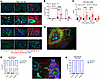 Figure 2
Localization of IgG antibodies to the pancreatic ECM and epithelia of mouse and human PDAC. (A) Representative images of IgA, IgM, and IgG staining in Pdx1-Cre WT, KC-WT, KPC-WT, and KPC-μSAID pancreatic tissues. Frozen sections (5 μM) were stained with a cocktail of antibodies that included rat anti-mouse CD326 (Epcam)-AF488, either goat anti-mouse IgM- or IgG-AF555, IgA-AF647, and DAPI. IgA-AF647 was pseudo-colored as “red” in the IgA images to enhance visualization of IgA localization. (B) Area of IgA, IgG, and IgM staining in Pdx1-Cre WT (n = 3), KC-WT (n = 3), KPC-WT (n = 3), and KPC-μSAID (n = 1) were quantified using ImageJ. Data are graphed as mean ± SD. *P < 0.05, ****P < 0.0001; 2-way ANOVA with Tukey’s correction for multiple comparisons. (C) Lysates from homogenized pancreatic tissue from perfused Pdx1-Cre WT, KC-WT, and KPC-WT mice were assessed for mouse IgG1, IgG2b, IgG3, and IgM by ELISA to determine relative abundances of each Ig isotype (n = 10–13 mice/group). *P < 0.05, **P < 0.01, and ****P < 0.0001; 2-way ANOVA with Tukey’s correction for multiple comparisons. (D) Representative image indicating IgG colocalization (indicated by yellow staining, orange arrow) with selective regions of CK7+ tumor tissue in Pt 13 (Supplemental Figure 2). IgG bright cells (presumed antibody-secreting cells, ASC) are highlighted with red arrows. (E) Quantification of IgG stain on tumor epithelia versus stroma in KC-WT, KPC-WT, and human PDAC patient tissue. Data are represented as mean ± SD. No statistical significance was reached with the small cohort of samples (n = 3/group); Welch’s t test. (F) IgM staining was proximal to the IgM+ tertiary-like lymphoid structure (white-dotted circle). IgM colocalization with tumor epithelia is represented in orange staining region (orange arrow). IgM bright cells (presumed ASCs) are highlighted with red arrows. (G) Quantification of IgM stain on tumor epithelia versus stroma in KC-WT, KPC-WT, and human PDAC patient tissue. Data are represented as mean ± SD. No statistical significance was reached with the small cohort of samples (n = 3/group); Welch’s t test. (A, D, and F) Original magnification, ×16.
A previous study measuring antibody binding to pancreatic tumor epithelia in patients revealed ~10% of the IgG detected in the TME was bound to tumor cells (28). To confirm this result, we evaluated IgG staining in the pancreatic TME of a small cohort of patient biopsies (n = 3). Similar to findings in mice, IgG antibodies were predominantly localized to the ECM in all PDAC tumor biopsies (Supplemental Figure 2). However, in contrast to mouse tumors, colocalization of both IgM- and IgG-bright antibody-secreting cells was present proximal to specific regions of CK7+ tumor epithelia and adjacent tertiary lymphoid-like structures (TLS), with increases in IgG-epithelial staining approximating levels of epithelial-bound IgG in a larger PDAC patient cohort (28) (Figure 2, D and E; 10.5% ± 9.6%). Furthermore, IgM-CK7+ colocalization was also present at higher levels than observed in KC-WT and KPC-WT mice (Figures 2, F and G; 25.3% ± 37.9%). Although our human cohort is small, these findings imply a greater degree of antigenicity or recognition of unique tumor antigen(s) in human pancreatic tumors compared with KPC mice (29).
Antibody deficiency correlates with a reduction in podoplanin+ fibroblast and ECM density. Given the striking colocalization of IgG within the ECM, we sought to determine whether there was correlative evidence that this association was meaningful from a biologic perspective. To do this, we evaluated ECM density in KC and KPC pancreata to determine if there was a correlation between ECM density and IgG deposition focusing on regions with ADM, mPanIn, or tumor. Interestingly, antibody-deficient KC-μSAID and KPC-μSAID mice exhibited a 2-fold reduction in the area of trichrome+ staining (Figure 3, A–D) within both premalignant regions of ADM/mPanIn and malignant regions of PDAC, consistent with a reduction in procollagen I, a soluble precursor to the most abundant protein within the pancreatic ECM (Figure 3E) (6).
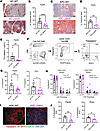 Figure 3
Antibody deficiency reduces ECM and CAF in the KC and KPC pancreatic microenvironment. (A–D) Masson’s trichrome staining (20× magnification) of pancreas from 20-week-old, mPanIn-bearing, KC-WT and KC-μSAID pancreata (A) or 12-week-old, tumor-bearing KPC-WT and KPC-μSAID pancreata (C). (B and D) The area of trichrome staining was assessed using ImageJ software, n = 5–12 mice/genotype. Data are representative of aggregated individual experiments, mean ± SEM. **P < 0.01, ****P < 0.0001; Welch’s t test. (E) Procollagen 1 protein was measured by ELISA using pancreatic lysates from perfused 20-week-old, mPanIn-bearing, KC-WT versus KC-μSAID mice, n = 9–15 mice/group, mean ± SD. **P < 0.01; Welch’s t test. (F) Evaluation of fibroblast abundance in the pancreas of KC-WT and KPC-WT versus KC-μSAID and KPC-μSAID mice using multiparameter flow cytometry. (G) Live CD45–EpCAM–CD31– cells were evaluated for the percentage of cells expressing the pan-cancer-associated fibroblast protein Podoplanin (Pdpn). *P < 0.05, **P < 0.01. (H) Podoplanin+CD140α+/– CAFs were subsetted into myCAF (Pdpn+Ly6C–MHCII–), iCAF (Pdpn+Ly6C+MHCII–), and apCAF (Pdpn+Ly6C–MHCII+). Data are an aggregate of 5 independent experiments, mean ± SEM. No significant differences were noted between groups; 2-way ANOVA with Šídák’s correction for multiple comparisons. (I and J) The abundance of podoplanin+ CAFs was assessed within the pancreas of KC-WT versus KC-μSAID mice and KPC-WT versus KPC-μSAID mice, n = 3–5 mice/group, mean ± SD, *P < 0.05, **P < 0.01; Welch’s t test. (I) Original magnification, ×20.
Given that activated myofibroblasts (myCAF) are the predominant cell type responsible for secretion of ECM molecules, we then assessed the abundance of fibroblast subsets using an established flow cytometric panel that utilizes podoplanin as a pan-CAF/fibroblast marker (Figure 3F) (30). The percentage of podoplanin+ cells was significantly reduced in KC-μSAID and KPC-μSAID pancreata compared with KC-WT and KPC-WT mice (Figure 3G). However, further subsetting of podoplanin+ CAF revealed no significant differences in the relative proportions of myofibroblastic (podoplanin+Ly6C–MHCII–, myCAF), inflammatory (podoplanin+Ly6C+MHCII–, iCAF) and antigen-presenting (podoplanin+Ly6C–MHCIIhi, apCAF) CAF (Figure 3H) associated with antibody deficiency. Evaluation of podoplanin expression within affected mPanIn/ADM and PDAC regions revealed a significant decrease in podoplanin expression within regions of preneoplasia/neoplasia in both KC- and KPC-μSAID pancreata compared with KC- and KPC-WT pancreata, respectively (Figure 3, I and J), indicating an effect of antibody deficiency on the density of podoplanin+ CAFs within the premalignant and malignant cancer-associated stroma.
To better understand whether IgG antibodies interact with cells in the tumor stroma, we examined expression and localization of IgG with Fcγ receptors. Previous findings indicate that Fcγr1 and Fcγr3 mRNA are expressed in podoplanin+ CAFs in PDAC (30), suggesting potential for direct antibody-Fcγ receptor interactions on CAF subsets. FACS analysis of activating (FcγR1 and FcγR3) and inhibitory (FcγR2b) Fc receptor protein expression on the cell surface of both immune and nonimmune cell types revealed varying levels of FcγR1/2b/3 on macrophage/mMDSC (high), granulocytic myeloid-derived suppressor cells (gMDSC, intermediate/low), CD31+ endothelial, and podoplanin+ CAF/fibroblast (low) subsets (Supplemental Figure 3, A and B). Podoplanin+ CAFs demonstrated a diffuse pattern of colocalization (Supplemental Figure 3C), whereas F4/80+ macrophage were localized proximal to the epithelial basement membrane and showed focal IgG staining (Supplemental Figure 3D). These findings indicated considerable levels of colorimetric (yellow) overlap between these subsets and IgG antibodies in KC-WT and KPC-WT pancreas. Overall, these findings indicate that podoplanin+ CAF within the KC and KPC TME predominantly express FcγR1 protein on the cell surface, while significantly higher levels of both activating (FcγR1 and FcγR3) and inhibitory (FcγR2b) receptors are present on myeloid subsets, in particular monocytes and macrophage. Given the proximity of the IgG antibodies and Fcγ receptors, potential interactions are likely and may be of physiologic relevance to ECM homeostasis in premalignant and malignant pancreas cancer.
Antibody deficiency alters abundance and phenotypes of immune subsets in the pancreatic microenvironment. To determine whether the absence of IgG alters the phenotype of myeloid cells, we used multiparameter FACS analysis to assess changes in specific myeloid subsets within the KPC TME. No significant differences in CD11b+F4/80+ macrophage were noted in KPC-WT and KPC-μSAID mice (Figure 4A); however, antibody deficiency increased the expression of MHCII and CD86 on tumor-infiltrating macrophage (Figure 4B), suggesting an effect on macrophage polarization. Analysis of MDSC subsets within the KPC TME revealed an increase in myeloperoxidase-expressing total MDSCs within the KPC-μSAID TME (Figure 4C), with increases in both Gr-1–expressing granulocytic (Ly6G+ gMDSC) and monocytic (Ly6G– MDSC) subsets in tumor-bearing KPC-μSAID mice (Figure 4D). The absence of antibody did not effect the abundance of dendritic cell subsets (Supplemental Figure 4A), including CD11b–XCR1+ cDC1 (Supplemental Figure 4B) and CD11b+CD172α+ cDC2 subsets (Supplemental Figure 4C). These findings indicate that antibody deficiency increases the abundance of tumor-infiltrating MDSCs and alters macrophage polarization, indicative of a mixed M1/M2 phenotype.
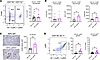 Figure 4
Antibody deficiency alters recruitment and phenotype of myeloid cells in the pancreatic TME. (A) Percentages of tumor-infiltrating, CD11b+Gr-1–F4/80+ macrophage in KPC-WT versus KPC-μSAID mice (n = 15–21 mice/group), mean ± SEM; Welch’s t test. (B) Evaluation of coexpression of MHCII, CD206, and CD86 on CD1b+Gr-1–F4/80+ macrophage in tumor-bearing KPC-WT versus KPC-μSAID pancreata, (n = 5–7 mice/group) mean ± SD. *P < 0.05; Welch’s t test. (C) Representative immunohistochemistry for myeloperoxidase (MPO) in pancreata of tumor-bearing, 12-week-old KPC-WT, and KPC-μSAID mice (n = 7–8), mean ± SD, **P < 0.01; Welch’s t test. Original magnification, ×20. Scale bar, 100 µM. (D) Percentages of tumor-infiltrating, CD11b+Gr-1+Ly6G+ gMDSC and CD11b+Gr-1+Ly6G– mMDSC in KPC-WT versus KPC-μSAID pancreata (n = 15–21 mice/group), mean ± SEM, *P < 0.05, **P < 0.01; Welch’s t test.
Antibody deficiency alters the abundance of T cells in the pancreatic TME. The increased presence of potentially immunosuppressive MDSC subsets in the KPC-μSAID TME, which act as a reservoir for immunosuppressive tumor-associated macrophage (9, 12, 31) and can effect T and NK cell infiltration and function (32–34), suggests that these changes may influence antitumor immunity. Therefore, we evaluated T and NK cell infiltrate and function in the KPC-WT versus the KPC-μSAID TME. Antibody deficiency significantly reduced the proportions of total CD3+ T cells in tumor-bearing KPC-μSAID mice (Figure 5, A and B), with the majority of T cells distributed in the peritumoral stroma within lymphoid aggregates (Figure 5A). Within the CD3+ T cell subsets, significant reductions were noted in CD4+ and CD8+ T cells (Figure 5, C–E). Similar to adaptive CD4+ and CD8+ T cell subsets, CD3–NK1.1+ NK cells exhibited a decrease in abundance in antibody-deficient KPC-μSAID mice (Figure 5E). Analysis of cytokine production after PMA-ionomycin stimulation revealed no significant differences in IFN-γ secretion from CD4+ and CD8+ T cells (Figure 5, F and G) isolated from the KPC-WT or KPC-μSAID TME. These findings suggest a reduction in T and NK cell recruitment secondary to increases in MDSC influx into the TME of antibody-deficient KPC-μSAID mice.
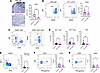 Figure 5
Antibody deficiency alters recruitment of T cell and NK cells in the pancreatic TME. (A) IHC for CD3 in tumor-bearing, 12-week-old KPC-WT and KPC-μSAID mice (n = 6 mice/group), mean ± SD, *P < 0.05; Welch’s t test. Original magnification, ×20. Scale bar, 100 μM. (B) Percentages of CD3+ T cells in KC-WT and KPC-WT versus KC-μSAID and KPC-μSAID mice (n = 15–21 mice/group), mean ± SEM, *P < 0.05; Welch’s t test. (C and D) Percentages of tumor-infiltrating CD3+CD4+Foxp3+, CD3+CD4+Foxp3–, and CD3+CD8+ T cells in 12-week-old KPC-WT and KPC-μSAID pancreata (n = 15–21 mice/group), mean ± SD, *P < 0.05, **P < 0.01; Welch’s t test. (E) Percentages of tumor-infiltrating CD3–NK1.1+ NK cells in 12-week-old KPC-WT and KPC-μSAID pancreata (n = 14–18 mice/group), mean ± SD, *P < 0.05; Welch’s t test. (F and G) Expression of intracytoplasmic IFNγ in CD4+ (F) and CD8+ (G) T cells 5 hours after PMA-ionomycin stimulation in the presence of brefeldin A using cells isolated from 12-week-old KPC-WT and KPC-μSAID pancreata (n = 11–14 mice/group), mean ± SD, ns = nonsignificant; Welch’s t test.
Antibody subclass deficiency mediates the tumor-suppressive function of antibody in PDAC and the density of pancreatic fibrosis. Given the predominant localization of IgG and IgM antibodies (and not IgA) in the pancreatic ECM (Figure 2B), we then evaluated the specific effect of deleting only secretory IgM (μS–/–) or all class-switched (IgA, IgE, IgG) antibody isotypes (AID–/–) on pancreatic tumorigenesis. While KPC-μS–deficient mice did not exhibit differences in median survival compared with KPC-WT mice (Figure 6A), tumor-free and median survival of KPC-AID mice phenocopied the incidence of lethal PDAC observed in KPC-μSAID mice (Figure 6B). This underscores the importance of class-switched antibodies (likely IgG subclass antibodies) in suppression of pancreatic cancer. Furthermore, KPC-AID–deficient animals exhibited similar reductions in ECM (Figure 6C), reductions in podoplanin+ CAFs (Figure 6D), increases in gMDSC infiltration (Figure 6E), a similar shift toward M1 macrophage polarization (Figure 6, F and G), and reductions in T and NK cells within the KPC-AID TME (Figure 6, H and I). These findings largely phenocopy our findings with complete antibody-deficient KPC-μSAID mice, indicating a predominant role of IgG and not IgM antibodies in regulation of pancreatic cancer progression and fibrosis.
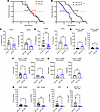 Figure 6
Class-switched antibody (IgA, IgE, IgG) deficiency accelerates pancreatic tumorigenesis and remodels the tumor microenvironment. (A and B) Kaplan-Meier survival curve of KPC-WT versus KPC-μS (A), and KPC-WT versus KPC-AID mice (B), n = 25–35 mice/genotype, ****P < 0.0001; log rank test. (C) The area of trichrome staining was assessed using ImageJ software, n = 5–13 mice/genotype. Data are representative of aggregated individual experiments, mean ± SEM, **P < 0.01, ***P < 0.001; Welch’s t test. (D) Live CD45–EPCAM–CD31– cells were evaluated for the percentage of cells expressing the pan-cancer-associated fibroblast marker Podoplanin (Pdpn), n = 7–24 mice/genotype. Data are representative of aggregated individual experiments, mean ± SEM, **P < 0.01, ***P < 0.001; Welch’s t test. (E) Percentages of tumor-infiltrating, CD11b+Gr-1+Ly6G+ gMDSC and CD11b+Gr-1+Ly6G– mMDSC in KPC-WT versus KPC-AID pancreata (n = 6–21 mice/group), mean ± SEM, *P < 0.05; Welch’s t test. (F) Percentages of tumor-infiltrating, CD11b+Gr-1–F4/80+ macrophage in KPC-WT versus KPC-AID mice (n = 6–21 mice/group), mean ± SEM; Welch’s t test. (G) Evaluation of coexpression of CD206, MHCII, and CD86 on CD11b+Gr-1–F4/80+ macrophage in tumor-bearing KPC-WT versus KPC-AID (n = 6–7 mice/group) pancreata, mean ± SD, **P < 0.01; Welch’s t test. (H) Percentages of tumor-infiltrating CD3+CD4+Foxp3+, CD3+CD4+Foxp3–, and CD3+CD8+ T cells in 12-week-old KPC-WT and KPC-AID pancreata (n = 5–21 mice/group), mean ± SD, **P < 0.01, ***P < 0.001; Welch’s t test. (I) Percentages of tumor-infiltrating CD3–NK1.1+ NK cells in 12-week-old KPC-WT and KPC-AID pancreata (n = 6–18 mice/group), mean ± SD, *P < 0.05; Welch’s t test.


