
Research ArticleCell biologyPulmonology
Open Access |  10.1172/jci.insight.198113
Sustained YAP/TAZ activation promotes aberrant alveolar epithelial cell differentiation and drives persistent fibrotic remodeling
Isabella P. Gaona,1 A. Scott McCall,1,2 Natalie M. Geis,1 Arlo C. Colvard,1 Gianluca T. DiGiovanni,1 Taylor P. Sherrill,1 Ujjal K. Singha,1 David S. Nichols,1 Ana P. Serezani,1 Holly E. David,1 Jean-Philippe Cartailler,3 Shristi Shrestha,3 Sergey S. Gutor,4 Timothy S. Blackwell,4 Jonathan A. Kropski,1,2,5 and Jason J. Gokey1
1Division of Allergy, Pulmonary, and Critical Care Medicine, Department of Medicine, Vanderbilt University Medical Center, Nashville, Tennessee, USA.
2Department of Veterans Affairs Medical Center, Nashville, Tennessee, USA.
3Creative Data Solutions, Center for Stem Cell Biology, Vanderbilt University, Nashville, Tennessee, USA.
4Department of Internal Medicine, University of Michigan Medical School, Ann Arbor, Michigan, USA.
5Department of Cell and Developmental Biology, Vanderbilt University School of Medicine, Nashville, Tennessee, USA.
Address correspondence to: Jason J. Gokey, 1161 21st Avenue South, Medical Center North, B2127B, Nashville, Tennessee 37232, USA. Phone: 615.322.3412; Email: jason.j.gokey@vumc.org.
Authorship note: IPG and ASM contributed equally to this work and have been designated as co–first authors.
Find articles by Gaona, I. in: PubMed | Google Scholar
1Division of Allergy, Pulmonary, and Critical Care Medicine, Department of Medicine, Vanderbilt University Medical Center, Nashville, Tennessee, USA.
2Department of Veterans Affairs Medical Center, Nashville, Tennessee, USA.
3Creative Data Solutions, Center for Stem Cell Biology, Vanderbilt University, Nashville, Tennessee, USA.
4Department of Internal Medicine, University of Michigan Medical School, Ann Arbor, Michigan, USA.
5Department of Cell and Developmental Biology, Vanderbilt University School of Medicine, Nashville, Tennessee, USA.
Address correspondence to: Jason J. Gokey, 1161 21st Avenue South, Medical Center North, B2127B, Nashville, Tennessee 37232, USA. Phone: 615.322.3412; Email: jason.j.gokey@vumc.org.
Authorship note: IPG and ASM contributed equally to this work and have been designated as co–first authors.
Find articles by
McCall, A.
in:
PubMed
|
Google Scholar
|

1Division of Allergy, Pulmonary, and Critical Care Medicine, Department of Medicine, Vanderbilt University Medical Center, Nashville, Tennessee, USA.
2Department of Veterans Affairs Medical Center, Nashville, Tennessee, USA.
3Creative Data Solutions, Center for Stem Cell Biology, Vanderbilt University, Nashville, Tennessee, USA.
4Department of Internal Medicine, University of Michigan Medical School, Ann Arbor, Michigan, USA.
5Department of Cell and Developmental Biology, Vanderbilt University School of Medicine, Nashville, Tennessee, USA.
Address correspondence to: Jason J. Gokey, 1161 21st Avenue South, Medical Center North, B2127B, Nashville, Tennessee 37232, USA. Phone: 615.322.3412; Email: jason.j.gokey@vumc.org.
Authorship note: IPG and ASM contributed equally to this work and have been designated as co–first authors.
Find articles by Geis, N. in: PubMed | Google Scholar
1Division of Allergy, Pulmonary, and Critical Care Medicine, Department of Medicine, Vanderbilt University Medical Center, Nashville, Tennessee, USA.
2Department of Veterans Affairs Medical Center, Nashville, Tennessee, USA.
3Creative Data Solutions, Center for Stem Cell Biology, Vanderbilt University, Nashville, Tennessee, USA.
4Department of Internal Medicine, University of Michigan Medical School, Ann Arbor, Michigan, USA.
5Department of Cell and Developmental Biology, Vanderbilt University School of Medicine, Nashville, Tennessee, USA.
Address correspondence to: Jason J. Gokey, 1161 21st Avenue South, Medical Center North, B2127B, Nashville, Tennessee 37232, USA. Phone: 615.322.3412; Email: jason.j.gokey@vumc.org.
Authorship note: IPG and ASM contributed equally to this work and have been designated as co–first authors.
Find articles by Colvard, A. in: PubMed | Google Scholar
1Division of Allergy, Pulmonary, and Critical Care Medicine, Department of Medicine, Vanderbilt University Medical Center, Nashville, Tennessee, USA.
2Department of Veterans Affairs Medical Center, Nashville, Tennessee, USA.
3Creative Data Solutions, Center for Stem Cell Biology, Vanderbilt University, Nashville, Tennessee, USA.
4Department of Internal Medicine, University of Michigan Medical School, Ann Arbor, Michigan, USA.
5Department of Cell and Developmental Biology, Vanderbilt University School of Medicine, Nashville, Tennessee, USA.
Address correspondence to: Jason J. Gokey, 1161 21st Avenue South, Medical Center North, B2127B, Nashville, Tennessee 37232, USA. Phone: 615.322.3412; Email: jason.j.gokey@vumc.org.
Authorship note: IPG and ASM contributed equally to this work and have been designated as co–first authors.
Find articles by DiGiovanni, G. in: PubMed | Google Scholar
1Division of Allergy, Pulmonary, and Critical Care Medicine, Department of Medicine, Vanderbilt University Medical Center, Nashville, Tennessee, USA.
2Department of Veterans Affairs Medical Center, Nashville, Tennessee, USA.
3Creative Data Solutions, Center for Stem Cell Biology, Vanderbilt University, Nashville, Tennessee, USA.
4Department of Internal Medicine, University of Michigan Medical School, Ann Arbor, Michigan, USA.
5Department of Cell and Developmental Biology, Vanderbilt University School of Medicine, Nashville, Tennessee, USA.
Address correspondence to: Jason J. Gokey, 1161 21st Avenue South, Medical Center North, B2127B, Nashville, Tennessee 37232, USA. Phone: 615.322.3412; Email: jason.j.gokey@vumc.org.
Authorship note: IPG and ASM contributed equally to this work and have been designated as co–first authors.
Find articles by Sherrill, T. in: PubMed | Google Scholar
1Division of Allergy, Pulmonary, and Critical Care Medicine, Department of Medicine, Vanderbilt University Medical Center, Nashville, Tennessee, USA.
2Department of Veterans Affairs Medical Center, Nashville, Tennessee, USA.
3Creative Data Solutions, Center for Stem Cell Biology, Vanderbilt University, Nashville, Tennessee, USA.
4Department of Internal Medicine, University of Michigan Medical School, Ann Arbor, Michigan, USA.
5Department of Cell and Developmental Biology, Vanderbilt University School of Medicine, Nashville, Tennessee, USA.
Address correspondence to: Jason J. Gokey, 1161 21st Avenue South, Medical Center North, B2127B, Nashville, Tennessee 37232, USA. Phone: 615.322.3412; Email: jason.j.gokey@vumc.org.
Authorship note: IPG and ASM contributed equally to this work and have been designated as co–first authors.
Find articles by Singha, U. in: PubMed | Google Scholar
1Division of Allergy, Pulmonary, and Critical Care Medicine, Department of Medicine, Vanderbilt University Medical Center, Nashville, Tennessee, USA.
2Department of Veterans Affairs Medical Center, Nashville, Tennessee, USA.
3Creative Data Solutions, Center for Stem Cell Biology, Vanderbilt University, Nashville, Tennessee, USA.
4Department of Internal Medicine, University of Michigan Medical School, Ann Arbor, Michigan, USA.
5Department of Cell and Developmental Biology, Vanderbilt University School of Medicine, Nashville, Tennessee, USA.
Address correspondence to: Jason J. Gokey, 1161 21st Avenue South, Medical Center North, B2127B, Nashville, Tennessee 37232, USA. Phone: 615.322.3412; Email: jason.j.gokey@vumc.org.
Authorship note: IPG and ASM contributed equally to this work and have been designated as co–first authors.
Find articles by Nichols, D. in: PubMed | Google Scholar
1Division of Allergy, Pulmonary, and Critical Care Medicine, Department of Medicine, Vanderbilt University Medical Center, Nashville, Tennessee, USA.
2Department of Veterans Affairs Medical Center, Nashville, Tennessee, USA.
3Creative Data Solutions, Center for Stem Cell Biology, Vanderbilt University, Nashville, Tennessee, USA.
4Department of Internal Medicine, University of Michigan Medical School, Ann Arbor, Michigan, USA.
5Department of Cell and Developmental Biology, Vanderbilt University School of Medicine, Nashville, Tennessee, USA.
Address correspondence to: Jason J. Gokey, 1161 21st Avenue South, Medical Center North, B2127B, Nashville, Tennessee 37232, USA. Phone: 615.322.3412; Email: jason.j.gokey@vumc.org.
Authorship note: IPG and ASM contributed equally to this work and have been designated as co–first authors.
Find articles by Serezani, A. in: PubMed | Google Scholar
1Division of Allergy, Pulmonary, and Critical Care Medicine, Department of Medicine, Vanderbilt University Medical Center, Nashville, Tennessee, USA.
2Department of Veterans Affairs Medical Center, Nashville, Tennessee, USA.
3Creative Data Solutions, Center for Stem Cell Biology, Vanderbilt University, Nashville, Tennessee, USA.
4Department of Internal Medicine, University of Michigan Medical School, Ann Arbor, Michigan, USA.
5Department of Cell and Developmental Biology, Vanderbilt University School of Medicine, Nashville, Tennessee, USA.
Address correspondence to: Jason J. Gokey, 1161 21st Avenue South, Medical Center North, B2127B, Nashville, Tennessee 37232, USA. Phone: 615.322.3412; Email: jason.j.gokey@vumc.org.
Authorship note: IPG and ASM contributed equally to this work and have been designated as co–first authors.
Find articles by David, H. in: PubMed | Google Scholar
1Division of Allergy, Pulmonary, and Critical Care Medicine, Department of Medicine, Vanderbilt University Medical Center, Nashville, Tennessee, USA.
2Department of Veterans Affairs Medical Center, Nashville, Tennessee, USA.
3Creative Data Solutions, Center for Stem Cell Biology, Vanderbilt University, Nashville, Tennessee, USA.
4Department of Internal Medicine, University of Michigan Medical School, Ann Arbor, Michigan, USA.
5Department of Cell and Developmental Biology, Vanderbilt University School of Medicine, Nashville, Tennessee, USA.
Address correspondence to: Jason J. Gokey, 1161 21st Avenue South, Medical Center North, B2127B, Nashville, Tennessee 37232, USA. Phone: 615.322.3412; Email: jason.j.gokey@vumc.org.
Authorship note: IPG and ASM contributed equally to this work and have been designated as co–first authors.
Find articles by
Cartailler, J.
in:
PubMed
|
Google Scholar
|
1Division of Allergy, Pulmonary, and Critical Care Medicine, Department of Medicine, Vanderbilt University Medical Center, Nashville, Tennessee, USA.
2Department of Veterans Affairs Medical Center, Nashville, Tennessee, USA.
3Creative Data Solutions, Center for Stem Cell Biology, Vanderbilt University, Nashville, Tennessee, USA.
4Department of Internal Medicine, University of Michigan Medical School, Ann Arbor, Michigan, USA.
5Department of Cell and Developmental Biology, Vanderbilt University School of Medicine, Nashville, Tennessee, USA.
Address correspondence to: Jason J. Gokey, 1161 21st Avenue South, Medical Center North, B2127B, Nashville, Tennessee 37232, USA. Phone: 615.322.3412; Email: jason.j.gokey@vumc.org.
Authorship note: IPG and ASM contributed equally to this work and have been designated as co–first authors.
Find articles by Shrestha, S. in: PubMed | Google Scholar
1Division of Allergy, Pulmonary, and Critical Care Medicine, Department of Medicine, Vanderbilt University Medical Center, Nashville, Tennessee, USA.
2Department of Veterans Affairs Medical Center, Nashville, Tennessee, USA.
3Creative Data Solutions, Center for Stem Cell Biology, Vanderbilt University, Nashville, Tennessee, USA.
4Department of Internal Medicine, University of Michigan Medical School, Ann Arbor, Michigan, USA.
5Department of Cell and Developmental Biology, Vanderbilt University School of Medicine, Nashville, Tennessee, USA.
Address correspondence to: Jason J. Gokey, 1161 21st Avenue South, Medical Center North, B2127B, Nashville, Tennessee 37232, USA. Phone: 615.322.3412; Email: jason.j.gokey@vumc.org.
Authorship note: IPG and ASM contributed equally to this work and have been designated as co–first authors.
Find articles by Gutor, S. in: PubMed | Google Scholar
1Division of Allergy, Pulmonary, and Critical Care Medicine, Department of Medicine, Vanderbilt University Medical Center, Nashville, Tennessee, USA.
2Department of Veterans Affairs Medical Center, Nashville, Tennessee, USA.
3Creative Data Solutions, Center for Stem Cell Biology, Vanderbilt University, Nashville, Tennessee, USA.
4Department of Internal Medicine, University of Michigan Medical School, Ann Arbor, Michigan, USA.
5Department of Cell and Developmental Biology, Vanderbilt University School of Medicine, Nashville, Tennessee, USA.
Address correspondence to: Jason J. Gokey, 1161 21st Avenue South, Medical Center North, B2127B, Nashville, Tennessee 37232, USA. Phone: 615.322.3412; Email: jason.j.gokey@vumc.org.
Authorship note: IPG and ASM contributed equally to this work and have been designated as co–first authors.
Find articles by Blackwell, T. in: PubMed | Google Scholar
1Division of Allergy, Pulmonary, and Critical Care Medicine, Department of Medicine, Vanderbilt University Medical Center, Nashville, Tennessee, USA.
2Department of Veterans Affairs Medical Center, Nashville, Tennessee, USA.
3Creative Data Solutions, Center for Stem Cell Biology, Vanderbilt University, Nashville, Tennessee, USA.
4Department of Internal Medicine, University of Michigan Medical School, Ann Arbor, Michigan, USA.
5Department of Cell and Developmental Biology, Vanderbilt University School of Medicine, Nashville, Tennessee, USA.
Address correspondence to: Jason J. Gokey, 1161 21st Avenue South, Medical Center North, B2127B, Nashville, Tennessee 37232, USA. Phone: 615.322.3412; Email: jason.j.gokey@vumc.org.
Authorship note: IPG and ASM contributed equally to this work and have been designated as co–first authors.
Find articles by
Kropski, J.
in:
PubMed
|
Google Scholar
|
1Division of Allergy, Pulmonary, and Critical Care Medicine, Department of Medicine, Vanderbilt University Medical Center, Nashville, Tennessee, USA.
2Department of Veterans Affairs Medical Center, Nashville, Tennessee, USA.
3Creative Data Solutions, Center for Stem Cell Biology, Vanderbilt University, Nashville, Tennessee, USA.
4Department of Internal Medicine, University of Michigan Medical School, Ann Arbor, Michigan, USA.
5Department of Cell and Developmental Biology, Vanderbilt University School of Medicine, Nashville, Tennessee, USA.
Address correspondence to: Jason J. Gokey, 1161 21st Avenue South, Medical Center North, B2127B, Nashville, Tennessee 37232, USA. Phone: 615.322.3412; Email: jason.j.gokey@vumc.org.
Authorship note: IPG and ASM contributed equally to this work and have been designated as co–first authors.
Find articles by
Gokey, J.
in:
PubMed
|
Google Scholar
|
Published June 9, 2026 - More info
JCI Insight. 2026;11(15):e198113. https://doi.org/10.1172/jci.insight.198113.
© 2026 Gaona et al. This work is licensed under the Creative Commons Attribution 4.0 International License. To view a copy of this license, visit http://creativecommons.org/licenses/by/4.0/.
Received: July 17, 2025; Accepted: June 5, 2026

-
Results
To determine whether YAP/TAZ is activated in the IPF lung epithelium, we used immunofluorescence staining to assess nuclear YAP or TAZ in cells positive for SP-C (marking either AT2 cells in healthy donors/IPF or hyperplastic/metaplastic alveolar epithelium in IPF) or for AGER (labeling AT1 in healthy donors/IPF or aberrant epithelium in IPF). Deidentified donor and IPF subject (N = 6 each) demographics are reported in Supplemental Table 1 (supplemental material available online with this article; https://doi.org/10.1172/jci.insight.198113DS1). Consistent with our previous findings (41), YAP was rarely detected in SP-C+ cells (5.8% ± 4.2%) of healthy donors; however, YAP was present in the nucleus of 38.7% (± 6.3%) of SP-C+ cells, including cells that were both SP-C+ and AGER+, in IPF lungs (Figure 1, A and C). TAZ was also rarely detected (2.1% ± 2.4%) in healthy donor SP-C+ AT2 cells; however, nuclear TAZ was present in 21.4% (± 7.3%) of SP-C+ and SP-C+AGER+ cells in IPF lungs (Figure 1, B and D). Fluorescence intensity of YAP and TAZ was quantified in Sp-C+DAPI+ nuclei, which demonstrated that both YAP and TAZ fluorescence intensity was increased in Sp-C+ nuclei in IPF lungs (Supplemental Figure 1). We then interrogated scRNA-seq data from our recently published work (46, 47), performing AT2 cell type–specific, subject-level pseudobulk differential expression analysis comparing IPF and control AT2 cells. Pseudobulk analysis was used to account for the variability across subjects and factor in the spectrum of YAP/TAZ activation across all AT2 cells. We found that YAP and TAZ (WWTR1), YAP/TAZ binding partners (TEAD1/3, NFIB), and YAP/TAZ targets and associated targets (CYR [ref. 48], CTGF, AXL [ref. 49], BIRC5, CCND1 [ref. 50], AREG [ref. 51], BCL2 [ref. 51], CDKN1A [ref. 52]) were increased in IPF AT2 cells compared with control donor AT2 cells (Figure 1E). CDK1, which phosphorylates YAP/TAZ during cell division to promote cancer development and metastasis (53), was also increased, although the role in this context is unknown. These findings support the concept that there is sustained activation of YAP/TAZ signaling in IPF alveolar epithelium.
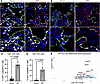 Figure 1
YAP and TAZ are active in the IPF epithelium. (A and B) Immunofluorescence analysis of YAP (red) (A) and TAZ (red) (B) in AGER+ (green) AT1 cells and SP-C+ (white) AT2 cells. Scale bars: 50 μm. (C and D) Quantification of YAP+ nuclei (C) and TAZ+ nuclei (D) in SP-C+ AT2 cells from donor and IPF lungs. n = 6 donors per group. Statistics determined using unpaired parametric t tests. (E) Differential gene expression analysis of IPF AT2 cells generated from previously published scRNA-seq analysis of IPF and donor lungs (GSE227136).
To test the consequences of sustained YAP/TAZ signaling in human alveolar epithelial cells, CD326+ epithelial cells isolated from peripheral lung tissue obtained from declined lung donors were cultured in serum-free, feeder-free medium (SFFFM) as alveolar organoids (54). This approach allows the isolation of the heterogeneous populations, as recent work demonstrated that HTII-280 is not specific to AT2 cells, particularly in the IPF lung (55). Organoids were grown from day 1 to day 7 in SFFFM and then either continued in SFFFM until day 14 or switched to alveolar differentiation medium (ADM) from day 7 to day 14. Cells were treated with either vehicle or the YAP/TAZ–activating drug XMU-MP-1 (1 or 3 mM), a specific MST1/2 inhibitor (56), from culture day 4 to 14, during which we observed dramatic changes in organoid appearance (Figure 2, A and B, and Supplemental Figure 2A). RNA analysis by qPCR demonstrated that XMU-MP-1 treatment activated the YAP/TAZ target genes AJUBA and CTGF (Supplemental Figure 2B). We noted morphologic differences in culture and thus sought to characterize multiple subcellular components to quantify cellular morphologies. Whole-mount staining of RNA (SYTO14) and cytoskeletal component (wheat germ agglutinin and phalloidin) dyes followed by high-content imaging and analysis were used (57). We found that activation of YAP/TAZ with XMU-MP-1 resulted in marked and overriding morphologic changes of these human AT2 cell organoids whether cultured in SFFFM or commercial ADM, which drove unique morphologic appearance (ADM resulting in a splayed appearance) (Figure 2B and Supplemental Figure 2A). Analysis of vehicle- and XMU-treated organoids revealed cell morphology changes in YAP/TAZ–activated organoids as demonstrated by visualization of the variance in cell shape in phenotypic principal component analysis (PCA) space derived from all extracted morphologic features with substantial shifts between SFFFM, ADM, and XMU-treated organoids (58) (Figure 2C and Supplemental Figure 2, C and D). Likewise, analysis of cell nucleus morphology in phenotypic space incorporating RNA nuclear localization revealed considerably altered nuclear features in YAP/TAZ–activated organoids, which is consistent with prior YAP/TAZ activation phenotypes observed in mechanical situations (44, 59–61) (Figure 2D and Supplemental Figure 3). We then further characterized these organoids using immunofluorescent staining and scRNA-seq. Collected organoids were stained for AGER and SP-C, which demonstrated that YAP/TAZ activation with XMU increased the expression of AT1 cell–associated AGER in comparison with untreated organoids in SFFFM, suggesting increased differentiation toward AT1 or transitional cell populations (Figure 3A). Analysis of scRNA data indicated that while protein levels of the AT1 marker AGER were increased, sustained activation of YAP/TAZ signaling resulted in the aberrant differentiation of AT2 cells into several subpopulations, including a YAP/TAZ–active aberrant population expressing high levels of the mitochondrial marker TOMM20 and a YAP/TAZ–active population expressing high levels of keratins (KRThi) associated with aberrant transitional cell populations (Figure 3, B and C). These aberrant populations were present in XMU-MP-1–treated cultures regardless of SFFFM or ADM culture media or donor (Figure 3, D and E, and Supplemental Figure 4). Further supporting this concept, YAP/TAZ target genes (AJUBA, AXL, BIRC5) were increased in SFFFM conditions (Figure 3F), while AT1 cell markers AGER, CAV1, and HOPX were increased in ADM conditions (Figure 3G). However, aberrant airway markers including, CEACAM6 and P63 (basal/basaloid), MUC5B (goblet), SCGB3A2 (distal secretory), as well as fibrotic associated genes MMP7/14 and the lysyl oxidases LOXL1 and LOXL4 were increased in both media conditions (Figure 3H). These findings indicate that sustained activation of YAP/TAZ in human epithelial cells results in abnormal alveolar cell behavior and differentiation into aberrant cell populations, which supersedes signaling provided by media associated with either AT2 cell maintenance or components of alveolar differentiation.
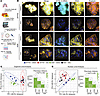 Figure 2
YAP/TAZ activation alters cell morphology in human organoids. (A) Schematic of human epithelial organoid generation, YAP/TAZ activation (XMU-MP-1), and collection strategy. (B) Cell and nucleus shape analysis using wheat germ agglutinin (WGA; yellow) and phalloidin (orange) with SYTO14 (cyan) in organoids treated with vehicle or XMU-MP-1 in either SFFFM or ADM. Scale bars: 50 μm. (C) Organoid morphologic analysis across phenotypic PCA space based on analysis of high-dimensional feature extraction and statistical analysis of phenotypic distance between groups. Each point represents wells as technical replicates. (D) Analysis of cell nuclei across phenotypic PCA space and phenotypic distance between groups. Each point represents wells as technical replicates. Two independent experiments were pooled for PCA analysis. P values were adjusted for multiple comparisons and derived from Hotelling’s t test in PCA space between groups.
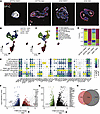 Figure 3
YAP/TAZ activation leads to aberrant epithelial cell populations in human alveolar organoids. (A) Immunofluorescence analysis of AGER+ cells and SP-C+ cells in organoids treated with 3 μM XMU-MP-1 or DMSO in expansion (SFFFM) and differentiation (ADM) media. Scale bar: 50 μm. (B and C) UMAP embedding of jointly analyzed scRNA-seq of YAP/TAZ–activated and DMSO control organoids annotated by treatment conditions under SFFFM or ADM (B) or cell type/state (C). Data from 2 independent experiments were pooled for analysis. (D) Stacked-bar quantification of percentages of identified cell populations. (E) Dot plot depicting marker gene expression in normal and aberrant cell populations. (F) Volcano plot of SFFFM versus SFFFM plus 3 μM XMU-MP-1 treatment with known YAP-mediated targets and genes associated with IPF within the alveolar epithelium noted. (G) Volcano plot of ADM versus ADM plus 3 μM XMU-MP-1 treatment with known IPF-associated and YAP-mediated targets within the alveolar epithelium noted. (H) Venn diagram noting the overlap of upregulated genes (Padj < 0.05 and log2 fold change > 1) generated by 3 μM XMU-MP-1 between SFFFM and ADM.
To test whether this YAP/TAZ–driven aberrant differentiation impacts experimental lung fibrosis, we used a mouse model of conditional YAP/TAZ activation in AT2 cells. Hippo kinase–floxed mice (Stk3fl/flStk4fl/fl) were crossed with tamoxifen-inducible SftpcCreert2tdTomato mice to generate SftpcCreert2tdTomato Stk3fl/flStk4fl/fl, hereafter referred to as YTactive mice. This model mimics the mechanism of XMU treatment (inhibition of MST1/2) by genetically deleting Stk4 and Stk3 (the mouse homologous genes). Cre+ YAP/TAZ–active mice and Cre– littermate controls or SftpcCreert2tdTomato wild-type (WT) mice were administered tamoxifen (100 mg/kg i.p.) 3 weeks before a single intratracheal dose of saline or 0.08 IU bleomycin. This tamoxifen delivery time point allows for washout to specifically target AT2 cells before lung injury. Lungs were collected at 14 days and 28 days after bleomycin for assessment of fibrosis (Figure 4, A and B). While total collagen (Figure 4C) and Ashcroft scoring (Figure 4D) were similar in WT and YTactive on day 14 after bleomycin, by day 28 YTactive mice had increased Ashcroft score and lung collagen content compared with WT mice. This indicated that sustained YAP/TAZ activation in AT2 cells drives persistent lung fibrosis and suggested the effects were mediated through regulation of the repair/resolution phase. To specifically test whether YAP/TAZ activation in AT2 cells during repair/resolution exacerbates fibrosis, we administered bleomycin to YTactive mice and littermate controls; then, on day 14 after bleomycin, mice were given tamoxifen to delete Stk3/4 (thus activate YT) or corn oil (control) (Figure 4E). This tamoxifen delivery time point targets all cells expressing Sftpc at 14 days during the repair process and may include cells not targeted in the earlier time course such as alveolar transitional or distal airway populations. YTactive mice had increased collagen content (Figure 4F) and worsened Ashcroft score (Figure 4G) at both day 28 and day 56 after bleomycin. Since epithelial deletion of YAP/TAZ has previously been shown to regulate the lung immune response, bronchoalveolar lavage fluid was collected from saline- and bleomycin-injured mice. Neither total immune cell or Diff-Quik analysis of recruited immune cell populations revealed differences between WT and YTactive mice at the time points assessed (Supplemental Figure 5, A and B). YAP/TAZ activation by Stk3/4 deletion was assessed by immunofluorescence analysis of TAZ in lineage-traced AT2 cells as well as in Hopx+ cells to assess TAZ in AT1 cells (Figure 4H). Quantification demonstrated that the majority of Hopx+ cells expressed TAZ (Supplemental Figure 5C), while TAZ was rarely detected in WT mouse lineage-traced AT2 cells (Figure 4H). In contrast, TAZ+ lineage-traced cells were significantly increased in YTactive mice injured with bleomycin, 28 days after injury (Figure 4I). In WT bleomycin-injured mouse lungs, most of the TAZ+ lineage-traced cells that were present were also Hopx+, suggesting differentiation toward AT1 cells (Supplemental Figure 5D). However, in YTactive lungs, a lower percentage of TAZ+ lineage-traced cells were Hopx+, suggesting that sustained TAZ activity is not sufficient to drive AT2 to AT1 cell differentiation. Together, these results indicated that persistent activation of YT in AT2 cells prevented resolution of lung injury and resulted in persistent lung fibrosis.
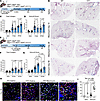 Figure 4
YTactive mice show increased and sustained fibrotic remodeling. (A) Timeline of mouse injury model with YAP/TAZ activated before bleomycin with lungs assessed at 14 and 28 days. (B) Masson’s trichrome staining of lung tissue sections from WT and YTactive mice at 14, 28, and 56 days after bleomycin or saline instillation. Scale bars: 100 μm. (C and D) Quantitative analysis of total collagen (C) and Ashcroft scoring of fibrosis (D) in WT and YTactive mice at 14 and 28 days after saline or bleomycin. Mice from 3 independent experiments were pooled in the following groups: WT saline (n = 10), YTactive saline (n = 8), day 14 WT bleomycin (n = 16), day 14 YTactive bleomycin (n = 13), day 28 WT bleomycin (n = 10), and day 28 YTactive (n = 16) bleomycin. (E) Timeline of mouse lung injury model with YAP/TAZ activated after bleomycin and collection at 28 and 56 days. (F and G) Quantitative analysis of total collagen (F) and Ashcroft scoring of fibrosis (G) in WT and YTactive mice at 28 and 56 days after saline or bleomycin. Mice across 3 independent experiments were grouped as WT saline (n = 9), YTactive saline (n = 8), day 28 WT bleomycin (n = 13), day 28 YTactive bleomycin (n = 14), day 56 WT bleomycin (n = 8), and day 56 YTactive bleomycin (n = 10). Ordinary 1-way ANOVA with Šidák’s multiple-comparison test with a single pooled variance was used to compare groups. (H) Immunofluorescence analysis of lineage-traced AT2 cells (green) expressing Hopx (white) and TAZ (red) at 28 days after injury. Red arrows indicate TAZ+ lineage-traced cells. White arrows indicate Hopx+TAZ+ lineage-traced cells. Scale bar: 50 μM. (I) Quantification of TAZ+ lineage-traced AT2 cells in WT and YTactive saline-treated mice (N = 3 mice each) and bleomycin-treated mice (N = 12 mice each) from 28 days after injury across both time courses.
Next, to determine whether intervention with a pharmacological YAP/TAZ inhibitor could restore alveolar repair/regeneration, tamoxifen-treated YTactive and WT mice were challenged with intratracheal bleomycin (3 weeks after tamoxifen, similar to Figure 4A) and injected with verteporfin (60 mg/kg i.p.), a YAP/TAZ–TEAD inhibitor that prevents YAP/TAZ nuclear localization and enhances degradation (48), 14 days after bleomycin-induced lung injury (Figure 5A). Consistent with the above findings, YTactive mice had increased collagen content and worsened lung injury scores at 28 days after injury (Figure 5, B–D). While verteporfin did not impact fibrosis in WT mice, verteporfin treatment of YTactive mice led to improved Ashcroft scores and lower total collagen content as measured by total Sircol in comparison with vehicle-treated YTactive mice at 28 days after injury (Figure 5, B–D). Immunofluorescence analysis of WT and YTactive mouse lungs treated with saline or bleomycin showed increased Hopx+ AT1-like cells derived from lineage-labeled AT2 cells, as well as increased Sp-C+Hopx+ transitional cells, in YTactive bleomycin-treated lungs (Figure 5, E–G). Verteporfin treatment did not significantly impact the number of lineage-traced Hopx+ cells; however, the number of transitional Sp-C+Hopx+ cells was reduced, suggesting resolution of the transitional phenotype. YTactive bleomycin-treated lungs had decreased overall Sp-C+ AT2 cells and increased Hopx+ AT1-like cells, which were not significantly affected by verteporfin treatment (Figure 5I and Supplemental Figure 6A). Beyond a role in AT2 to AT1 cell differentiation, YAP and TAZ are also known to regulate cell proliferation. Immunofluorescence analysis of Ki67+ proliferating cells found that YTactive bleomycin-injured mouse lungs had increased proliferating lineage-traced cells compared with WT bleomycin-injured lungs (Supplemental Figure 6B). The number of proliferating lineage-traced cells was reduced, although not significantly, by verteporfin treatment 28 days after injury (Supplemental Figure 6C). We observed that during single-dose bleomycin treatment, a small number of Scgb1a1+ airway cells (2.0% ± 1.1%) migrated into the distal lung to potentially participate in repair. Scgb1a1+ cells were increased (10.3% ± 6.2%) in the distal lung parenchyma in YTactive bleomycin-injured lungs in comparison with littermates, while verteporfin treatment led to reduced parenchymal Scgb1a1+ cells (5.0% ± 4.2%) in comparison with vehicle-treated YTactive mice (Figure 5, H and J). These findings indicate that verteporfin treatment after onset of fibrotic remodeling improved lung regeneration by antagonizing the sustained YAP/TAZ activity in AT2 cells.
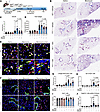 Figure 5
The YAP/TAZ inhibitor verteporfin partially rescues fibrotic phenotype in YTactive mice after bleomycin injury. (A) Timeline of YTactive mouse bleomycin injury model with YAP/TAZ inhibition with verteporfin (60 mg/kg) at 14 days after injury. (B) Masson’s trichrome staining of WT and YTactive mice with and without verteporfin following saline or bleomycin. Scale bars: 100 μm. (C and D) Ashcroft scoring of fibrosis (C) and total collagen analysis (D) of WT and YTactive mice with and without verteporfin following saline or bleomycin. Mice from 3 independent experiments were pooled in the following groups: WT saline (n = 9), YTactive saline (n = 9), WT saline/verteporfin (n = 9), YTactive saline/verteporfin (n = 8), WT bleomycin (n = 16), YTactive bleomycin (n = 14), WT bleomycin/verteporfin (n = 11), and YTactive bleomycin/verteporfin (n = 16). (E) Immunofluorescence analysis of Sp-C+ (red), Hopx+ (white), and lineage-traced AT2 (green) cells. White arrows indicate Hopx+ lineage-traced cells. Red arrows indicate Sp-C+Hopx+ lineage-traced cells. Scale bar: 50 μm. (G, H, and I) Quantification of lineage-traced AT2 cells expressing Hopx (G), Sp-C+Hopx+ cells (H), and total Sp-C+ cells (I) per frame. (F) Scgb1a1+ cells (green), AT2 lineage-labeled cells (red), and Sp-C+ cells (white) in WT and YTactive mice given saline, bleomycin, or bleomycin and verteporfin. Green arrows indicate Scgb1a1+ cells outside of visible airways. Scale bar: 50 μm. (J) Quantification of Scgb1a1+ cells outside of airways in the alveolar region. Mice from 3 independent experiments were grouped as WT and YTactive saline (n = 6), WT and YTactive saline/verteporfin (n = 6), WT bleomycin (n = 14), YTactive bleomycin (n = 16), WT bleomycin/verteporfin (n = 9), and YTactive bleomycin/verteporfin (n = 9). To determine significance, an ordinary 1-way ANOVA with Šidák’s multiple-comparison test with a single pooled variance was used.
To examine the mechanisms through which sustained YAP/TAZ activation in AT2 cells prevents functional alveolar repair and fibrosis resolution, we performed single-nucleus multiomic (RNA + ATAC) sequencing of lung tissue from tamoxifen-treated WT and YTactive mice 28 days after bleomycin (or saline control). Following data integration, cells were clustered using single-cell ATAC (scATAC) profiles and annotated using canonical marker genes, and the epithelial cell population subset was isolated (Figure 6, A and B, and Supplemental Figure 7A). Analysis of opened chromatin regions in bleomycin-injured AT2 cells found increased gene activity scores of several abnormal genes, including those associated with airway epithelial cells, i.e., Scgb1a1, Muc5b, Sox2, and the AT1/transitional cell markers Hopx and Krt19, while the AT2-associated transcription factor Etv5 was reduced (Supplemental Figure 7, B and C) in AT2 cells from YTactive bleomycin-injured lungs compared with cells isolated from WT bleomycin-treated lungs. Marker gene analysis using promoter activity demonstrated that genes associated with airway (Sox2, Runx2), transitional cells (Hopx, Krt19), and proliferation (Mki67, Ccna2) were associated with AT2 cells from bleomycin-injured YTactive mice (Figure 6C). Analysis of transcription factor binding site enrichment within opened promoter regions was associated with, among others, the AT2 cell regulator Cebpa (Figure 6D).
 Figure 6
Single-cell ATAC-seq demonstrates altered AT2 cell chromatin accessibility in YTactive bleomycin-injured mouse lungs associated with aberrant transitional cells. (A and B) UMAPs demonstrating clustering from 17 cell types in mouse lungs (A) and identifying cells recovered from respective genotype and treatment groups from single-nucleus multiome (RNA + ATAC sequencing [ATAC-seq]) of lung tissue from 28 days after bleomycin (B). (C) Volcano plot showing upregulated gene activity from AT2 cells of bleomycin-injured WT (left) and YTactive (right) mice. (D) Single-cell ATAC-seq shows enriched binding sites for open chromatin regions in bleomycin YTactive AT2 cells. The “avg_diff” is the fold change computing the average difference in chromVAR z score after differential testing between WT (left) and YTactive (right) mice.
To determine whether verteporfin treatment corrected the abnormal AT2 differentiation identified by scATAC-seq, immunofluorescence and RNAscope analysis of lineage-traced AT2 cells was used. RNA-ISH confirmed there were increased lineage-labeled Krt19+ cells (12.4% ± 3.4% Krt19+Lin+) in YTactive bleomycin-injured mice compared with WT bleomycin-injured lungs (0.9% ± 0.4% Krt19+Lin+). Verteporfin-treated YTactive lungs had significantly reduced Krt19+ cells compared with vehicle-treated YTactive bleomycin-injured lungs (7.7% ± 1.5% Krt19+Lin+) (Figure 7, A and B), although this remained higher than in bleomycin-injured verteporfin-treated WT mice (1.6% ± 0.3%). With evidence of altered Cebpa activity from our single-nucleus ATAC-seq results, we then assessed a CEBPA gene module score from human AT2 cells grown in SFFFM (from Figure 2). Genes associated with CEBPA activity were reduced in human epithelial cells cultured with sustained YAP/TAZ activation by XMU-MP-1 (Supplemental Figure 7D). Finally, immunofluorescence analysis of Cebpa in lineage-traced AT2 cells from WT (91.0% ± 3.6%) and YTactive (87.1% ± 5.3%) mouse lungs treated with saline or WT bleomycin-treated lungs (89.9% ± 6.0%) demonstrated that Cebpa was readily detected in lineage-traced Sp-C+ AT2 cells; however, this was significantly reduced (58.6% ± 9.9%) in AT2 cells in YTactive mouse lungs injured with bleomycin. Verteporfin treatment significantly increased Cebpa+ lineage-traced cells in the YTactive bleomycin-injured lungs (85.1% ± 4.8%) (Figure 7, C and D). Collectively, these findings suggest that sustained YAP/TAZ activity negatively regulates Cebpa or that the sustained YAP/TAZ activation leads to a loss of AT2 cell identity, thereby reducing Cebpa expression. Treatment with verteporfin improved alveolar repair, including decreasing Krt19+ transitional cells as well as restoring Cebpa expression, in lineage-traced AT2 cells. These findings indicate that disruption of aberrant persistent YAP/TAZ activity can promote adaptive repair and potentially delay or stop the progression of pulmonary fibrosis.
 Figure 7
Sustained YAP/TAZ activation leads to aberrant alveolar epithelial cell differentiation and accumulation of transitional cell populations, which is partially corrected by verteporfin treatment. (A) Immunofluorescence and RNAscope analysis of Krt19 (white) and lineage-traced AT2 cells (green). Scale bars: 50 μm. (B) Quantification of Krt19+/lineage-traced cells in each treatment group. Mice across 3 independent experiments were grouped as WT and YTactive saline (n = 4), WT and YTactive saline/verteporfin (n = 4), WT and YTactive bleomycin (n = 6), and WT and YTactive bleomycin/verteporfin (n = 6). (C) Immunofluorescence analysis of AT2 lineage-labeled cells (green), Cebpa+ cells (red), and Hopx+ AT1 cells (white) in WT and YTactive mice given saline, bleomycin, or bleomycin and verteporfin. Scale bars: 50 μm. (D) Quantification of Cebpa+ nuclei in AT2 lineage-labeled cells. Mice from 3 independent experiments were grouped as WT and YTactive saline (n = 6), WT and YTactive saline/verteporfin (n = 6), WT bleomycin (n = 14), YTactive bleomycin (n = 16), WT bleomycin/verteporfin (n = 9), and YTactive bleomycin/verteporfin (n = 9). Ordinary 1-way ANOVA with Šidák’s multiple-comparison test with a single pooled variance was used to determine significance.
Next, to determine whether the aberrant AT2 cell differentiation in sustained YTactive mice is via cell-autonomous signaling (if YAP/TAZ activation alone in the AT2 cell is sufficient to drive aberrant differentiation), we used the AT2 cell organoid culture model from Katsura et al. (54). SftpcCreert2tdTomato WT mice were used as controls for the YTactive mice. Mice were injected with 100 mg/kg tamoxifen dissolved in corn oil 3 weeks before cell isolation. Then Cd326+ epithelial cells were isolated and cultured in SFFFM for 2 weeks. TdTomato+ cells were isolated by FACS and cultured in SFFFM for 10 days. Then cultures were either continued in SFFFM or switched to ADM for 1 week (Figure 8A). YTactive organoids cultured in SFFFM or ADM had increased organoid number, while YTactive organoids in SFFFM had decreased organoid size, compared with those isolated from WT mice (Figure 8, B–D, and Supplemental Figure 8). These organoids were then dissociated and assessed by bulk RNA-seq to determine transcriptional regulation. YTactive organoids had 1,945 genes with increased and 1,409 genes with decreased expression in SFFFM, while 1,812 genes were increased and 704 genes were decreased in ADM, compared with WT AT2 cells. There were 705 shared genes increased and 243 shared genes decreased in the YTactive organoids between the 2 medium conditions. YAP/TAZ–associated genes (Wwtr1, Ctgf, Ccnd2, Axl, Cyr61, and Ajuba) were significantly increased along with AT1 differentiation markers including Ager, Rtkn2, and Klf5 (Figure 8, E–G). In both SFFFM and ADM, YTactive organoids had increased expression of proximal epithelial cell markers including Scgb1a1, Scgb3a2, Krt5, and Tp63 as well as increased expression of the transitional cell markers Krt17 and Krt19, suggesting loss of normal alveolar cell fate. YTactive organoids also had decreased expression of the alveolar epithelial cell markers Lamp3, Fasn, Slc34a2, and Sftpc, further supporting this concept. Especially in SFFFM, YTactive organoids had increased expression of several genes associated with altered developmental pathway activity. This includes increased Notch (Notch3, Hey1, Jag2), Wnt (Wnt5a, Wnt7b, Plaur), and TGF-β (Tgfb2, Tgfbr2, and Serpine1) signaling. Uncontrolled regulation of developmental pathway signaling is a hallmark of failed repair and has been identified in the epithelium of patients with pulmonary fibrosis (19, 41, 62). Interestingly, most immune-associated genes were downregulated, except for Il33, which was increased. Markers of abnormal repair and pulmonary fibrosis were also increased in the YTactive mouse organoids, including increased fibroblast activation markers (Vim, FN1), increased expression of Mmp14, and increased expression of the lysyl oxidases Lox and Loxl2, which are secreted by AT2 cells and are associated with fibroblast activation in pulmonary fibrosis and induced by YAP (63) (Figure 8G).
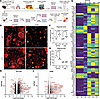 Figure 8
Lineage-traced YTactive AT2 cells express markers of aberrant differentiation in feeder-free organoid culture. (A) Schematic of experimental design. (B) Fluorescent imaging of representative Tomato+ lineage-traced organoids at time of collection. Scale bars: 250 μm. (C) Quantification of total organoid numbers per well per mouse (N = 2 wells per mouse, N = 4 mice per group). (D) Quantification of average organoid size in each culture condition. Each dot represents an average per mouse. Sequencing and data analysis from 1 of 2 experiments are represented. Statistics determined by ordinary 1-way ANOVA with Šidák’s multiple-comparison test. (E and F) Volcano plots showing differentially expressed genes (determined using DESeq2) in SFFFM (N = 3 mice each genotype) (E) and ADM (N = 4 mice each genotype) (F) medium conditions. Significant-expression cutoffs of Padj < 0.05 and log2 fold change < –0.5, > 0.5 were used. Positive fold change values indicate increased expression in YTactive AT2 cells. (G) Heatmap of gene expression patterns from individual mouse organoids cultured in SFFFM showing gene expression associated with YAP/TAZ activation, epithelial cell type markers, developmental pathway markers, and IPF-associated genes.
Collectively, these findings demonstrate that, while previous studies show that YAP/TAZ activity is required for AT2 to AT1 cell differentiation and is required initially to promote repair, sustained unregulated YAP/TAZ activity promotes the aberrant epithelial cell differentiation associated with failed repair, leading to worsened fibrotic remodeling.


