
Research ArticleNeuroscienceOphthalmology
Open Access |  10.1172/jci.insight.197880
VIRMA modulates function of photoreceptor cells through m6A modification and alternative splicing
Wenjing Liu,1,2 Xiaojing Wu,1 Rong Zou,2 Fan Zhang,3 Yudi Fan,2 Kuanxiang Sun,2 Liping Yang,4 Jiang Hu,1 Lin Zhang,2,5 and Xianjun Zhu1,2,5
1Department of Orthopedics and
2The Sichuan Provincial Key Laboratory for Human Disease Gene Study and Center for Medical Genetics, Sichuan Provincial People’s Hospital, School of Medicine, University of Electronic Science and Technology of China, Chengdu, Sichuan, China.
3Beijing Chinagene Co. LTD, Beijing, China.
4Department of Ophthalmology, Third Hospital, Peking University, Beijing, China.
5Sichuan-Chongqing Joint Key Laboratory for Pathology and Laboratory Medicine, Jinfaeng Laboratory, Chongqing, China.
Address correspondence to: Xianjun Zhu, Jiang Hu, or Lin Zhang, Sichuan Provincial Key Laboratory for Human Disease Gene Study, Sichuan Provincial People’s Hospital, University of Electronic Science and Technology of China, Chengdu, Sichuan, 610072, China. Email: xjzhu@uestc.edu.cn (XZ); Hujiang8711@163 (JH); zhanglin202@uestc.edu.cn (LZ). Or to: Liping Yang, Department of Ophthalmology, Third Hospital, Peking University, 100191, Beijing, China. Email: alexlipingyang@bjmu.edu.cn.
Authorship note: WL, XW, RZ, and FZ contributed equally to this work.
Find articles by Liu, W. in: PubMed | Google Scholar
1Department of Orthopedics and
2The Sichuan Provincial Key Laboratory for Human Disease Gene Study and Center for Medical Genetics, Sichuan Provincial People’s Hospital, School of Medicine, University of Electronic Science and Technology of China, Chengdu, Sichuan, China.
3Beijing Chinagene Co. LTD, Beijing, China.
4Department of Ophthalmology, Third Hospital, Peking University, Beijing, China.
5Sichuan-Chongqing Joint Key Laboratory for Pathology and Laboratory Medicine, Jinfaeng Laboratory, Chongqing, China.
Address correspondence to: Xianjun Zhu, Jiang Hu, or Lin Zhang, Sichuan Provincial Key Laboratory for Human Disease Gene Study, Sichuan Provincial People’s Hospital, University of Electronic Science and Technology of China, Chengdu, Sichuan, 610072, China. Email: xjzhu@uestc.edu.cn (XZ); Hujiang8711@163 (JH); zhanglin202@uestc.edu.cn (LZ). Or to: Liping Yang, Department of Ophthalmology, Third Hospital, Peking University, 100191, Beijing, China. Email: alexlipingyang@bjmu.edu.cn.
Authorship note: WL, XW, RZ, and FZ contributed equally to this work.
Find articles by Wu, X. in: PubMed | Google Scholar
1Department of Orthopedics and
2The Sichuan Provincial Key Laboratory for Human Disease Gene Study and Center for Medical Genetics, Sichuan Provincial People’s Hospital, School of Medicine, University of Electronic Science and Technology of China, Chengdu, Sichuan, China.
3Beijing Chinagene Co. LTD, Beijing, China.
4Department of Ophthalmology, Third Hospital, Peking University, Beijing, China.
5Sichuan-Chongqing Joint Key Laboratory for Pathology and Laboratory Medicine, Jinfaeng Laboratory, Chongqing, China.
Address correspondence to: Xianjun Zhu, Jiang Hu, or Lin Zhang, Sichuan Provincial Key Laboratory for Human Disease Gene Study, Sichuan Provincial People’s Hospital, University of Electronic Science and Technology of China, Chengdu, Sichuan, 610072, China. Email: xjzhu@uestc.edu.cn (XZ); Hujiang8711@163 (JH); zhanglin202@uestc.edu.cn (LZ). Or to: Liping Yang, Department of Ophthalmology, Third Hospital, Peking University, 100191, Beijing, China. Email: alexlipingyang@bjmu.edu.cn.
Authorship note: WL, XW, RZ, and FZ contributed equally to this work.
Find articles by Zou, R. in: PubMed | Google Scholar
1Department of Orthopedics and
2The Sichuan Provincial Key Laboratory for Human Disease Gene Study and Center for Medical Genetics, Sichuan Provincial People’s Hospital, School of Medicine, University of Electronic Science and Technology of China, Chengdu, Sichuan, China.
3Beijing Chinagene Co. LTD, Beijing, China.
4Department of Ophthalmology, Third Hospital, Peking University, Beijing, China.
5Sichuan-Chongqing Joint Key Laboratory for Pathology and Laboratory Medicine, Jinfaeng Laboratory, Chongqing, China.
Address correspondence to: Xianjun Zhu, Jiang Hu, or Lin Zhang, Sichuan Provincial Key Laboratory for Human Disease Gene Study, Sichuan Provincial People’s Hospital, University of Electronic Science and Technology of China, Chengdu, Sichuan, 610072, China. Email: xjzhu@uestc.edu.cn (XZ); Hujiang8711@163 (JH); zhanglin202@uestc.edu.cn (LZ). Or to: Liping Yang, Department of Ophthalmology, Third Hospital, Peking University, 100191, Beijing, China. Email: alexlipingyang@bjmu.edu.cn.
Authorship note: WL, XW, RZ, and FZ contributed equally to this work.
Find articles by Zhang, F. in: PubMed | Google Scholar
1Department of Orthopedics and
2The Sichuan Provincial Key Laboratory for Human Disease Gene Study and Center for Medical Genetics, Sichuan Provincial People’s Hospital, School of Medicine, University of Electronic Science and Technology of China, Chengdu, Sichuan, China.
3Beijing Chinagene Co. LTD, Beijing, China.
4Department of Ophthalmology, Third Hospital, Peking University, Beijing, China.
5Sichuan-Chongqing Joint Key Laboratory for Pathology and Laboratory Medicine, Jinfaeng Laboratory, Chongqing, China.
Address correspondence to: Xianjun Zhu, Jiang Hu, or Lin Zhang, Sichuan Provincial Key Laboratory for Human Disease Gene Study, Sichuan Provincial People’s Hospital, University of Electronic Science and Technology of China, Chengdu, Sichuan, 610072, China. Email: xjzhu@uestc.edu.cn (XZ); Hujiang8711@163 (JH); zhanglin202@uestc.edu.cn (LZ). Or to: Liping Yang, Department of Ophthalmology, Third Hospital, Peking University, 100191, Beijing, China. Email: alexlipingyang@bjmu.edu.cn.
Authorship note: WL, XW, RZ, and FZ contributed equally to this work.
Find articles by Fan, Y. in: PubMed | Google Scholar
1Department of Orthopedics and
2The Sichuan Provincial Key Laboratory for Human Disease Gene Study and Center for Medical Genetics, Sichuan Provincial People’s Hospital, School of Medicine, University of Electronic Science and Technology of China, Chengdu, Sichuan, China.
3Beijing Chinagene Co. LTD, Beijing, China.
4Department of Ophthalmology, Third Hospital, Peking University, Beijing, China.
5Sichuan-Chongqing Joint Key Laboratory for Pathology and Laboratory Medicine, Jinfaeng Laboratory, Chongqing, China.
Address correspondence to: Xianjun Zhu, Jiang Hu, or Lin Zhang, Sichuan Provincial Key Laboratory for Human Disease Gene Study, Sichuan Provincial People’s Hospital, University of Electronic Science and Technology of China, Chengdu, Sichuan, 610072, China. Email: xjzhu@uestc.edu.cn (XZ); Hujiang8711@163 (JH); zhanglin202@uestc.edu.cn (LZ). Or to: Liping Yang, Department of Ophthalmology, Third Hospital, Peking University, 100191, Beijing, China. Email: alexlipingyang@bjmu.edu.cn.
Authorship note: WL, XW, RZ, and FZ contributed equally to this work.
Find articles by Sun, K. in: PubMed | Google Scholar
1Department of Orthopedics and
2The Sichuan Provincial Key Laboratory for Human Disease Gene Study and Center for Medical Genetics, Sichuan Provincial People’s Hospital, School of Medicine, University of Electronic Science and Technology of China, Chengdu, Sichuan, China.
3Beijing Chinagene Co. LTD, Beijing, China.
4Department of Ophthalmology, Third Hospital, Peking University, Beijing, China.
5Sichuan-Chongqing Joint Key Laboratory for Pathology and Laboratory Medicine, Jinfaeng Laboratory, Chongqing, China.
Address correspondence to: Xianjun Zhu, Jiang Hu, or Lin Zhang, Sichuan Provincial Key Laboratory for Human Disease Gene Study, Sichuan Provincial People’s Hospital, University of Electronic Science and Technology of China, Chengdu, Sichuan, 610072, China. Email: xjzhu@uestc.edu.cn (XZ); Hujiang8711@163 (JH); zhanglin202@uestc.edu.cn (LZ). Or to: Liping Yang, Department of Ophthalmology, Third Hospital, Peking University, 100191, Beijing, China. Email: alexlipingyang@bjmu.edu.cn.
Authorship note: WL, XW, RZ, and FZ contributed equally to this work.
Find articles by Yang, L. in: PubMed | Google Scholar
1Department of Orthopedics and
2The Sichuan Provincial Key Laboratory for Human Disease Gene Study and Center for Medical Genetics, Sichuan Provincial People’s Hospital, School of Medicine, University of Electronic Science and Technology of China, Chengdu, Sichuan, China.
3Beijing Chinagene Co. LTD, Beijing, China.
4Department of Ophthalmology, Third Hospital, Peking University, Beijing, China.
5Sichuan-Chongqing Joint Key Laboratory for Pathology and Laboratory Medicine, Jinfaeng Laboratory, Chongqing, China.
Address correspondence to: Xianjun Zhu, Jiang Hu, or Lin Zhang, Sichuan Provincial Key Laboratory for Human Disease Gene Study, Sichuan Provincial People’s Hospital, University of Electronic Science and Technology of China, Chengdu, Sichuan, 610072, China. Email: xjzhu@uestc.edu.cn (XZ); Hujiang8711@163 (JH); zhanglin202@uestc.edu.cn (LZ). Or to: Liping Yang, Department of Ophthalmology, Third Hospital, Peking University, 100191, Beijing, China. Email: alexlipingyang@bjmu.edu.cn.
Authorship note: WL, XW, RZ, and FZ contributed equally to this work.
Find articles by Hu, J. in: PubMed | Google Scholar
1Department of Orthopedics and
2The Sichuan Provincial Key Laboratory for Human Disease Gene Study and Center for Medical Genetics, Sichuan Provincial People’s Hospital, School of Medicine, University of Electronic Science and Technology of China, Chengdu, Sichuan, China.
3Beijing Chinagene Co. LTD, Beijing, China.
4Department of Ophthalmology, Third Hospital, Peking University, Beijing, China.
5Sichuan-Chongqing Joint Key Laboratory for Pathology and Laboratory Medicine, Jinfaeng Laboratory, Chongqing, China.
Address correspondence to: Xianjun Zhu, Jiang Hu, or Lin Zhang, Sichuan Provincial Key Laboratory for Human Disease Gene Study, Sichuan Provincial People’s Hospital, University of Electronic Science and Technology of China, Chengdu, Sichuan, 610072, China. Email: xjzhu@uestc.edu.cn (XZ); Hujiang8711@163 (JH); zhanglin202@uestc.edu.cn (LZ). Or to: Liping Yang, Department of Ophthalmology, Third Hospital, Peking University, 100191, Beijing, China. Email: alexlipingyang@bjmu.edu.cn.
Authorship note: WL, XW, RZ, and FZ contributed equally to this work.
Find articles by Zhang, L. in: PubMed | Google Scholar
1Department of Orthopedics and
2The Sichuan Provincial Key Laboratory for Human Disease Gene Study and Center for Medical Genetics, Sichuan Provincial People’s Hospital, School of Medicine, University of Electronic Science and Technology of China, Chengdu, Sichuan, China.
3Beijing Chinagene Co. LTD, Beijing, China.
4Department of Ophthalmology, Third Hospital, Peking University, Beijing, China.
5Sichuan-Chongqing Joint Key Laboratory for Pathology and Laboratory Medicine, Jinfaeng Laboratory, Chongqing, China.
Address correspondence to: Xianjun Zhu, Jiang Hu, or Lin Zhang, Sichuan Provincial Key Laboratory for Human Disease Gene Study, Sichuan Provincial People’s Hospital, University of Electronic Science and Technology of China, Chengdu, Sichuan, 610072, China. Email: xjzhu@uestc.edu.cn (XZ); Hujiang8711@163 (JH); zhanglin202@uestc.edu.cn (LZ). Or to: Liping Yang, Department of Ophthalmology, Third Hospital, Peking University, 100191, Beijing, China. Email: alexlipingyang@bjmu.edu.cn.
Authorship note: WL, XW, RZ, and FZ contributed equally to this work.
Find articles by
Zhu, X.
in:
PubMed
|
Google Scholar
|

Published March 20, 2026 - More info
JCI Insight. 2026;11(9):e197880. https://doi.org/10.1172/jci.insight.197880.
© 2026 Liu et al. This work is licensed under the Creative Commons Attribution 4.0 International License. To view a copy of this license, visit http://creativecommons.org/licenses/by/4.0/.
Received: July 11, 2025; Accepted: March 10, 2026

-
Results
VIRMA deficiency in rod cells causes impaired visual function. m6A modification has been reported to be involved in maintaining retinal homeostasis in several mouse models, as described in the Introduction. Although previous study illustrated that conditional knockout of the Mettl3/14 or Ythdc2 impaired photoreceptor function and survival in mice (30, 48, 49), whether other components involved in m6A modification could modulate photoreceptor function and survival remains unclear. To address this question, we focused on VIRMA, a structural component of the m6A methyltransferase complex, as its depletion leads to the biggest downregulation of m6A modification compared with other key members such as METTL3, METTL14, and WTAP (12). Immunofluorescence staining demonstrated that VIRMA was broadly expressed in nucleus of outer nuclear layer (ONL), inner nuclear layer, and ganglion cell layer in retina labeled with anti-VIRMA antibody, suggesting a potential functional role of VIRMA in retina (Supplemental Figure 1A; supplemental material available online with this article; https://doi.org/10.1172/jci.insight.197880DS1). To determine the function of VIRMA in photoreceptor cells, we crossed Virma-floxed mice with RHO-Cre (50) and HRGP-Cre transgenic mice (51), which express Cre specifically in the rod and cone cells, respectively (Supplemental Figure 1A). Genotyping confirmed the deletion of exon 2 in homozygotes, and the littermates of the progeny were distinguished as follows: Virmaloxp/loxp; RHO-Cre (hereafter called RKO), Virmaloxp/loxp; HRGP-Cre (hereafter called HKO), and Virmaloxp/loxp (used as control [Ctrl]) mice (Supplemental Figure 1B). To confirm the cell type–specific expression of our Cre lines, we introduced ROSA26-tdTomato reporter mice to visualize the specific expression of RHO-Cre and HRGP-Cre in retina rod and cone photoreceptor cells, respectively. As expected, tdTomato fluorescence was detected in the ONL of RHO-Cre mice (Supplemental Figure 1, C and D). Given that rod cells constitute 97% in murine photoreceptors (52), the widespread tdTomato signal in the ONL of RHO-Cre mice supports its specificity for rod cells (Supplemental Figure 1D). As revealed by Western blot, RT-qPCR, and immunofluorescence staining, the expression level of Virma was drastically reduced in the retina, confirming the successful generation of Virma photoreceptor-specific knockout mice (Supplemental Figure 1, E and F). In HRGP-Cre mice, tdTomato fluorescence was also observed in the ONL (Supplemental Figure 1G). High-magnification costaining with the cone-specific marker cone arrestin (cArr) revealed precise colocalization of the tdTomato signal within cArr-positive cells, suggesting the precise excision.
To assess the visual function in Virma RKO mice, scotopic electroretinograms (ERGs) were performed on Ctrl and RKO mice at 4 weeks of age. Scotopic ERG responses in the RKO retinas exhibited diminished amplitudes for both a-waves and b-waves when compared with those of age-matched controls at each flash intensity (Figure 1, A and B). The average amplitudes of the a- and b-waves of RKO mice were reduced by approximately 69% and 62%, respectively. In contrast, photopic ERG traces, reflecting cone photoreceptor function, appeared normal in RKO mice at this time point (Figure 1, C and D). These results indicate that the rod photoreceptor function was significantly compromised by the loss of Virma. We then carried out behavioral assessments for visual function via the light-dark transition test and optomotor response test. The preferred movements in dark and light were intuitively presented in traveling trajectories (Figure 1E), and heatmaps documented the time spent at in different regions of the light-dark box (Figure 1F). RKO mice showed an apparent preference for staying in the dark chamber for over 55% of time at 2,000 lux luminance and traveled around 50% of distance in the dark, both of which were lower than either of those in Ctrl mice (Figure 1G). Meanwhile, the minimal duration time in dark was significant decreased, while the transition time increased (Figure 1G). In the C57BL/6J mouse strain, the ratio of the number of times of head movement responded in the correct and incorrect directions, namely optomotor reflex (OMR), is most significantly observed at a spatial frequency of 0.2 cycles/° (53). Therefore, a spatial frequency of 0.2 cycles/° was chosen to evaluate the effect of Virma deficiency on visual function in mice as previously described (53). The overall OMR values in Ctrl context exhibited equal or higher than 2.0, while in RKO mice, the OMR value was apparently reduced to 1.5 (Figure 1, H–J). These results indicate that the m6A writer VIRMA positively regulates rod photoreceptor function in vivo and Virma deletion compromise photoreceptor function.
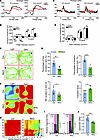 Figure 1
Impaired visual function in rod-specific Virma-depleted mice. (A) Scotopic ERGs were recorded with increasing light intensities from dark-adapted Ctrl and RKO mice at 4 weeks of age. (B) Statistical analysis for the amplitudes of the a-wave and b-wave under scotopic conditions (Student’s t test, n = 3). (C) Photopic ERGs were recorded from Ctrl and RKO mice at 4 weeks of age. (D) Statistical analysis for the amplitudes of the a-wave and b-wave under photopic conditions (Student’s t test, n = 3). (E and F) The representative traveling trajectories (E) and heatmap recordings for time spent in distinct regions (F) of the light-dark box at 2,000 lux luminance. (G) Statistical analysis based on behavioral parameters, including time, distance traveled, and duration as well as transition between the chambers (Student’s t test, n = 6). (H) Representative heatmaps of the visual stimuli–driven optomotor responses at 0.2 cycles/° spatial frequency. (I) Representative images of OMR values. The response time in either stimulus direction (positive value, light green window) or opposite direction (negative value, light magenta window) at a specific velocity threshold was normalized to the maximal response time, set as 1, and presented as a blue bar. (J) Statistical analysis of optomotor response (Student’s t test, n = 6). Data are presented as the mean ± SD. *P < 0.05; **P < 0.01; ***P < 0.001; ****P < 0.0001. A lack of significant difference is indicated by #.
Rod cell degeneration in RKO mice. To confirm morphological changes in mice, histological analysis was performed on the retinas of Ctrl and RKO mice at different ages. At 3 weeks of age, the cellular layers and retinal thickness in RKO mice were well maintained (Figure 2, A and B). In contrast, RKO mice exhibited gradual reduction in the outer segments (OS), inner segments (IS), and ONL of photoreceptors at 4 weeks, with these changes becoming more evident with age as a consequence of the Virma deletion (Figure 2, A and B). Intriguingly, the retinas of Virma RKO mice exhibited much more rapid degeneration compared with Mettl3/14 RKO mice. The pathological phenotypes in the retinas of Mettl3/14 RKO mice first appeared at 3 months and 3.5 months of age, respectively (Supplemental Figure 2), highlighting the key role of VIRMA in retina function.
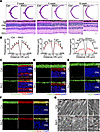 Figure 2
Virma deficiency leads to progressive rod cell loss in the retina. (A) H&E staining of paraffin sections of Ctrl and RKO retinas at the ages of 3 weeks, 4 weeks, and 8 weeks. Scale bars: 50 μm. (B) Quantitative analysis of the ONL thickness of the Ctrl and RKO retinas at defined ages (n = 3). Analyzed by multiple 2-tailed t tests with the Holm-Šídák method to correct for multiple comparisons. (C–F) Retinal cryosections from 4-week-old mice were stained with OS markers rhodopsin, PRPH2, GRK1, PDE6B, and CNGA1 and IS marker NaK ATPase. Scale bars: 25 μm. (G) Representative transmission electron microscopy images of photoreceptor outer segments in 4-week-old Ctrl and RKO mice. Red dashed line indicates the boundary between the RPE layer and the OS. Red arrowheads indicate the disorder of OS disk. RPE, retinal pigment epithelium; OS, outer segment; IS, inner segment; ONL, outer nuclear layer; INL, inner nuclear layer; GCL, ganglion cell layer. Data are presented as the mean ± SD. *P < 0.05; **P < 0.01; ***P < 0.001; ****P < 0.0001. A lack of significant difference is indicated by #.
The OS house a large amount of phototransduction proteins, all of which are synthesized in the IS and transported to the OS via the photoreceptor cilium. To elucidate the effect of Virma deficiency on the function of photoreceptor cells, we conducted immunofluorescence staining to assess the subcellular localization and expression of multiple key OS proteins in the RKO retina, including rhodopsin, PRPH2, GRK1, PDE6B, and CNGA1. In RKO retinas, these proteins retained their normal OS localization, but the OS appeared markedly shortened (Figure 2, C–F). This morphological phenotype may result from decreased protein synthesis or defects in cilium transport. To investigate this, we evaluated the morphology and structural changes of cilia using immunostaining and transmission electron microscopy (TEM). Cryosections of Ctrl and RKO animals were stained with centriole marker CEP164 and the ciliary marker acetylated α-tubulin. The results illustrated that, similar to those in Ctrl mice, the photoreceptor cilia in RKO mice appeared slender in their arrangement without noticeable length differences (Supplemental Figure 3, A–C). TEM results further corroborated these findings, showing that cilia in RKO mice also exhibited a typical 9+0 structure (Supplemental Figure 3D). As evidenced by TEM, a palisade pattern formed by the OS was observed on the RPE, displaying highly ordered OS disc in the 4-week-old Ctrl mice. However, age-matched RKO mice showed disorganized OS discs in photoreceptors cells, indicating the damage of the OS (Figure 2G).
In addition, the activation of resident retinal glial and immune cells is a key event in the progression of photoreceptor degeneration (54–56). We thus stained retinal sections from Ctrl and RKO mice for activated Müller and microglia markers. The abnormal migratory behavior stained with glial fibrillary acidic protein (GFAP) provides obvious evidence for Müller cell proliferation in RKO mice in response to retinal injury or stress (Supplemental Figure 4A). The ionized calcium-binding adapter molecule 1–immunoreactive (IBA1-immunoreactive) microglial cells had features typical of the resting state in Ctrl mice. In contrast, the IBA1-immunoreactive cells in RKO mice transformed into an amoeboid shape and infiltrated the ONL and both the inner and outer segments of photoreceptors (Supplemental Figure 4B). Western blot analysis further confirmed these results, as revealed by increased GFAP and IBA1 protein level in the RKO retinas (Supplemental Figure 4C). TUNEL staining suggested that gradual loss of photoreceptors in RKO mice primarily occurred via apoptosis (Supplemental Figure 4D).
Owing to the loss of trophic factors and structural support provided by neighboring rod photoreceptor cells, the degeneration of rods frequently leads to secondary morphological and physiological changes of cones, ultimately resulting in cell death (5, 57). While rods die first at 4 weeks, with ONL shrinking over time, cone structure begins to deteriorate at 8 weeks of age in RKO mice (Supplemental Figure 5, A–G). From 8 to 15 weeks of age in RKO mice, cones exhibited pronounced morphological alterations, mislocalization of cone OS proteins, and gradual cell death as a consequence of the progressive rod cell loss (Supplemental Figure 5, E–I). These results indicated that specific deletion of VIRMA in retina rod photoreceptor cells contributed to progressive photoreceptor cell loss.
Cone cell defects in HKO mice. Rod cells detect light intensity, contributing to night and peripheral vision, while cone cells perceive color, supporting daylight and central vision (58). To further examine the role of VIRMA in photoreceptor function, we specifically knocked out Virma in cone cells using HRGP-Cre. Photopic ERG showed decreased a- and b-wave amplitudes in 8-week-old HKO mice compared with controls (Figure 3A). At this time point, scotopic a-wave amplitude was unaffected (Figure 3B). At 8 weeks of age, HKO mice showed marked and clear changes in cones morphology, along with a slight decrease in cone density (Figure 3, C–F). In the both dorsal and ventral retinas of HKO mice, the M-opsin–positive cones exhibited a significant decrease in number, accompanied by morphological disorganization and misshapen appearance (Figure 3, C–E). In contrast, the number of S-opsin–positive cones showed no significant change, with only minor morphological distortions (Supplemental Figure 6). Subsequently, starting from week 16, a sharp decline in the number of cones was observed in HKO mice, which became more evident with increasing age (Supplemental Figure 7). Degeneration of cones also triggered glial cell activation in the retina (Figure 3G). Misshaped and reduced cone cells observed in HKO mice suggested that Virma depletion resulted in the degeneration of cone cells.
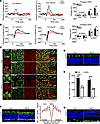 Figure 3
Virma depletion in cone cells leads to cone defects in the retina. (A) Representative photopic ERG traces and statistical analysis at identified flash intensities in mice at 8 weeks of age (Student’s t test, n = 3). (B) Representative scotopic ERG traces and statistical analysis at identified flash intensities in mice at 8 weeks of age (Student’s t test, n = 3). (C) Immunostaining of retina flat mount from 8-week-old Ctrl and HKO mice with M-opsin and PNA (red). Scale bars: 50 μm. Representative images from the dorsal and ventral retinal quadrant are shown. Scale bars: 20 μm. Inset images showed a cropped and zoomed image. Scale bars: 5 μm. White arrowheads indicate the lost and misshaped M-opsin–positive cones. (D) Retinal cryosections from 8-week-old Ctrl and HKO mice were labeled with M-opsin. Scale bars: 20 μm. (E) Quantification of the number of M-opsin–positive cones at both dorsal and ventral side of the retina per field (Student’s t test, n = 5). (F) Representative immunofluorescence images of cArr (green) of retina sections from 8-week-old Ctrl and HKO mice, and the number of cArr-positive cones per 500 μm field was quantified. Scale bars: 25 μm. Analyzed by multiple 2-tailed t tests with the Holm-Šídák method to correct for multiple comparisons. (G) Retinal sections from 8-week-old mice were stained with GFAP (green). Scale bars: 20 μm. Data are presented as the mean ± SD. *P < 0.05; **P < 0.01; ***P < 0.001; ****P < 0.0001. A lack of significant difference is indicated by #.
VIRMA depletion decreases the abundance of m6A methylation in the RKO retina. VIRMA serves as an interaction platform for the assembly of MACOM complex (including VIRMA, WTAP, HAKAI, RBM15, and ZC3H13), which is required for mRNA m6A methylation (18). We thus assessed the global profiles of m6A methylation levels in retina via dot blot assay, and the result revealed a 50% reduction of overall m6A levels in the RKO mice compared with the Ctrl mice (Figure 4A). Immunofluorescence staining further confirmed the aberrant downregulation of m6A levels in ONL of RKO mice (Figure 4B). We then explored whether the loss of VIRMA affects the expression and subcellular distribution of other MACOM members. To this end, we detect the protein levels of these members, and the data showed that only WTAP expression was downregulated upon VIRMA deletion, while the expression of other members remained unaffected, which consistent with findings from a previous report (32) (Figure 4C).
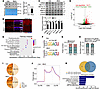 Figure 4
Loss of Virma led to reduction of global m6A modification abundance in the retina. (A) m6A dot blot assay of global m6A abundance in retinas from 4-week-old Ctrl and RKO mice using 250 ng or 500 ng mRNAs. Methylene blue staining was used as a loading control (Student’s t test, n = 4). (B) Immunofluorescence staining of m6A (red) of retina cryosections from 4-week-old mice. Scale bars: 20 μm; 5 μm (higher-magnification images). (C) Western blot and quantification of expression of m6A writers in 4-week-old mouse retinas (Student’s t test, n = 3). (D) Volcano plots of the significantly differentially expressed genes between Ctrl and RKO (fold change ≥1.2 and P < 0.05). (E) Pathway analysis in downregulated genes after Virma deletion. (F) Top consensus m6A motif identified by HOMER in Ctrl and RKO retinas. (G) Number of m6A peaks identified from MeRIP-seq in Ctrl and RKO retinas. (H) Number of m6A-modified genes identified from MeRIP-seq in Ctrl and RKO retinas. (I) Graphs illustrating the proportion distribution of the m6A peaks in mRNA transcripts from Ctrl and RKO retinas. (J) Distribution of m6A peaks across 5′ UTR, CDS, and 3′ UTR of mRNA in Ctrl and RKO retinas. CDS, code sequence. (K) A Venn diagram showing the shared genes with reduced m6A modification levels and mRNA expression levels, along with enriched GO terms for these 71 selected genes.
Previous studies suggest that m6A methyltransferases are predominately localized in the nuclear speckles, where m6A methylation occurs (15–17, 34). MACOM complex showed no obvious change in cellular localization upon VIRMA depletion (Supplemental Figure 8). These results suggest that VIRMA is not required for the nuclear localization of the MACOM complex, except for its effect on WTAP stabilization within the nucleus.
To investigate whether the functional defects in photoreceptor cells of RKO mice were attributable to decreased m6A modification and to elucidate the underlying molecular mechanisms, we comprehensively analyzed the retinal mRNA m6A modification landscape via methylated RNA immunoprecipitation–qPCR (MeRIP-qPCR) and the corresponding gene expression profiles via RNA-seq. The data revealed 600 downregulated genes and 1,417 upregulated genes with significant differences (fold change >1.2, P < 0.05) in transcript levels between Ctrl and RKO mice, and these genes were primarily enriched in the phototransduction signaling pathway (Figure 4, D and E). The m6A “GGACU” consensus motif was highly enriched in both Ctrl and RKO groups using the HOMER program (59, 60) (Figure 4F). In total, MeRIP-seq identified 26,324 m6A peaks from 3,601 m6A-modified transcripts in Ctrl retinas and 25,193 m6A peaks from 3,546 m6A-modified transcripts in RKO retinas. Following Virma deletion in rods, 539 genes gained m6A modification , 582 genes lost m6A modification, and 3,007 genes were common to both groups (Figure 4, G and H). Peak distribution analysis showed a similar pattern, with m6A sites enriched in both CDS and 3′ UTRs. The highest enrichment of m6A residues was located near the stop codon and 3′ UTRs (Figure 4, I and J), which is consistent with results from previous studies (32, 41). As is typical, less enrichment of m6A peaks appeared at 3′ UTR and near the stop codon in RKO retinas (Figure 4J). By intersecting the 600 downregulated genes identified from RNA-seq and 418 m6A-downregulated genes identified from MeRIP-seq, 71 candidate genes were selected (Figure 4K). Gene ontology (GO) analysis of these genes yielded the enrichment signaling pathways of biological process, and notable gene sets include visual perception and photoreceptor cell maintenance (Figure 4K). Therefore, we focused primarily on the alterations of these two signaling cascades in the subsequent investigation.
Virma regulates the expression of visual perception–related genes through m6A modification. Heatmaps of the visual perception–related genes showed significant downregulation at the mRNA level (Figure 5A), which was further validated by RT-qPCR showing reduced expression of Gnat1, Guca1b, Prph2, Pde6b, Pde6g, Rgs9bp, Rs1, Prph2, Slc24a1, Rho, Mdm1, Cc2d2a, and Rgs9 in the retinas of RKO mice (Figure 5B). These genes also exhibited significant loss of m6A peak signals in response to Virma knockout, as confirmed by MeRIP-qPCR (Figure 5, C and D). Compared with the previously reported Mett13/14 RKO mice, a greater number of visual perception–related genes were downregulated in the retinas of Virma RKO mice (30, 49). To further explore the mechanism underlying VIRMA’s regulation of photoreceptor function, we used a proteomic approach on retinas from Ctrl and RKO mice. GO enrichment analysis identified substantially altered categories of proteins following Virma deletion. The differently expressed proteins were mainly involved in retina homeostasis, visual perception, and protein deglutamylation (Figure 5E), which was closely aligned with the RNA-seq data. Western blot analysis also revealed a reduction in RHO, GNAT1, PDE6B, PRPH2, and RDH12 (Figure 5F). To determine whether m6A hypomethylation directly caused the downregulation of visual perception–related genes, we analyzed global m6A levels at postnatal week 3, prior to the onset of photoreceptor degeneration. Dot blot analysis revealed a significant reduction in overall m6A levels in the RKO mice compared with the Ctrl mice (Supplemental Figure 9A). At this early stage, H&E staining and immunostaining for key photoreceptor function or structural proteins showed no obvious difference between RKO and Ctrl retina sections (Figure 2A and Supplemental Figure 9, B–D). GFAP and TUNEL staining also showed no cellular stress or apoptosis in RKO photoreceptors (Supplemental Figure 9, E and F). Furthermore, RT-qPCR analysis revealed no significant difference in the expression of visual perception–related genes between RKO and Ctrl mice (Supplemental Figure 9G). Thus, m6A methylation reduction precedes both transcriptional decline and phenotypic changes, confirming its primary role in disease initiation. Collectively, these findings shed light on the epigenetic underpinnings that drive the progress of photoreceptor degeneration, with a marked decrease in m6A methylation level of visual perception–associated key molecules.
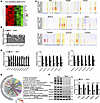 Figure 5
Virma regulated visual perception–associated gene expression via m6A modification in rods. (A) Heatmap of several visual perception–related genes identified in Figure 4. (B) RT-qPCR verified the mRNA expression for the indicated genes (Student’s t test, n = 3). (C) Integrative Genomics Viewer tracks of MeRIP-seq reads along indicated mRNAs. Normalized reads density levels are shown as blue (input), red (Ctrl), and green (RKO) shades, respectively. Three replicates are shown. (D) MeRIP-qPCR assay indicating the m6A modification levels for the indicated genes (Student’s t test, n = 3). (E) Chord plot of differentially expressed proteins in the RKO group compared with Ctrl groups. (F) Western blot and quantification of visual perception–related protein expression in retinas from 4-week-old mice. β-Actin served as control. Data are presented as the mean ± SD. *P < 0.05; **P < 0.01; ***P < 0.001; ****P < 0.0001.
Virma modulates the AS of Imphd1 and Polg2. VIRMA, like other known nuclear enzymes related to m6A modification, is localized to the nuclear speckles that enrich pre-mRNA processing factors (12, 16, 17, 34, 61) (Supplemental Figure 8). SRSF3, a member of serine/arginine rich protein family, is involved in regulating AS (62). It has been reported that the m6A-binding protein YTHDC1 can recruit SRSF3 to modulate the AS of target genes (63). Immunofluorescence showed that VIRMA colocalized with SRSF3 in the nuclear speckles, while coimmunoprecipitation confirmed the interaction between VIRMA and SRSF3 (Figure 6A), suggesting that VIRMA may also play a role in regulating AS. To confirm this, high-throughput transcriptomic was applied to measure the AS events in mRNAs potentially affected by VIRMA depletion in rods. A total of 452 significant AS events were identified (P < 0.05) in 205 genes using SUPPA2 (64), including 109 in alternative 5’ splice sites (A5SS), 108 in alternative 3’ splice sites (A3SS), 89 in skipped exons (SE), 69 in alternative first exon (AF), 62 in retained introns (RI), 9 in alternative last exon (AL), and 6 in mutually exclusive exons (MXE) under VIRMA deficiency (Figure 6B). Among them, 29 events were directly related to retina functions, and 19 gene were most attractive, as they have been shown to regulate nucleotides metabolism, visual phototransduction, ciliogenesis, mitochondrial dysfunction, and ubiquitination modification in retina (Supplemental Table 1). The results revealed that significant AS events in these genes, in response to VIRMA deletion, tended to promote exon skipping and intron retention (Supplemental Table 1). We next validated the reliability of high-throughput transcriptomic data by RT-PCR analysis of key retina function–related genes in Ctrl and RKO retinas: Impdh1 (associated with purine metabolism), Polg2 (mitochondrial DNA [mtDNA] replication related), and Actg1 (engaged in synaptic function). Compare with controls, RKO mice exhibited increased skipping of exon 2 in Impdh1 (Figure 6, C–E) and increased retention of intron 2 in Polg2 (Figure 6, F–H). Retinal inosine monophosphate dehydrogenase 1(IMPDH1) encodes enzyme IMP dehydrogenase type 1, an enzyme that catalyzes the rate-limiting step of de novo guanine synthesis by converting inosine monophosphate (IMP) to xanthosine monophosphate (XMP) with the reduction of NAD (65). Mutations in IMPDH1 were previously reported in patients with autosomal dominant RP 10 (66, 67), highlighting the critical role of this enzyme in maintaining photoreceptor function.
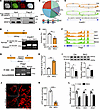 Figure 6
Virma is involved in alternative splicing of transcripts in retina. (A) Colocalization and coimmunoprecipitation analysis of VIRMA and SRSF3. Scale bar: 10 μm. (B) Seven types of alternative splicing events were identified in RKO retains. A3, alternative 3′ splice site; A5, alternative 5′ splice site; MX, mutually exclusive exon; SE, skipped exon; RI, retained intron; AF, alternative first exon; AL, alternative last exon. (C) Sashimi plot of Impdh1 gene in Ctrl and RKO retinas. (D and E) RT-PCR validation of exon 2 skipping of Impdh1 gene (Student’s t test, n = 3). (F) Wiggle plots showing intron retention of Polg2. (G and H) RT-PCR validation of intron retention of Polg2 gene in RKO retinas (Student’s t test, n = 3). (I) Western blot and RT-qPCR analysis of POLG2 expression in Ctrl and RKO mice (Student’s t test, n = 3). (J) HSP60 (a mitochondrial marker) immunofluorescence staining of shCtrl and shVIRMA 293STF cells. Scale bars: 20 μm; 5 μm (higher-magnification images). (K) ATP levels in fresh retains from 4-week-old Ctrl and RKO mice were measured using luciferase assay (Student’s t test, n = 5). (L) RT-qPCR analysis of the expression of mitochondrial function–related genes (Student’s t test, n = 4). Data are presented as the mean ± SD. *P < 0.05; **P < 0.01; ***P < 0.001; ****P < 0.0001.
Intron retention level is negatively correlated with the steady-state expression of genes (68, 69), and RT-qPCR and Western blot further confirmed reduced expression of Polg2 at both the mRNA and protein levels, respectively (Figure 6I). Polg2, encoding the α subunit of mtDNA polγ, has been identified to be associated with progressive external ophthalmoplegia accompanied by vision and hearing loss (70). Mitochondrial dysfunction is implicated in multiple common pathologies, including neurodegeneration, metabolic syndrome, and cancer (71–73). mtDNA plays a crucial role in mitochondria function, and any alterations in mtDNA replication can effect the normal function of mitochondria. Therefore, we first assessed the status of mitochondrial in the absence of VIRMA by immunostaining with heat shock protein (HSP60, a mitochondrial chaperonin) and found abnormal mitochondrial morphology following VIRMA deletion (Figure 6J). We also found that Virma loss decreased ATP production in RKO retinas (Figure 6K). Bcl2a, an antiapoptotic factor in the mitochondrial death pathway, showed decreased expression in RKO retina. Additionally, the mitochondrial detoxification enzymes Sod1 and Sod2 were downregulated in RKO retina as well (Figure 6L). These data suggested the presence of mitochondrial damage in RKO mice. In summary, the m6A methyltransferase VIRMA participates in posttranscriptional regulation by regulating AS in rod cells.
Srsf3 depletion in retina rods causes impaired visual function. Retinal tissue exhibits one of the highest levels of AS, and AS makes a major contribution to gene expression during retinal development and homeostasis. Mutations in general splicing factors have been reported to be associated with RP in humans (74–76). Previous studies on AS focused on the spatial and temporal patterns of protein isoforms during retina development (77). Here, we generated rod cell–specific Srsf3 knockout mice (Srsf3-RKO) to study the AS dysregulation in photoreceptor function. We first confirmed a greater reduction in SRSF3 expression in the retinas of Srsf3-RKO mice compared with Ctrl mice using immunofluorescence staining (Figure 7A). Scotopic ERG recordings revealed reduced amplitudes of both a- and b-waves in Srsf3-RKO mice compared with controls at each flash intensity at 3 weeks of age (Figure 7B). H&E staining showed a shorter photoreceptor segment in the Srsf3-RKO mice, with obvious photoreceptor loss at 3 weeks of age. However, Srsf3-RKO mice underwent rapid pathological changes: by 5 weeks of age, the ONL was reduced to approximately 50%, and by 8 weeks of age, the ONL was nearly completely lost (Figure 7C). Immunofluorescence staining (Figure 7, D–G) and Western blot (Figure 7H) further revealed reduced expression of OS structural and functional proteins in Srsf3-RKO retinas at 3 weeks of age, including rhodopsin, PDE6B, CNGA1, PRPH2, and GRK1. These data highlight the importance of a stable splicing process in maintaining retinal photoreceptor function.
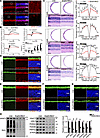 Figure 7
SRSF3-mediated alternative splicing is crucial for retina function. (A) Immunofluorescence staining of SRSF3 in Ctrl and Srsf3-RKO mice. Scale bars: 20 μm; 5 μm (higher-magnification images). (B) Representative scotopic ERG traces and statistical analysis at identified flash intensities in mice at 3 weeks of age (Student’s t test, n = 3). (C) H&E staining was performed on paraffin sections from Srsf3-RKO and Ctrl mice at 4, 5, and 8 weeks. The thickness of the photoreceptor segments (PRS) and ONL was quantified at defined ages (n = 3). Scale bar: 25 μm. Analyzed by multiple 2-tailed t tests with the Holm-Šídák method to correct for multiple comparisons. (D–G) Retinal cryosections from 3-week-old mice were stained with OS markers rhodopsin, PRPH2, GRK1, PDE6B, and CNGA1 and IS marker NaK ATPase. Scale bars: 25 μm. (H) Western blot and quantification analysis of OS key functional proteins (Student’s t test, n = 3). OS, outer segment; IS, inner segment; ONL, outer nuclear layer; INL, inner nuclear layer; GCL, ganglion cell layer, RPS, photoreceptor segment. Data are presented as the mean ± SD. *P < 0.05; **P < 0.01; ***P < 0.001; ****P < 0.0001. A lack of significant difference is indicated by #.
Rescue effect of Virma in rod cells on photoreceptor degeneration in RKO mice. The m6A modification is a highly dynamic and reversible process, with both upregulation and downregulation of m6A modification reported to be involved in various cancers, suggesting that the m6A modification is crucial for the proper tissue function. We attempted to rescue the photoreceptor phenotypes in RKO mice by restoring m6A modification with a Virma overexpression allele (Virmaloxp/loxp; CAG-Virma-3xFlag; RHO-Cre, hereafter named Rescue). Remarkably, reexpression of Virma in rods of RKO mice significantly improved visual perception and ameliorated degeneration of photoreceptors cells at 8 weeks of age (Figure 8). In Virma-rescued retinas, the global m6A methylation levels were significantly restored compared with those in RKO mice, as quantified by dot blot assay (Figure 8A). Scotopic ERG recordings revealed elevated amplitudes of a-waves and b-waves in Rescue mice compared with age-matched RKO mice, indicating the improved rod-driven circuit responses (Figure 8B). H&E staining confirmed the rescue effect on retinal morphology: Rescue mice showed significantly thickened photoreceptor segments and ONL compared with RKO mice, with values nearly restored to levels similar to those of Ctrl mice (Figure 8C). Immunofluorescence staining (Figure 8D) and Western blot analysis (Figure 8E) revealed increased expression of OS structural and functional proteins. In conclusion, these data provided additional evidence that VIRMA loss compromised photoreceptor function, highlighting the critical role of m6A methylation photoreceptor cells.
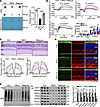 Figure 8
Replenishing Virma can attenuate photoreceptor degeneration in RKO mice. (A) m6A dot blot assay of global m6A abundance in retinas from 8-week-old Ctrl, RKO, and Rescue mice. Methylene blue staining was used as a loading control (1-way ANOVA, n = 4). (B) Representative scotopic ERG traces and statistical analysis at identified flash intensities in mice at 8 weeks of age (n = 3). Analyzed by 2-way ANOVA with post hoc Bonferroni’s multiple-comparisons test. (C) H&E staining of paraffin sections of RKO mice, Rescue mice, and Ctrl mice at 8 weeks, and quantification analysis of the photoreceptor segments (PRS) and ONL thickness of the groups (n = 3). Scale bar: 25 μm. Analyzed by multiple 2-tailed t tests with the Holm-Šídák method to correct for multiple comparisons. (D) Retina cryosections from 8-week-old mice were stained with OS marker rhodopsin and IS marker NaK ATPase. Scale bars: 25 μm. (E) Western blot and quantification analysis of visual perception–associated proteins (n = 3). OS, outer segment; IS, inner segment; ONL, outer nuclear layer; INL, inner nuclear layer; GCL, ganglion cell layer, RPS, photoreceptor segment. Data are presented as the mean ± SD. *P < 0.05; **P < 0.01; ***P < 0.001; ****P < 0.0001.


