
Research ArticleImmunology
Open Access |  10.1172/jci.insight.197393
A stromal platform for robust expansion of functional IL-10–producing B cells for immune regulation
Ryo Kawakami,1 Keisuke Imabayashi,1 Akemi Baba,1 Yuichi Saito,1,2 Kazuhiko Kawata,1 Yutaro Yada,1 Airi Shibata,1 Rinka Ito,1 Ryo Kurasawa,1 Ryota Higuchi,1,2 Sungyeon Park,1,3 Hiroaki Niiro,4 Shinya Tanaka,1 and Yoshihiro Baba1
1Division of Immunology and Genome Biology, Medical Institute of Bioregulation, Kyushu University, Fukuoka, Japan.
2Department of Otorhinolaryngology, Faculty of Medical Sciences,
3Department of Pediatrics, Faculty of Medical Sciences, and
4Department of Medical Education, Faculty of Medical Sciences, Kyushu University Graduate School of Medical Sciences, Fukuoka, Japan.
Address correspondence to: Yoshihiro Baba, 9th floor, Biomedical Research Station, Medical Institute of Bioregulation, Kyushu University, 3-1-1, Maidashi, Higashi-ku, Fukuoka-shi, Fukuoka, 812-8582, Japan. Phone: 81.92.642.6838; Email: babay@bioreg.kyushu-u.ac.jp.
Find articles by Kawakami, R. in: PubMed | Google Scholar
1Division of Immunology and Genome Biology, Medical Institute of Bioregulation, Kyushu University, Fukuoka, Japan.
2Department of Otorhinolaryngology, Faculty of Medical Sciences,
3Department of Pediatrics, Faculty of Medical Sciences, and
4Department of Medical Education, Faculty of Medical Sciences, Kyushu University Graduate School of Medical Sciences, Fukuoka, Japan.
Address correspondence to: Yoshihiro Baba, 9th floor, Biomedical Research Station, Medical Institute of Bioregulation, Kyushu University, 3-1-1, Maidashi, Higashi-ku, Fukuoka-shi, Fukuoka, 812-8582, Japan. Phone: 81.92.642.6838; Email: babay@bioreg.kyushu-u.ac.jp.
Find articles by Imabayashi, K. in: PubMed | Google Scholar
1Division of Immunology and Genome Biology, Medical Institute of Bioregulation, Kyushu University, Fukuoka, Japan.
2Department of Otorhinolaryngology, Faculty of Medical Sciences,
3Department of Pediatrics, Faculty of Medical Sciences, and
4Department of Medical Education, Faculty of Medical Sciences, Kyushu University Graduate School of Medical Sciences, Fukuoka, Japan.
Address correspondence to: Yoshihiro Baba, 9th floor, Biomedical Research Station, Medical Institute of Bioregulation, Kyushu University, 3-1-1, Maidashi, Higashi-ku, Fukuoka-shi, Fukuoka, 812-8582, Japan. Phone: 81.92.642.6838; Email: babay@bioreg.kyushu-u.ac.jp.
Find articles by Baba, A. in: PubMed | Google Scholar
1Division of Immunology and Genome Biology, Medical Institute of Bioregulation, Kyushu University, Fukuoka, Japan.
2Department of Otorhinolaryngology, Faculty of Medical Sciences,
3Department of Pediatrics, Faculty of Medical Sciences, and
4Department of Medical Education, Faculty of Medical Sciences, Kyushu University Graduate School of Medical Sciences, Fukuoka, Japan.
Address correspondence to: Yoshihiro Baba, 9th floor, Biomedical Research Station, Medical Institute of Bioregulation, Kyushu University, 3-1-1, Maidashi, Higashi-ku, Fukuoka-shi, Fukuoka, 812-8582, Japan. Phone: 81.92.642.6838; Email: babay@bioreg.kyushu-u.ac.jp.
Find articles by Saito, Y. in: PubMed | Google Scholar
1Division of Immunology and Genome Biology, Medical Institute of Bioregulation, Kyushu University, Fukuoka, Japan.
2Department of Otorhinolaryngology, Faculty of Medical Sciences,
3Department of Pediatrics, Faculty of Medical Sciences, and
4Department of Medical Education, Faculty of Medical Sciences, Kyushu University Graduate School of Medical Sciences, Fukuoka, Japan.
Address correspondence to: Yoshihiro Baba, 9th floor, Biomedical Research Station, Medical Institute of Bioregulation, Kyushu University, 3-1-1, Maidashi, Higashi-ku, Fukuoka-shi, Fukuoka, 812-8582, Japan. Phone: 81.92.642.6838; Email: babay@bioreg.kyushu-u.ac.jp.
Find articles by Kawata, K. in: PubMed | Google Scholar
1Division of Immunology and Genome Biology, Medical Institute of Bioregulation, Kyushu University, Fukuoka, Japan.
2Department of Otorhinolaryngology, Faculty of Medical Sciences,
3Department of Pediatrics, Faculty of Medical Sciences, and
4Department of Medical Education, Faculty of Medical Sciences, Kyushu University Graduate School of Medical Sciences, Fukuoka, Japan.
Address correspondence to: Yoshihiro Baba, 9th floor, Biomedical Research Station, Medical Institute of Bioregulation, Kyushu University, 3-1-1, Maidashi, Higashi-ku, Fukuoka-shi, Fukuoka, 812-8582, Japan. Phone: 81.92.642.6838; Email: babay@bioreg.kyushu-u.ac.jp.
Find articles by Yada, Y. in: PubMed | Google Scholar
1Division of Immunology and Genome Biology, Medical Institute of Bioregulation, Kyushu University, Fukuoka, Japan.
2Department of Otorhinolaryngology, Faculty of Medical Sciences,
3Department of Pediatrics, Faculty of Medical Sciences, and
4Department of Medical Education, Faculty of Medical Sciences, Kyushu University Graduate School of Medical Sciences, Fukuoka, Japan.
Address correspondence to: Yoshihiro Baba, 9th floor, Biomedical Research Station, Medical Institute of Bioregulation, Kyushu University, 3-1-1, Maidashi, Higashi-ku, Fukuoka-shi, Fukuoka, 812-8582, Japan. Phone: 81.92.642.6838; Email: babay@bioreg.kyushu-u.ac.jp.
Find articles by Shibata, A. in: PubMed | Google Scholar
1Division of Immunology and Genome Biology, Medical Institute of Bioregulation, Kyushu University, Fukuoka, Japan.
2Department of Otorhinolaryngology, Faculty of Medical Sciences,
3Department of Pediatrics, Faculty of Medical Sciences, and
4Department of Medical Education, Faculty of Medical Sciences, Kyushu University Graduate School of Medical Sciences, Fukuoka, Japan.
Address correspondence to: Yoshihiro Baba, 9th floor, Biomedical Research Station, Medical Institute of Bioregulation, Kyushu University, 3-1-1, Maidashi, Higashi-ku, Fukuoka-shi, Fukuoka, 812-8582, Japan. Phone: 81.92.642.6838; Email: babay@bioreg.kyushu-u.ac.jp.
Find articles by Ito, R. in: PubMed | Google Scholar
1Division of Immunology and Genome Biology, Medical Institute of Bioregulation, Kyushu University, Fukuoka, Japan.
2Department of Otorhinolaryngology, Faculty of Medical Sciences,
3Department of Pediatrics, Faculty of Medical Sciences, and
4Department of Medical Education, Faculty of Medical Sciences, Kyushu University Graduate School of Medical Sciences, Fukuoka, Japan.
Address correspondence to: Yoshihiro Baba, 9th floor, Biomedical Research Station, Medical Institute of Bioregulation, Kyushu University, 3-1-1, Maidashi, Higashi-ku, Fukuoka-shi, Fukuoka, 812-8582, Japan. Phone: 81.92.642.6838; Email: babay@bioreg.kyushu-u.ac.jp.
Find articles by Kurasawa, R. in: PubMed | Google Scholar
1Division of Immunology and Genome Biology, Medical Institute of Bioregulation, Kyushu University, Fukuoka, Japan.
2Department of Otorhinolaryngology, Faculty of Medical Sciences,
3Department of Pediatrics, Faculty of Medical Sciences, and
4Department of Medical Education, Faculty of Medical Sciences, Kyushu University Graduate School of Medical Sciences, Fukuoka, Japan.
Address correspondence to: Yoshihiro Baba, 9th floor, Biomedical Research Station, Medical Institute of Bioregulation, Kyushu University, 3-1-1, Maidashi, Higashi-ku, Fukuoka-shi, Fukuoka, 812-8582, Japan. Phone: 81.92.642.6838; Email: babay@bioreg.kyushu-u.ac.jp.
Find articles by Higuchi, R. in: PubMed | Google Scholar
1Division of Immunology and Genome Biology, Medical Institute of Bioregulation, Kyushu University, Fukuoka, Japan.
2Department of Otorhinolaryngology, Faculty of Medical Sciences,
3Department of Pediatrics, Faculty of Medical Sciences, and
4Department of Medical Education, Faculty of Medical Sciences, Kyushu University Graduate School of Medical Sciences, Fukuoka, Japan.
Address correspondence to: Yoshihiro Baba, 9th floor, Biomedical Research Station, Medical Institute of Bioregulation, Kyushu University, 3-1-1, Maidashi, Higashi-ku, Fukuoka-shi, Fukuoka, 812-8582, Japan. Phone: 81.92.642.6838; Email: babay@bioreg.kyushu-u.ac.jp.
Find articles by Park, S. in: PubMed | Google Scholar
1Division of Immunology and Genome Biology, Medical Institute of Bioregulation, Kyushu University, Fukuoka, Japan.
2Department of Otorhinolaryngology, Faculty of Medical Sciences,
3Department of Pediatrics, Faculty of Medical Sciences, and
4Department of Medical Education, Faculty of Medical Sciences, Kyushu University Graduate School of Medical Sciences, Fukuoka, Japan.
Address correspondence to: Yoshihiro Baba, 9th floor, Biomedical Research Station, Medical Institute of Bioregulation, Kyushu University, 3-1-1, Maidashi, Higashi-ku, Fukuoka-shi, Fukuoka, 812-8582, Japan. Phone: 81.92.642.6838; Email: babay@bioreg.kyushu-u.ac.jp.
Find articles by Niiro, H. in: PubMed | Google Scholar
1Division of Immunology and Genome Biology, Medical Institute of Bioregulation, Kyushu University, Fukuoka, Japan.
2Department of Otorhinolaryngology, Faculty of Medical Sciences,
3Department of Pediatrics, Faculty of Medical Sciences, and
4Department of Medical Education, Faculty of Medical Sciences, Kyushu University Graduate School of Medical Sciences, Fukuoka, Japan.
Address correspondence to: Yoshihiro Baba, 9th floor, Biomedical Research Station, Medical Institute of Bioregulation, Kyushu University, 3-1-1, Maidashi, Higashi-ku, Fukuoka-shi, Fukuoka, 812-8582, Japan. Phone: 81.92.642.6838; Email: babay@bioreg.kyushu-u.ac.jp.
Find articles by Tanaka, S. in: PubMed | Google Scholar
1Division of Immunology and Genome Biology, Medical Institute of Bioregulation, Kyushu University, Fukuoka, Japan.
2Department of Otorhinolaryngology, Faculty of Medical Sciences,
3Department of Pediatrics, Faculty of Medical Sciences, and
4Department of Medical Education, Faculty of Medical Sciences, Kyushu University Graduate School of Medical Sciences, Fukuoka, Japan.
Address correspondence to: Yoshihiro Baba, 9th floor, Biomedical Research Station, Medical Institute of Bioregulation, Kyushu University, 3-1-1, Maidashi, Higashi-ku, Fukuoka-shi, Fukuoka, 812-8582, Japan. Phone: 81.92.642.6838; Email: babay@bioreg.kyushu-u.ac.jp.
Find articles by Baba, Y. in: PubMed | Google Scholar
Published April 22, 2026 - More info
JCI Insight. 2026;11(8):e197393. https://doi.org/10.1172/jci.insight.197393.
© 2026 Kawakami et al. This work is licensed under the Creative Commons Attribution 4.0 International License. To view a copy of this license, visit http://creativecommons.org/licenses/by/4.0/.

-
Results
Efficient induction and expansion of human IL–10–producing B cells using engineered stromal cells. To establish a method for efficiently inducing and expanding human IL-10–producing B cells in vitro, we engineered stromal MS5 cells to express human IFN-β1 (MS5-IFNβ1), CD40L and BAFF (MS5-CD40L/BAFF), or all 3 factors simultaneously (MS5-3F) (Figure 1A). The expression of each factor was confirmed by flow cytometry (CD40L, BAFF) and ELISA of culture supernatants (IFN-β1) (Figure 1, B and C, and Supplemental Figure 1; supplemental material available online with this article; https://doi.org/10.1172/jci.insight.197393DS1). Peripheral blood B cells were cocultured on each stromal line (Supplemental Figure 2A). Total B cell numbers increased robustly only in MS5-CD40L/BAFF and MS5-3F cocultures (Figure 1D). We therefore compared their capacity to secrete IL-10 under these 2 conditions. Using a single-cell IL-10 secretion assay, we found that MS5-3F coculture yielded significantly higher frequencies of IL-10–producing B cells, suggesting a synergistic effect of IFN-β with CD40L and BAFF (Figure 1, E and F). IL-10+ B cells peaked around day 12 and maintained stable frequencies thereafter. Notably, the system achieved a 1200-fold expansion of IL-10–producing B cells by day 16 (Figure 1F). To optimize culture conditions, we assessed the requirement for CpG, IL-2, and IL-6. CpG was essential for robust proliferation (Supplemental Figure 2B), while IL-2 and IL-6 had no additive effect (Supplemental Figure 2, C and D). In contrast to liquid culture with CpG, IL-2, IL-6, and IFN-α, which led to rapid cell loss, the MS5-3F coculture supported sustained viability and approximately 100-fold expansion (Figure 1G). ELISA further confirmed enhanced IL-10 secretion in the MS5-3F system (Figure 1H). Finally, consistent results were observed across multiple donors, demonstrating the platform’s robustness and broad applicability (Figure 1, I and J, and Supplemental Figure 2E).
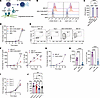 Figure 1
Establishment of a stromal coculture system for human IL-10–producing B cell induction and expansion. (A) Schematic overview of the coculture system. MS5 stromal cells were genetically engineered to express human IFN-β1 (MS5-IFNβ1), CD40L and BAFF (MS5-CD40L/BAFF), or all 3 factors (MS5-3F), to support the differentiation of peripheral blood B cells into IL-10–producing B cells. (B) Representative flow cytometry histograms of human CD40L and BAFF expressed on MS5 lines. See also Supplemental Figure 1. (C) Quantification of IFN-β1 production by MS5 lines. (D) Fold expansion of total B cells cocultured with different MS5 lines in the presence of CpG ODN. Cell numbers were assessed every 4 days and normalized to the initial input to calculate fold change. See also Supplemental Figure 2A. (E and F) Induction and expansion of IL-10–producing B cells cocultured with MS5-CD40L or MS5-3F. (E) Representative flow cytometry plots of IL-10–producing B cells on days 0 and 12 of coculture, assessed using IL-10 secretion assay. (F) Fold expansion and temporal changes in frequencies of IL-10+ cells. (G and H) Comparison of B cell expansion and IL-10 production between MS5-3F coculture and conventional liquid culture conditions. (G) Fold expansion of total B cells. (H) IL-10 secretion in culture supernatants on day 4 assessed by ELISA. (I) Expansion of B cells from multiple healthy donors in MS5-3F coculture. (J) Summarized graph of percentage IL-10 in B cells from different donors on day 12 of MS5-3F coculture. See also Supplemental Figure 2E. Data from 3 independent experiments were combined (C, D, and F: n = 3; G–J: n = 9). Data are presented as mean ± SEM. P values are from 1-way ANOVA with Tukey’s post hoc test (C, H, and J) or 2-way (D and F) ANOVA with Bonferroni’s post hoc test. **P ≤ 0.01; ***P ≤ 0.001; ****P ≤ 0.0001. NS, not significant.
Phenotypic characterization of human B cells expanded in stromal coculture. To characterize the nature of B cells induced in MS5-3F coculture, we assessed surface markers associated with B cell differentiation. Flow cytometry identified major subsets based on CD24, CD38, and CD27: naive mature B cells (CD24+CD38–CD27–), naive immature B cells (CD24hiCD38loCD27–), memory B cells (CD24hiCD38–CD27+), and plasmablasts/plasma cells (CD38hiCD27lo or CD38hiCD27hi) (Figure 2, A and B). Prior to coculture (day 0), the population consisted mainly of naive mature, naive immature, and memory B cells. By day 4, most cells adopted a CD38+ phenotype. By day 12, 60%–80% of cells acquired a CD38hiCD27lo phenotype, previously associated with IL-10–producing plasmablasts (9). Subsequently, these cells transitioned to a CD38hiCD27hi phenotype. Although the frequency of CD38hiCD27hi cells seemed to increase over time, absolute count analyses showed simultaneous increases in both CD38hiCD27lo and CD38hiCD27hi cells (through day 20), indicating ongoing accumulation and maturation rather than just loss of CD38hiCD27lo cells. Further analysis revealed that both subsets downregulated CD180 and Pax5 and upregulated IRF4 and Blimp-1 (Figure 2C). Rapid and pronounced changes in these transcription factors were evident as early as day 4 (Supplemental Figure 3). CD138 expression was detected in CD38hiCD27hi cells but absent in CD38hiCD27lo cells, confirming that the former represented mature plasma cells, whereas the latter corresponded to plasmablasts. Morphologically, these cells exhibited features characteristic of antibody-secreting cells, including larger size, abundant cytoplasm, and eccentric nuclei (Figure 2D). These observations support the notion that CD38hiCD27lo and CD38hiCD27hi subsets represent sequential stages along the plasmablast-to–plasma cell differentiation axis.
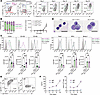 Figure 2
MS5-3F coculture induces IgM+ plasmablast differentiation from human B cells. (A and B) Temporal changes in activation markers of B cells cocultured with MS5-3F. (A) Representative flow cytometry plots. (B) Frequencies and absolute cell numbers of indicated subsets among CD19+ cells. (C) Representative histograms and summarized MFI of surface markers and transcriptional factors expressed on CD27hi and CD27lo B cells on days 0 and 12 of MS5-3F coculture. See also Supplemental Figure 3. (D) Morphological analysis of primary B cells (day 0) and MS5-3F–induced B cell subsets, stained with May-Grünwald-Giemsa. CD27hi and CD27lo B cells were sorted on day 12 of coculture. Original magnification, ×400. Scale bars: 20 μm. (E) Representative flow cytometry plots of IgM, IgD, and IgG on B cells on day 12 of MS5-3F coculture. (F) Quantification of IgM and IgG antibody production by cocultured B cells. Culture supernatants were harvested every 4 days and analyzed by ELISA. Data from 3 independent experiments were combined (B and C: n = 3 or 9; F: n = 9). Data are presented as mean ± SEM. P values are from 1-way ANOVA with Tukey’s post hoc test (C). **P ≤ 0.01; ***P ≤ 0.001; ****P ≤ 0.0001. NS, not significant.
IL-10 has been reported to act in an autocrine manner on human B cells to promote plasmablast differentiation (34). To address this, we assessed B cell differentiation on MS5-3F in the presence or absence of IL-10– and IL-10R–blocking antibodies. IL-10 pathway blockade significantly reduced the overall number of B cells, whereas the frequencies of CD38hiCD27lo and CD38hiCD27hi populations were unchanged under these conditions (Supplemental Figure 4). Thus, autocrine IL-10 is functionally active and primarily supports the expansion and/or survival of plasmablast/plasma cell populations, rather than altering their relative distribution.
Next, we examined the immunoglobulin isotype profile of the expanded cells. The majority of cells expressed IgM, while IgG+ cells were rare, despite some loss of IgD in a portion of the population (Figure 2E). ELISA confirmed increasing IgM secretion over time, with minimal IgG detected (Figure 2F). Thus, the MS5-3F coculture system supports the expansion of unswitched (IgM+) plasmablasts, with minimal IgG+ cells.
Phenotypic characterization of human IL-10–producing B cells in stromal coculture. To clarify which subset of differentiated B cells mainly produces IL-10, we performed IL-10 secretion assays in conjunction with phenotypic gating. At both day 12 and day 20, IL-10+ cells were distributed across both CD38hiCD27lo and CD38hiCD27hi subsets, with a higher frequency observed in the former (Figure 3, A and B, and Supplemental Figure 5). To trace their origin, B cells were sorted into naive immature, naive mature, and memory subsets before MS5-3F coculture (Supplemental Figure 6). Immature and mature B cells efficiently differentiated into CD38hiCD27lo plasmablasts, while memory B cells showed limited differentiation, predominantly giving rise instead to CD38hiCD27hi cells (Figure 3C). Consistently, flow cytometric assays and ELISAs showed that naive-derived plasmablasts produced higher levels of IL-10 than memory-derived counterparts (Figure 3, D and E). These findings indicate that IL-10–producing B cells in this system are primarily plasmablasts, which arise predominantly from naive B cells.
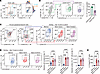 Figure 3
Phenotype of MS5-3F–induced IL-10–producing B cells. (A and B) Phenotypic comparison of IL-10+ and IL-10– B cells on day 12 of MS5-3F coculture. (A) Comparison of CD27 and CD38 expression between IL-10+ and IL-10– fractions. (B) Frequencies of IL-10+ cells within CD27hi and CD27lo subsets. See also Supplemental Figure 6. (C) Representative flow cytometry plots of activation markers expressed on peripheral blood B cells, and sorted memory, naive mature, and naive immature subsets on day 12 of MS5-3F coculture. Sorting strategy is shown in Supplemental Figure 6. (D) IL-10 production by each sorted B cell population on day 12 of MS5-3F coculture. (E) ELISA of IL-10 secreted by each sorted B cell population on day 12 of MS5-3F coculture. Data from 3 independent experiments were combined (B and D: n = 9; E: n = 8). Data are presented as mean ± SEM. P values are from 2-tailed, unpaired Student’s t test (B) and 1-way ANOVA with Tukey’s post hoc test (D and E). ****P ≤ 0.0001. NS, not significant.
To characterize the functional polarization of MS5-3F–expanded IL-10+ B cells, we next assessed whether they coproduce pro- or antiinflammatory cytokines. Intracellular cytokine staining showed that IFN-γ and IL-12 were undetectable in IL-10+ cells, whereas a fraction of IL-10+ B cells coproduced IL-6 (~40%) or TNF-α (~3%). The coexistence of a subset of IL-10+ B cells with proinflammatory cytokines is consistent with the reported heterogeneity of human IL-10–producing B cells (21, 35) (Supplemental Figure 7). We also examined additional antiinflammatory mediators and found that TGF-β was detectable in approximately 10% of IL-10+ cells, while granzyme B was undetectable by flow cytometry; IL-35 was not detectable in IL-10+ cells by ELISA under our culture conditions. Overall, cytokine profiling suggested an IL-10–skewed phenotype, with only a limited fraction of IL-10+ cells coproducing proinflammatory cytokines.
To further assess the migratory potential of MS5-3F–expanded IL-10+ B cells, we examined the expression of representative chemokine receptors and adhesion molecules by flow cytometry (Supplemental Figure 8). IL-10+ cells showed detectable expression of CXCR3, CXCR4, and CXCR5, whereas CCR2, CCR5, and CCR7 were undetectable or minimal under our conditions. In parallel, IL-10+ cells broadly expressed adhesion molecules implicated in tissue entry and retention, including VLA-4 (integrin α4/CD49d and β1/CD29), ICAM-1, CD44, and CD62L (L-selectin). Collectively, this profile is compatible with trafficking to inflamed peripheral tissues (CXCR3 together with VLA-4/ICAM-1) while retaining potential access to secondary lymphoid environments (CXCR5/CXCR4 and CD62L). These data provide a phenotypic framework for considering where MS5-3F–expanded IL-10+ B cells may localize and regulate T cells in vivo.
To assess the robustness of IL-10 expression under inflammatory cues, MS5-3F–induced IL-10+ B cells were harvested and recultured for 4 days in the presence of a proinflammatory cytokine cocktail under a high-dose condition and at serial dilutions (36–38). Even at the highest dose, viability and the frequency of IL-10+ cells among viable B cells showed only a slight reduction, whereas lower-dose conditions had minimal impact on viability and IL-10 expression (Supplemental Figure 9, A and B). Overall, IL-10 expression was largely preserved across conditions, supporting the robustness of the MS5-3F–induced IL-10 program under inflammatory cytokine exposure.
MS5-3F–induced human IL-10–producing B cells suppress T cell activation. To evaluate the immunosuppressive function of IL-10–producing B cells expanded in MS5-3F coculture, we examined their ability to suppress CD4+ T cell proliferation in vitro (Figure 4A). B cells were cultured with MS5-3F until day 12 and then restimulated with anti-IgM antibodies to enhance IL-10 production. Restimulated B cells were then cocultured with autologous naive CD4+CD25– T cells activated by anti-CD3/anti-CD28 antibodies, and T cell proliferation was assessed by CellTrace Violet (CTV) dilution. Freshly isolated B cells had no effect, whereas MS5-3F–induced B cells potently inhibited T cell proliferation in a dose-dependent manner (Figure 4, B and C). In parallel, we compared the suppressive effectiveness of IL-10+ B cells induced by MS5-3F with autologous CD4+CD25+ regulatory T cells (Tregs) using the same CTV assay. Under our conditions, the percentage inhibition achieved by these IL-10+ B cells was comparable to that of Tregs (Supplemental Figure 10, A and B). Blockade of IL-10 with neutralizing antibodies against IL-10 and IL-10R substantially diminished the suppressive effect of the MS5-3F–induced B cells, indicating that inhibition of CD4+ T cell proliferation is largely dependent on IL-10 (Figure 4, D and E). Given prior reports that human Bregs can promote Treg induction/expansion (21, 39), we next assessed whether these cells also promote Treg expansion. MS5-3F–cocultured B cells significantly increased the frequency of CD4+CD25hiCD127–/loFoxp3+CTLA4hi Tregs compared with cultures containing freshly isolated B cells (Figure 4F and Supplemental Figure 10C). Notably, IL-10/IL-10R blockade did not abrogate this increase, suggesting that Treg expansion occurs largely independently of IL-10 signaling under these conditions.
 Figure 4
Suppressive function of MS5-3F–induced IL-10–producing B cells. (A) Schematic of the T cell suppression assay. (B and C) Suppression of T cell proliferation by cocultured B cells. (B) Representative CTV dilution histograms of CD4+ T cells cocultured with either primary B cells or MS5-3F–induced B cells at various B/T ratios. (C) Summarized percentage inhibition of T cell proliferation. (D and E) IL-10–dependent suppression of T cell proliferation. (D) Representative CTV dilution histograms of CD4+ T cells cocultured with MS5-3F–induced B cells in the presence of anti–IL-10/anti–IL-10R neutralizing antibodies or isotype controls. (E) Summarized percentage inhibition. (F) Summarized graphs showing Treg induction by primary B cells and MS5-3F–induced cocultured B cells. Peripheral blood–derived CD4+CD25– non-Tregs were cocultured with primary B cells or MS5-3F–induced B cells (cocultured with MS5-3F for 12 days and restimulated for 2 days) on plate-bound anti-CD3 antibody for 3 days. To evaluate the role of IL-10 in Treg induction, anti–IL-10/anti–IL-10R monoclonal antibodies or isotype control were added during the culture. Tregs were defined as CD4+CD25hiCD127–/loCTLA4hiFOXP3+ cells. See also Supplemental Figure 10C for representative flow cytometry plots. Data from 3 independent experiments were combined (C and E: n = 8, F: n = 9). Data are presented as mean ± SEM. P values are from 1-way ANOVA with Tukey’s post hoc test (C, E, and F). **P ≤ 0.01; ***P ≤ 0.001; ****P ≤ 0.0001. NS, not significant.
Induction of IL-10–producing B cells from patients with SLE in MS5-3F coculture. Previous studies have reported that B cells from patients with SLE exhibit impaired IL-10 production in specific regulatory subsets, particularly CD24hiCD38hi naive immature B cells, in response to CD40 stimulation (11). To determine whether our MS5-3F coculture system can induce IL-10–producing B cells from SLE patient–derived B cells, we performed parallel cultures with cells from SLE patients and HCs. Flow cytometric analysis of baseline B cell composition showed no significant differences in the proportions of naive and memory subsets between SLE and HC samples, although donor variability was observed, potentially reflecting differences in disease activity (Figure 5A and Supplemental Table 1). As expected, SLE-derived B cells exhibited significantly reduced IL-10 production following CD40 stimulation alone (Figure 5B). However, after MS5-3F coculture, both SLE and HC B cells efficiently expanded and differentiated into IL-10–producing populations, as confirmed by flow cytometry and ELISA of culture supernatants (Figure 5, C–E).
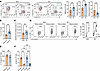 Figure 5
Induction of IL-10–producing B cells from patients with SLE and healthy donors in MS5-3F coculture. (A) Representative flow cytometry plots of surface markers expressed on B cells from patients with SLE and healthy controls (HCs), and summarized frequencies of memory (CD38–CD27+), naive mature (CD38–CD27–), and naive immature (CD38loCD27–) B cells among CD19+ cells. See also Supplemental Table 1. (B) Summarized frequencies of IL-10+ B cells from patients with SLE and HCs stimulated with CD40L for 2 days (pre-co-culture). B cell stimulation was performed using CD40L-expressing MS5 cells. For the construction of the MS5 cells, see Supplemental Figure 11. (C and D) Induction and expansion of IL-10+ B cells from patients with SLE and HCs. (C) Fold expansion of total B cells from patients with SLE and HCs cocultured with MS5-3F for 12 days. (D) Representative flow cytometry plots and summarized frequencies of IL-10+ B cells from SLE and HC B cells, stimulated with CD40L for 2 days (pre-co-culture) or cocultured with MS5-3F for 12 days (post-co-culture). (E) ELISA of IL-10 secreted by SLE and HC B cells cocultured with MS5-3F for 12 days. (F) ELISA of IgM and IgG secreted by SLE and HC B cells cocultured with MS5-3F for 12 days. Data from 2 independent experiments were combined (SLE: n = 4; HC: n = 8). Data are presented as mean ± SEM. P values are from 2-tailed, unpaired Welch’s t-test (A–E) and 1-way ANOVA with Tukey’s post hoc test (F). **P ≤ 0.01; ***P ≤ 0.001; ****P ≤ 0.0001. NS, not significant.
To assess the risk of IgG antibody production under these conditions, we next examined the isotype profile of secreted antibodies. In both SLE and HC samples, secreted antibodies were predominantly IgM, with minimal IgG detection (Figure 5F). This consistently IgM-dominant profile suggests that, under these conditions, unswitched plasmablast/plasma cells are preferentially expanded while IgG-secreting output remains limited, even in autoimmune contexts. Collectively, these results demonstrate that the MS5-3F platform enables robust expansion of IgM+ IL-10–producing plasmablasts from both HC and SLE-derived B cells, with minimal IgG secretion. Although the minimal IgG production observed may suggest a limited risk of expanding autoreactive clones, direct evaluation of autoreactivity will be required in future studies.


