
Research ArticleHematologyImmunology
Open Access |  10.1172/jci.insight.194491
Improved conditioning for hematopoietic chimerism induces islet tolerance to cure diabetes
Stephan A. Ramos,1 Preksha Bhagchandani,1 Diego M. Burgos,1 Xueying Gu,1 Richard Rodriguez,1 Nadia Nourin,1 Martin Neukam,1 Shiva Pathak,2 Judith A. Shizuru,2,3,4 and Seung K. Kim1,3,4
1Department of Developmental Biology,
2Division of Blood and Marrow Transplantation, Department of Medicine,
3Stanford Diabetes Research Center, and
4Northern California Breakthrough T1D Center of Excellence, Stanford School of Medicine, Stanford, California, USA.
Address correspondence to: Seung K. Kim, Stanford University School of Medicine, Beckman Center B300, 279 Campus Drive West, Stanford, California 94305, USA. Phone: 1.605.723. 6230; seungkim@stanford.edu.
Find articles by Ramos, S. in: PubMed | Google Scholar
1Department of Developmental Biology,
2Division of Blood and Marrow Transplantation, Department of Medicine,
3Stanford Diabetes Research Center, and
4Northern California Breakthrough T1D Center of Excellence, Stanford School of Medicine, Stanford, California, USA.
Address correspondence to: Seung K. Kim, Stanford University School of Medicine, Beckman Center B300, 279 Campus Drive West, Stanford, California 94305, USA. Phone: 1.605.723. 6230; seungkim@stanford.edu.
Find articles by
Bhagchandani, P.
in:
PubMed
|
Google Scholar
|

1Department of Developmental Biology,
2Division of Blood and Marrow Transplantation, Department of Medicine,
3Stanford Diabetes Research Center, and
4Northern California Breakthrough T1D Center of Excellence, Stanford School of Medicine, Stanford, California, USA.
Address correspondence to: Seung K. Kim, Stanford University School of Medicine, Beckman Center B300, 279 Campus Drive West, Stanford, California 94305, USA. Phone: 1.605.723. 6230; seungkim@stanford.edu.
Find articles by Burgos, D. in: PubMed | Google Scholar
1Department of Developmental Biology,
2Division of Blood and Marrow Transplantation, Department of Medicine,
3Stanford Diabetes Research Center, and
4Northern California Breakthrough T1D Center of Excellence, Stanford School of Medicine, Stanford, California, USA.
Address correspondence to: Seung K. Kim, Stanford University School of Medicine, Beckman Center B300, 279 Campus Drive West, Stanford, California 94305, USA. Phone: 1.605.723. 6230; seungkim@stanford.edu.
Find articles by Gu, X. in: PubMed | Google Scholar
1Department of Developmental Biology,
2Division of Blood and Marrow Transplantation, Department of Medicine,
3Stanford Diabetes Research Center, and
4Northern California Breakthrough T1D Center of Excellence, Stanford School of Medicine, Stanford, California, USA.
Address correspondence to: Seung K. Kim, Stanford University School of Medicine, Beckman Center B300, 279 Campus Drive West, Stanford, California 94305, USA. Phone: 1.605.723. 6230; seungkim@stanford.edu.
Find articles by Rodriguez, R. in: PubMed | Google Scholar
1Department of Developmental Biology,
2Division of Blood and Marrow Transplantation, Department of Medicine,
3Stanford Diabetes Research Center, and
4Northern California Breakthrough T1D Center of Excellence, Stanford School of Medicine, Stanford, California, USA.
Address correspondence to: Seung K. Kim, Stanford University School of Medicine, Beckman Center B300, 279 Campus Drive West, Stanford, California 94305, USA. Phone: 1.605.723. 6230; seungkim@stanford.edu.
Find articles by Nourin, N. in: PubMed | Google Scholar
1Department of Developmental Biology,
2Division of Blood and Marrow Transplantation, Department of Medicine,
3Stanford Diabetes Research Center, and
4Northern California Breakthrough T1D Center of Excellence, Stanford School of Medicine, Stanford, California, USA.
Address correspondence to: Seung K. Kim, Stanford University School of Medicine, Beckman Center B300, 279 Campus Drive West, Stanford, California 94305, USA. Phone: 1.605.723. 6230; seungkim@stanford.edu.
Find articles by Neukam, M. in: PubMed | Google Scholar
1Department of Developmental Biology,
2Division of Blood and Marrow Transplantation, Department of Medicine,
3Stanford Diabetes Research Center, and
4Northern California Breakthrough T1D Center of Excellence, Stanford School of Medicine, Stanford, California, USA.
Address correspondence to: Seung K. Kim, Stanford University School of Medicine, Beckman Center B300, 279 Campus Drive West, Stanford, California 94305, USA. Phone: 1.605.723. 6230; seungkim@stanford.edu.
Find articles by Pathak, S. in: PubMed | Google Scholar
1Department of Developmental Biology,
2Division of Blood and Marrow Transplantation, Department of Medicine,
3Stanford Diabetes Research Center, and
4Northern California Breakthrough T1D Center of Excellence, Stanford School of Medicine, Stanford, California, USA.
Address correspondence to: Seung K. Kim, Stanford University School of Medicine, Beckman Center B300, 279 Campus Drive West, Stanford, California 94305, USA. Phone: 1.605.723. 6230; seungkim@stanford.edu.
Find articles by Shizuru, J. in: PubMed | Google Scholar
1Department of Developmental Biology,
2Division of Blood and Marrow Transplantation, Department of Medicine,
3Stanford Diabetes Research Center, and
4Northern California Breakthrough T1D Center of Excellence, Stanford School of Medicine, Stanford, California, USA.
Address correspondence to: Seung K. Kim, Stanford University School of Medicine, Beckman Center B300, 279 Campus Drive West, Stanford, California 94305, USA. Phone: 1.605.723. 6230; seungkim@stanford.edu.
Find articles by Kim, S. in: PubMed | Google Scholar
Published April 21, 2026 - More info
JCI Insight. 2026;11(11):e194491. https://doi.org/10.1172/jci.insight.194491.
© 2026 Ramos et al. This work is licensed under the Creative Commons Attribution 4.0 International License. To view a copy of this license, visit http://creativecommons.org/licenses/by/4.0/.
Received: April 14, 2025; Accepted: April 2, 2026

-
Results
JAK1/2 inhibition permits reduced radiation in hematopoietic conditioning to achieve durable mixed chimerism. A prior NMA conditioning regimen we developed uses CD117 antibody, transient T cell depletion (hereafter referred to as TCD) with αCD4 and αCD8 antibodies, and 200–300 cGy TBI to establish durable mixed hematopoietic chimerism after HCT with MHC-mismatched bone marrow (22). To improve conditioning further, we sought reagents with established clinical safety that would permit reduced radiation dosage. Baricitinib is an immunosuppressive agent that inhibits NK and T cells via JAK1/2 blockade and is well-tolerated in studies of allogeneic HSC engraftment (26, 32). To evaluate if baricitinib could reduce conditioning TBI intensity, nondiabetic B6 CD45.1+ mice were administered baricitinib (400 g/d) from days –5 to day +3 and TCD from day –2 to day 0, irradiated with deescalated doses of 75, 50, or 25 cGy TBI on day –3, transplanted with BALB/c CD45.2+ lineage-depleted hematopoietic stem and progenitor cells (HSPCs), and followed for up to 26 weeks (Figure 1, A and B). Four weeks after HCT, we observed donor engraftment in all peripheral blood lineages in mice conditioned with 75 cGy (Figure 1C). Stable mixed chimerism was maintained in blood throughout the 26-week experiment period in 5 of 5 mixed chimeric recipients (hereafter referred to as BALB/c:B6 mice; Figure 1D). Endpoint analysis of the spleen and bone marrow showed comparable chimerism levels (Figure 1, E and F). We also confirmed bone marrow engraftment of donor Lin–SCA1+cKIT+ (LSK) HSCs and persistence of host LSK HSCs (donor LSK chimerism: 34.2% ± 25.4%; Figure 1F). By contrast, we did not achieve durable multilineage mixed chimerism in B6 mice after conditioning with 50 or 25 cGy (Supplemental Figure 1, A–D; supplemental material available online with this article; https://doi.org/10.1172/jci.insight.194491DS1). Specifically, B6 mice conditioned with 50 or 25 cGy TBI did not generate donor-derived CD3+ T cells, which are crucial for allogeneic tolerance and stable mixed hematopoietic chimerism (33) (Supplemental Figure 1, A–D).
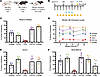 Figure 1
Nonmyeloablative conditioning with baricitinib and 75 cGy TBI permits durable allogeneic donor chimerism. (A) Transplantation model and strains used. (B) Experimental conditioning and transplantation timeline. (C) Multilineage chimerism analysis of peripheral blood 4 weeks after HCT. (D) Longitudinal multilineage chimerism analysis of peripheral blood through 26 weeks after HCT. (E) Multilineage chimerism analysis of host spleen 26 weeks after HCT. (F) Multilineage chimerism analysis, including Lin–SCA1+cKIT+ (LSK) HSCs, of host bone marrow 26 weeks after HCT. n = 5 animals, from 1 experiment. Data are presented as mean ± SEM. TBI, total body irradiation; HCT, hematopoietic cell transplant; TCD, T cell depletion. See also Supplemental Figure 1.
Using whole bone marrow (WBM) instead of lineage-depleted HSPCs achieved similar outcomes (Supplemental Figure 2). After HSPC or WBM transplantation, we did not observe signs of GVHD (e.g., mucosal changes, skin rash, or weight loss), and longitudinal body weight measures showed excellent weight gain from HCT to experimental endpoint in all groups (Supplemental Figure 1E and Supplemental Figure 2C). Thus, we established durable mixed hematopoietic chimerism in nondiabetic B6 mice across complete MHC mismatch with a NMA regimen combining 75 cGy TBI with αCD117, TCD, and baricitinib. These studies illustrate that systematic addition of reagents or steps could be useful for reducing TBI and conditioning toxicity, and we used this strategy to reduce TBI further. In all subsequent studies, we transplanted WBM to model the current clinical standard.
Studies of bone marrow clearance after conditioning with αCD47 antibody and Bcl-2 inhibitor. Prior studies have incorporated αCD47 antibodies into conditioning regimens to promote macrophage-mediated clearance of host HSCs and achieved mixed chimerism across a haplo-mismatched MHC barrier (30, 34). To evaluate conditioning with αCD47 to promote mixed chimerism across a full MHC mismatch, we conditioned B6 CD45.1+ mice with αCD117, baricitinib, TCD, and αCD47 antibody (300 g/d) from day –6 to day –2. On day –3 mice were irradiated with 25 cGy TBI and transplanted with 30E6 WBM cells from CD45.2+ BALB/c donors on day 0 (Figure 2A). Serial analysis of peripheral blood for up to 28 weeks after HCT revealed successful multilineage chimerism levels in B6 mice after conditioning with αCD47 antibody and 25 cGy TBI (Figure 2, B and C). Endpoint analysis of the spleen and bone marrow showed durable multilineage chimerism levels and engraftment of donor CD45.2+ LSK HSCs (donor LSK chimerism, 47.4% ± 7.9%; Figure 2, D and E). We did not observe indices of GVHD in BALB/c:B6 chimeras throughout our studies, including weight loss (Figure 2F), erythema or other skin changes. However, addition of conditioning αCD47 antibody resulted in approximately 20% reduction in body mass during the conditioning period, necessitating daily oral feeding supplementation for 7 days during and after conditioning (Figure 2F).
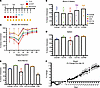 Figure 2
αCD47 monoclonal antibody conditioning promotes durable mixed hematopoietic chimerism with 25 cGy TBI. (A) Experimental conditioning and transplantation timeline. (B) Multilineage chimerism analysis of peripheral blood 5 weeks after HCT. (C) Longitudinal multilineage chimerism analysis of peripheral blood through 28 weeks after HCT. (D) Multilineage chimerism analysis of host spleen 47 weeks after HCT. (E) Multilineage chimerism analysis, including Lin–SCA1+cKIT+ (LSK) HSCs, of host bone marrow 47 weeks after HCT. (F) Weight of BALB/c:B6 mice overtime as a percentage of initial weight prior to conditioning start. n = 3 animals, from 1 experiment. Data are presented as mean ± SEM. TBI, total body irradiation; HCT, hematopoietic cell transplant; TCD, T cell depletion.
To reduce conditioning toxicity, we sought αCD47 dosage reductions. We measured bone marrow clearance after conditioning with αCD117, baricitinib, 30 cGy TBI, and either 75 or 50 g/d αCD47 (Supplemental Figure 3A). Conditioning with 75 and 50 g/d αCD47 antibody for 5 consecutive days reduced overall bone marrow cellularity and HSC count equally (Supplemental Figure 3, B and C). We observed little to no change in body mass of mice conditioned with 50 g/d, while the 75 g/d group experienced significant weight loss (Supplemental Figure 3D), a known complication of accompanying anemia (30, 34, 35). However, HSCs were not reduced to levels permissive to successful HCT engraftment with either αCD47 dose (Supplemental Figure 3C). These findings suggested that additional steps might be required with low-dose αCD47 to permit successful HCT engraftment and further reduction of conditioning TBI dosing.
Venetoclax is a pharmacologic inhibitor of Bcl-2, a survival factor in HSPCs and differentiated blood lineages, and was recently used to reduce conditioning TBI by 50% in nonhuman primates prior to successful mixed chimerism (25, 31). We evaluated the effect of venetoclax (200 g/d from days –6 to –2) on bone marrow clearance in mice conditioned with αCD117, baricitinib, and 50, 25, or 10 cGy TBI (Supplemental Figure 3E). Addition of venetoclax did not adequately clear HSCs, despite reduced overall cell counts (Supplemental Figure 3, F and G). However, venetoclax was well tolerated, causing only a mild, transient change in body mass that resolved by day 0 (Supplemental Figure 3H). We next investigated bone marrow clearance and mixed chimerism using αCD117-based conditioning with both venetoclax and αCD47.
Durable allogeneic mixed hematopoietic chimerism after conditioning with 10 cGy TBI. We conditioned B6 mice with venetoclax, αCD47 (50 g/d), αCD117 antibody, TCD, baricitinib, and 10 cGy TBI (Figure 3A). This conditioning regimen led to durable multilineage mixed hematopoietic chimerism after BALB/c WBM transplantation (Figure 3, B and C), with only modest, transient weight loss (<10%) (Figure 3F). Endpoint analysis of spleen and bone marrow 22 or 25 weeks after HCT revealed mixed chimerism and engraftment of donor CD45.2+ LSK HSCs in the bone marrow (Figure 3, D and E). By contrast, mice failed to achieve multilineage mixed chimerism and allogeneic tolerance after omission of αCD47 antibody or TBI (0 cGy) from this regimen (Supplemental Figure 4). Thus, systematic testing identified a combination of reagents that minimized conditioning XRT and permitted mixed chimerism in nondiabetic mice.
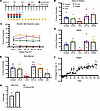 Figure 3
Durable mixed hematopoietic chimerism after nonmyeloablative conditioning with 10 cGy TBI. (A) Experimental conditioning and transplantation timeline. (B) Multilineage chimerism analysis of peripheral blood 4 weeks after HCT. (C) Longitudinal multilineage chimerism analysis of peripheral blood through 20 weeks after HCT. (D) Multilineage chimerism analysis of host spleen 22 or 25 weeks after HCT. (E) Multilineage chimerism analysis, including Lin–SCA1+cKIT+ (LSK) HSCs, of host bone marrow 22 or 25 weeks after HCT. (F) Weight of BALB/c:B6 mice overtime as a percentage of initial weight prior to conditioning start. (B–F) n = 9 animals from 2 independent experiments. (G) Litter sizes of unconditioned female mice paired with conditioned males (purple; n = 2 animals) and conditioned female mice paired with unconditioned males (green; n = 3 animals). Data are presented as mean ± SEM. TBI, total body irradiation; HCT, hematopoietic cell transplant; TCD, T cell depletion. See also, Supplemental Figure 4.
While this conditioning regimen was well tolerated, mice developed peritransplant anemia, corrected by a single whole blood transfusion. Despite the requirement for supportive intervention early on, conditioned mice showed normal average weight gain after conditioning alone or conditioning and HCT (Figure 3F). Importantly, both male and female mice remained fertile after conditioning (Figure 3G) and did not show indications of GVHD, including weight loss, erythema, or other skin changes.
Diabetes reversal with allogeneic islet and bone marrow transplantation after NMA conditioning. We investigated if combined allogeneic HCT and islet transplantation could reverse established diabetes in B6 RIP-DTR mice after conditioning with αCD117, αCD47, TCD, venetoclax, baricitinib, and 10 cGy TBI (Figure 4A; see Methods, ref. 36). After injection of diphtheria toxin (DT; red arrow), all B6 RIP-DTR mice became severely diabetic, with glycemia >500 mg/dL (Figure 4, E and F). Prior to conditioning, diabetic mice were maintained on insulin (see Methods), which was discontinued on day 0 after HCT and islet transplantation. We transplanted BALB/c WBM and approximately 400 islets from BALB/c (donor-matched) or FVB (third-party) donors in the subcapsular renal space (Figure 4A). We observed multilineage mixed hematopoietic chimerism in peripheral blood of diabetic B6 RIP-DTR mice by 4 weeks after HCT (Figure 4B). Of 5 mice transplanted with BALB/c islets and followed for 20 weeks, all had durable chimerism (Figure 4C). Endpoint analysis of bone marrow revealed abundant donor chimerism, including LSK HSCs (Figure 4D). Thus, our NMA conditioning regimen incorporating only 10 cGy TBI achieved durable mixed hematopoietic chimerism and established allogeneic tolerance across full MHC mismatch in overtly diabetic mice.
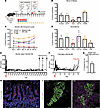 Figure 4
Allogeneic islet tolerance and diabetes reversal after simultaneous islet and bone marrow transplant in diabetic mice conditioned with 10 cGy TBI. (A) Experimental design and transplantation timeline. (B) Multilineage chimerism analysis of peripheral blood 4 weeks after HCT. (C) Longitudinal multilineage chimerism analysis of peripheral blood through 20 weeks after HCT. (D) Multilineage chimerism analysis, including Lin–SCA1+cKIT+ (LSK) HSCs, of host bone marrow 24 or 27 weeks after HCT. (E) Nonfasting blood glucose (BG) levels of diabetic B6 RIP-DTR mice that received simultaneous BALB/c bone marrow and islet transplants. (B–E) n = 5 animals from 3 independent experiments. (F) Nonfasting blood glucose levels of diabetic B6 RIP-DTR mice transplanted with BALB/c bone marrow and third-party FVB islets (n = 5 mice from 4 independent experiments). Red arrow indicates DT injection (E and F), and black arrows indicate nephrectomies (E). (G) Percentage weight change at day of nephrectomy compared with starting weight at day –6 (n = 5 animals). (H) Representative intestinal histology of BALB/c:B6 mice at 24 or 27 weeks after HCT, stained for CD45. n = 5 animals from 3 independent experiments. Scale bar: 50 μm. (I) Representative histology of BALB/c (left) and FVB (right) islets transplanted under the kidney capsule of BALB/c:B6 mice stained for insulin (green), CD45 (magenta), and glucagon (white). Scale bar: 50 μm. Data are presented as mean ± SEM. TBI, total body irradiation; HCT, hematopoietic cell transplant; TCD, T cell depletion.
Diabetic B6 RIP-DTR mice with durable chimerism (BALB/c:B6 RIP-DTR) maintained normal blood glucose levels throughout the follow-up period (>150 days) and did not require supplemental insulin or additional immunosuppression (n = 5/5; Figure 4E). We did not observe evidence of GVHD in chimeric BALB/c:B6 RIP-DTR mice; this included assessment of longitudinal body weight measures that showed normal average weight gain after HCT (Figure 4G) and gastrointestinal histology, which showed an absence of inflammation (Figure 4H).
Removal of the kidney harboring engrafted BALB/c islets (Nephrectomy; black arrows), resulted in rapid reversion to diabetes (n = 5/5; Figure 4E). Chimeric BALB/c:B6 RIP-DTR mice that received FVB islets had initial glycemic stabilization but spontaneously reverted to hyperglycemia by approximately 70 days after HCT, indicating rejection of these “third-party” islets and reestablishment of immune competence (n = 5/5; Figure 4F). Histology of the recovered islet graft at the experimental endpoint in BALB/c:B6 RIP-DTR mice revealed intact BALB/c islets with little to no CD45+ immune cell infiltrate. By contrast, FVB islet grafts showed heavy immune cell infiltration and reduced islet cells (Figure 4I). In summary, we have developed a conditioning regimen with 10 cGy TBI that promotes durable mixed hematopoietic chimerism, allogeneic graft tolerance, and diabetes reversal.
To determine whether this regimen induces durable tolerance to allogeneic antigens, nondiabetic B6 mice were conditioned and transplanted with BALB/c WBM and islets (Figure 4A). Then, 50 days after hematopoietic cell transplantation (HCT) and islet transplantation, chimeric mice received a second islet graft under the contralateral kidney capsule. Mice were euthanized 2 weeks later, and both grafts were evaluated histologically for evidence of rejection. No signs of acute allogeneic rejection or immune cell infiltration were observed in either the primary or secondary islet grafts (Supplemental Figure 5A). By contrast, we observed immune cell infiltration and reduction of “third-party” FVB islet cells (Supplemental Figure 5B).
To assess the presence of donor-reactive T cells, we isolated splenic T cells from CD45.2+ BALB/c:B6 chimeras, labeled these with CellTrace Far Red (Thermo Fisher Scientific), and then cultured these with CD11c+ splenic DCs from naive CD45.1+ B6, BALB c, or FVB mice. Both donor- (H2Kd+) and host-derived (H2Kb+) CD4+ and CD8+ T cells proliferated in response to third-party FVB DCs, whereas minimal proliferation was observed in response to either B6 or BALB/c DCs (Supplemental Figure 5, C–E, and Supplemental Figure 6). Together, these findings demonstrate that the regimen establishes stable donor-specific tolerance that supports acceptance of a secondary matched graft and is associated with deletion or functional control of donor-reactive T cells in BALB/c:B6 mixed chimeras.
Central mechanisms of immune tolerance in mixed chimeric mice. Thymic DCs augment “negative selection” of T cells in the thymus (37–40). In mixed chimerism, donor antigen-presenting cells in thymus, including thymic DCs, present both donor and self-antigens to developing thymocytes, promoting autologous and allogeneic tolerance (41). To assess tolerance mechanisms in BALB/c:B6 chimeras, we characterized the major CD11c+ DC subsets: B220+PDCA1+ plasmacytoid DCs (pDCs), conventional CD8+SIRP– cDC1 cells, and CD8–SIRP+ cDC2 cells in the thymus and spleen of chimeric BALB/c:B6 mice compared with controls (37–40, 42). We confirmed the presence of CD45.2+ donor-derived DCs in both the thymus (Figure 5A and Supplemental Figure 7A) and spleen (Figure 6A and Supplemental Figure 7F) of mixed chimeric mice, indicative of antigen presentation by donor DCs in these tissues. Compared with both unconditioned and conditioning-only control B6 mice, thymic cDC2 DCs were detected at similar frequencies in BALB/c:B6 mice (Figure 5B and Supplemental Figure 7B). Interestingly, the frequency of pDCs was significantly reduced in conditioned controls and BALB/c:B6 mice, while cDC1s were significantly increased all other groups, compared with naive B6 mice (Figure 5B and Supplemental Figure 7B). These differences in DC frequencies highlight potential shifts in immune regulation in mixed chimerism, warranting further exploration of pathways like the PD-1/PD-L1 signaling axis, which is critical for maintaining central and peripheral tolerance (43, 44).
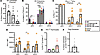 Figure 5
Central tolerance mechanisms in mixed chimeric mice. (A) Chimerism analysis of CD11c+MHC-II+ DC subsets in the thymus of B6:BALB/c chimeras 22 or 25 weeks after HCT. pDCs, B220+PDCA1+; cDC1, B220–SIRP–CD8+; cDC2, B220–SIRP+CD8–. (B) Thymic DC subset frequency in WT B6, conditioned B6, B6:BALB/c mixed chimeras, and B6:BALB/c mixed chimeras that received an islet graft. (C) Proportion and (D) MFI of PD-L1 expression in thymic host- and donor-derived DCs in B6:BALB/c mice. (E) Proportion of CD45.1+PD-1+ thymocytes in B6, conditioned B6, and B6:BALB/c mice. (F) Donor chimerism in CD4+FOXP3+ thymic Tregs. n = 5–9 animals from 2 independent experiments. “Conditioned B6” refers to B6 mice that received conditioning without HCT. Data are presented as mean ± SEM. (B–D) Two-way ANOVA with (B) Tukey’s or (C and D) Šidák’s post hoc test was used to determine significance. *P < 0.05, **P < 0.01, ***P < 0.001, ****P < 0.0001.
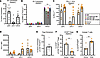 Figure 6
Peripheral tolerance mechanisms in mixed chimeric mice. (A) Chimerism analysis of CD11c+MHC-II+ DC subsets in the spleen of B6:BALB/c chimeras 22 or 25 weeks after HCT. pDCs, B220+PDCA1+; cDC1, B220–SIRP–CD8+; cDC2, B220–SIRP+CD8–. (B) Splenic DC subset frequency in WT B6, conditioned B6, B6:BALB/c mixed chimeras, and B6:BALB/c mixed chimeras that received an islet graft. (C) Proportion and (D) MFI of PD-L1 in splenic host and donor DCs in B6:BALB/c mice. (E) Donor chimerism in CD4+FOXP3+ splenic Tregs. (F) Proportion of ICOS+CD4+FOXP3+ splenic Tregs. (G) Frequency of CD73hi FR4hi anergic cells among host and donor CD4+ FOXP3– conventional T cells (Tcon) cells of B6:BALB/c spleen. n = 5–9 animals from 2 independent experiments. “Conditioned B6” indicates B6 mice that received conditioning without HCT. Data are presented as mean ± SEM. (B) Two-way ANOVA with Tukey’s post hoc test or unpaired t test (F and G) were used to determine significance. **P < 0.01.
In the thymus, PD-1 is upregulated in thymocytes undergoing negative selection and primarily localized to the medulla, while PD-L1 is expressed in both the cortex and medulla by thymic epithelial and DCs (44–46). We observed an increase in the frequency and levels of PD-L1 expression in host-derived cDC1 and cDC2 DCs of mixed chimeric mice (Figure 5, C and D, and Supplemental Figure 7C). We also observed an increase in the overall frequency of PD-1+ thymocytes in chimeric mice, compared with controls (Figure 5E and Supplemental Figure 7D). To further evaluate the selection of donor and host-derived thymocytes, we analyzed T cells with the V11 domain, which are deleted by genome-encoded superantigen presentation in BALB/c but not B6 mice (47). In BALB/c:B6 mice, approximately 70% of Vβ11+ T cells were depleted, compared with B6 controls (Supplemental Figure 8A). Importantly, we observed deletion of both donor (CD45.1+) and host (CD45.2+) Vβ11+ T cells, indicating education of host T cells to donor antigens (Supplemental Figure 8B). By contrast, Vβ8.1+ T cells, which are not under selective pressure in BALB/c or B6 strains, were not depleted (Supplemental Figure 8C). Negative selection of thymocytes is often accompanied by the presence of thymic regulatory T cells (tTregs), and we detected donor-derived CD4+/FOXP3+ tTregs in the thymus of chimeric BALB/c:B6 mice (Figure 5F and Supplemental Figure 7E). Together, these results support mechanisms of central tolerance induction in BALB/c:B6 mixed chimeras, where donor DCs in the host thymus could mediate negative selection and augment the generation of host and donor-derived tTregs.
Peripheral mechanisms of immune tolerance in mixed chimeric mice. Peripheral tolerance mechanisms are crucial for suppressing allo- and autoreactive T cells that evade thymic selection and for tolerizing residual tissue-resident host T cells that survive conditioning. As with thymic DCs, we evaluated both the frequency of splenic DC subsets and their PD-L1 expression (Figure 6, B–D, and Supplemental Figure 7, G and H). Similarly, we observed an upward trend in the frequency and level of PD-L1 expression in host-derived splenic DCs (Figure 6, C and D). These findings indicate a role for PD-L1 expression in splenic DCs in promoting peripheral tolerance.
Peripheral tolerance in transplantation is also associated with Treg activity (48). Consistent with our observations in the thymus, we observed donor-derived splenic CD4+FOXP3+ Tregs in mixed chimeric mice (Figure 6E and Supplemental Figure 7I). To determine whether Tregs present in mixed chimeric mice were functional, we analyzed inducible costimulator (ICOS), whose expression is correlated with increased IL-10 secretion and suppression potential, in donor- and host-derived splenic Tregs (49). While both host- and donor-derived ICOS+ Tregs are present, the frequency of donor-derived ICOS+ Tregs was significantly higher than host-derived ICOS+ Tregs (Figure 6F and Supplemental Figure 7J). Donor-derived Tregs can suppress alloreactive host-type T cells (50). Supporting this possibility, we observed that the proportion of host-derived anergic CD4+CD73hiFR4hi cells was significantly higher (Figure 6G and Supplemental Figure 7K). Additionally, myeloid-derived suppressor cells (MDSCs) have been shown to play a role in promoting tolerance to allogeneic tissues (51, 52). In mice, MDSCs are broadly categorized as granulocytic (G) (CD11b+, LY6G+, LY6Clo) or monocytic (M) (CD11b+, LY6G–, LY6Chi) MDSCs, which differ in lineage and suppressive mechanisms (53). Thus, we evaluated MDSCs in the peripheral blood and spleens of mixed chimeric mice and observed G- and M-MDSCs at comparable proportions as in control B6 mice, with both populations exhibiting donor chimerism (Supplemental Figure 8, D–G). In summary, durable mixed hematopoietic chimerism after conditioning with our low-dose radiation regimen likely reflects both central and peripheral mechanisms that establish and maintain tolerance to donor HSCs and islets and prevent GVHD.


