
Research ArticleCardiologyPulmonology
Open Access |  10.1172/jci.insight.194251
Excessive postnatal smooth muscle differentiation in a lung-specific model of TBX4-related pulmonary hypertension
Lea C. Steffes,1 Kaylie A. Chiles,2,3,4 Sehar R. Masud,1 Aleen Rahman,1 Madeline Dawson,2,3 Csaba Galambos,5 Maya E. Kumar,1 and Ripla Arora2,3
1Department of Pediatrics, Division of Pulmonary Medicine, Stanford University School of Medicine, Palo Alto, California, USA.
2Department of Obstetrics, Gynecology, and Reproductive Biology, and
3Institute for Quantitative Health Science and Engineering, Michigan State University, East Lansing, Michigan, USA.
4Michigan State University College of Osteopathic Medicine, East Lansing, Michigan, USA.
5Departments of Pathology and Pediatrics, University of Colorado School of Medicine and Children’s Hospital Colorado, Aurora, Colorado, USA.
Address correspondence to: Maya E. Kumar, Department of Pediatrics, Division of Pulmonary Medicine, Stanford University, School of Medicine, 240 Pasteur Dr, Biomedical Innovations Building, Room 2300, Stanford University School of Medicine, Stanford, California 94305, USA. Phone: 650.724.9250; Email: mayak@stanford.edu. Or to: Ripla Arora, Department of Obstetrics, Gynecology and Reproductive Biology, Institute for Quantitative Health Science and Engineering, Michigan State University, 775 Woodlot Dr, Rm 3312, East Lansing, Michigan 48824, USA. Phone: 517.353.6958; Email: ripla@msu.edu.
Authorship note: LCS and KAC contributed equally to this work and are co–first authors.
Find articles by Steffes, L. in: PubMed | Google Scholar
1Department of Pediatrics, Division of Pulmonary Medicine, Stanford University School of Medicine, Palo Alto, California, USA.
2Department of Obstetrics, Gynecology, and Reproductive Biology, and
3Institute for Quantitative Health Science and Engineering, Michigan State University, East Lansing, Michigan, USA.
4Michigan State University College of Osteopathic Medicine, East Lansing, Michigan, USA.
5Departments of Pathology and Pediatrics, University of Colorado School of Medicine and Children’s Hospital Colorado, Aurora, Colorado, USA.
Address correspondence to: Maya E. Kumar, Department of Pediatrics, Division of Pulmonary Medicine, Stanford University, School of Medicine, 240 Pasteur Dr, Biomedical Innovations Building, Room 2300, Stanford University School of Medicine, Stanford, California 94305, USA. Phone: 650.724.9250; Email: mayak@stanford.edu. Or to: Ripla Arora, Department of Obstetrics, Gynecology and Reproductive Biology, Institute for Quantitative Health Science and Engineering, Michigan State University, 775 Woodlot Dr, Rm 3312, East Lansing, Michigan 48824, USA. Phone: 517.353.6958; Email: ripla@msu.edu.
Authorship note: LCS and KAC contributed equally to this work and are co–first authors.
Find articles by Chiles, K. in: PubMed | Google Scholar
1Department of Pediatrics, Division of Pulmonary Medicine, Stanford University School of Medicine, Palo Alto, California, USA.
2Department of Obstetrics, Gynecology, and Reproductive Biology, and
3Institute for Quantitative Health Science and Engineering, Michigan State University, East Lansing, Michigan, USA.
4Michigan State University College of Osteopathic Medicine, East Lansing, Michigan, USA.
5Departments of Pathology and Pediatrics, University of Colorado School of Medicine and Children’s Hospital Colorado, Aurora, Colorado, USA.
Address correspondence to: Maya E. Kumar, Department of Pediatrics, Division of Pulmonary Medicine, Stanford University, School of Medicine, 240 Pasteur Dr, Biomedical Innovations Building, Room 2300, Stanford University School of Medicine, Stanford, California 94305, USA. Phone: 650.724.9250; Email: mayak@stanford.edu. Or to: Ripla Arora, Department of Obstetrics, Gynecology and Reproductive Biology, Institute for Quantitative Health Science and Engineering, Michigan State University, 775 Woodlot Dr, Rm 3312, East Lansing, Michigan 48824, USA. Phone: 517.353.6958; Email: ripla@msu.edu.
Authorship note: LCS and KAC contributed equally to this work and are co–first authors.
Find articles by Masud, S. in: PubMed | Google Scholar
1Department of Pediatrics, Division of Pulmonary Medicine, Stanford University School of Medicine, Palo Alto, California, USA.
2Department of Obstetrics, Gynecology, and Reproductive Biology, and
3Institute for Quantitative Health Science and Engineering, Michigan State University, East Lansing, Michigan, USA.
4Michigan State University College of Osteopathic Medicine, East Lansing, Michigan, USA.
5Departments of Pathology and Pediatrics, University of Colorado School of Medicine and Children’s Hospital Colorado, Aurora, Colorado, USA.
Address correspondence to: Maya E. Kumar, Department of Pediatrics, Division of Pulmonary Medicine, Stanford University, School of Medicine, 240 Pasteur Dr, Biomedical Innovations Building, Room 2300, Stanford University School of Medicine, Stanford, California 94305, USA. Phone: 650.724.9250; Email: mayak@stanford.edu. Or to: Ripla Arora, Department of Obstetrics, Gynecology and Reproductive Biology, Institute for Quantitative Health Science and Engineering, Michigan State University, 775 Woodlot Dr, Rm 3312, East Lansing, Michigan 48824, USA. Phone: 517.353.6958; Email: ripla@msu.edu.
Authorship note: LCS and KAC contributed equally to this work and are co–first authors.
Find articles by Rahman, A. in: PubMed | Google Scholar
1Department of Pediatrics, Division of Pulmonary Medicine, Stanford University School of Medicine, Palo Alto, California, USA.
2Department of Obstetrics, Gynecology, and Reproductive Biology, and
3Institute for Quantitative Health Science and Engineering, Michigan State University, East Lansing, Michigan, USA.
4Michigan State University College of Osteopathic Medicine, East Lansing, Michigan, USA.
5Departments of Pathology and Pediatrics, University of Colorado School of Medicine and Children’s Hospital Colorado, Aurora, Colorado, USA.
Address correspondence to: Maya E. Kumar, Department of Pediatrics, Division of Pulmonary Medicine, Stanford University, School of Medicine, 240 Pasteur Dr, Biomedical Innovations Building, Room 2300, Stanford University School of Medicine, Stanford, California 94305, USA. Phone: 650.724.9250; Email: mayak@stanford.edu. Or to: Ripla Arora, Department of Obstetrics, Gynecology and Reproductive Biology, Institute for Quantitative Health Science and Engineering, Michigan State University, 775 Woodlot Dr, Rm 3312, East Lansing, Michigan 48824, USA. Phone: 517.353.6958; Email: ripla@msu.edu.
Authorship note: LCS and KAC contributed equally to this work and are co–first authors.
Find articles by Dawson, M. in: PubMed | Google Scholar
1Department of Pediatrics, Division of Pulmonary Medicine, Stanford University School of Medicine, Palo Alto, California, USA.
2Department of Obstetrics, Gynecology, and Reproductive Biology, and
3Institute for Quantitative Health Science and Engineering, Michigan State University, East Lansing, Michigan, USA.
4Michigan State University College of Osteopathic Medicine, East Lansing, Michigan, USA.
5Departments of Pathology and Pediatrics, University of Colorado School of Medicine and Children’s Hospital Colorado, Aurora, Colorado, USA.
Address correspondence to: Maya E. Kumar, Department of Pediatrics, Division of Pulmonary Medicine, Stanford University, School of Medicine, 240 Pasteur Dr, Biomedical Innovations Building, Room 2300, Stanford University School of Medicine, Stanford, California 94305, USA. Phone: 650.724.9250; Email: mayak@stanford.edu. Or to: Ripla Arora, Department of Obstetrics, Gynecology and Reproductive Biology, Institute for Quantitative Health Science and Engineering, Michigan State University, 775 Woodlot Dr, Rm 3312, East Lansing, Michigan 48824, USA. Phone: 517.353.6958; Email: ripla@msu.edu.
Authorship note: LCS and KAC contributed equally to this work and are co–first authors.
Find articles by Galambos, C. in: PubMed | Google Scholar
1Department of Pediatrics, Division of Pulmonary Medicine, Stanford University School of Medicine, Palo Alto, California, USA.
2Department of Obstetrics, Gynecology, and Reproductive Biology, and
3Institute for Quantitative Health Science and Engineering, Michigan State University, East Lansing, Michigan, USA.
4Michigan State University College of Osteopathic Medicine, East Lansing, Michigan, USA.
5Departments of Pathology and Pediatrics, University of Colorado School of Medicine and Children’s Hospital Colorado, Aurora, Colorado, USA.
Address correspondence to: Maya E. Kumar, Department of Pediatrics, Division of Pulmonary Medicine, Stanford University, School of Medicine, 240 Pasteur Dr, Biomedical Innovations Building, Room 2300, Stanford University School of Medicine, Stanford, California 94305, USA. Phone: 650.724.9250; Email: mayak@stanford.edu. Or to: Ripla Arora, Department of Obstetrics, Gynecology and Reproductive Biology, Institute for Quantitative Health Science and Engineering, Michigan State University, 775 Woodlot Dr, Rm 3312, East Lansing, Michigan 48824, USA. Phone: 517.353.6958; Email: ripla@msu.edu.
Authorship note: LCS and KAC contributed equally to this work and are co–first authors.
Find articles by Kumar, M. in: PubMed | Google Scholar
1Department of Pediatrics, Division of Pulmonary Medicine, Stanford University School of Medicine, Palo Alto, California, USA.
2Department of Obstetrics, Gynecology, and Reproductive Biology, and
3Institute for Quantitative Health Science and Engineering, Michigan State University, East Lansing, Michigan, USA.
4Michigan State University College of Osteopathic Medicine, East Lansing, Michigan, USA.
5Departments of Pathology and Pediatrics, University of Colorado School of Medicine and Children’s Hospital Colorado, Aurora, Colorado, USA.
Address correspondence to: Maya E. Kumar, Department of Pediatrics, Division of Pulmonary Medicine, Stanford University, School of Medicine, 240 Pasteur Dr, Biomedical Innovations Building, Room 2300, Stanford University School of Medicine, Stanford, California 94305, USA. Phone: 650.724.9250; Email: mayak@stanford.edu. Or to: Ripla Arora, Department of Obstetrics, Gynecology and Reproductive Biology, Institute for Quantitative Health Science and Engineering, Michigan State University, 775 Woodlot Dr, Rm 3312, East Lansing, Michigan 48824, USA. Phone: 517.353.6958; Email: ripla@msu.edu.
Authorship note: LCS and KAC contributed equally to this work and are co–first authors.
Find articles by
Arora, R.
in:
PubMed
|
Google Scholar
|

Published April 27, 2026 - More info
JCI Insight. 2026;11(11):e194251. https://doi.org/10.1172/jci.insight.194251.
© 2026 Steffes et al. This work is licensed under the Creative Commons Attribution 4.0 International License. To view a copy of this license, visit http://creativecommons.org/licenses/by/4.0/.
Received: April 30, 2025; Accepted: April 14, 2026

-
Results
Mice lacking pulmonary Tbx4 gene function have PH. To assess excision at the Tbx4 locus, Tbx4LMECre semiquantitative PCR–based genotyping of entire lungs at E18.5 was used. DNA fragments were amplified for Tbx4 wild-type, floxed (conditional), or null (excised) alleles (22). A reduction in the floxed band and a prominent null band indicates efficient excision at the Tbx4 locus within the pulmonary mesenchyme (Supplemental Figure 1A). As endothelial and epithelial lineages do not express Tbx4LMECre, a band for the floxed allele is expected in both Tbx4cKO and control samples. Tbx4cKO pups were born in Mendelian ratios, with 50.8% of pups from the cross Tbx4LMECre; Tbx4fl/fl × Tbx4fl/fl inheriting Cre (n = 62/122 Cre-positive pups weaned from 12 litters). Equal proportions of males and females were born (29/62 Cre-positive pups were female and 33/62 pups were male) and adult Tbx4cKO mice had no differences in weight compared to control mice (Supplemental Figure 1B).
To further characterize the impact of fetal loss of Tbx4 and Tbx5 on adult lung function and the development of PH, we performed echocardiography on adult mice between 3 and 8 months of age (Supplemental Figure 2). PH metrics collected from mouse echocardiography include the ratio of pulmonary acceleration time to pulmonary ejection time (PAT/PET), a measurement of right ventricular (RV) afterload; a decrease in this value is correlated with increased severity of PH), RV and outflow tract (RVOT) dilation, and leftward deviation of the interventricular septum (measured by the RV-to–left ventricular area ratio, RV/LV) (32–34).
Tbx4cKO adult mice exhibited a significant reduction in PAT/PET compared with controls (Figure 1A; n = 20 controls and n = 16 Tbx4cKO; P = 0.009 compared with control). Concurrent loss of one Tbx5 allele (Tbx4cKO;Tbx5het) shows both reduced PAT/PET and statistically significant worsening of the RV/LV area (Figure 1, A–C; n = 10 Tbx4cKO;Tbx5het; PAT/PET P = 0.0002 compared with control and P = 0.243 compared with Tbx4cKO; RV/LV area P = 0.002 compared with control and P = 0.032 compared with Tbx4cKO). No statistically significant difference was seen in RVOT diameter between any groups (P = 0.065).
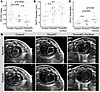 Figure 1
Echocardiographic assessment of adult mice infers PH in Tbx4cKO and Tbx4cKO;Tbx5het. (A) PAT/PET is significantly reduced in Tbx4cKO and Tbx4cKO;Tbx5het compared with control. There was no significant difference in RV outflow tract (RVOT) dilation (B) or RV/LV area ratio (C) in Tbx4cKO, although a significant increase was found in RV/LV area in Tbx4cKO;Tbx5het compared with control. n = 20 controls, n = 16 Tbx4cKO, n = 10 Tbx4cKO;Tbx5het. One-way ANOVA across genotypes, followed by Tukey’s HSD post hoc tests for pairwise comparisons between groups. Males, open circles; females, closed circles. (D) Representative images from systole and diastole phases of the cardiac cycle depicting the dilated RVs in Tbx4cKO and Tbx4cKO;Tbx5het mice, with flattening of the interventricular septum. Dotted lines denote the ventricular lumen.
Representative short axis echo images by genotype are shown in Figure 1D. No significant changes in cardiac output (CO), stroke volume (SV), ejection fraction (EF), or fractional shortening (LV diameter change during systole) were observed between genotypes, indicating normal LV function (Supplemental Figure 2).
Tbx4cKO right caudal lobes at E18.5 are smaller with muscularized distal vessels and airway SMCs found close to pleural surface. TBX4 loss of function is associated with lethal developmental lung disorders hallmarked by hypoplastic lungs and varying degrees of acinar developmental failure (19). To identify changes at the end of embryogenesis, Tbx4cKO mice were harvested at E18.5, just before birth. Using whole-mount immunofluorescent staining, confocal microscopy, and image segmentation, we analyzed right caudal lobe volume and smooth muscle α-actin (ACTA2) expression around the distal arterioles and airways in uninflated lungs (Figure 2, A and B). Lobe volume was significantly smaller in Tbx4cKO mice compared with control (Figure 2C; average 6.02 × 109 μm3 vs. 8.20 × 109 μm3; P = 0.029) and a significant reduction in the distance between PA and airway SMCs and the pleura was observed in Tbx4cKO lobes compared with control. The shortest distance from the distal-most point of fully coherent arterial SMC coverage to the pleural edge was measured in arteries associated with the terminal bifurcations of the right caudal (RCd) lateral (L) branches 1-4 (RCd.L1 through RCd.L4) (35). PA diameter at the point of distal-most coherent PA SMC coverage was measured and no significant change was found in Tbx4cKO mice compared to control (Figure 2D; P = 0.97). Tbx4cKO mice exhibited a significant reduction in muscularized PA-to-pleura distances compared with control (Figure 2E; P = 0.032), with coherent PA SMC coverage terminating a median distance of 396 μm from the pleural edge in control lobes, and 322 μm in Tbx4cKO. In addition to distal PA SMC coverage, we assessed distal airway SMC coverage. Similar to PA SMCs, distal-most airway SMC coverage was significantly closer to the pleural edge in Tbx4cKO compared with control (Figure 2F; median of 403 μm in controls; 393.5 μm in Tbx4cKO; P = 0.044; n = 3 controls and n = 4 Tbx4cKOs).
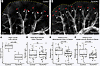 Figure 2
Decreased distance between muscularized airways and arteries and the pleura edge, as well as reduced lobe volume at E18.5 in Tbx4cKO. Confocal projections of whole right caudal lobes stained to highlight ACTA2 (white), cleared, and visualized in 3 dimensions from control (A) and Tbx4cKO (B), showing ACTA2+ airways and arterioles nearer to the pleural edge in Tbx4cKO compared with control at E18.5. White arrowheads mark distal most extent of airway smooth muscle; red arrowheads mark distal most coherent vascular smooth muscle; “V” marks veins. Note: The leftmost branch in A was excluded from quantitative analysis due to artifactual folding of the pleural edge during mounting. Scale bars: 150 μm. (C) Caudal lobe volume is significantly reduced in Tbx4cKO compared with control (P = 0.029). Distal muscularized artery diameter did not differ significantly between genotypes (D); however, the distance from distal-most vascular (E) and airway (F) smooth muscle to the pleural edge was significantly reduced in Tbx4cKO compared with control. n = 3 controls and n = 4 Tbx4cKOs. Welch’s ANOVA (assuming unequal variances) was performed to assess differences across genotypes, followed by Games-Howell post hoc tests for pairwise comparisons between groups.
Tbx4cKO and Tbx4cKO;Tbx5het adult mice have significant medial thickening and rare neointimal formation. Increased muscularization and arterial remodeling is seen with TBX4-related pulmonary vascular disease (9, 20, 21) (Figure 3E and Supplemental Figure 3). Thickening of the smooth muscle media, located between the internal and external elastic lamina, and formation of neointimal lesions, which are cellular accumulations between the intima and internal elastic lamina, are hallmarks of human PAH histology and drive PH hemodynamics (4). To uncover the cause of elevated PA pressures observed in adult Tbx4cKO, we performed a detailed examination of PA anatomy in these animals (Figure 3, A–C). Although average PA diameter was comparable between genotypes (56.7 μm in control vs. 55.9 μm in Tbx4cKO), media layers were significantly thicker in Tbx4cKO animals, with an increase in mean thickness of 24% compared with controls (Figure 3D; 3.6 μm in Tbx4cKO and 2.9 μm in control, P = 1.03 × 10⁻⁷). There was no significant increase in medial thickness in Tbx4cKO;Tbx5het compared to Tbx4cKO (P = 0.11). Consistent with medial thickening reducing the size of the patent vessel lumen, percentage lumen (vessel diameter minus medial thicknesses divided by vessel diameter) was significantly reduced in Tbx4cKO compared with control (Supplemental Figure 4A; P = 2.88 × 10⁻⁵) and Tbx4cKO;Tbx5het (P = 0.01 vs. control). There was no significant difference between Tbx4cKO and Tbx4cKO;Tbx5het. In one Tbx4cKO animal, frequent, partially occlusive neointimal lesions were observed (neointima present in 38% of measured arteries; 11 of 29 arteries scored), but neointima was largely absent in all other mutant animals evaluated (neointima present in 0.31% of all remaining arteries; 1 of 318 arteries scored; n = 3 for each genotype). Similar rare neointimal changes are observed in human TBX4 syndrome lung histology (20).
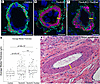 Figure 3
Tbx4cKO and Tbx4cKO;Tbx5het mice display pulmonary artery muscularization consistent with PH hemodynamics and similar to that seen in TBX4 syndrome. (A–C) Pulmonary artery cross sections from control, Tbx4cKO, and Tbx4cKO;Tbx5het mouse lungs stained to highlight media (ACTA2, magenta), internal and external elastic laminae (hydrazide, cyan), and nuclei (DAPI, blue) show an increase in medial thickness (yellow bars) with loss of Tbx4 gene function from lung mesenchyme. (D) Measurement of medial thickness from high-resolution confocal images of individual arteries from each genotype confirms medial hypertrophy with loss of Tbx4. The additional loss of 1 copy of Tbx5 does not lead to significant worsening of the phenotype. n = 3 for each genotype. Welch’s ANOVA (assuming unequal variances) was performed to assess differences across genotypes, followed by Games-Howell post hoc tests for pairwise comparisons between groups. (E) Pulmonary arteries (H&E stain of paraffin sections) of TBX4 syndrome patients display a similar expansion of the medial layer (yellow bar) versus control (see Supplemental Figure 3). Scale bars: 10 μm (A–C) and 100 μm (E).
Whole-mount analysis of Tbx4cKO and Tbx4cKO;Tbx5het lungs demonstrates excessive vascular SMC coverage and distal muscularization of small arteries. To assess the distribution and extent of muscularized arteries with fine spatial precision, whole-mount ACTA2 antibody staining, deep tissue imaging, and detailed quantitation of intact right caudal lobes were performed. A striking feature of the mutant phenotype was the abnormal proximity of fully muscularized arteries to the pleural surface (Figure 4, A–F), paralleling observations in TBX4 syndrome in which muscularized arteries abut the pleura (Figure 4G). To confirm that this reflects true extension of smooth muscle coverage, both the distance from the pleural edge to the distal-most coherent SMC coverage and the length of SMC-covered arterial segments from defined proximal artery bifurcation points were measured (Figure 4H and Supplemental Figure 4B). As in the embryonic analysis above, to allow quantitative comparison between genotypes, we assessed the arteries accompanying the terminal bifurcations of airway branches RCd.L1 through RCd.L4 (35) in all animals. In control lungs, arteries have a coherent ACTA2+ media until a median distance of 511 μm from the pleura, after which only sparse, discontinuous ACTA2+ cells are observed. However, in Tbx4cKO mice, we found coherent muscularization extended a median distance of 278 μm (P = 6.57 × 10⁻⁹ vs. control) from the pleural edge (Figure 4H). Many fully muscularized arteries extended into what is normally a non-muscularized vascular zone, with 39.1% of PAs showing complete smooth muscle medial coat within 160 μm of the pleura in Tbx4cKO compared with zero in the control. We termed this region that is typically free of muscularized PA the subpleural non-muscularized zone (SNZ), demarcated as a dashed line in Figure 4H. In addition, Tbx4cKO arteries showed longer SMC-covered segments compared with controls (Supplemental Figure 4B, P = 0.014), again indicating that smooth muscle extends more distally along the arterial tree.
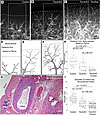 Figure 4
Whole-mount analysis reveals increased vascular smooth muscle coverage of peripheral pulmonary artery networks in Tbx4cKO and Tbx4cKO;Tbx5het. (A–C) Intact right caudal lobes stained to highlight smooth muscle α-actin (ACTA2) protein (white), cleared, and visualized in 3 dimensions from control, Tbx4cKO, and Tbx4cKO;Tbx5het animals allows visualization of both airway, arterial, and venous smooth muscle networks. The same branch (dorsal view of RCd.L3) is shown for each genotype with distal-most airway bifurcation marked with asterisk to aid comparison. Images in A–C are multifocal projections of stereoscope z-stacks. Scale bars: 500 μm. (D–F) Schematic drawings of arterial networks for each genotype. The gray dotted line in E at 160 μm demarcates the subpleural nonmuscular zone (SNZ) where muscularized pulmonary arteries are absent in control lungs. (G) Highly muscularized arteries (H&E stain of paraffin section) are found close to the pleural surface in TBX4 syndrome lungs but not in control (see Supplemental Figure 3). (H) In both Tbx4cKO and Tbx4cKO;Tbx5het, muscularized arteries extend significantly closer to the pleura (yellow dotted lines in A–C; black dotted lines in D–F). (I) Consistent with abnormal smooth muscle coverage of slender distal pulmonary arteries, the diameter of the distal-most fully muscularized arteries drops significantly in both Tbx4cKO and Tbx4cKO;Tbx5het animals. Control n = 7, Tbx4cKO n = 5, Tbx4cKO;Tbx5het n = 3. Welch’s ANOVA (assuming unequal variances) was performed to assess differences across genotypes, followed by Games-Howell post hoc tests for pairwise comparisons between groups.
Distal muscularization, in which smaller diameter arteries have a complete SMC coat, is seen in PH histology and is thought to be an important driver of increased pulmonary vascular resistance (4). We assessed distal muscularization by measuring the diameter of arteries at the point where the complete SMC coat ends and found that smaller diameter arteries were fully muscularized in Tbx4cKO compared with controls (Figure 4I; median of 30.2 μm in Tbx4cKO vs. 53.1 μm in control; P < 1.0 × 10⁻¹⁰).
All PA muscularization parameters were exacerbated in Tbx4cKO;Tbx5het, with the distance to the pleura of muscularized arteries shrinking to a median of 100 μm (P = 1.60 × 10⁻⁷ vs. Tbx4cKO, P = 3.62 × 10⁻¹⁰ vs. control), the percentage of muscularized vessels within the SNZ increasing to 83.7% (Figure 4H), and the diameter of muscularized tips narrowing further to 21.9 μm (Figure 4F; P = 7.9 × 10⁻⁹ vs. Tbx4cKO, P < 1.0 × 10⁻¹⁰ vs. control; control n = 7, Tbx4cKO n = 5, Tbx4cKO;Tbx5het n = 3). Together, these findings indicate a key role for T-box genes in regulating proper distal arterial muscularization.
Excessive PA branching and abnormal patterning of muscularized arteries in Tbx4cKO mice. Arteries of all sizes have elastic laminae that disappear only as they transition to the capillary bed (36). Staining these elastin layers allows us to visualize the arterial tree in whole-mount samples independently of the presence of SMCs (Supplemental Figure 5). To allow direct comparison between control and mutant samples, we quantitated branch number and the presence of an SMC coat of the same PA (the PA serving the second ventral airway branch emerging from the first lateral branch of the right caudal lobe; RCd.L1.V2 [V, ventral]; branch number was determined by counting all PA branch points visible with either ACTA2 or elastin staining in the PA tree stemming from the first lateral branch) in control and Tbx4cKO mice. In control, distal arteries are ACTA2-negative, with 44% of elastin-marked PA branches lacking an SMC coat (26 elastin-marked branches, 15 ACTA2-coated). Tbx4cKO shows a more elaborate and muscularized arterial tree with a greater number of elastin-marked branches, all of which are invested with an SMC coat. In Tbx4cKO, the SMC coat extends beyond the visualizable elastic lamina, with 47 elastin-marked branches scored but 56 ACTA2-covered branches visualized. While the increased number of arterial branches might initially suggest increased vascular surface area that could reduce pulmonary vascular resistance, these are abnormal vessels with extensive distal muscularization of smaller diameter vessels, medial thickening, and luminal narrowing consistent with the observed echocardiographic evidence of PH.
Airway muscularization extends closer to pleura in Tbx4cKO and Tbx4cKO;Tbx5het compared with control and myofibroblasts are abundant in Tbx4cKO. Because bronchioles abutting the pleural edge are observed in TBX4 syndrome patients (Figure 5A) (20) we investigated the distribution of SMC-invested conducting airways in relation to the pleura in Tbx4cKO mice. In healthy animals, parallel rings of SMCs expressing ACTA2 wrap around conducting airways. These rings are formed by closely spaced bundles of SMCs (Figure 5, B and C). Moving from proximal to distal, as conducting airways transition to respiratory epithelium, the SMC rings abruptly become sparse and are absent in the most peripheral airways (37). In Tbx4cKO animals, airway SMC rings are present closer to the pleura than in control (Figure 5D; median of 731 μm in KO vs. 1188 μm in control, P = 2.77 × 10⁻⁴). Additionally, the spacing of SMC rings was altered in Tbx4cKO, with wider spacing of rings both proximally (median gaps of 25.6 μm in Tbx4cKO vs. 19.7 μm in control, P = 1.00 × 10⁻³) and distally (median gaps of 80.9 μm in Tbx4cKO vs. 25.6 μm in control, P = 1.04 × 10⁻⁵) relative to a fixed position in the airway tree, the terminal bifurcation of branches RCd.L1.Cr1, RCd.L1.Cr2, and RCd.L1.Cr3 (Cr, cranial) (35) (Figure 5E). Measurement of gap distances and the distal extent of airway SMC rings in Tbx4cKO;Tbx5het was unreliable due to the large number of ACTA2+ myofibroblast-like cells throughout the parenchyma (airway to pleura measurements: control n = 7, Tbx4cKO n = 4; SMC gap distance measurements: control n = 3, Tbx4cKO n = 3). In addition, dispersed C-shaped ACTA2+ cells not present in controls were found throughout the parenchyma of Tbx4cKO lungs (Figure 5, F and G) with further expansion in Tbx4cKO;Tbx5het mice. These cells were not associated with conducting airways, arteries, or veins and are inferred to be myofibroblasts. Similar ectopic interstitial ACTA2+ cells are seen in patients with TBX4 syndrome (Figure 5H). Full section confocal scans from each genotype are included for reference in Supplemental Figure 6.
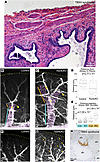 Figure 5
Airway smooth muscle extends closer to the pleura and is mispatterned in Tbx4-mutant lungs. (A) In TBX4 syndrome, smooth muscle–wrapped conducting airways are found in close apposition to the pleura, while control conducting airways end more proximally (see Supplemental Figure 3). (B and C) Whole-mount stains of right caudal lobes highlight ACTA2+ cells (white) along airways and vasculature. The same branch (dorsal view of RCd.L1.Cr2) is shown in each genotype, with airway-associated smooth muscle indicated with pink overlay and the position of the distal-most complete smooth muscle ring indicated with yellow arrowheads. (D) The distance between distal-most airway SMC ring and the pleural margin is significantly shorter in Tbx4cKO animals versus control. Control n = 7, Tbx4cKO n = 4. (E) The distance between airway smooth muscle bundles both before (cyan bar in B and C) and after (orange bar in B and C) the final conducting airway bifurcation (yellow dot in B and C) is significantly wider in Tbx4cKO. Con, control; KO, Tbx4cKO. Cyan, proximal measurements; orange, distal measurements. Control n = 3, Tbx4cKO n = 3. (D and E) Welch’s ANOVA (assuming unequal variances) was performed to assess differences across genotypes, followed by Games-Howell post hoc tests for pairwise comparisons between groups. (F and G) Whole-mount ACTA2 (white) staining of right caudal lobe margins shows an abundance of ACTA2+ C-shaped myofibroblasts (selected cells highlighted with arrowheads) in parenchyma of Tbx4cKO not present in control. Pleural lobe margin indicated with yellow dotted line in A–C, F, and H. ACTA2 immunostaining highlights a focus of ectopic smooth muscle accumulation in the lung interstitium in a patient with TBX4 syndrome (alv marks alveoli). Scale bars: 100 μm (A–C and F), 200 μm (G), and 50 μm (H).
Pleural SMC bands are found with increasing density with T-box allele loss and are characterized by concurrent expression of myofibroblast and airway SMC markers. In addition to the airway and vascular abnormalities described above, whole-mount ACTA2 antibody staining of intact lobes revealed the presence of ACTA2-expressing bands, predominantly running along the ventral face of the pleural surface (Figure 6, A–C). These bands were composed of long strands of parallel smooth muscle–like fibers grouped in coherent bundles (Figure 6E). Short, thin bands were present in control specimens (Figure 6A). However, in Tbx4cKO and Tbx4cKO;Tbx5het, we observed a graduated increase in the length, density, and number of these pleural smooth muscle fibers (Figure 6, B and C). Although bands were prominent in all Tbx4cKO;Tbx5het lobes examined, in 1 animal elaborate webs of SMC bands covering the majority of the pleural surface were observed, to the point of obscuring visualization of underlying structures with fluorescence microscopy (Figure 6C). These bundles wrap around lobe edges and extend through clefts but never invade the lung parenchyma. Notably, they do not appear to connect to any internal patterning elements such as airways or vessels. This phenomenon of ectopic bundles of SMCs at the pleural surface has been previously reported in patients with TBX4 syndrome (Figure 6, D and E) (20) but their clinical consequence is poorly understood. To further characterize the molecular profile of pleural bands, we performed multiplexed RNA in situ hybridization using markers for mesenchymal subsets identified by recent single-cell profiling efforts (29), including airway and vascular SMCs, pericytes, and myofibroblasts (Figure 6, F–J). Our analysis revealed that these cells strongly express transcripts characteristic of generic SMC identity (Cnn1; Figure 6H) as well as Lgr6 (Figure 6I), a marker of embryonic airway SMCs (25) and a lineage marker for septation myofibroblasts (37). We observed low levels of airway SMC marker Hhip (Figure 6J) and negligible expression of vascular SMC and pericyte markers Pdgfrb and Notch3 (Figure 6, I and J). Collectively, this expression pattern reflects a generic ACTA2+ identity with some molecular features resembling airway SMCs and myofibroblasts, but not precisely matching any described SMC subset present in the healthy lung.
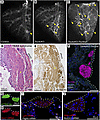 Figure 6
Loss of T-box genes leads to expansion of ectopic subpleural smooth muscle bands. (A–C) Ventral views of right caudal lobes from control, Tbx4cKO, and Tbx4cKO;Tbx5het, stained in whole mount to identify ACTA2+ cells (white). Small bands of subpleural smooth muscle (arrowheads) are occasionally found in control specimens, with the size and extent of the subpleural smooth muscle banding increasing in Tbx4cKO, and with Tbx4cKO;Tbx5het animals showing extensive banding wrapping all faces of the lobe. (D and E) Subpleural accumulation of ACTA2+ smooth muscle (asterisks) is a feature of TBX4 syndrome but absent in control (see Supplemental Figure 3). (F) Confocal micrograph of immunostained cryosection shows that mouse ACTA2+ bands lie directly beneath the pleura and are composed of bundles of tightly aligned cells that lack apparent contact with internal lung structures. Molecular characterization of ectopic subpleural bands in a Tbx4cKO;Tbx5het mouse by fluorescent in situ hybridization shows ACTA2+ bands express high levels of Cnn1 (G and H) and Lgr6 (I), minimal levels of Hhip (J), while Notch3 and Pdgfrb are undetectable, not fully consistent with any canonical lung smooth muscle identity, but intermediate between airway smooth muscle and myofibroblast. Pleura are marked with a white dotted line in F–J; subpleural band cells are marked with a yellow dotted line in I and J. Scale bars: 500 μm (A–C), 100 μm (D–F), and 50 μm (G–J).


