
Research ArticleImmunologyInflammation
Open Access |  10.1172/jci.insight.192830
Systemic reprogramming of monocytes in Crohn’s disease promotes their intestinal inflammatory function
Eve Hornsby,1 Radha Gadhok,1,2 Inva Hoti,1 Eva Wozniak,3 James R. Boot,3 Emma Connick,3 Paul Stevens,3 Holly Creed,1 Amy Lewis,4 Andrew Silver,4 James O. Lindsay,1,2 and Andrew J. Stagg1
1Centre for Immunobiology and Infection, Blizard Institute, Barts and The London School of Medicine and Dentistry, Queen Mary University of London, London, United Kingdom.
2Department of Gastroenterology, Barts Health NHS Trust, The Royal London Hospital, London, United Kingdom.
3Genome Centre and
4Centre for Genomics and Child Health, Blizard Institute, Barts and The London School of Medicine and Dentistry, Queen Mary University of London, London, United Kingdom.
Address correspondence to: Andrew J. Stagg or Eve Hornsby, Centre for Immunobiology and Infection, Blizard Institute, 4 Newark Street, London E1 2AT, United Kingdom. Phone: 02078822483; Email: a.stagg@qmul.ac.uk (AJS); e.hornsby@qmul.ac.uk (EH).
Find articles by Hornsby, E. in: PubMed | Google Scholar
1Centre for Immunobiology and Infection, Blizard Institute, Barts and The London School of Medicine and Dentistry, Queen Mary University of London, London, United Kingdom.
2Department of Gastroenterology, Barts Health NHS Trust, The Royal London Hospital, London, United Kingdom.
3Genome Centre and
4Centre for Genomics and Child Health, Blizard Institute, Barts and The London School of Medicine and Dentistry, Queen Mary University of London, London, United Kingdom.
Address correspondence to: Andrew J. Stagg or Eve Hornsby, Centre for Immunobiology and Infection, Blizard Institute, 4 Newark Street, London E1 2AT, United Kingdom. Phone: 02078822483; Email: a.stagg@qmul.ac.uk (AJS); e.hornsby@qmul.ac.uk (EH).
Find articles by Gadhok, R. in: PubMed | Google Scholar
1Centre for Immunobiology and Infection, Blizard Institute, Barts and The London School of Medicine and Dentistry, Queen Mary University of London, London, United Kingdom.
2Department of Gastroenterology, Barts Health NHS Trust, The Royal London Hospital, London, United Kingdom.
3Genome Centre and
4Centre for Genomics and Child Health, Blizard Institute, Barts and The London School of Medicine and Dentistry, Queen Mary University of London, London, United Kingdom.
Address correspondence to: Andrew J. Stagg or Eve Hornsby, Centre for Immunobiology and Infection, Blizard Institute, 4 Newark Street, London E1 2AT, United Kingdom. Phone: 02078822483; Email: a.stagg@qmul.ac.uk (AJS); e.hornsby@qmul.ac.uk (EH).
Find articles by Hoti, I. in: PubMed | Google Scholar
1Centre for Immunobiology and Infection, Blizard Institute, Barts and The London School of Medicine and Dentistry, Queen Mary University of London, London, United Kingdom.
2Department of Gastroenterology, Barts Health NHS Trust, The Royal London Hospital, London, United Kingdom.
3Genome Centre and
4Centre for Genomics and Child Health, Blizard Institute, Barts and The London School of Medicine and Dentistry, Queen Mary University of London, London, United Kingdom.
Address correspondence to: Andrew J. Stagg or Eve Hornsby, Centre for Immunobiology and Infection, Blizard Institute, 4 Newark Street, London E1 2AT, United Kingdom. Phone: 02078822483; Email: a.stagg@qmul.ac.uk (AJS); e.hornsby@qmul.ac.uk (EH).
Find articles by Wozniak, E. in: PubMed | Google Scholar
1Centre for Immunobiology and Infection, Blizard Institute, Barts and The London School of Medicine and Dentistry, Queen Mary University of London, London, United Kingdom.
2Department of Gastroenterology, Barts Health NHS Trust, The Royal London Hospital, London, United Kingdom.
3Genome Centre and
4Centre for Genomics and Child Health, Blizard Institute, Barts and The London School of Medicine and Dentistry, Queen Mary University of London, London, United Kingdom.
Address correspondence to: Andrew J. Stagg or Eve Hornsby, Centre for Immunobiology and Infection, Blizard Institute, 4 Newark Street, London E1 2AT, United Kingdom. Phone: 02078822483; Email: a.stagg@qmul.ac.uk (AJS); e.hornsby@qmul.ac.uk (EH).
Find articles by Boot, J. in: PubMed | Google Scholar
1Centre for Immunobiology and Infection, Blizard Institute, Barts and The London School of Medicine and Dentistry, Queen Mary University of London, London, United Kingdom.
2Department of Gastroenterology, Barts Health NHS Trust, The Royal London Hospital, London, United Kingdom.
3Genome Centre and
4Centre for Genomics and Child Health, Blizard Institute, Barts and The London School of Medicine and Dentistry, Queen Mary University of London, London, United Kingdom.
Address correspondence to: Andrew J. Stagg or Eve Hornsby, Centre for Immunobiology and Infection, Blizard Institute, 4 Newark Street, London E1 2AT, United Kingdom. Phone: 02078822483; Email: a.stagg@qmul.ac.uk (AJS); e.hornsby@qmul.ac.uk (EH).
Find articles by Connick, E. in: PubMed | Google Scholar
1Centre for Immunobiology and Infection, Blizard Institute, Barts and The London School of Medicine and Dentistry, Queen Mary University of London, London, United Kingdom.
2Department of Gastroenterology, Barts Health NHS Trust, The Royal London Hospital, London, United Kingdom.
3Genome Centre and
4Centre for Genomics and Child Health, Blizard Institute, Barts and The London School of Medicine and Dentistry, Queen Mary University of London, London, United Kingdom.
Address correspondence to: Andrew J. Stagg or Eve Hornsby, Centre for Immunobiology and Infection, Blizard Institute, 4 Newark Street, London E1 2AT, United Kingdom. Phone: 02078822483; Email: a.stagg@qmul.ac.uk (AJS); e.hornsby@qmul.ac.uk (EH).
Find articles by Stevens, P. in: PubMed | Google Scholar
1Centre for Immunobiology and Infection, Blizard Institute, Barts and The London School of Medicine and Dentistry, Queen Mary University of London, London, United Kingdom.
2Department of Gastroenterology, Barts Health NHS Trust, The Royal London Hospital, London, United Kingdom.
3Genome Centre and
4Centre for Genomics and Child Health, Blizard Institute, Barts and The London School of Medicine and Dentistry, Queen Mary University of London, London, United Kingdom.
Address correspondence to: Andrew J. Stagg or Eve Hornsby, Centre for Immunobiology and Infection, Blizard Institute, 4 Newark Street, London E1 2AT, United Kingdom. Phone: 02078822483; Email: a.stagg@qmul.ac.uk (AJS); e.hornsby@qmul.ac.uk (EH).
Find articles by Creed, H. in: PubMed | Google Scholar
1Centre for Immunobiology and Infection, Blizard Institute, Barts and The London School of Medicine and Dentistry, Queen Mary University of London, London, United Kingdom.
2Department of Gastroenterology, Barts Health NHS Trust, The Royal London Hospital, London, United Kingdom.
3Genome Centre and
4Centre for Genomics and Child Health, Blizard Institute, Barts and The London School of Medicine and Dentistry, Queen Mary University of London, London, United Kingdom.
Address correspondence to: Andrew J. Stagg or Eve Hornsby, Centre for Immunobiology and Infection, Blizard Institute, 4 Newark Street, London E1 2AT, United Kingdom. Phone: 02078822483; Email: a.stagg@qmul.ac.uk (AJS); e.hornsby@qmul.ac.uk (EH).
Find articles by Lewis, A. in: PubMed | Google Scholar
1Centre for Immunobiology and Infection, Blizard Institute, Barts and The London School of Medicine and Dentistry, Queen Mary University of London, London, United Kingdom.
2Department of Gastroenterology, Barts Health NHS Trust, The Royal London Hospital, London, United Kingdom.
3Genome Centre and
4Centre for Genomics and Child Health, Blizard Institute, Barts and The London School of Medicine and Dentistry, Queen Mary University of London, London, United Kingdom.
Address correspondence to: Andrew J. Stagg or Eve Hornsby, Centre for Immunobiology and Infection, Blizard Institute, 4 Newark Street, London E1 2AT, United Kingdom. Phone: 02078822483; Email: a.stagg@qmul.ac.uk (AJS); e.hornsby@qmul.ac.uk (EH).
Find articles by Silver, A. in: PubMed | Google Scholar
1Centre for Immunobiology and Infection, Blizard Institute, Barts and The London School of Medicine and Dentistry, Queen Mary University of London, London, United Kingdom.
2Department of Gastroenterology, Barts Health NHS Trust, The Royal London Hospital, London, United Kingdom.
3Genome Centre and
4Centre for Genomics and Child Health, Blizard Institute, Barts and The London School of Medicine and Dentistry, Queen Mary University of London, London, United Kingdom.
Address correspondence to: Andrew J. Stagg or Eve Hornsby, Centre for Immunobiology and Infection, Blizard Institute, 4 Newark Street, London E1 2AT, United Kingdom. Phone: 02078822483; Email: a.stagg@qmul.ac.uk (AJS); e.hornsby@qmul.ac.uk (EH).
Find articles by Lindsay, J. in: PubMed | Google Scholar
1Centre for Immunobiology and Infection, Blizard Institute, Barts and The London School of Medicine and Dentistry, Queen Mary University of London, London, United Kingdom.
2Department of Gastroenterology, Barts Health NHS Trust, The Royal London Hospital, London, United Kingdom.
3Genome Centre and
4Centre for Genomics and Child Health, Blizard Institute, Barts and The London School of Medicine and Dentistry, Queen Mary University of London, London, United Kingdom.
Address correspondence to: Andrew J. Stagg or Eve Hornsby, Centre for Immunobiology and Infection, Blizard Institute, 4 Newark Street, London E1 2AT, United Kingdom. Phone: 02078822483; Email: a.stagg@qmul.ac.uk (AJS); e.hornsby@qmul.ac.uk (EH).
Find articles by Stagg, A. in: PubMed | Google Scholar
Published August 11, 2026 - More info
JCI Insight. 2026;11(18):e192830. https://doi.org/10.1172/jci.insight.192830.
© 2026 Hornsby et al. This work is licensed under the Creative Commons Attribution 4.0 International License. To view a copy of this license, visit http://creativecommons.org/licenses/by/4.0/.
Received: February 27, 2025; Accepted: July 30, 2026


-
Results
Circulating monocytes exhibit heterogeneity in health and IBD. To identify IBD-associated changes in circulating monocytes, we performed scRNA-seq on monocytes enriched from the peripheral blood of 12 patients with newly diagnosed IBD (CD, n = 6; UC, n = 6) and 8 age-, ethnicity-, and sex-matched HCs. Patients with IBD had clinical and biomarker evidence of active disease and were all treatment naive. The CD cohort comprised 3 patients with colonic, 2 with ileal, and 1 with ileocolonic disease. Four patients had nonstricturing, nonpenetrating disease, 1 had stricturing disease, and 1 had penetrating disease; 2 patients also had perianal involvement. The UC cohort included 3 patients with left-sided colitis and 3 with extensive colitis (Supplemental Data File 1; supplemental material available online with this article; https://doi.org/10.1172/jci.insight.192830DS1). Monocytes for the scRNA-seq analysis were enriched using negative magnetic selection. After sample integration and exclusion of minor clusters expressing known markers of lymphocytes, dendritic cells, platelets, and hematopoietic stem cells (HSCs), graph-based clustering identified 5 transcriptionally distinct monocyte clusters within a single object of 19,967 cells derived from both patients with IBD and HCs (Figure 1A and Supplemental Figure 1A). Expression of previously identified distinguishing markers of circulating monocyte subsets (22, 23) indicated that clusters 0, 1, and 3 mapped to classical monocytes while clusters 2 and 4 represented nonclassical and intermediate monocytes, respectively (Figure 1B). A more extensive analysis of cluster-discriminating genes (Figure 1, C–E, and Supplemental Data File 2) revealed that cluster 0 (classical) was defined by an inflammatory and migratory signature and characterized by expression of genes such as S100A8/12 and CXCL8. Cluster 1 (classical) had increased expression of a small subset of genes with previously described proinflammatory roles in monocytes, including LGALS2, CRIP1, and TAGLN2 (24–26), while cluster 3 (classical) was uniquely defined by interferon signaling–related genes such as MX1, ISG15, and SIGLEC1. Consistent with well-established characteristics of intermediate and nonclassical monocytes (22, 23), cluster 4 (intermediate) had elevated expression of genes involved in antigen presentation (e.g., HLA-DQA1, CD74) and translation (e.g., RPSA), while cluster 2 (nonclassical) was defined by expression of genes such as FCGR3A, CDKN1C, MS4A1, TCF7L2, IFITM3, and IFITM2, in addition to genes enriched for actin-related pathways (e.g., ACTB, RHOC, and CDC42). The 5 monocyte clusters were present at similar frequencies in both patients with IBD and HCs, although there was a small but significant increase in cluster 4 (intermediate) monocytes in CD relative to HCs (Figure 1F) in line with the previously reported expansion of intermediate monocytes in CD (6).
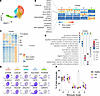 Figure 1
Circulating monocytes exhibit heterogeneity in health and IBD. scRNA-seq analysis of peripheral blood monocytes from newly diagnosed, treatment-naive IBD patients with active disease (CD, n = 6; UC, n = 6) and HCs (n = 8). (A) UMAP projection of monocyte clusters from all integrated donors. (B) Average cell expression per donor per cluster of distinguishing markers of classical, intermediate, and nonclassical monocytes. (C) Average cell expression per donor per cluster of cluster-defining markers. (D) UMAP projections showing log-normalized expression of select cluster-defining markers. (E) Top 3 significantly enriched Gene Ontology (biological process) terms for cluster-defining markers after removal of redundant terms. Gene ratio, representing the number of genes in the term divided by the total number of defining genes for that cluster, and adjusted P value are indicated. (F) Proportions of each cluster expressed as a percentage of total monocytes per donor. P value denotes the result of 2-way ANOVA with Dunnett’s correction. Box-and-whisker plots show the median (center line), 25th and 75th percentiles (box), and minimum and maximum values (whiskers). Individual data points are overlaid. *P < 0.05.
Predicted monocyte differentiation trajectories are altered in CD. Given that circulating monocyte subsets have been linked by a linear developmental trajectory (20), we explored how the 5 monocyte clusters are developmentally related and how this relationship is altered in IBD. To this end, we performed trajectory analysis on the scRNA-seq dataset using Slingshot (27). We re-incorporated a cluster of CD34+PROM1+ HSCs (28) that were filtered out in our initial analysis to be used as a starting cluster. Reclustering of the new dataset identified 5 clusters of monocytes with almost identical features to those described in the initial analysis plus an additional sixth cluster representing the progenitors (Figure 2, A and B, and Supplemental Figure 1B). Pseudotime ordering (Figure 2, C and D) positioned cluster 1 (classical) monocytes immediately after the progenitors, suggesting they are the most immature monocyte cluster. This is consistent with their lower expression of canonical “classical monocyte” genes (Figure 1B), such as S100A12, CCR2, and CD36, relative to other classical monocytes. From this cluster, cells were mapped along 3 predicted lineage trajectories (Figure 2, C and D). In lineage 1, cells transitioned to cluster 2 (nonclassical) via cluster 4 (intermediate) consistent with the established blood monocyte differentiation pathway. In lineages 2 and 3, cluster 1 (classical) monocytes gave rise to putatively more mature classical monocytes (cluster 0), with lineage 3 passing through an interferon response gene–expressing state (cluster 3). There were no gross alterations in the distribution of cells across each of these predicted differentiation trajectories in health versus IBD (Supplemental Figure 1C); however, there was a small increase in the proportion of cells assigned to lineage 3 in CD compared with HCs, and a concomitant nonsignificant reduction in lineage 1 (Figure 2E). This effect was also observed in UC, although it did not reach statistical significance. These data are suggestive of a subtle shift in the representation of monocyte lineages in CD, consistent with an increased contribution from an inferred trajectory leading to mature classical monocytes, which are considered the precursors to intestinal macrophages (2, 6, 7, 21).
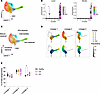 Figure 2
Predicted monocyte differentiation trajectories are altered in CD. (A) UMAP projection of monocytes (clusters 0–4) and hematopoietic stem cells (HSCs) from all integrated donors. (B) Log-normalized expression of HSC markers. (C) Global lineages of monocyte differentiation as determined by Slingshot, using HSCs as a starting cluster. (D) Individual global lineages of monocyte differentiation; clusters and pseudotime values for each lineage are indicated. (E) Proportion of cells assigned to each lineage expressed as a percentage of the total assignments per donor. P value denotes the result of 2-way ANOVA with Dunnett’s correction. Box-and-whisker plots show the median (center line), 25th and 75th percentiles (box), and minimum and maximum values (whiskers). Individual data points are overlaid. *P < 0.05.
Circulating monocytes from patients with CD display a distinct transcriptional profile. To identify gene expression changes in blood monocytes from patients with IBD compared with HCs, we performed pseudobulk differential expression analysis in each of the 5 monocyte clusters. Pseudobulk approaches provide higher precision and specificity than models that treat individual cells as independent observations; however, they also have reduced sensitivity (29). To account for this trade-off, we applied a relaxed false discovery rate (FDR) cutoff of 0.25. Despite this, monocytes from patients with UC showed few differentially expressed genes (DEGs) compared with HCs, whereas CD monocytes exhibited widespread transcriptional changes, most prominently in the putative immature classical monocyte cluster (cluster 1). There were no DEGs in the IFN-classical cluster (cluster 3) (Figure 3A and Supplemental Data File 2). Many DEGs were shared across monocyte subsets, with consistent fold changes (FCs) observed even where statistical significance was not reached (Supplemental Figure 1, D and E). UC monocytes showed similar directional changes to many CD-associated DEGs, but with reduced magnitude and limited statistical significance (Supplemental Figure 1, D and E). Notably, the magnitude of CD-associated transcriptional changes in monocyte clusters correlated with serum C-reactive protein (CRP) in CD but not UC, indicating that in CD this monocyte signature is linked with systemic inflammation (Supplemental Figure 2).
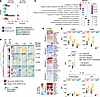 Figure 3
Circulating monocytes from patients with CD display a distinct transcriptional profile. Pseudobulk differential expression analysis was performed on monocyte clusters from treatment-naive patients with CD (n = 6) and UC (n = 6) versus HCs (n = 8). (A) Numbers of genes with FDR ≤ 0.25 are plotted for each cluster and disease. (B) Hierarchical clustering of differentially expressed genes (DEGs) based on average cell expression per donor per cluster. Cluster and disease type with FDR ≤ 0.25 and the direction of regulation are shown in the left annotation. (C) Top 3 significantly enriched Gene Ontology (biological process) terms for each module of DEGs after removal of redundant terms. Gene ratio (genes in term/total genes in module) and adjusted P value are indicated. (D) Ten pathway genes for each module of DEGs, expressed as log2 FC in CD compared with HC within each cluster. (E) Flow cytometry analysis of monocytes in a separate cohort of treatment-naive patients with CD (n = 5) and HCs (n = 5). Top: Mean fluorescence intensity (MFI) of extracellular CD55 and CD64 in classical, intermediate, and nonclassical monocytes. Middle: MFI of intranuclear STAT1 in total CD14+ monocytes. Bottom: MFI of intracellular IL-1β in classical, intermediate, and nonclassical monocytes following a 3-hour stimulation of PBMCs with 0.4 ng/mL lipopolysaccharide (LPS) or an unstimulated control. MFIs are normalized within each sample by subtraction of the MFI of the relevant isotype control (for CD55, CD64, and STAT1) or of the HLA-DR– population (for IL-1β). P values were determined by 2-way ANOVA with Šidák’s correction (for CD55, CD64, and IL-1β) or Mann-Whitney test for STAT1. Box-and-whisker plots show the median (center line), 25th and 75th percentiles (box), and minimum and maximum values (whiskers). Data points are overlaid.
Hierarchical clustering of all DEGs identified distinct modules of genes that were broadly organized by differential regulation in CD and by variation in expression across monocyte subsets (Figure 3B). Genes upregulated in CD were predominantly found in modules 1, 3, and 5, with the greatest impact observed in the immature classical monocyte cluster (cluster 1), as indicated by the high number of significant genes (Figure 3B). Functional enrichment analysis revealed that module 5 was associated with immune-related processes, including “response to molecule of bacterial origin” and “positive regulation of inflammatory response” (e.g., LAP3, FCGR1A, GBP5, NLRP3, CD55, CXCL2, IL1B). Module 1 was enriched for genes involved in “cytoplasmic translation” (e.g., RPL28, RACK1), while module 3 was associated with “proton transmembrane transport” (e.g., UQCR10, NDUFB10, NDUFA3, COX7A2L) (Figure 3, C and D, and Supplemental Data File 2).
In contrast, genes downregulated in CD monocytes were present mainly in modules 2 and 4. Module 2 did not show significant enrichment for specific Gene Ontology pathways but included genes such as the RNA-binding protein L1TD1 and the DNA-binding protein TRNP1. This module was most affected in nonclassical monocytes, where expression of these genes was elevated relative to other monocyte clusters. Module 4 genes were most affected in the immature classical monocyte cluster (cluster 1) and were enriched for processes including “positive regulation of translation” (e.g. NSUN5, LARP4B) and “UV-damage excision repair” (e.g., POLD3, CUL4B) (Figure 3, C and D, and Supplemental Data File 2).
Gene set enrichment analysis (GSEA) (Supplemental Figure 3A), which does not depend on the selection of DEGs, corroborated these findings, demonstrating enrichment of inflammatory, cytokine production, protein processing, DNA repair, and metabolic pathways in CD monocytes, with a less pronounced effect in UC.
To validate key transcriptional findings at the protein level, we performed flow cytometry in an independent cohort of 5 treatment-naive CD patients with active disease and 5 HCs (Figure 3E and Supplemental Figure 3, B and C). Consistent with the transcriptomic data, CD monocytes exhibited increased surface expression of CD55 and CD64, most prominently within classical and intermediate subsets. A trend toward increased intranuclear STAT1 expression in total CD14+ monocytes was also observed. Intracellular IL-1β production was assessed following a 3-hour stimulation with lipopolysaccharide (LPS) or medium alone (unstimulated) and was modestly increased in CD monocytes compared with controls under both conditions. This increase reached statistical significance in unstimulated intermediate monocytes and LPS-stimulated nonclassical monocytes. In contrast, expression of HLA-DR, CD63, and CD87 was not different between health and CD (Supplemental Figure 3D). These results confirm that components of the inflammatory gene signature in circulating CD monocytes are partially reflected at the protein level.
Taken together these data demonstrate that blood monocytes in CD exhibit broad transcriptional reprogramming, whereas those from patients with UC are less affected.
Changes in chromatin accessibility underpin the upregulation of a subset of inflammatory genes in CD blood monocytes. To identify regulatory elements underlying the altered transcriptional profile in monocytes from patients with CD, we examined a separate single-nucleus multiome dataset generated from CD14+ monocytes isolated from the peripheral blood of 3 newly diagnosed, treatment-naive patients with CD and 3 HCs (Supplemental Data File 1). The dataset, comprising RNA-seq and assay for transposase-accessible chromatin using sequencing (ATAC-seq), allowed us to profile gene expression and chromatin accessibility within the same cell. After the exclusion of minor clusters expressing known markers of lymphocytes and dendritic cells, we obtained a single dataset containing 5,892 single nuclei derived from both patients with CD and HCs that met quality control and filtering criteria. Graph-based clustering of the dataset revealed 5 single-nucleus RNA-seq (snRNA-seq) clusters of monocytes with resemblance to the clusters in the original scRNA-seq dataset as well as 4 single-nucleus ATAC-seq (snATAC-seq) clusters (Figure 4A and Supplemental Figure 4, A and B). While FCGR3A+ nonclassical monocytes were distinguished in both clustering modalities, snRNA-seq clusters representing classical and intermediate monocytes did not overlap with snATAC-seq clusters, suggesting that there is limited association between the transcriptional and chromatin accessibility landscapes in these populations (Supplemental Figure 4A).
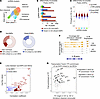 Figure 4
Changes in chromatin accessibility underpin the upregulation of a subset of inflammatory genes in CD peripheral blood monocytes. Single-nucleus multiomics (snRNA-seq and snATAC-seq) analysis of peripheral blood CD14+ monocytes from newly diagnosed, treatment-naive patients with active CD (n = 3) and HCs (n = 3). (A) UMAP projection of snRNA-seq monocyte clusters from all integrated donors. (B) Number of DAPs in each snRNA-seq cluster between health and CD. (C) log2 FC accessibility of DAPs (identified in at least 1 snRNA-seq cluster) plotted in all snRNA-seq clusters. (D) Numbers of DAPs that are either unlinked to gene expression, linked to a DEG, or linked to a non-DEG are shown. (E) Correlation coefficients and –log10 P values are plotted for the links between Up-DAPs and DEGs. (F) Coverage plot displaying normalized read density around the IL1B gene in immature classical monocytes in CD and HC donors. (G) Transcription factor (TF) motif enrichment analysis of Up-DAPs that are significantly linked to Up-DEGs. Fold enrichment is displayed against log2 FC expression in CD versus health for immature classical monocytes. Human TFs with log10 expression greater than 1 in any RNA cluster are shown, and significantly enriched motifs are indicated.
Differential analysis of chromatin accessibility between health and CD identified a total of 1,169 differentially accessible peaks (DAPs) that were significantly different (adjusted P < 0.05) in at least one monocyte cluster (Figure 4, B and C, and Supplemental Figure 4C). These 1,169 DAPs had a consistent direction of change across all monocyte clusters, even when statistical significance was achieved in only some, indicating a shared rather than subset-specific remodeling of chromatin in circulating monocytes. Ten thousand ninety-nine DAPs had increased accessibility in CD (Up-DAPs), while 70 had reduced accessibility (Down-DAPs).
To connect these DAPs to putative target genes, we next explored peak-gene associations across the full monocyte dataset. We defined DEGs as those that were CD DEGs in our original scRNA-seq analysis and that also displayed equivalent log2 FCs between health and CD in all snRNA-seq clusters (Supplemental Figure 5A). A large proportion of DAPs were not significantly associated with gene expression (Figure 4D), but Up-DAPs were in close proximity to genes involved in inflammatory and cytokine responses, indicating that monocytes from patients with CD have a poised chromatin state that may subsequently bias expression of genes involved in these pathways (Supplemental Figure 5, B and C). One hundred thirty-nine Up-DAPs were significantly correlated with DEG expression (Figure 4D), predominantly showing positive associations with a subset of Up-DEGs (Figure 4E) involved in antigen presentation, cell activation, and cytokine production, including IL1B, SOD2, and CCL3 (Figure 4F and Supplemental Figure 6A). Five negative correlations were observed with Down-DEGs (ANKRD17, NCOA3, MAP3K1). Notably, some genes, including IL1B, SOD2, and ANKRD17, were linked to multiple Up-DAPs and therefore appear more than once (Figure 4E). Transcription factor motif enrichment analysis of Up-DAPs that were linked to Up-DEGs revealed members of the EGR family (EGR1, EGR2, EGR3), NF-κB family (NFKB2, REL, RELA), KLF family (KLF2, KLF6), and AP-1 family (JUNB), among others, as putative regulators of this subset of Up-DEGs, also based on their elevated expression in CD immature classical monocytes compared with HCs (Figure 4G). Similar expression patterns were also seen for the other clusters (data not shown). Notably, a proportion of DEGs were also unlinked to chromatin accessibility, suggesting that altered gene expression in CD monocytes is to some degree regulated independently of alterations to chromatin (Supplemental Figure 6B).
Together these data suggest that cross-subset changes in chromatin accessibility underpin the upregulation of a subset of inflammatory genes in blood monocytes from patients with CD. Furthermore, blood monocytes in CD have an altered chromatin state, rendering them poised for differential expression of genes involved in inflammation and cytokine signaling.
CD monocytes are primed for inflammatory function before they arrive in the intestine, with evidence of IFN-γ–associated conditioning. We next considered the signals that might be responsible for driving the alterations in circulating monocytes from patients with CD and the functional implications this might have. We noted that IFN-γ response genes such as transcription factors (STAT1, IRF1, IRF8), guanylate-binding proteins (GBP1, GBP2, GBP5), and MHC molecules (HLA-DQA1, HLA-B) were significantly enriched in modules 1, 3, and 5, which comprise genes upregulated in CD (Figure 5, A and B). Despite this, serum IFN-γ levels were not significantly elevated in patients with CD relative to HCs (Supplemental Figure 6C), suggesting that the CD-associated IFN-γ gene signature is not simply explained by increased circulating cytokine abundance at the time of sampling. Additionally, IFN-γ–induced STAT1 phosphorylation was comparable in CD14+ monocytes from patients with CD and HCs (Supplemental Figure 6D), and expression of receptors for both type I and type II interferons was unchanged across monocyte clusters between health and disease (Supplemental Figure 6E), implying no intrinsic differences in proximal IFN-γ signaling capacity. However, we did observe a trend toward higher levels of serum IFN-γ in CD compared with UC (Supplemental Figure 6C). In addition, serum IFN-γ levels positively correlated with the magnitude of CD-associated transcriptional changes in monocytes in CD, although this did not reach statistical significance. No such correlation was observed in UC or HCs (Figure 5C). Together, these findings suggest that, within the context of CD, systemic IFN-γ may contribute to shaping monocyte gene expression, although the heightened IFN-γ transcriptional signature in CD cannot be solely attributed to increased circulating IFN-γ levels.
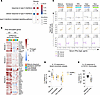 Figure 5
CD monocytes are primed for inflammatory function before they arrive in the intestine, with evidence of IFN-γ–associated conditioning. (A) Significantly enriched Gene Ontology terms related to IFN-γ signaling in DEG modules identified in Figure 3. (B) Expression of IFN-γ–stimulated genes that are also DEGs is displayed as log2 FC relative to HCs for each disease and monocyte cluster. (C) Serum concentration of IFN-γ (log2) in patients with CD and UC and HCs plotted against the total CD-up module score per monocyte cluster. Pearson’s correlation coefficients (r) and corresponding P values are shown for each cluster and patient group. Black lines indicate linear regression fits. (D) Percentage inhibition of LPS-induced TNF-α production by IL-10 in each blood monocyte subset in HCs (n = 8) and a separate cohort of patients with active CD (n = 6). Monocyte subsets and intracellular TNF-α production were assessed using flow cytometry following a 3-hour stimulation of PBMCs with 1 ng/mL LPS in the presence and absence of 2 ng/mL IL-10. Data were analyzed statistically by 2-way ANOVA with Šidák’s correction. (E) Percentage inhibition of LPS-induced intracellular TNF-α production by 2 ng/mL IL-10 in isolated blood CD14+ monocytes from healthy individuals (n = 4) preincubated in medium alone or with IFN-γ (100 U/mL) for 24 hours. Data were analyzed by paired t test. (D and E) Box-and-whisker plots show the median (center line), 25th and 75th percentiles (box), and minimum and maximum values (whiskers). Individual data points are overlaid. *P < 0.05.
IFN-γ has been shown to reprogram monocyte transcription and function before bone marrow egress in mice (18) and to suppress IL-10 responsiveness in human monocytes (30). We therefore hypothesized that enhanced IFN-γ–associated signaling in CD monocytes might impair their responsiveness to the immunoregulatory cytokine IL-10. To test this, PBMCs from a separate cohort of CD patients with active disease (Supplemental Data File 1) or HCs were stimulated with LPS in the presence or absence of IL-10 and then analyzed by flow cytometry. LPS-induced intracellular TNF-α production in the absence of IL-10 was comparable between patients with CD and HCs across all monocyte subsets (Supplemental Figure 7, A–C); however, IL-10 was significantly less effective at suppressing LPS-induced TNF-α production in classical monocytes from patients with CD (Figure 5D). Importantly, this reduction in IL-10 responsiveness was not attributable to impaired proximal IL-10 receptor signaling, as patients with CD lacked known IBD-associated variants in IL-10 pathway genes (IL10RA, IL10RB, STAT3, JAK1, SOCS3), exhibited increased surface expression of IL-10Rα, and showed intact IL-10–induced STAT3 phosphorylation (Supplemental Figure 7D). Finally, pretreatment of CD14+ monocytes from healthy volunteers with recombinant IFN-γ reduced the ability of IL-10 to suppress LPS-induced TNF-α (Figure 5E). Taken together these data indicate that circulating monocytes in CD are functionally primed toward inflammatory responses before tissue entry, and support a model in which IFN-γ may contribute to imprinting this phenotype.
The transcriptional and functional reprogramming of CD blood monocytes is maintained upon entry into the intestine. Having established that circulating monocytes in patients with active CD are transcriptionally and functionally modified in the circulation, we next determined whether this phenotype is retained upon entry into the intestine.
To address this, we examined an external myeloid scRNA-seq dataset (31) derived from inflamed and noninflamed intestinal biopsies of biologic-naive patients with IBD (CD, n = 16; UC, n = 19) and HCs (n = 3) (Zenodo, record 14007626). After exclusion of cells with high expression of DC markers (CD1C, CLEC10A, LAMP3, XCR1, IL3RA) and mast cells (GATA2, CPA3), the remaining 7,725 cells were segregated into 4 transcriptionally distinct clusters (Figure 6, A and B, and Supplemental Figure 8A).
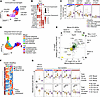 Figure 6
The transcriptional reprogramming of CD blood monocytes is maintained upon entry into the intestine. (A) UMAP projection of scRNA-seq data from intestinal monocytes/macrophages derived from inflamed and noninflamed biopsies of biologic-naive patients with CD (n = 16) and UC (n = 19) and HCs (n = 3). Transcriptionally distinct gut clusters are shown. (B) Expression of select markers in gut clusters; percent positive cells and log-normalized average expression are shown. (C) Proportions of each gut cluster expressed as a percentage of total monocytes/macrophages per donor. P value denotes the result of 2-way ANOVA with Dunnett’s correction. (D) UMAP projection of integrated intestinal and blood scRNA-seq datasets. Original clusters of independently analyzed datasets are shown. (E) Blood CD DEGs plotted as log2 FC expression in CD versus HCs in blood mature classical monocytes against log2 FC expression in total healthy gut cells versus total healthy blood cells. Numbers of genes appearing in each quadrant and results of Spearman’s rank test are displayed. (F) Average expression of blood CD DEGs in blood and gut clusters derived from HCs. Direction of regulation relative to HCs is indicated. (G) Total blood CD-up and CD-down module scores plotted per donor in gut monocyte clusters and blood mature classical cells. NI, noninflamed; I, inflamed. P value denotes the result of a mixed-effects analysis with Dunnett’s correction within the gut clusters only. (C and G) Box-and-whisker plots show the median (center line), 25th and 75th percentiles (box), and minimum and maximum values (whiskers). Individual data points are overlaid. *P < 0.05, **P < 0.01, ***P < 0.001, ****P < 0.0001.
The S100A8/CD55+ cluster, characterized by high expression of S100A8 and CD55, likely represents recently recruited monocytes (3, 32). The FOLR2/C1QA+ cluster expressed canonical tissue-resident macrophage markers, including CD63, C1QA, CD68, MRC1, and FOLR2. The CD9/MMP14+ cluster also expressed tissue macrophage markers but was distinguished by increased expression of activation and tissue remodeling genes (CD9, MMP14, IL1B, CCL4, CD84). Finally, the CXCR4/ARL4C+ cluster exhibited intermediate expression of monocyte and macrophage markers, consistent with early-differentiating monocyte-derived cells (Figure 6, A and B, and Supplemental Figure 8B).
There was an expansion of the S100A8/CD55+ cluster in inflamed IBD tissue, consistent with previous reports (5–8, 33–36), accompanied by a reduction in the CXCR4/ARL4C+ cluster (Figure 6C). Integration with our blood dataset identified the S100A8/CD55+ gut cluster as most similar to putatively mature classical blood monocytes based on proximity in uniform manifold approximation and projection (UMAP) space (Figure 6D). This supports the notion that mature classical blood monocytes are precursors to intestinal monocyte-derived populations.
We next examined the expression of blood monocyte CD-associated DEGs within intestinal monocyte/macrophage populations. Firstly, we found that these DEGs broadly reflected transcriptional features of intestinal monocyte/macrophages. Specifically, FCs of these genes in mature classical blood monocytes from patients with CD relative to HCs were positively correlated with FCs of the same genes between total intestinal monocytes/macrophages and total blood monocytes from HCs (Figure 6, E and F). Notably, genes most strongly upregulated in CD blood monocytes (e.g., EGR3, AREG, THBD, and CXCL2) were also highly enriched in intestinal compared with blood monocytes. Although this relationship was less pronounced among genes with smaller increases in CD blood monocytes, the overall pattern suggests that blood monocytes in CD acquire some gut-associated transcriptional features before tissue entry.
Next, to directly test whether the blood monocyte CD-associated transcriptional program is preserved in intestinal monocyte/macrophages, we calculated module scores for genes upregulated (CD-up) and downregulated (CD-down) in CD blood monocytes. Intestinal monocytes/macrophages from IBD samples exhibited increased expression of the CD-up module and decreased expression of the CD-down module relative to HCs, recapitulating the pattern originally observed in blood (Figure 6G). This effect was strongest and statistically significant in inflamed CD and UC tissue, although a trend was also evident in noninflamed samples. Interestingly, the CD-up module remained unchanged in FOLR2/C1QA+ tissue-resident macrophages. These findings indicate that the blood CD-associated transcriptional signature is preserved in intestinal monocytes/macrophages and is most prominent in inflamed tissue, consistent with its reinforcement by local inflammatory signals.
Similar results were observed in an independent scRNA-seq dataset (37) derived from involved (n = 5) and noninvolved (n = 4) regions of ileocecal surgical resections from 5 patients with CD (Supplemental Data File 1). In this dataset, S100A8/9/12+ and C1QA/B/C+ monocyte/macrophage clusters showed increased expression of CD-up genes and reduced expression of CD-down genes relative to circulating mature classical monocytes, with the strongest effect occurring in cells from involved tissue (Supplemental Figure 8, C–E). Together, these data suggest a broad pattern whereby the blood CD-associated monocyte signature reflects the premature acquisition of a gut-associated transcriptional profile before tissue infiltration, and that this profile is subsequently amplified within the inflamed intestinal mucosa.
Finally, we addressed whether the functional priming of CD blood monocytes is retained in intestinal monocyte-derived cells. Lamina propria cells (LPCs) were isolated from inflamed intestinal biopsies of patients with CD (Supplemental Data File 1) or from non-IBD tissue and stimulated for 3 hours with LPS in the presence or absence of IL-10 before flow cytometry analysis. Within CD45+ leukocytes, three HLA-DR+FSCint–hi populations were identified on the basis of CD14 expression: CD14hi, CD14lo, and CD14neg (Figure 7A and Supplemental Figure 9A). CD14hi and CD14lo populations expressed CD64 consistent with monocyte/macrophage identity, whereas CD14neg cells lacked expression of CD64 and may have included DCs (38) (Figure 7B). CD14hi cells are likely to be a more differentiated macrophage population than CD14lo cells based on higher phagocytic activity, lower CCR2 expression, and higher levels of CX3CR1, CD206 (MRC1), CD63, and FOLR2 (Supplemental Figure 9, B–D). There was a relative accumulation of CD14lo cells and corresponding reduction in CD14hi cells in inflamed intestinal mucosa of patients with active CD compared with non-IBD controls (Figure 7, A and C). Although “spontaneous” and LPS-induced production of TNF-α did not differ between groups (Supplemental Figure 9E), IL-10–mediated suppression of TNF-α was significantly impaired in both CD14hi and CD14lo cells from patients with active CD (Figure 7D). Collectively these data indicate that intestinal monocyte-derived cells in CD are predisposed to inflammatory function, and that this phenotype is established, at least in part, prior to tissue recruitment.
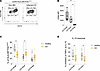 Figure 7
Functional modification of intestinal monocyte-derived cells in CD. (A) Flow cytometry gating of CD14hi, CD14lo, and CD14neg cells within the CD45+HLA-DR+FSCint–hi population of lamina propria cells (LPCs). Example from inflamed CD and from a non-IBD control are shown. (B) Mean fluorescence intensity (MFI) of CD64 (minus MFI of isotype control) in CD14hi, CD14lo, and CD14neg cells from non-IBD samples (n = 5). P value denotes the result of 1-way ANOVA with Holm-Šidák’s correction. (C) CD14hi, CD14lo, and CD14neg populations expressed as a proportion of HLA-DR+FSCint–hi LPCs from inflamed CD (n = 14) and non-IBD controls (Healthy; n = 17). (D) Percentage inhibition of LPS-induced intracellular TNF-α production by IL-10 in CD14hi and CD14lo LPCs from inflamed CD (n = 14) and non-IBD control biopsies (Healthy; n = 17). LPCs were stimulated for 3 hours with 1 ng/mL LPS in the presence and absence of 2 ng/mL IL-10. (C and D) Data were analyzed statistically by 2-way ANOVA with Šidák’s correction. (B–D) *P < 0.05. Box-and-whisker plots show the median (center line), 25th and 75th percentiles (box), and minimum and maximum values (whiskers). Individual data points are overlaid.


