
Clinical Research and Public HealthNephrologyTransplantation
Open Access |  10.1172/jci.insight.188658
A cross-sectional study of the role of epithelial cell injury in kidney transplant outcomes
Philip F. Halloran,1,2 Jessica Chang,1 Martina Mackova,1 Katelynn S. Madill-Thomsen,1 Enver Akalin,3 Tarek Alhamad,4 Sanjiv Anand,5 Miha Arnol,6 Rajendra Baliga,7 Mirosław Banasik,8 Christopher D. Blosser,9 Georg Böhmig,10 Daniel Brennan,11 Jonathan Bromberg,12 Klemens Budde,13 Andrzej Chamienia,14 Kevin Chow,15 Michał Ciszek,16 Declan de Freitas,17 Dominika Dęborska-Materkowska,18 Alicja Debska-Ślizień,14 Arjang Djamali,18 Leszek Domański,19 Magdalena Durlik,16 Gunilla Einecke,20 Farsad Eskandary,10 Richard Fatica,21 Iman Francis,22 Justyna Fryc,23 John Gill,24 Jagbir Gill,24 Maciej Glyda,25 Sita Gourishankar,2 Marta Gryczman,19 Gaurav Gupta,26 Petra Hruba,27 Peter Hughes,15 Arskarapurk Jittirat,28 Zeljka Jurekovic,29 Layla Kamal,26 Mahmoud Kamel,7 Sam Kant,11 Nika Kojc,6 Joanna Konopa,14 James Lan,24 Roslyn B. Mannon,30 Arthur Matas,31 Joanna Mazurkiewicz,19 Marius Miglinas,32 Thomas Mueller,33 Marek Myślak,19 Seth Narins,34 Beata Naumnik,23 Anita Patel,22 Agnieszka Perkowska-Ptasińska,16 Michael Picton,17 Grzegorz Piecha,35 Emilio Poggio,21 Silvie Rajnochová Bloudíčkova,27 Thomas Schachtner,33 Soroush Shojai,2 Majid L.N. Sikosana,2 Janka Slatinská,27 Katarzyna Smykal-Jankowiak,25 Ashish Solanki,11 Željka Veceric Haler,6 Ondrej Viklicky,27 Ksenija Vucur,29 Matthew R. Weir,12 Andrzej Wiecek,35 Zbigniew Włodarczyk,36 Harold Yang,34 Ziad Zaky,21 Patrick T. Gauthier,1 and Christian Hinze20
1Alberta Transplant Applied Genomics Centre and
2University of Alberta, Edmonton, Alberta, Canada.
3Montefiore Medical Center, Bronx, New York, USA.
4Washington University at St. Louis, St. Louis, Missouri, USA.
5Intermountain Transplant Services, Murray, Utah, USA.
6University of Ljubljana, Ljubljana, Slovenia.
7Tampa General Hospital, Tampa, Florida, USA.
8Medical University of Wrocław, Wrocław, Poland.
9University of Washington, Seattle, Washington, USA.
10Medical University of Vienna, Vienna, Austria.
11Johns Hopkins University School of Medicine, Baltimore, Maryland, USA.
12University of Maryland, Baltimore, Maryland, USA.
13Charité – Universitätsmedizin Berlin, Berlin, Germany.
14Medical University of Gdańsk, Gdańsk, Poland.
15The Royal Melbourne Hospital, Parkville, Victoria, Australia.
16Warsaw Medical University, Warsaw, Poland.
17Manchester Royal Infirmary, Manchester, United Kingdom.
18University of Wisconsin, Madison, Wisconsin, USA.
19Pomeranian Medical University, Szczecin, Poland.
20Hannover Medical School, Hannover, Germany.
21Cleveland Clinic Foundation, Cleveland, Ohio, USA.
22Henry Ford Transplant Institute, Detroit, Michigan, USA.
23Medical University of Białystok, Białystok, Poland.
24St. Paul’s Hospital, Vancouver, British Columbia, Canada.
25Wojewodzki Hospital, Poznan, Poland.
26Virginia Commonwealth University, Richmond, Virginia, USA.
27Institute for Experimental and Clinical Medicine, Prague, Czech Republic.
28University Hospital Cleveland Medical Center, Cleveland, Ohio, USA.
29University Hospital Merkur, Zagreb, Croatia.
30University of Alabama at Birmingham, Birmingham, Alabama, USA.
31University of Minnesota, Minneapolis, Minnesota, USA.
32Vilnius University Hospital Santaros Klinikos, Vilnius, Lithuania.
33University Hospital Zurich, Zurich, Switzerland.
34PinnacleHealth Transplant Associates, UPMC, Harrisburg, Pennsylvania, USA.
35Silesian Medical University, Katowice, Poland.
36University Hospital No. 1, Bydgoszcz, Poland.
Address correspondence to: Philip F. Halloran, Alberta Transplant Applied Genomics Centre, #250 Heritage Medical Research Centre, University of Alberta, Edmonton, Alberta T6G 2S2, Canada. Phone: 780.492.6160; Email: phallora@ualberta.ca.
Authorship note: PTG and CH are co–senior authors.
Find articles by Halloran, P. in: PubMed | Google Scholar
1Alberta Transplant Applied Genomics Centre and
2University of Alberta, Edmonton, Alberta, Canada.
3Montefiore Medical Center, Bronx, New York, USA.
4Washington University at St. Louis, St. Louis, Missouri, USA.
5Intermountain Transplant Services, Murray, Utah, USA.
6University of Ljubljana, Ljubljana, Slovenia.
7Tampa General Hospital, Tampa, Florida, USA.
8Medical University of Wrocław, Wrocław, Poland.
9University of Washington, Seattle, Washington, USA.
10Medical University of Vienna, Vienna, Austria.
11Johns Hopkins University School of Medicine, Baltimore, Maryland, USA.
12University of Maryland, Baltimore, Maryland, USA.
13Charité – Universitätsmedizin Berlin, Berlin, Germany.
14Medical University of Gdańsk, Gdańsk, Poland.
15The Royal Melbourne Hospital, Parkville, Victoria, Australia.
16Warsaw Medical University, Warsaw, Poland.
17Manchester Royal Infirmary, Manchester, United Kingdom.
18University of Wisconsin, Madison, Wisconsin, USA.
19Pomeranian Medical University, Szczecin, Poland.
20Hannover Medical School, Hannover, Germany.
21Cleveland Clinic Foundation, Cleveland, Ohio, USA.
22Henry Ford Transplant Institute, Detroit, Michigan, USA.
23Medical University of Białystok, Białystok, Poland.
24St. Paul’s Hospital, Vancouver, British Columbia, Canada.
25Wojewodzki Hospital, Poznan, Poland.
26Virginia Commonwealth University, Richmond, Virginia, USA.
27Institute for Experimental and Clinical Medicine, Prague, Czech Republic.
28University Hospital Cleveland Medical Center, Cleveland, Ohio, USA.
29University Hospital Merkur, Zagreb, Croatia.
30University of Alabama at Birmingham, Birmingham, Alabama, USA.
31University of Minnesota, Minneapolis, Minnesota, USA.
32Vilnius University Hospital Santaros Klinikos, Vilnius, Lithuania.
33University Hospital Zurich, Zurich, Switzerland.
34PinnacleHealth Transplant Associates, UPMC, Harrisburg, Pennsylvania, USA.
35Silesian Medical University, Katowice, Poland.
36University Hospital No. 1, Bydgoszcz, Poland.
Address correspondence to: Philip F. Halloran, Alberta Transplant Applied Genomics Centre, #250 Heritage Medical Research Centre, University of Alberta, Edmonton, Alberta T6G 2S2, Canada. Phone: 780.492.6160; Email: phallora@ualberta.ca.
Authorship note: PTG and CH are co–senior authors.
Find articles by
Chang, J.
in:
PubMed
|
Google Scholar
|

1Alberta Transplant Applied Genomics Centre and
2University of Alberta, Edmonton, Alberta, Canada.
3Montefiore Medical Center, Bronx, New York, USA.
4Washington University at St. Louis, St. Louis, Missouri, USA.
5Intermountain Transplant Services, Murray, Utah, USA.
6University of Ljubljana, Ljubljana, Slovenia.
7Tampa General Hospital, Tampa, Florida, USA.
8Medical University of Wrocław, Wrocław, Poland.
9University of Washington, Seattle, Washington, USA.
10Medical University of Vienna, Vienna, Austria.
11Johns Hopkins University School of Medicine, Baltimore, Maryland, USA.
12University of Maryland, Baltimore, Maryland, USA.
13Charité – Universitätsmedizin Berlin, Berlin, Germany.
14Medical University of Gdańsk, Gdańsk, Poland.
15The Royal Melbourne Hospital, Parkville, Victoria, Australia.
16Warsaw Medical University, Warsaw, Poland.
17Manchester Royal Infirmary, Manchester, United Kingdom.
18University of Wisconsin, Madison, Wisconsin, USA.
19Pomeranian Medical University, Szczecin, Poland.
20Hannover Medical School, Hannover, Germany.
21Cleveland Clinic Foundation, Cleveland, Ohio, USA.
22Henry Ford Transplant Institute, Detroit, Michigan, USA.
23Medical University of Białystok, Białystok, Poland.
24St. Paul’s Hospital, Vancouver, British Columbia, Canada.
25Wojewodzki Hospital, Poznan, Poland.
26Virginia Commonwealth University, Richmond, Virginia, USA.
27Institute for Experimental and Clinical Medicine, Prague, Czech Republic.
28University Hospital Cleveland Medical Center, Cleveland, Ohio, USA.
29University Hospital Merkur, Zagreb, Croatia.
30University of Alabama at Birmingham, Birmingham, Alabama, USA.
31University of Minnesota, Minneapolis, Minnesota, USA.
32Vilnius University Hospital Santaros Klinikos, Vilnius, Lithuania.
33University Hospital Zurich, Zurich, Switzerland.
34PinnacleHealth Transplant Associates, UPMC, Harrisburg, Pennsylvania, USA.
35Silesian Medical University, Katowice, Poland.
36University Hospital No. 1, Bydgoszcz, Poland.
Address correspondence to: Philip F. Halloran, Alberta Transplant Applied Genomics Centre, #250 Heritage Medical Research Centre, University of Alberta, Edmonton, Alberta T6G 2S2, Canada. Phone: 780.492.6160; Email: phallora@ualberta.ca.
Authorship note: PTG and CH are co–senior authors.
Find articles by Mackova, M. in: PubMed | Google Scholar
1Alberta Transplant Applied Genomics Centre and
2University of Alberta, Edmonton, Alberta, Canada.
3Montefiore Medical Center, Bronx, New York, USA.
4Washington University at St. Louis, St. Louis, Missouri, USA.
5Intermountain Transplant Services, Murray, Utah, USA.
6University of Ljubljana, Ljubljana, Slovenia.
7Tampa General Hospital, Tampa, Florida, USA.
8Medical University of Wrocław, Wrocław, Poland.
9University of Washington, Seattle, Washington, USA.
10Medical University of Vienna, Vienna, Austria.
11Johns Hopkins University School of Medicine, Baltimore, Maryland, USA.
12University of Maryland, Baltimore, Maryland, USA.
13Charité – Universitätsmedizin Berlin, Berlin, Germany.
14Medical University of Gdańsk, Gdańsk, Poland.
15The Royal Melbourne Hospital, Parkville, Victoria, Australia.
16Warsaw Medical University, Warsaw, Poland.
17Manchester Royal Infirmary, Manchester, United Kingdom.
18University of Wisconsin, Madison, Wisconsin, USA.
19Pomeranian Medical University, Szczecin, Poland.
20Hannover Medical School, Hannover, Germany.
21Cleveland Clinic Foundation, Cleveland, Ohio, USA.
22Henry Ford Transplant Institute, Detroit, Michigan, USA.
23Medical University of Białystok, Białystok, Poland.
24St. Paul’s Hospital, Vancouver, British Columbia, Canada.
25Wojewodzki Hospital, Poznan, Poland.
26Virginia Commonwealth University, Richmond, Virginia, USA.
27Institute for Experimental and Clinical Medicine, Prague, Czech Republic.
28University Hospital Cleveland Medical Center, Cleveland, Ohio, USA.
29University Hospital Merkur, Zagreb, Croatia.
30University of Alabama at Birmingham, Birmingham, Alabama, USA.
31University of Minnesota, Minneapolis, Minnesota, USA.
32Vilnius University Hospital Santaros Klinikos, Vilnius, Lithuania.
33University Hospital Zurich, Zurich, Switzerland.
34PinnacleHealth Transplant Associates, UPMC, Harrisburg, Pennsylvania, USA.
35Silesian Medical University, Katowice, Poland.
36University Hospital No. 1, Bydgoszcz, Poland.
Address correspondence to: Philip F. Halloran, Alberta Transplant Applied Genomics Centre, #250 Heritage Medical Research Centre, University of Alberta, Edmonton, Alberta T6G 2S2, Canada. Phone: 780.492.6160; Email: phallora@ualberta.ca.
Authorship note: PTG and CH are co–senior authors.
Find articles by Madill-Thomsen, K. in: PubMed | Google Scholar
1Alberta Transplant Applied Genomics Centre and
2University of Alberta, Edmonton, Alberta, Canada.
3Montefiore Medical Center, Bronx, New York, USA.
4Washington University at St. Louis, St. Louis, Missouri, USA.
5Intermountain Transplant Services, Murray, Utah, USA.
6University of Ljubljana, Ljubljana, Slovenia.
7Tampa General Hospital, Tampa, Florida, USA.
8Medical University of Wrocław, Wrocław, Poland.
9University of Washington, Seattle, Washington, USA.
10Medical University of Vienna, Vienna, Austria.
11Johns Hopkins University School of Medicine, Baltimore, Maryland, USA.
12University of Maryland, Baltimore, Maryland, USA.
13Charité – Universitätsmedizin Berlin, Berlin, Germany.
14Medical University of Gdańsk, Gdańsk, Poland.
15The Royal Melbourne Hospital, Parkville, Victoria, Australia.
16Warsaw Medical University, Warsaw, Poland.
17Manchester Royal Infirmary, Manchester, United Kingdom.
18University of Wisconsin, Madison, Wisconsin, USA.
19Pomeranian Medical University, Szczecin, Poland.
20Hannover Medical School, Hannover, Germany.
21Cleveland Clinic Foundation, Cleveland, Ohio, USA.
22Henry Ford Transplant Institute, Detroit, Michigan, USA.
23Medical University of Białystok, Białystok, Poland.
24St. Paul’s Hospital, Vancouver, British Columbia, Canada.
25Wojewodzki Hospital, Poznan, Poland.
26Virginia Commonwealth University, Richmond, Virginia, USA.
27Institute for Experimental and Clinical Medicine, Prague, Czech Republic.
28University Hospital Cleveland Medical Center, Cleveland, Ohio, USA.
29University Hospital Merkur, Zagreb, Croatia.
30University of Alabama at Birmingham, Birmingham, Alabama, USA.
31University of Minnesota, Minneapolis, Minnesota, USA.
32Vilnius University Hospital Santaros Klinikos, Vilnius, Lithuania.
33University Hospital Zurich, Zurich, Switzerland.
34PinnacleHealth Transplant Associates, UPMC, Harrisburg, Pennsylvania, USA.
35Silesian Medical University, Katowice, Poland.
36University Hospital No. 1, Bydgoszcz, Poland.
Address correspondence to: Philip F. Halloran, Alberta Transplant Applied Genomics Centre, #250 Heritage Medical Research Centre, University of Alberta, Edmonton, Alberta T6G 2S2, Canada. Phone: 780.492.6160; Email: phallora@ualberta.ca.
Authorship note: PTG and CH are co–senior authors.
Find articles by Akalin, E. in: PubMed | Google Scholar
1Alberta Transplant Applied Genomics Centre and
2University of Alberta, Edmonton, Alberta, Canada.
3Montefiore Medical Center, Bronx, New York, USA.
4Washington University at St. Louis, St. Louis, Missouri, USA.
5Intermountain Transplant Services, Murray, Utah, USA.
6University of Ljubljana, Ljubljana, Slovenia.
7Tampa General Hospital, Tampa, Florida, USA.
8Medical University of Wrocław, Wrocław, Poland.
9University of Washington, Seattle, Washington, USA.
10Medical University of Vienna, Vienna, Austria.
11Johns Hopkins University School of Medicine, Baltimore, Maryland, USA.
12University of Maryland, Baltimore, Maryland, USA.
13Charité – Universitätsmedizin Berlin, Berlin, Germany.
14Medical University of Gdańsk, Gdańsk, Poland.
15The Royal Melbourne Hospital, Parkville, Victoria, Australia.
16Warsaw Medical University, Warsaw, Poland.
17Manchester Royal Infirmary, Manchester, United Kingdom.
18University of Wisconsin, Madison, Wisconsin, USA.
19Pomeranian Medical University, Szczecin, Poland.
20Hannover Medical School, Hannover, Germany.
21Cleveland Clinic Foundation, Cleveland, Ohio, USA.
22Henry Ford Transplant Institute, Detroit, Michigan, USA.
23Medical University of Białystok, Białystok, Poland.
24St. Paul’s Hospital, Vancouver, British Columbia, Canada.
25Wojewodzki Hospital, Poznan, Poland.
26Virginia Commonwealth University, Richmond, Virginia, USA.
27Institute for Experimental and Clinical Medicine, Prague, Czech Republic.
28University Hospital Cleveland Medical Center, Cleveland, Ohio, USA.
29University Hospital Merkur, Zagreb, Croatia.
30University of Alabama at Birmingham, Birmingham, Alabama, USA.
31University of Minnesota, Minneapolis, Minnesota, USA.
32Vilnius University Hospital Santaros Klinikos, Vilnius, Lithuania.
33University Hospital Zurich, Zurich, Switzerland.
34PinnacleHealth Transplant Associates, UPMC, Harrisburg, Pennsylvania, USA.
35Silesian Medical University, Katowice, Poland.
36University Hospital No. 1, Bydgoszcz, Poland.
Address correspondence to: Philip F. Halloran, Alberta Transplant Applied Genomics Centre, #250 Heritage Medical Research Centre, University of Alberta, Edmonton, Alberta T6G 2S2, Canada. Phone: 780.492.6160; Email: phallora@ualberta.ca.
Authorship note: PTG and CH are co–senior authors.
Find articles by Alhamad, T. in: PubMed | Google Scholar
1Alberta Transplant Applied Genomics Centre and
2University of Alberta, Edmonton, Alberta, Canada.
3Montefiore Medical Center, Bronx, New York, USA.
4Washington University at St. Louis, St. Louis, Missouri, USA.
5Intermountain Transplant Services, Murray, Utah, USA.
6University of Ljubljana, Ljubljana, Slovenia.
7Tampa General Hospital, Tampa, Florida, USA.
8Medical University of Wrocław, Wrocław, Poland.
9University of Washington, Seattle, Washington, USA.
10Medical University of Vienna, Vienna, Austria.
11Johns Hopkins University School of Medicine, Baltimore, Maryland, USA.
12University of Maryland, Baltimore, Maryland, USA.
13Charité – Universitätsmedizin Berlin, Berlin, Germany.
14Medical University of Gdańsk, Gdańsk, Poland.
15The Royal Melbourne Hospital, Parkville, Victoria, Australia.
16Warsaw Medical University, Warsaw, Poland.
17Manchester Royal Infirmary, Manchester, United Kingdom.
18University of Wisconsin, Madison, Wisconsin, USA.
19Pomeranian Medical University, Szczecin, Poland.
20Hannover Medical School, Hannover, Germany.
21Cleveland Clinic Foundation, Cleveland, Ohio, USA.
22Henry Ford Transplant Institute, Detroit, Michigan, USA.
23Medical University of Białystok, Białystok, Poland.
24St. Paul’s Hospital, Vancouver, British Columbia, Canada.
25Wojewodzki Hospital, Poznan, Poland.
26Virginia Commonwealth University, Richmond, Virginia, USA.
27Institute for Experimental and Clinical Medicine, Prague, Czech Republic.
28University Hospital Cleveland Medical Center, Cleveland, Ohio, USA.
29University Hospital Merkur, Zagreb, Croatia.
30University of Alabama at Birmingham, Birmingham, Alabama, USA.
31University of Minnesota, Minneapolis, Minnesota, USA.
32Vilnius University Hospital Santaros Klinikos, Vilnius, Lithuania.
33University Hospital Zurich, Zurich, Switzerland.
34PinnacleHealth Transplant Associates, UPMC, Harrisburg, Pennsylvania, USA.
35Silesian Medical University, Katowice, Poland.
36University Hospital No. 1, Bydgoszcz, Poland.
Address correspondence to: Philip F. Halloran, Alberta Transplant Applied Genomics Centre, #250 Heritage Medical Research Centre, University of Alberta, Edmonton, Alberta T6G 2S2, Canada. Phone: 780.492.6160; Email: phallora@ualberta.ca.
Authorship note: PTG and CH are co–senior authors.
Find articles by Anand, S. in: PubMed | Google Scholar
1Alberta Transplant Applied Genomics Centre and
2University of Alberta, Edmonton, Alberta, Canada.
3Montefiore Medical Center, Bronx, New York, USA.
4Washington University at St. Louis, St. Louis, Missouri, USA.
5Intermountain Transplant Services, Murray, Utah, USA.
6University of Ljubljana, Ljubljana, Slovenia.
7Tampa General Hospital, Tampa, Florida, USA.
8Medical University of Wrocław, Wrocław, Poland.
9University of Washington, Seattle, Washington, USA.
10Medical University of Vienna, Vienna, Austria.
11Johns Hopkins University School of Medicine, Baltimore, Maryland, USA.
12University of Maryland, Baltimore, Maryland, USA.
13Charité – Universitätsmedizin Berlin, Berlin, Germany.
14Medical University of Gdańsk, Gdańsk, Poland.
15The Royal Melbourne Hospital, Parkville, Victoria, Australia.
16Warsaw Medical University, Warsaw, Poland.
17Manchester Royal Infirmary, Manchester, United Kingdom.
18University of Wisconsin, Madison, Wisconsin, USA.
19Pomeranian Medical University, Szczecin, Poland.
20Hannover Medical School, Hannover, Germany.
21Cleveland Clinic Foundation, Cleveland, Ohio, USA.
22Henry Ford Transplant Institute, Detroit, Michigan, USA.
23Medical University of Białystok, Białystok, Poland.
24St. Paul’s Hospital, Vancouver, British Columbia, Canada.
25Wojewodzki Hospital, Poznan, Poland.
26Virginia Commonwealth University, Richmond, Virginia, USA.
27Institute for Experimental and Clinical Medicine, Prague, Czech Republic.
28University Hospital Cleveland Medical Center, Cleveland, Ohio, USA.
29University Hospital Merkur, Zagreb, Croatia.
30University of Alabama at Birmingham, Birmingham, Alabama, USA.
31University of Minnesota, Minneapolis, Minnesota, USA.
32Vilnius University Hospital Santaros Klinikos, Vilnius, Lithuania.
33University Hospital Zurich, Zurich, Switzerland.
34PinnacleHealth Transplant Associates, UPMC, Harrisburg, Pennsylvania, USA.
35Silesian Medical University, Katowice, Poland.
36University Hospital No. 1, Bydgoszcz, Poland.
Address correspondence to: Philip F. Halloran, Alberta Transplant Applied Genomics Centre, #250 Heritage Medical Research Centre, University of Alberta, Edmonton, Alberta T6G 2S2, Canada. Phone: 780.492.6160; Email: phallora@ualberta.ca.
Authorship note: PTG and CH are co–senior authors.
Find articles by Arnol, M. in: PubMed | Google Scholar
1Alberta Transplant Applied Genomics Centre and
2University of Alberta, Edmonton, Alberta, Canada.
3Montefiore Medical Center, Bronx, New York, USA.
4Washington University at St. Louis, St. Louis, Missouri, USA.
5Intermountain Transplant Services, Murray, Utah, USA.
6University of Ljubljana, Ljubljana, Slovenia.
7Tampa General Hospital, Tampa, Florida, USA.
8Medical University of Wrocław, Wrocław, Poland.
9University of Washington, Seattle, Washington, USA.
10Medical University of Vienna, Vienna, Austria.
11Johns Hopkins University School of Medicine, Baltimore, Maryland, USA.
12University of Maryland, Baltimore, Maryland, USA.
13Charité – Universitätsmedizin Berlin, Berlin, Germany.
14Medical University of Gdańsk, Gdańsk, Poland.
15The Royal Melbourne Hospital, Parkville, Victoria, Australia.
16Warsaw Medical University, Warsaw, Poland.
17Manchester Royal Infirmary, Manchester, United Kingdom.
18University of Wisconsin, Madison, Wisconsin, USA.
19Pomeranian Medical University, Szczecin, Poland.
20Hannover Medical School, Hannover, Germany.
21Cleveland Clinic Foundation, Cleveland, Ohio, USA.
22Henry Ford Transplant Institute, Detroit, Michigan, USA.
23Medical University of Białystok, Białystok, Poland.
24St. Paul’s Hospital, Vancouver, British Columbia, Canada.
25Wojewodzki Hospital, Poznan, Poland.
26Virginia Commonwealth University, Richmond, Virginia, USA.
27Institute for Experimental and Clinical Medicine, Prague, Czech Republic.
28University Hospital Cleveland Medical Center, Cleveland, Ohio, USA.
29University Hospital Merkur, Zagreb, Croatia.
30University of Alabama at Birmingham, Birmingham, Alabama, USA.
31University of Minnesota, Minneapolis, Minnesota, USA.
32Vilnius University Hospital Santaros Klinikos, Vilnius, Lithuania.
33University Hospital Zurich, Zurich, Switzerland.
34PinnacleHealth Transplant Associates, UPMC, Harrisburg, Pennsylvania, USA.
35Silesian Medical University, Katowice, Poland.
36University Hospital No. 1, Bydgoszcz, Poland.
Address correspondence to: Philip F. Halloran, Alberta Transplant Applied Genomics Centre, #250 Heritage Medical Research Centre, University of Alberta, Edmonton, Alberta T6G 2S2, Canada. Phone: 780.492.6160; Email: phallora@ualberta.ca.
Authorship note: PTG and CH are co–senior authors.
Find articles by Baliga, R. in: PubMed | Google Scholar
1Alberta Transplant Applied Genomics Centre and
2University of Alberta, Edmonton, Alberta, Canada.
3Montefiore Medical Center, Bronx, New York, USA.
4Washington University at St. Louis, St. Louis, Missouri, USA.
5Intermountain Transplant Services, Murray, Utah, USA.
6University of Ljubljana, Ljubljana, Slovenia.
7Tampa General Hospital, Tampa, Florida, USA.
8Medical University of Wrocław, Wrocław, Poland.
9University of Washington, Seattle, Washington, USA.
10Medical University of Vienna, Vienna, Austria.
11Johns Hopkins University School of Medicine, Baltimore, Maryland, USA.
12University of Maryland, Baltimore, Maryland, USA.
13Charité – Universitätsmedizin Berlin, Berlin, Germany.
14Medical University of Gdańsk, Gdańsk, Poland.
15The Royal Melbourne Hospital, Parkville, Victoria, Australia.
16Warsaw Medical University, Warsaw, Poland.
17Manchester Royal Infirmary, Manchester, United Kingdom.
18University of Wisconsin, Madison, Wisconsin, USA.
19Pomeranian Medical University, Szczecin, Poland.
20Hannover Medical School, Hannover, Germany.
21Cleveland Clinic Foundation, Cleveland, Ohio, USA.
22Henry Ford Transplant Institute, Detroit, Michigan, USA.
23Medical University of Białystok, Białystok, Poland.
24St. Paul’s Hospital, Vancouver, British Columbia, Canada.
25Wojewodzki Hospital, Poznan, Poland.
26Virginia Commonwealth University, Richmond, Virginia, USA.
27Institute for Experimental and Clinical Medicine, Prague, Czech Republic.
28University Hospital Cleveland Medical Center, Cleveland, Ohio, USA.
29University Hospital Merkur, Zagreb, Croatia.
30University of Alabama at Birmingham, Birmingham, Alabama, USA.
31University of Minnesota, Minneapolis, Minnesota, USA.
32Vilnius University Hospital Santaros Klinikos, Vilnius, Lithuania.
33University Hospital Zurich, Zurich, Switzerland.
34PinnacleHealth Transplant Associates, UPMC, Harrisburg, Pennsylvania, USA.
35Silesian Medical University, Katowice, Poland.
36University Hospital No. 1, Bydgoszcz, Poland.
Address correspondence to: Philip F. Halloran, Alberta Transplant Applied Genomics Centre, #250 Heritage Medical Research Centre, University of Alberta, Edmonton, Alberta T6G 2S2, Canada. Phone: 780.492.6160; Email: phallora@ualberta.ca.
Authorship note: PTG and CH are co–senior authors.
Find articles by Banasik, M. in: PubMed | Google Scholar
1Alberta Transplant Applied Genomics Centre and
2University of Alberta, Edmonton, Alberta, Canada.
3Montefiore Medical Center, Bronx, New York, USA.
4Washington University at St. Louis, St. Louis, Missouri, USA.
5Intermountain Transplant Services, Murray, Utah, USA.
6University of Ljubljana, Ljubljana, Slovenia.
7Tampa General Hospital, Tampa, Florida, USA.
8Medical University of Wrocław, Wrocław, Poland.
9University of Washington, Seattle, Washington, USA.
10Medical University of Vienna, Vienna, Austria.
11Johns Hopkins University School of Medicine, Baltimore, Maryland, USA.
12University of Maryland, Baltimore, Maryland, USA.
13Charité – Universitätsmedizin Berlin, Berlin, Germany.
14Medical University of Gdańsk, Gdańsk, Poland.
15The Royal Melbourne Hospital, Parkville, Victoria, Australia.
16Warsaw Medical University, Warsaw, Poland.
17Manchester Royal Infirmary, Manchester, United Kingdom.
18University of Wisconsin, Madison, Wisconsin, USA.
19Pomeranian Medical University, Szczecin, Poland.
20Hannover Medical School, Hannover, Germany.
21Cleveland Clinic Foundation, Cleveland, Ohio, USA.
22Henry Ford Transplant Institute, Detroit, Michigan, USA.
23Medical University of Białystok, Białystok, Poland.
24St. Paul’s Hospital, Vancouver, British Columbia, Canada.
25Wojewodzki Hospital, Poznan, Poland.
26Virginia Commonwealth University, Richmond, Virginia, USA.
27Institute for Experimental and Clinical Medicine, Prague, Czech Republic.
28University Hospital Cleveland Medical Center, Cleveland, Ohio, USA.
29University Hospital Merkur, Zagreb, Croatia.
30University of Alabama at Birmingham, Birmingham, Alabama, USA.
31University of Minnesota, Minneapolis, Minnesota, USA.
32Vilnius University Hospital Santaros Klinikos, Vilnius, Lithuania.
33University Hospital Zurich, Zurich, Switzerland.
34PinnacleHealth Transplant Associates, UPMC, Harrisburg, Pennsylvania, USA.
35Silesian Medical University, Katowice, Poland.
36University Hospital No. 1, Bydgoszcz, Poland.
Address correspondence to: Philip F. Halloran, Alberta Transplant Applied Genomics Centre, #250 Heritage Medical Research Centre, University of Alberta, Edmonton, Alberta T6G 2S2, Canada. Phone: 780.492.6160; Email: phallora@ualberta.ca.
Authorship note: PTG and CH are co–senior authors.
Find articles by Blosser, C. in: PubMed | Google Scholar
1Alberta Transplant Applied Genomics Centre and
2University of Alberta, Edmonton, Alberta, Canada.
3Montefiore Medical Center, Bronx, New York, USA.
4Washington University at St. Louis, St. Louis, Missouri, USA.
5Intermountain Transplant Services, Murray, Utah, USA.
6University of Ljubljana, Ljubljana, Slovenia.
7Tampa General Hospital, Tampa, Florida, USA.
8Medical University of Wrocław, Wrocław, Poland.
9University of Washington, Seattle, Washington, USA.
10Medical University of Vienna, Vienna, Austria.
11Johns Hopkins University School of Medicine, Baltimore, Maryland, USA.
12University of Maryland, Baltimore, Maryland, USA.
13Charité – Universitätsmedizin Berlin, Berlin, Germany.
14Medical University of Gdańsk, Gdańsk, Poland.
15The Royal Melbourne Hospital, Parkville, Victoria, Australia.
16Warsaw Medical University, Warsaw, Poland.
17Manchester Royal Infirmary, Manchester, United Kingdom.
18University of Wisconsin, Madison, Wisconsin, USA.
19Pomeranian Medical University, Szczecin, Poland.
20Hannover Medical School, Hannover, Germany.
21Cleveland Clinic Foundation, Cleveland, Ohio, USA.
22Henry Ford Transplant Institute, Detroit, Michigan, USA.
23Medical University of Białystok, Białystok, Poland.
24St. Paul’s Hospital, Vancouver, British Columbia, Canada.
25Wojewodzki Hospital, Poznan, Poland.
26Virginia Commonwealth University, Richmond, Virginia, USA.
27Institute for Experimental and Clinical Medicine, Prague, Czech Republic.
28University Hospital Cleveland Medical Center, Cleveland, Ohio, USA.
29University Hospital Merkur, Zagreb, Croatia.
30University of Alabama at Birmingham, Birmingham, Alabama, USA.
31University of Minnesota, Minneapolis, Minnesota, USA.
32Vilnius University Hospital Santaros Klinikos, Vilnius, Lithuania.
33University Hospital Zurich, Zurich, Switzerland.
34PinnacleHealth Transplant Associates, UPMC, Harrisburg, Pennsylvania, USA.
35Silesian Medical University, Katowice, Poland.
36University Hospital No. 1, Bydgoszcz, Poland.
Address correspondence to: Philip F. Halloran, Alberta Transplant Applied Genomics Centre, #250 Heritage Medical Research Centre, University of Alberta, Edmonton, Alberta T6G 2S2, Canada. Phone: 780.492.6160; Email: phallora@ualberta.ca.
Authorship note: PTG and CH are co–senior authors.
Find articles by Böhmig, G. in: PubMed | Google Scholar
1Alberta Transplant Applied Genomics Centre and
2University of Alberta, Edmonton, Alberta, Canada.
3Montefiore Medical Center, Bronx, New York, USA.
4Washington University at St. Louis, St. Louis, Missouri, USA.
5Intermountain Transplant Services, Murray, Utah, USA.
6University of Ljubljana, Ljubljana, Slovenia.
7Tampa General Hospital, Tampa, Florida, USA.
8Medical University of Wrocław, Wrocław, Poland.
9University of Washington, Seattle, Washington, USA.
10Medical University of Vienna, Vienna, Austria.
11Johns Hopkins University School of Medicine, Baltimore, Maryland, USA.
12University of Maryland, Baltimore, Maryland, USA.
13Charité – Universitätsmedizin Berlin, Berlin, Germany.
14Medical University of Gdańsk, Gdańsk, Poland.
15The Royal Melbourne Hospital, Parkville, Victoria, Australia.
16Warsaw Medical University, Warsaw, Poland.
17Manchester Royal Infirmary, Manchester, United Kingdom.
18University of Wisconsin, Madison, Wisconsin, USA.
19Pomeranian Medical University, Szczecin, Poland.
20Hannover Medical School, Hannover, Germany.
21Cleveland Clinic Foundation, Cleveland, Ohio, USA.
22Henry Ford Transplant Institute, Detroit, Michigan, USA.
23Medical University of Białystok, Białystok, Poland.
24St. Paul’s Hospital, Vancouver, British Columbia, Canada.
25Wojewodzki Hospital, Poznan, Poland.
26Virginia Commonwealth University, Richmond, Virginia, USA.
27Institute for Experimental and Clinical Medicine, Prague, Czech Republic.
28University Hospital Cleveland Medical Center, Cleveland, Ohio, USA.
29University Hospital Merkur, Zagreb, Croatia.
30University of Alabama at Birmingham, Birmingham, Alabama, USA.
31University of Minnesota, Minneapolis, Minnesota, USA.
32Vilnius University Hospital Santaros Klinikos, Vilnius, Lithuania.
33University Hospital Zurich, Zurich, Switzerland.
34PinnacleHealth Transplant Associates, UPMC, Harrisburg, Pennsylvania, USA.
35Silesian Medical University, Katowice, Poland.
36University Hospital No. 1, Bydgoszcz, Poland.
Address correspondence to: Philip F. Halloran, Alberta Transplant Applied Genomics Centre, #250 Heritage Medical Research Centre, University of Alberta, Edmonton, Alberta T6G 2S2, Canada. Phone: 780.492.6160; Email: phallora@ualberta.ca.
Authorship note: PTG and CH are co–senior authors.
Find articles by Brennan, D. in: PubMed | Google Scholar
1Alberta Transplant Applied Genomics Centre and
2University of Alberta, Edmonton, Alberta, Canada.
3Montefiore Medical Center, Bronx, New York, USA.
4Washington University at St. Louis, St. Louis, Missouri, USA.
5Intermountain Transplant Services, Murray, Utah, USA.
6University of Ljubljana, Ljubljana, Slovenia.
7Tampa General Hospital, Tampa, Florida, USA.
8Medical University of Wrocław, Wrocław, Poland.
9University of Washington, Seattle, Washington, USA.
10Medical University of Vienna, Vienna, Austria.
11Johns Hopkins University School of Medicine, Baltimore, Maryland, USA.
12University of Maryland, Baltimore, Maryland, USA.
13Charité – Universitätsmedizin Berlin, Berlin, Germany.
14Medical University of Gdańsk, Gdańsk, Poland.
15The Royal Melbourne Hospital, Parkville, Victoria, Australia.
16Warsaw Medical University, Warsaw, Poland.
17Manchester Royal Infirmary, Manchester, United Kingdom.
18University of Wisconsin, Madison, Wisconsin, USA.
19Pomeranian Medical University, Szczecin, Poland.
20Hannover Medical School, Hannover, Germany.
21Cleveland Clinic Foundation, Cleveland, Ohio, USA.
22Henry Ford Transplant Institute, Detroit, Michigan, USA.
23Medical University of Białystok, Białystok, Poland.
24St. Paul’s Hospital, Vancouver, British Columbia, Canada.
25Wojewodzki Hospital, Poznan, Poland.
26Virginia Commonwealth University, Richmond, Virginia, USA.
27Institute for Experimental and Clinical Medicine, Prague, Czech Republic.
28University Hospital Cleveland Medical Center, Cleveland, Ohio, USA.
29University Hospital Merkur, Zagreb, Croatia.
30University of Alabama at Birmingham, Birmingham, Alabama, USA.
31University of Minnesota, Minneapolis, Minnesota, USA.
32Vilnius University Hospital Santaros Klinikos, Vilnius, Lithuania.
33University Hospital Zurich, Zurich, Switzerland.
34PinnacleHealth Transplant Associates, UPMC, Harrisburg, Pennsylvania, USA.
35Silesian Medical University, Katowice, Poland.
36University Hospital No. 1, Bydgoszcz, Poland.
Address correspondence to: Philip F. Halloran, Alberta Transplant Applied Genomics Centre, #250 Heritage Medical Research Centre, University of Alberta, Edmonton, Alberta T6G 2S2, Canada. Phone: 780.492.6160; Email: phallora@ualberta.ca.
Authorship note: PTG and CH are co–senior authors.
Find articles by Bromberg, J. in: PubMed | Google Scholar
1Alberta Transplant Applied Genomics Centre and
2University of Alberta, Edmonton, Alberta, Canada.
3Montefiore Medical Center, Bronx, New York, USA.
4Washington University at St. Louis, St. Louis, Missouri, USA.
5Intermountain Transplant Services, Murray, Utah, USA.
6University of Ljubljana, Ljubljana, Slovenia.
7Tampa General Hospital, Tampa, Florida, USA.
8Medical University of Wrocław, Wrocław, Poland.
9University of Washington, Seattle, Washington, USA.
10Medical University of Vienna, Vienna, Austria.
11Johns Hopkins University School of Medicine, Baltimore, Maryland, USA.
12University of Maryland, Baltimore, Maryland, USA.
13Charité – Universitätsmedizin Berlin, Berlin, Germany.
14Medical University of Gdańsk, Gdańsk, Poland.
15The Royal Melbourne Hospital, Parkville, Victoria, Australia.
16Warsaw Medical University, Warsaw, Poland.
17Manchester Royal Infirmary, Manchester, United Kingdom.
18University of Wisconsin, Madison, Wisconsin, USA.
19Pomeranian Medical University, Szczecin, Poland.
20Hannover Medical School, Hannover, Germany.
21Cleveland Clinic Foundation, Cleveland, Ohio, USA.
22Henry Ford Transplant Institute, Detroit, Michigan, USA.
23Medical University of Białystok, Białystok, Poland.
24St. Paul’s Hospital, Vancouver, British Columbia, Canada.
25Wojewodzki Hospital, Poznan, Poland.
26Virginia Commonwealth University, Richmond, Virginia, USA.
27Institute for Experimental and Clinical Medicine, Prague, Czech Republic.
28University Hospital Cleveland Medical Center, Cleveland, Ohio, USA.
29University Hospital Merkur, Zagreb, Croatia.
30University of Alabama at Birmingham, Birmingham, Alabama, USA.
31University of Minnesota, Minneapolis, Minnesota, USA.
32Vilnius University Hospital Santaros Klinikos, Vilnius, Lithuania.
33University Hospital Zurich, Zurich, Switzerland.
34PinnacleHealth Transplant Associates, UPMC, Harrisburg, Pennsylvania, USA.
35Silesian Medical University, Katowice, Poland.
36University Hospital No. 1, Bydgoszcz, Poland.
Address correspondence to: Philip F. Halloran, Alberta Transplant Applied Genomics Centre, #250 Heritage Medical Research Centre, University of Alberta, Edmonton, Alberta T6G 2S2, Canada. Phone: 780.492.6160; Email: phallora@ualberta.ca.
Authorship note: PTG and CH are co–senior authors.
Find articles by
Budde, K.
in:
PubMed
|
Google Scholar
|
1Alberta Transplant Applied Genomics Centre and
2University of Alberta, Edmonton, Alberta, Canada.
3Montefiore Medical Center, Bronx, New York, USA.
4Washington University at St. Louis, St. Louis, Missouri, USA.
5Intermountain Transplant Services, Murray, Utah, USA.
6University of Ljubljana, Ljubljana, Slovenia.
7Tampa General Hospital, Tampa, Florida, USA.
8Medical University of Wrocław, Wrocław, Poland.
9University of Washington, Seattle, Washington, USA.
10Medical University of Vienna, Vienna, Austria.
11Johns Hopkins University School of Medicine, Baltimore, Maryland, USA.
12University of Maryland, Baltimore, Maryland, USA.
13Charité – Universitätsmedizin Berlin, Berlin, Germany.
14Medical University of Gdańsk, Gdańsk, Poland.
15The Royal Melbourne Hospital, Parkville, Victoria, Australia.
16Warsaw Medical University, Warsaw, Poland.
17Manchester Royal Infirmary, Manchester, United Kingdom.
18University of Wisconsin, Madison, Wisconsin, USA.
19Pomeranian Medical University, Szczecin, Poland.
20Hannover Medical School, Hannover, Germany.
21Cleveland Clinic Foundation, Cleveland, Ohio, USA.
22Henry Ford Transplant Institute, Detroit, Michigan, USA.
23Medical University of Białystok, Białystok, Poland.
24St. Paul’s Hospital, Vancouver, British Columbia, Canada.
25Wojewodzki Hospital, Poznan, Poland.
26Virginia Commonwealth University, Richmond, Virginia, USA.
27Institute for Experimental and Clinical Medicine, Prague, Czech Republic.
28University Hospital Cleveland Medical Center, Cleveland, Ohio, USA.
29University Hospital Merkur, Zagreb, Croatia.
30University of Alabama at Birmingham, Birmingham, Alabama, USA.
31University of Minnesota, Minneapolis, Minnesota, USA.
32Vilnius University Hospital Santaros Klinikos, Vilnius, Lithuania.
33University Hospital Zurich, Zurich, Switzerland.
34PinnacleHealth Transplant Associates, UPMC, Harrisburg, Pennsylvania, USA.
35Silesian Medical University, Katowice, Poland.
36University Hospital No. 1, Bydgoszcz, Poland.
Address correspondence to: Philip F. Halloran, Alberta Transplant Applied Genomics Centre, #250 Heritage Medical Research Centre, University of Alberta, Edmonton, Alberta T6G 2S2, Canada. Phone: 780.492.6160; Email: phallora@ualberta.ca.
Authorship note: PTG and CH are co–senior authors.
Find articles by Chamienia, A. in: PubMed | Google Scholar
1Alberta Transplant Applied Genomics Centre and
2University of Alberta, Edmonton, Alberta, Canada.
3Montefiore Medical Center, Bronx, New York, USA.
4Washington University at St. Louis, St. Louis, Missouri, USA.
5Intermountain Transplant Services, Murray, Utah, USA.
6University of Ljubljana, Ljubljana, Slovenia.
7Tampa General Hospital, Tampa, Florida, USA.
8Medical University of Wrocław, Wrocław, Poland.
9University of Washington, Seattle, Washington, USA.
10Medical University of Vienna, Vienna, Austria.
11Johns Hopkins University School of Medicine, Baltimore, Maryland, USA.
12University of Maryland, Baltimore, Maryland, USA.
13Charité – Universitätsmedizin Berlin, Berlin, Germany.
14Medical University of Gdańsk, Gdańsk, Poland.
15The Royal Melbourne Hospital, Parkville, Victoria, Australia.
16Warsaw Medical University, Warsaw, Poland.
17Manchester Royal Infirmary, Manchester, United Kingdom.
18University of Wisconsin, Madison, Wisconsin, USA.
19Pomeranian Medical University, Szczecin, Poland.
20Hannover Medical School, Hannover, Germany.
21Cleveland Clinic Foundation, Cleveland, Ohio, USA.
22Henry Ford Transplant Institute, Detroit, Michigan, USA.
23Medical University of Białystok, Białystok, Poland.
24St. Paul’s Hospital, Vancouver, British Columbia, Canada.
25Wojewodzki Hospital, Poznan, Poland.
26Virginia Commonwealth University, Richmond, Virginia, USA.
27Institute for Experimental and Clinical Medicine, Prague, Czech Republic.
28University Hospital Cleveland Medical Center, Cleveland, Ohio, USA.
29University Hospital Merkur, Zagreb, Croatia.
30University of Alabama at Birmingham, Birmingham, Alabama, USA.
31University of Minnesota, Minneapolis, Minnesota, USA.
32Vilnius University Hospital Santaros Klinikos, Vilnius, Lithuania.
33University Hospital Zurich, Zurich, Switzerland.
34PinnacleHealth Transplant Associates, UPMC, Harrisburg, Pennsylvania, USA.
35Silesian Medical University, Katowice, Poland.
36University Hospital No. 1, Bydgoszcz, Poland.
Address correspondence to: Philip F. Halloran, Alberta Transplant Applied Genomics Centre, #250 Heritage Medical Research Centre, University of Alberta, Edmonton, Alberta T6G 2S2, Canada. Phone: 780.492.6160; Email: phallora@ualberta.ca.
Authorship note: PTG and CH are co–senior authors.
Find articles by Chow, K. in: PubMed | Google Scholar
1Alberta Transplant Applied Genomics Centre and
2University of Alberta, Edmonton, Alberta, Canada.
3Montefiore Medical Center, Bronx, New York, USA.
4Washington University at St. Louis, St. Louis, Missouri, USA.
5Intermountain Transplant Services, Murray, Utah, USA.
6University of Ljubljana, Ljubljana, Slovenia.
7Tampa General Hospital, Tampa, Florida, USA.
8Medical University of Wrocław, Wrocław, Poland.
9University of Washington, Seattle, Washington, USA.
10Medical University of Vienna, Vienna, Austria.
11Johns Hopkins University School of Medicine, Baltimore, Maryland, USA.
12University of Maryland, Baltimore, Maryland, USA.
13Charité – Universitätsmedizin Berlin, Berlin, Germany.
14Medical University of Gdańsk, Gdańsk, Poland.
15The Royal Melbourne Hospital, Parkville, Victoria, Australia.
16Warsaw Medical University, Warsaw, Poland.
17Manchester Royal Infirmary, Manchester, United Kingdom.
18University of Wisconsin, Madison, Wisconsin, USA.
19Pomeranian Medical University, Szczecin, Poland.
20Hannover Medical School, Hannover, Germany.
21Cleveland Clinic Foundation, Cleveland, Ohio, USA.
22Henry Ford Transplant Institute, Detroit, Michigan, USA.
23Medical University of Białystok, Białystok, Poland.
24St. Paul’s Hospital, Vancouver, British Columbia, Canada.
25Wojewodzki Hospital, Poznan, Poland.
26Virginia Commonwealth University, Richmond, Virginia, USA.
27Institute for Experimental and Clinical Medicine, Prague, Czech Republic.
28University Hospital Cleveland Medical Center, Cleveland, Ohio, USA.
29University Hospital Merkur, Zagreb, Croatia.
30University of Alabama at Birmingham, Birmingham, Alabama, USA.
31University of Minnesota, Minneapolis, Minnesota, USA.
32Vilnius University Hospital Santaros Klinikos, Vilnius, Lithuania.
33University Hospital Zurich, Zurich, Switzerland.
34PinnacleHealth Transplant Associates, UPMC, Harrisburg, Pennsylvania, USA.
35Silesian Medical University, Katowice, Poland.
36University Hospital No. 1, Bydgoszcz, Poland.
Address correspondence to: Philip F. Halloran, Alberta Transplant Applied Genomics Centre, #250 Heritage Medical Research Centre, University of Alberta, Edmonton, Alberta T6G 2S2, Canada. Phone: 780.492.6160; Email: phallora@ualberta.ca.
Authorship note: PTG and CH are co–senior authors.
Find articles by Ciszek, M. in: PubMed | Google Scholar
1Alberta Transplant Applied Genomics Centre and
2University of Alberta, Edmonton, Alberta, Canada.
3Montefiore Medical Center, Bronx, New York, USA.
4Washington University at St. Louis, St. Louis, Missouri, USA.
5Intermountain Transplant Services, Murray, Utah, USA.
6University of Ljubljana, Ljubljana, Slovenia.
7Tampa General Hospital, Tampa, Florida, USA.
8Medical University of Wrocław, Wrocław, Poland.
9University of Washington, Seattle, Washington, USA.
10Medical University of Vienna, Vienna, Austria.
11Johns Hopkins University School of Medicine, Baltimore, Maryland, USA.
12University of Maryland, Baltimore, Maryland, USA.
13Charité – Universitätsmedizin Berlin, Berlin, Germany.
14Medical University of Gdańsk, Gdańsk, Poland.
15The Royal Melbourne Hospital, Parkville, Victoria, Australia.
16Warsaw Medical University, Warsaw, Poland.
17Manchester Royal Infirmary, Manchester, United Kingdom.
18University of Wisconsin, Madison, Wisconsin, USA.
19Pomeranian Medical University, Szczecin, Poland.
20Hannover Medical School, Hannover, Germany.
21Cleveland Clinic Foundation, Cleveland, Ohio, USA.
22Henry Ford Transplant Institute, Detroit, Michigan, USA.
23Medical University of Białystok, Białystok, Poland.
24St. Paul’s Hospital, Vancouver, British Columbia, Canada.
25Wojewodzki Hospital, Poznan, Poland.
26Virginia Commonwealth University, Richmond, Virginia, USA.
27Institute for Experimental and Clinical Medicine, Prague, Czech Republic.
28University Hospital Cleveland Medical Center, Cleveland, Ohio, USA.
29University Hospital Merkur, Zagreb, Croatia.
30University of Alabama at Birmingham, Birmingham, Alabama, USA.
31University of Minnesota, Minneapolis, Minnesota, USA.
32Vilnius University Hospital Santaros Klinikos, Vilnius, Lithuania.
33University Hospital Zurich, Zurich, Switzerland.
34PinnacleHealth Transplant Associates, UPMC, Harrisburg, Pennsylvania, USA.
35Silesian Medical University, Katowice, Poland.
36University Hospital No. 1, Bydgoszcz, Poland.
Address correspondence to: Philip F. Halloran, Alberta Transplant Applied Genomics Centre, #250 Heritage Medical Research Centre, University of Alberta, Edmonton, Alberta T6G 2S2, Canada. Phone: 780.492.6160; Email: phallora@ualberta.ca.
Authorship note: PTG and CH are co–senior authors.
Find articles by de Freitas, D. in: PubMed | Google Scholar
1Alberta Transplant Applied Genomics Centre and
2University of Alberta, Edmonton, Alberta, Canada.
3Montefiore Medical Center, Bronx, New York, USA.
4Washington University at St. Louis, St. Louis, Missouri, USA.
5Intermountain Transplant Services, Murray, Utah, USA.
6University of Ljubljana, Ljubljana, Slovenia.
7Tampa General Hospital, Tampa, Florida, USA.
8Medical University of Wrocław, Wrocław, Poland.
9University of Washington, Seattle, Washington, USA.
10Medical University of Vienna, Vienna, Austria.
11Johns Hopkins University School of Medicine, Baltimore, Maryland, USA.
12University of Maryland, Baltimore, Maryland, USA.
13Charité – Universitätsmedizin Berlin, Berlin, Germany.
14Medical University of Gdańsk, Gdańsk, Poland.
15The Royal Melbourne Hospital, Parkville, Victoria, Australia.
16Warsaw Medical University, Warsaw, Poland.
17Manchester Royal Infirmary, Manchester, United Kingdom.
18University of Wisconsin, Madison, Wisconsin, USA.
19Pomeranian Medical University, Szczecin, Poland.
20Hannover Medical School, Hannover, Germany.
21Cleveland Clinic Foundation, Cleveland, Ohio, USA.
22Henry Ford Transplant Institute, Detroit, Michigan, USA.
23Medical University of Białystok, Białystok, Poland.
24St. Paul’s Hospital, Vancouver, British Columbia, Canada.
25Wojewodzki Hospital, Poznan, Poland.
26Virginia Commonwealth University, Richmond, Virginia, USA.
27Institute for Experimental and Clinical Medicine, Prague, Czech Republic.
28University Hospital Cleveland Medical Center, Cleveland, Ohio, USA.
29University Hospital Merkur, Zagreb, Croatia.
30University of Alabama at Birmingham, Birmingham, Alabama, USA.
31University of Minnesota, Minneapolis, Minnesota, USA.
32Vilnius University Hospital Santaros Klinikos, Vilnius, Lithuania.
33University Hospital Zurich, Zurich, Switzerland.
34PinnacleHealth Transplant Associates, UPMC, Harrisburg, Pennsylvania, USA.
35Silesian Medical University, Katowice, Poland.
36University Hospital No. 1, Bydgoszcz, Poland.
Address correspondence to: Philip F. Halloran, Alberta Transplant Applied Genomics Centre, #250 Heritage Medical Research Centre, University of Alberta, Edmonton, Alberta T6G 2S2, Canada. Phone: 780.492.6160; Email: phallora@ualberta.ca.
Authorship note: PTG and CH are co–senior authors.
Find articles by Dęborska-Materkowska, D. in: PubMed | Google Scholar
1Alberta Transplant Applied Genomics Centre and
2University of Alberta, Edmonton, Alberta, Canada.
3Montefiore Medical Center, Bronx, New York, USA.
4Washington University at St. Louis, St. Louis, Missouri, USA.
5Intermountain Transplant Services, Murray, Utah, USA.
6University of Ljubljana, Ljubljana, Slovenia.
7Tampa General Hospital, Tampa, Florida, USA.
8Medical University of Wrocław, Wrocław, Poland.
9University of Washington, Seattle, Washington, USA.
10Medical University of Vienna, Vienna, Austria.
11Johns Hopkins University School of Medicine, Baltimore, Maryland, USA.
12University of Maryland, Baltimore, Maryland, USA.
13Charité – Universitätsmedizin Berlin, Berlin, Germany.
14Medical University of Gdańsk, Gdańsk, Poland.
15The Royal Melbourne Hospital, Parkville, Victoria, Australia.
16Warsaw Medical University, Warsaw, Poland.
17Manchester Royal Infirmary, Manchester, United Kingdom.
18University of Wisconsin, Madison, Wisconsin, USA.
19Pomeranian Medical University, Szczecin, Poland.
20Hannover Medical School, Hannover, Germany.
21Cleveland Clinic Foundation, Cleveland, Ohio, USA.
22Henry Ford Transplant Institute, Detroit, Michigan, USA.
23Medical University of Białystok, Białystok, Poland.
24St. Paul’s Hospital, Vancouver, British Columbia, Canada.
25Wojewodzki Hospital, Poznan, Poland.
26Virginia Commonwealth University, Richmond, Virginia, USA.
27Institute for Experimental and Clinical Medicine, Prague, Czech Republic.
28University Hospital Cleveland Medical Center, Cleveland, Ohio, USA.
29University Hospital Merkur, Zagreb, Croatia.
30University of Alabama at Birmingham, Birmingham, Alabama, USA.
31University of Minnesota, Minneapolis, Minnesota, USA.
32Vilnius University Hospital Santaros Klinikos, Vilnius, Lithuania.
33University Hospital Zurich, Zurich, Switzerland.
34PinnacleHealth Transplant Associates, UPMC, Harrisburg, Pennsylvania, USA.
35Silesian Medical University, Katowice, Poland.
36University Hospital No. 1, Bydgoszcz, Poland.
Address correspondence to: Philip F. Halloran, Alberta Transplant Applied Genomics Centre, #250 Heritage Medical Research Centre, University of Alberta, Edmonton, Alberta T6G 2S2, Canada. Phone: 780.492.6160; Email: phallora@ualberta.ca.
Authorship note: PTG and CH are co–senior authors.
Find articles by Debska-Ślizień, A. in: PubMed | Google Scholar
1Alberta Transplant Applied Genomics Centre and
2University of Alberta, Edmonton, Alberta, Canada.
3Montefiore Medical Center, Bronx, New York, USA.
4Washington University at St. Louis, St. Louis, Missouri, USA.
5Intermountain Transplant Services, Murray, Utah, USA.
6University of Ljubljana, Ljubljana, Slovenia.
7Tampa General Hospital, Tampa, Florida, USA.
8Medical University of Wrocław, Wrocław, Poland.
9University of Washington, Seattle, Washington, USA.
10Medical University of Vienna, Vienna, Austria.
11Johns Hopkins University School of Medicine, Baltimore, Maryland, USA.
12University of Maryland, Baltimore, Maryland, USA.
13Charité – Universitätsmedizin Berlin, Berlin, Germany.
14Medical University of Gdańsk, Gdańsk, Poland.
15The Royal Melbourne Hospital, Parkville, Victoria, Australia.
16Warsaw Medical University, Warsaw, Poland.
17Manchester Royal Infirmary, Manchester, United Kingdom.
18University of Wisconsin, Madison, Wisconsin, USA.
19Pomeranian Medical University, Szczecin, Poland.
20Hannover Medical School, Hannover, Germany.
21Cleveland Clinic Foundation, Cleveland, Ohio, USA.
22Henry Ford Transplant Institute, Detroit, Michigan, USA.
23Medical University of Białystok, Białystok, Poland.
24St. Paul’s Hospital, Vancouver, British Columbia, Canada.
25Wojewodzki Hospital, Poznan, Poland.
26Virginia Commonwealth University, Richmond, Virginia, USA.
27Institute for Experimental and Clinical Medicine, Prague, Czech Republic.
28University Hospital Cleveland Medical Center, Cleveland, Ohio, USA.
29University Hospital Merkur, Zagreb, Croatia.
30University of Alabama at Birmingham, Birmingham, Alabama, USA.
31University of Minnesota, Minneapolis, Minnesota, USA.
32Vilnius University Hospital Santaros Klinikos, Vilnius, Lithuania.
33University Hospital Zurich, Zurich, Switzerland.
34PinnacleHealth Transplant Associates, UPMC, Harrisburg, Pennsylvania, USA.
35Silesian Medical University, Katowice, Poland.
36University Hospital No. 1, Bydgoszcz, Poland.
Address correspondence to: Philip F. Halloran, Alberta Transplant Applied Genomics Centre, #250 Heritage Medical Research Centre, University of Alberta, Edmonton, Alberta T6G 2S2, Canada. Phone: 780.492.6160; Email: phallora@ualberta.ca.
Authorship note: PTG and CH are co–senior authors.
Find articles by
Djamali, A.
in:
PubMed
|
Google Scholar
|
1Alberta Transplant Applied Genomics Centre and
2University of Alberta, Edmonton, Alberta, Canada.
3Montefiore Medical Center, Bronx, New York, USA.
4Washington University at St. Louis, St. Louis, Missouri, USA.
5Intermountain Transplant Services, Murray, Utah, USA.
6University of Ljubljana, Ljubljana, Slovenia.
7Tampa General Hospital, Tampa, Florida, USA.
8Medical University of Wrocław, Wrocław, Poland.
9University of Washington, Seattle, Washington, USA.
10Medical University of Vienna, Vienna, Austria.
11Johns Hopkins University School of Medicine, Baltimore, Maryland, USA.
12University of Maryland, Baltimore, Maryland, USA.
13Charité – Universitätsmedizin Berlin, Berlin, Germany.
14Medical University of Gdańsk, Gdańsk, Poland.
15The Royal Melbourne Hospital, Parkville, Victoria, Australia.
16Warsaw Medical University, Warsaw, Poland.
17Manchester Royal Infirmary, Manchester, United Kingdom.
18University of Wisconsin, Madison, Wisconsin, USA.
19Pomeranian Medical University, Szczecin, Poland.
20Hannover Medical School, Hannover, Germany.
21Cleveland Clinic Foundation, Cleveland, Ohio, USA.
22Henry Ford Transplant Institute, Detroit, Michigan, USA.
23Medical University of Białystok, Białystok, Poland.
24St. Paul’s Hospital, Vancouver, British Columbia, Canada.
25Wojewodzki Hospital, Poznan, Poland.
26Virginia Commonwealth University, Richmond, Virginia, USA.
27Institute for Experimental and Clinical Medicine, Prague, Czech Republic.
28University Hospital Cleveland Medical Center, Cleveland, Ohio, USA.
29University Hospital Merkur, Zagreb, Croatia.
30University of Alabama at Birmingham, Birmingham, Alabama, USA.
31University of Minnesota, Minneapolis, Minnesota, USA.
32Vilnius University Hospital Santaros Klinikos, Vilnius, Lithuania.
33University Hospital Zurich, Zurich, Switzerland.
34PinnacleHealth Transplant Associates, UPMC, Harrisburg, Pennsylvania, USA.
35Silesian Medical University, Katowice, Poland.
36University Hospital No. 1, Bydgoszcz, Poland.
Address correspondence to: Philip F. Halloran, Alberta Transplant Applied Genomics Centre, #250 Heritage Medical Research Centre, University of Alberta, Edmonton, Alberta T6G 2S2, Canada. Phone: 780.492.6160; Email: phallora@ualberta.ca.
Authorship note: PTG and CH are co–senior authors.
Find articles by Domański, L. in: PubMed | Google Scholar
1Alberta Transplant Applied Genomics Centre and
2University of Alberta, Edmonton, Alberta, Canada.
3Montefiore Medical Center, Bronx, New York, USA.
4Washington University at St. Louis, St. Louis, Missouri, USA.
5Intermountain Transplant Services, Murray, Utah, USA.
6University of Ljubljana, Ljubljana, Slovenia.
7Tampa General Hospital, Tampa, Florida, USA.
8Medical University of Wrocław, Wrocław, Poland.
9University of Washington, Seattle, Washington, USA.
10Medical University of Vienna, Vienna, Austria.
11Johns Hopkins University School of Medicine, Baltimore, Maryland, USA.
12University of Maryland, Baltimore, Maryland, USA.
13Charité – Universitätsmedizin Berlin, Berlin, Germany.
14Medical University of Gdańsk, Gdańsk, Poland.
15The Royal Melbourne Hospital, Parkville, Victoria, Australia.
16Warsaw Medical University, Warsaw, Poland.
17Manchester Royal Infirmary, Manchester, United Kingdom.
18University of Wisconsin, Madison, Wisconsin, USA.
19Pomeranian Medical University, Szczecin, Poland.
20Hannover Medical School, Hannover, Germany.
21Cleveland Clinic Foundation, Cleveland, Ohio, USA.
22Henry Ford Transplant Institute, Detroit, Michigan, USA.
23Medical University of Białystok, Białystok, Poland.
24St. Paul’s Hospital, Vancouver, British Columbia, Canada.
25Wojewodzki Hospital, Poznan, Poland.
26Virginia Commonwealth University, Richmond, Virginia, USA.
27Institute for Experimental and Clinical Medicine, Prague, Czech Republic.
28University Hospital Cleveland Medical Center, Cleveland, Ohio, USA.
29University Hospital Merkur, Zagreb, Croatia.
30University of Alabama at Birmingham, Birmingham, Alabama, USA.
31University of Minnesota, Minneapolis, Minnesota, USA.
32Vilnius University Hospital Santaros Klinikos, Vilnius, Lithuania.
33University Hospital Zurich, Zurich, Switzerland.
34PinnacleHealth Transplant Associates, UPMC, Harrisburg, Pennsylvania, USA.
35Silesian Medical University, Katowice, Poland.
36University Hospital No. 1, Bydgoszcz, Poland.
Address correspondence to: Philip F. Halloran, Alberta Transplant Applied Genomics Centre, #250 Heritage Medical Research Centre, University of Alberta, Edmonton, Alberta T6G 2S2, Canada. Phone: 780.492.6160; Email: phallora@ualberta.ca.
Authorship note: PTG and CH are co–senior authors.
Find articles by Durlik, M. in: PubMed | Google Scholar
1Alberta Transplant Applied Genomics Centre and
2University of Alberta, Edmonton, Alberta, Canada.
3Montefiore Medical Center, Bronx, New York, USA.
4Washington University at St. Louis, St. Louis, Missouri, USA.
5Intermountain Transplant Services, Murray, Utah, USA.
6University of Ljubljana, Ljubljana, Slovenia.
7Tampa General Hospital, Tampa, Florida, USA.
8Medical University of Wrocław, Wrocław, Poland.
9University of Washington, Seattle, Washington, USA.
10Medical University of Vienna, Vienna, Austria.
11Johns Hopkins University School of Medicine, Baltimore, Maryland, USA.
12University of Maryland, Baltimore, Maryland, USA.
13Charité – Universitätsmedizin Berlin, Berlin, Germany.
14Medical University of Gdańsk, Gdańsk, Poland.
15The Royal Melbourne Hospital, Parkville, Victoria, Australia.
16Warsaw Medical University, Warsaw, Poland.
17Manchester Royal Infirmary, Manchester, United Kingdom.
18University of Wisconsin, Madison, Wisconsin, USA.
19Pomeranian Medical University, Szczecin, Poland.
20Hannover Medical School, Hannover, Germany.
21Cleveland Clinic Foundation, Cleveland, Ohio, USA.
22Henry Ford Transplant Institute, Detroit, Michigan, USA.
23Medical University of Białystok, Białystok, Poland.
24St. Paul’s Hospital, Vancouver, British Columbia, Canada.
25Wojewodzki Hospital, Poznan, Poland.
26Virginia Commonwealth University, Richmond, Virginia, USA.
27Institute for Experimental and Clinical Medicine, Prague, Czech Republic.
28University Hospital Cleveland Medical Center, Cleveland, Ohio, USA.
29University Hospital Merkur, Zagreb, Croatia.
30University of Alabama at Birmingham, Birmingham, Alabama, USA.
31University of Minnesota, Minneapolis, Minnesota, USA.
32Vilnius University Hospital Santaros Klinikos, Vilnius, Lithuania.
33University Hospital Zurich, Zurich, Switzerland.
34PinnacleHealth Transplant Associates, UPMC, Harrisburg, Pennsylvania, USA.
35Silesian Medical University, Katowice, Poland.
36University Hospital No. 1, Bydgoszcz, Poland.
Address correspondence to: Philip F. Halloran, Alberta Transplant Applied Genomics Centre, #250 Heritage Medical Research Centre, University of Alberta, Edmonton, Alberta T6G 2S2, Canada. Phone: 780.492.6160; Email: phallora@ualberta.ca.
Authorship note: PTG and CH are co–senior authors.
Find articles by Einecke, G. in: PubMed | Google Scholar
1Alberta Transplant Applied Genomics Centre and
2University of Alberta, Edmonton, Alberta, Canada.
3Montefiore Medical Center, Bronx, New York, USA.
4Washington University at St. Louis, St. Louis, Missouri, USA.
5Intermountain Transplant Services, Murray, Utah, USA.
6University of Ljubljana, Ljubljana, Slovenia.
7Tampa General Hospital, Tampa, Florida, USA.
8Medical University of Wrocław, Wrocław, Poland.
9University of Washington, Seattle, Washington, USA.
10Medical University of Vienna, Vienna, Austria.
11Johns Hopkins University School of Medicine, Baltimore, Maryland, USA.
12University of Maryland, Baltimore, Maryland, USA.
13Charité – Universitätsmedizin Berlin, Berlin, Germany.
14Medical University of Gdańsk, Gdańsk, Poland.
15The Royal Melbourne Hospital, Parkville, Victoria, Australia.
16Warsaw Medical University, Warsaw, Poland.
17Manchester Royal Infirmary, Manchester, United Kingdom.
18University of Wisconsin, Madison, Wisconsin, USA.
19Pomeranian Medical University, Szczecin, Poland.
20Hannover Medical School, Hannover, Germany.
21Cleveland Clinic Foundation, Cleveland, Ohio, USA.
22Henry Ford Transplant Institute, Detroit, Michigan, USA.
23Medical University of Białystok, Białystok, Poland.
24St. Paul’s Hospital, Vancouver, British Columbia, Canada.
25Wojewodzki Hospital, Poznan, Poland.
26Virginia Commonwealth University, Richmond, Virginia, USA.
27Institute for Experimental and Clinical Medicine, Prague, Czech Republic.
28University Hospital Cleveland Medical Center, Cleveland, Ohio, USA.
29University Hospital Merkur, Zagreb, Croatia.
30University of Alabama at Birmingham, Birmingham, Alabama, USA.
31University of Minnesota, Minneapolis, Minnesota, USA.
32Vilnius University Hospital Santaros Klinikos, Vilnius, Lithuania.
33University Hospital Zurich, Zurich, Switzerland.
34PinnacleHealth Transplant Associates, UPMC, Harrisburg, Pennsylvania, USA.
35Silesian Medical University, Katowice, Poland.
36University Hospital No. 1, Bydgoszcz, Poland.
Address correspondence to: Philip F. Halloran, Alberta Transplant Applied Genomics Centre, #250 Heritage Medical Research Centre, University of Alberta, Edmonton, Alberta T6G 2S2, Canada. Phone: 780.492.6160; Email: phallora@ualberta.ca.
Authorship note: PTG and CH are co–senior authors.
Find articles by Eskandary, F. in: PubMed | Google Scholar
1Alberta Transplant Applied Genomics Centre and
2University of Alberta, Edmonton, Alberta, Canada.
3Montefiore Medical Center, Bronx, New York, USA.
4Washington University at St. Louis, St. Louis, Missouri, USA.
5Intermountain Transplant Services, Murray, Utah, USA.
6University of Ljubljana, Ljubljana, Slovenia.
7Tampa General Hospital, Tampa, Florida, USA.
8Medical University of Wrocław, Wrocław, Poland.
9University of Washington, Seattle, Washington, USA.
10Medical University of Vienna, Vienna, Austria.
11Johns Hopkins University School of Medicine, Baltimore, Maryland, USA.
12University of Maryland, Baltimore, Maryland, USA.
13Charité – Universitätsmedizin Berlin, Berlin, Germany.
14Medical University of Gdańsk, Gdańsk, Poland.
15The Royal Melbourne Hospital, Parkville, Victoria, Australia.
16Warsaw Medical University, Warsaw, Poland.
17Manchester Royal Infirmary, Manchester, United Kingdom.
18University of Wisconsin, Madison, Wisconsin, USA.
19Pomeranian Medical University, Szczecin, Poland.
20Hannover Medical School, Hannover, Germany.
21Cleveland Clinic Foundation, Cleveland, Ohio, USA.
22Henry Ford Transplant Institute, Detroit, Michigan, USA.
23Medical University of Białystok, Białystok, Poland.
24St. Paul’s Hospital, Vancouver, British Columbia, Canada.
25Wojewodzki Hospital, Poznan, Poland.
26Virginia Commonwealth University, Richmond, Virginia, USA.
27Institute for Experimental and Clinical Medicine, Prague, Czech Republic.
28University Hospital Cleveland Medical Center, Cleveland, Ohio, USA.
29University Hospital Merkur, Zagreb, Croatia.
30University of Alabama at Birmingham, Birmingham, Alabama, USA.
31University of Minnesota, Minneapolis, Minnesota, USA.
32Vilnius University Hospital Santaros Klinikos, Vilnius, Lithuania.
33University Hospital Zurich, Zurich, Switzerland.
34PinnacleHealth Transplant Associates, UPMC, Harrisburg, Pennsylvania, USA.
35Silesian Medical University, Katowice, Poland.
36University Hospital No. 1, Bydgoszcz, Poland.
Address correspondence to: Philip F. Halloran, Alberta Transplant Applied Genomics Centre, #250 Heritage Medical Research Centre, University of Alberta, Edmonton, Alberta T6G 2S2, Canada. Phone: 780.492.6160; Email: phallora@ualberta.ca.
Authorship note: PTG and CH are co–senior authors.
Find articles by Fatica, R. in: PubMed | Google Scholar
1Alberta Transplant Applied Genomics Centre and
2University of Alberta, Edmonton, Alberta, Canada.
3Montefiore Medical Center, Bronx, New York, USA.
4Washington University at St. Louis, St. Louis, Missouri, USA.
5Intermountain Transplant Services, Murray, Utah, USA.
6University of Ljubljana, Ljubljana, Slovenia.
7Tampa General Hospital, Tampa, Florida, USA.
8Medical University of Wrocław, Wrocław, Poland.
9University of Washington, Seattle, Washington, USA.
10Medical University of Vienna, Vienna, Austria.
11Johns Hopkins University School of Medicine, Baltimore, Maryland, USA.
12University of Maryland, Baltimore, Maryland, USA.
13Charité – Universitätsmedizin Berlin, Berlin, Germany.
14Medical University of Gdańsk, Gdańsk, Poland.
15The Royal Melbourne Hospital, Parkville, Victoria, Australia.
16Warsaw Medical University, Warsaw, Poland.
17Manchester Royal Infirmary, Manchester, United Kingdom.
18University of Wisconsin, Madison, Wisconsin, USA.
19Pomeranian Medical University, Szczecin, Poland.
20Hannover Medical School, Hannover, Germany.
21Cleveland Clinic Foundation, Cleveland, Ohio, USA.
22Henry Ford Transplant Institute, Detroit, Michigan, USA.
23Medical University of Białystok, Białystok, Poland.
24St. Paul’s Hospital, Vancouver, British Columbia, Canada.
25Wojewodzki Hospital, Poznan, Poland.
26Virginia Commonwealth University, Richmond, Virginia, USA.
27Institute for Experimental and Clinical Medicine, Prague, Czech Republic.
28University Hospital Cleveland Medical Center, Cleveland, Ohio, USA.
29University Hospital Merkur, Zagreb, Croatia.
30University of Alabama at Birmingham, Birmingham, Alabama, USA.
31University of Minnesota, Minneapolis, Minnesota, USA.
32Vilnius University Hospital Santaros Klinikos, Vilnius, Lithuania.
33University Hospital Zurich, Zurich, Switzerland.
34PinnacleHealth Transplant Associates, UPMC, Harrisburg, Pennsylvania, USA.
35Silesian Medical University, Katowice, Poland.
36University Hospital No. 1, Bydgoszcz, Poland.
Address correspondence to: Philip F. Halloran, Alberta Transplant Applied Genomics Centre, #250 Heritage Medical Research Centre, University of Alberta, Edmonton, Alberta T6G 2S2, Canada. Phone: 780.492.6160; Email: phallora@ualberta.ca.
Authorship note: PTG and CH are co–senior authors.
Find articles by Francis, I. in: PubMed | Google Scholar
1Alberta Transplant Applied Genomics Centre and
2University of Alberta, Edmonton, Alberta, Canada.
3Montefiore Medical Center, Bronx, New York, USA.
4Washington University at St. Louis, St. Louis, Missouri, USA.
5Intermountain Transplant Services, Murray, Utah, USA.
6University of Ljubljana, Ljubljana, Slovenia.
7Tampa General Hospital, Tampa, Florida, USA.
8Medical University of Wrocław, Wrocław, Poland.
9University of Washington, Seattle, Washington, USA.
10Medical University of Vienna, Vienna, Austria.
11Johns Hopkins University School of Medicine, Baltimore, Maryland, USA.
12University of Maryland, Baltimore, Maryland, USA.
13Charité – Universitätsmedizin Berlin, Berlin, Germany.
14Medical University of Gdańsk, Gdańsk, Poland.
15The Royal Melbourne Hospital, Parkville, Victoria, Australia.
16Warsaw Medical University, Warsaw, Poland.
17Manchester Royal Infirmary, Manchester, United Kingdom.
18University of Wisconsin, Madison, Wisconsin, USA.
19Pomeranian Medical University, Szczecin, Poland.
20Hannover Medical School, Hannover, Germany.
21Cleveland Clinic Foundation, Cleveland, Ohio, USA.
22Henry Ford Transplant Institute, Detroit, Michigan, USA.
23Medical University of Białystok, Białystok, Poland.
24St. Paul’s Hospital, Vancouver, British Columbia, Canada.
25Wojewodzki Hospital, Poznan, Poland.
26Virginia Commonwealth University, Richmond, Virginia, USA.
27Institute for Experimental and Clinical Medicine, Prague, Czech Republic.
28University Hospital Cleveland Medical Center, Cleveland, Ohio, USA.
29University Hospital Merkur, Zagreb, Croatia.
30University of Alabama at Birmingham, Birmingham, Alabama, USA.
31University of Minnesota, Minneapolis, Minnesota, USA.
32Vilnius University Hospital Santaros Klinikos, Vilnius, Lithuania.
33University Hospital Zurich, Zurich, Switzerland.
34PinnacleHealth Transplant Associates, UPMC, Harrisburg, Pennsylvania, USA.
35Silesian Medical University, Katowice, Poland.
36University Hospital No. 1, Bydgoszcz, Poland.
Address correspondence to: Philip F. Halloran, Alberta Transplant Applied Genomics Centre, #250 Heritage Medical Research Centre, University of Alberta, Edmonton, Alberta T6G 2S2, Canada. Phone: 780.492.6160; Email: phallora@ualberta.ca.
Authorship note: PTG and CH are co–senior authors.
Find articles by Fryc, J. in: PubMed | Google Scholar
1Alberta Transplant Applied Genomics Centre and
2University of Alberta, Edmonton, Alberta, Canada.
3Montefiore Medical Center, Bronx, New York, USA.
4Washington University at St. Louis, St. Louis, Missouri, USA.
5Intermountain Transplant Services, Murray, Utah, USA.
6University of Ljubljana, Ljubljana, Slovenia.
7Tampa General Hospital, Tampa, Florida, USA.
8Medical University of Wrocław, Wrocław, Poland.
9University of Washington, Seattle, Washington, USA.
10Medical University of Vienna, Vienna, Austria.
11Johns Hopkins University School of Medicine, Baltimore, Maryland, USA.
12University of Maryland, Baltimore, Maryland, USA.
13Charité – Universitätsmedizin Berlin, Berlin, Germany.
14Medical University of Gdańsk, Gdańsk, Poland.
15The Royal Melbourne Hospital, Parkville, Victoria, Australia.
16Warsaw Medical University, Warsaw, Poland.
17Manchester Royal Infirmary, Manchester, United Kingdom.
18University of Wisconsin, Madison, Wisconsin, USA.
19Pomeranian Medical University, Szczecin, Poland.
20Hannover Medical School, Hannover, Germany.
21Cleveland Clinic Foundation, Cleveland, Ohio, USA.
22Henry Ford Transplant Institute, Detroit, Michigan, USA.
23Medical University of Białystok, Białystok, Poland.
24St. Paul’s Hospital, Vancouver, British Columbia, Canada.
25Wojewodzki Hospital, Poznan, Poland.
26Virginia Commonwealth University, Richmond, Virginia, USA.
27Institute for Experimental and Clinical Medicine, Prague, Czech Republic.
28University Hospital Cleveland Medical Center, Cleveland, Ohio, USA.
29University Hospital Merkur, Zagreb, Croatia.
30University of Alabama at Birmingham, Birmingham, Alabama, USA.
31University of Minnesota, Minneapolis, Minnesota, USA.
32Vilnius University Hospital Santaros Klinikos, Vilnius, Lithuania.
33University Hospital Zurich, Zurich, Switzerland.
34PinnacleHealth Transplant Associates, UPMC, Harrisburg, Pennsylvania, USA.
35Silesian Medical University, Katowice, Poland.
36University Hospital No. 1, Bydgoszcz, Poland.
Address correspondence to: Philip F. Halloran, Alberta Transplant Applied Genomics Centre, #250 Heritage Medical Research Centre, University of Alberta, Edmonton, Alberta T6G 2S2, Canada. Phone: 780.492.6160; Email: phallora@ualberta.ca.
Authorship note: PTG and CH are co–senior authors.
Find articles by Gill, J. in: PubMed | Google Scholar
1Alberta Transplant Applied Genomics Centre and
2University of Alberta, Edmonton, Alberta, Canada.
3Montefiore Medical Center, Bronx, New York, USA.
4Washington University at St. Louis, St. Louis, Missouri, USA.
5Intermountain Transplant Services, Murray, Utah, USA.
6University of Ljubljana, Ljubljana, Slovenia.
7Tampa General Hospital, Tampa, Florida, USA.
8Medical University of Wrocław, Wrocław, Poland.
9University of Washington, Seattle, Washington, USA.
10Medical University of Vienna, Vienna, Austria.
11Johns Hopkins University School of Medicine, Baltimore, Maryland, USA.
12University of Maryland, Baltimore, Maryland, USA.
13Charité – Universitätsmedizin Berlin, Berlin, Germany.
14Medical University of Gdańsk, Gdańsk, Poland.
15The Royal Melbourne Hospital, Parkville, Victoria, Australia.
16Warsaw Medical University, Warsaw, Poland.
17Manchester Royal Infirmary, Manchester, United Kingdom.
18University of Wisconsin, Madison, Wisconsin, USA.
19Pomeranian Medical University, Szczecin, Poland.
20Hannover Medical School, Hannover, Germany.
21Cleveland Clinic Foundation, Cleveland, Ohio, USA.
22Henry Ford Transplant Institute, Detroit, Michigan, USA.
23Medical University of Białystok, Białystok, Poland.
24St. Paul’s Hospital, Vancouver, British Columbia, Canada.
25Wojewodzki Hospital, Poznan, Poland.
26Virginia Commonwealth University, Richmond, Virginia, USA.
27Institute for Experimental and Clinical Medicine, Prague, Czech Republic.
28University Hospital Cleveland Medical Center, Cleveland, Ohio, USA.
29University Hospital Merkur, Zagreb, Croatia.
30University of Alabama at Birmingham, Birmingham, Alabama, USA.
31University of Minnesota, Minneapolis, Minnesota, USA.
32Vilnius University Hospital Santaros Klinikos, Vilnius, Lithuania.
33University Hospital Zurich, Zurich, Switzerland.
34PinnacleHealth Transplant Associates, UPMC, Harrisburg, Pennsylvania, USA.
35Silesian Medical University, Katowice, Poland.
36University Hospital No. 1, Bydgoszcz, Poland.
Address correspondence to: Philip F. Halloran, Alberta Transplant Applied Genomics Centre, #250 Heritage Medical Research Centre, University of Alberta, Edmonton, Alberta T6G 2S2, Canada. Phone: 780.492.6160; Email: phallora@ualberta.ca.
Authorship note: PTG and CH are co–senior authors.
Find articles by Gill, J. in: PubMed | Google Scholar
1Alberta Transplant Applied Genomics Centre and
2University of Alberta, Edmonton, Alberta, Canada.
3Montefiore Medical Center, Bronx, New York, USA.
4Washington University at St. Louis, St. Louis, Missouri, USA.
5Intermountain Transplant Services, Murray, Utah, USA.
6University of Ljubljana, Ljubljana, Slovenia.
7Tampa General Hospital, Tampa, Florida, USA.
8Medical University of Wrocław, Wrocław, Poland.
9University of Washington, Seattle, Washington, USA.
10Medical University of Vienna, Vienna, Austria.
11Johns Hopkins University School of Medicine, Baltimore, Maryland, USA.
12University of Maryland, Baltimore, Maryland, USA.
13Charité – Universitätsmedizin Berlin, Berlin, Germany.
14Medical University of Gdańsk, Gdańsk, Poland.
15The Royal Melbourne Hospital, Parkville, Victoria, Australia.
16Warsaw Medical University, Warsaw, Poland.
17Manchester Royal Infirmary, Manchester, United Kingdom.
18University of Wisconsin, Madison, Wisconsin, USA.
19Pomeranian Medical University, Szczecin, Poland.
20Hannover Medical School, Hannover, Germany.
21Cleveland Clinic Foundation, Cleveland, Ohio, USA.
22Henry Ford Transplant Institute, Detroit, Michigan, USA.
23Medical University of Białystok, Białystok, Poland.
24St. Paul’s Hospital, Vancouver, British Columbia, Canada.
25Wojewodzki Hospital, Poznan, Poland.
26Virginia Commonwealth University, Richmond, Virginia, USA.
27Institute for Experimental and Clinical Medicine, Prague, Czech Republic.
28University Hospital Cleveland Medical Center, Cleveland, Ohio, USA.
29University Hospital Merkur, Zagreb, Croatia.
30University of Alabama at Birmingham, Birmingham, Alabama, USA.
31University of Minnesota, Minneapolis, Minnesota, USA.
32Vilnius University Hospital Santaros Klinikos, Vilnius, Lithuania.
33University Hospital Zurich, Zurich, Switzerland.
34PinnacleHealth Transplant Associates, UPMC, Harrisburg, Pennsylvania, USA.
35Silesian Medical University, Katowice, Poland.
36University Hospital No. 1, Bydgoszcz, Poland.
Address correspondence to: Philip F. Halloran, Alberta Transplant Applied Genomics Centre, #250 Heritage Medical Research Centre, University of Alberta, Edmonton, Alberta T6G 2S2, Canada. Phone: 780.492.6160; Email: phallora@ualberta.ca.
Authorship note: PTG and CH are co–senior authors.
Find articles by Glyda, M. in: PubMed | Google Scholar
1Alberta Transplant Applied Genomics Centre and
2University of Alberta, Edmonton, Alberta, Canada.
3Montefiore Medical Center, Bronx, New York, USA.
4Washington University at St. Louis, St. Louis, Missouri, USA.
5Intermountain Transplant Services, Murray, Utah, USA.
6University of Ljubljana, Ljubljana, Slovenia.
7Tampa General Hospital, Tampa, Florida, USA.
8Medical University of Wrocław, Wrocław, Poland.
9University of Washington, Seattle, Washington, USA.
10Medical University of Vienna, Vienna, Austria.
11Johns Hopkins University School of Medicine, Baltimore, Maryland, USA.
12University of Maryland, Baltimore, Maryland, USA.
13Charité – Universitätsmedizin Berlin, Berlin, Germany.
14Medical University of Gdańsk, Gdańsk, Poland.
15The Royal Melbourne Hospital, Parkville, Victoria, Australia.
16Warsaw Medical University, Warsaw, Poland.
17Manchester Royal Infirmary, Manchester, United Kingdom.
18University of Wisconsin, Madison, Wisconsin, USA.
19Pomeranian Medical University, Szczecin, Poland.
20Hannover Medical School, Hannover, Germany.
21Cleveland Clinic Foundation, Cleveland, Ohio, USA.
22Henry Ford Transplant Institute, Detroit, Michigan, USA.
23Medical University of Białystok, Białystok, Poland.
24St. Paul’s Hospital, Vancouver, British Columbia, Canada.
25Wojewodzki Hospital, Poznan, Poland.
26Virginia Commonwealth University, Richmond, Virginia, USA.
27Institute for Experimental and Clinical Medicine, Prague, Czech Republic.
28University Hospital Cleveland Medical Center, Cleveland, Ohio, USA.
29University Hospital Merkur, Zagreb, Croatia.
30University of Alabama at Birmingham, Birmingham, Alabama, USA.
31University of Minnesota, Minneapolis, Minnesota, USA.
32Vilnius University Hospital Santaros Klinikos, Vilnius, Lithuania.
33University Hospital Zurich, Zurich, Switzerland.
34PinnacleHealth Transplant Associates, UPMC, Harrisburg, Pennsylvania, USA.
35Silesian Medical University, Katowice, Poland.
36University Hospital No. 1, Bydgoszcz, Poland.
Address correspondence to: Philip F. Halloran, Alberta Transplant Applied Genomics Centre, #250 Heritage Medical Research Centre, University of Alberta, Edmonton, Alberta T6G 2S2, Canada. Phone: 780.492.6160; Email: phallora@ualberta.ca.
Authorship note: PTG and CH are co–senior authors.
Find articles by Gourishankar, S. in: PubMed | Google Scholar
1Alberta Transplant Applied Genomics Centre and
2University of Alberta, Edmonton, Alberta, Canada.
3Montefiore Medical Center, Bronx, New York, USA.
4Washington University at St. Louis, St. Louis, Missouri, USA.
5Intermountain Transplant Services, Murray, Utah, USA.
6University of Ljubljana, Ljubljana, Slovenia.
7Tampa General Hospital, Tampa, Florida, USA.
8Medical University of Wrocław, Wrocław, Poland.
9University of Washington, Seattle, Washington, USA.
10Medical University of Vienna, Vienna, Austria.
11Johns Hopkins University School of Medicine, Baltimore, Maryland, USA.
12University of Maryland, Baltimore, Maryland, USA.
13Charité – Universitätsmedizin Berlin, Berlin, Germany.
14Medical University of Gdańsk, Gdańsk, Poland.
15The Royal Melbourne Hospital, Parkville, Victoria, Australia.
16Warsaw Medical University, Warsaw, Poland.
17Manchester Royal Infirmary, Manchester, United Kingdom.
18University of Wisconsin, Madison, Wisconsin, USA.
19Pomeranian Medical University, Szczecin, Poland.
20Hannover Medical School, Hannover, Germany.
21Cleveland Clinic Foundation, Cleveland, Ohio, USA.
22Henry Ford Transplant Institute, Detroit, Michigan, USA.
23Medical University of Białystok, Białystok, Poland.
24St. Paul’s Hospital, Vancouver, British Columbia, Canada.
25Wojewodzki Hospital, Poznan, Poland.
26Virginia Commonwealth University, Richmond, Virginia, USA.
27Institute for Experimental and Clinical Medicine, Prague, Czech Republic.
28University Hospital Cleveland Medical Center, Cleveland, Ohio, USA.
29University Hospital Merkur, Zagreb, Croatia.
30University of Alabama at Birmingham, Birmingham, Alabama, USA.
31University of Minnesota, Minneapolis, Minnesota, USA.
32Vilnius University Hospital Santaros Klinikos, Vilnius, Lithuania.
33University Hospital Zurich, Zurich, Switzerland.
34PinnacleHealth Transplant Associates, UPMC, Harrisburg, Pennsylvania, USA.
35Silesian Medical University, Katowice, Poland.
36University Hospital No. 1, Bydgoszcz, Poland.
Address correspondence to: Philip F. Halloran, Alberta Transplant Applied Genomics Centre, #250 Heritage Medical Research Centre, University of Alberta, Edmonton, Alberta T6G 2S2, Canada. Phone: 780.492.6160; Email: phallora@ualberta.ca.
Authorship note: PTG and CH are co–senior authors.
Find articles by Gryczman, M. in: PubMed | Google Scholar
1Alberta Transplant Applied Genomics Centre and
2University of Alberta, Edmonton, Alberta, Canada.
3Montefiore Medical Center, Bronx, New York, USA.
4Washington University at St. Louis, St. Louis, Missouri, USA.
5Intermountain Transplant Services, Murray, Utah, USA.
6University of Ljubljana, Ljubljana, Slovenia.
7Tampa General Hospital, Tampa, Florida, USA.
8Medical University of Wrocław, Wrocław, Poland.
9University of Washington, Seattle, Washington, USA.
10Medical University of Vienna, Vienna, Austria.
11Johns Hopkins University School of Medicine, Baltimore, Maryland, USA.
12University of Maryland, Baltimore, Maryland, USA.
13Charité – Universitätsmedizin Berlin, Berlin, Germany.
14Medical University of Gdańsk, Gdańsk, Poland.
15The Royal Melbourne Hospital, Parkville, Victoria, Australia.
16Warsaw Medical University, Warsaw, Poland.
17Manchester Royal Infirmary, Manchester, United Kingdom.
18University of Wisconsin, Madison, Wisconsin, USA.
19Pomeranian Medical University, Szczecin, Poland.
20Hannover Medical School, Hannover, Germany.
21Cleveland Clinic Foundation, Cleveland, Ohio, USA.
22Henry Ford Transplant Institute, Detroit, Michigan, USA.
23Medical University of Białystok, Białystok, Poland.
24St. Paul’s Hospital, Vancouver, British Columbia, Canada.
25Wojewodzki Hospital, Poznan, Poland.
26Virginia Commonwealth University, Richmond, Virginia, USA.
27Institute for Experimental and Clinical Medicine, Prague, Czech Republic.
28University Hospital Cleveland Medical Center, Cleveland, Ohio, USA.
29University Hospital Merkur, Zagreb, Croatia.
30University of Alabama at Birmingham, Birmingham, Alabama, USA.
31University of Minnesota, Minneapolis, Minnesota, USA.
32Vilnius University Hospital Santaros Klinikos, Vilnius, Lithuania.
33University Hospital Zurich, Zurich, Switzerland.
34PinnacleHealth Transplant Associates, UPMC, Harrisburg, Pennsylvania, USA.
35Silesian Medical University, Katowice, Poland.
36University Hospital No. 1, Bydgoszcz, Poland.
Address correspondence to: Philip F. Halloran, Alberta Transplant Applied Genomics Centre, #250 Heritage Medical Research Centre, University of Alberta, Edmonton, Alberta T6G 2S2, Canada. Phone: 780.492.6160; Email: phallora@ualberta.ca.
Authorship note: PTG and CH are co–senior authors.
Find articles by Gupta, G. in: PubMed | Google Scholar
1Alberta Transplant Applied Genomics Centre and
2University of Alberta, Edmonton, Alberta, Canada.
3Montefiore Medical Center, Bronx, New York, USA.
4Washington University at St. Louis, St. Louis, Missouri, USA.
5Intermountain Transplant Services, Murray, Utah, USA.
6University of Ljubljana, Ljubljana, Slovenia.
7Tampa General Hospital, Tampa, Florida, USA.
8Medical University of Wrocław, Wrocław, Poland.
9University of Washington, Seattle, Washington, USA.
10Medical University of Vienna, Vienna, Austria.
11Johns Hopkins University School of Medicine, Baltimore, Maryland, USA.
12University of Maryland, Baltimore, Maryland, USA.
13Charité – Universitätsmedizin Berlin, Berlin, Germany.
14Medical University of Gdańsk, Gdańsk, Poland.
15The Royal Melbourne Hospital, Parkville, Victoria, Australia.
16Warsaw Medical University, Warsaw, Poland.
17Manchester Royal Infirmary, Manchester, United Kingdom.
18University of Wisconsin, Madison, Wisconsin, USA.
19Pomeranian Medical University, Szczecin, Poland.
20Hannover Medical School, Hannover, Germany.
21Cleveland Clinic Foundation, Cleveland, Ohio, USA.
22Henry Ford Transplant Institute, Detroit, Michigan, USA.
23Medical University of Białystok, Białystok, Poland.
24St. Paul’s Hospital, Vancouver, British Columbia, Canada.
25Wojewodzki Hospital, Poznan, Poland.
26Virginia Commonwealth University, Richmond, Virginia, USA.
27Institute for Experimental and Clinical Medicine, Prague, Czech Republic.
28University Hospital Cleveland Medical Center, Cleveland, Ohio, USA.
29University Hospital Merkur, Zagreb, Croatia.
30University of Alabama at Birmingham, Birmingham, Alabama, USA.
31University of Minnesota, Minneapolis, Minnesota, USA.
32Vilnius University Hospital Santaros Klinikos, Vilnius, Lithuania.
33University Hospital Zurich, Zurich, Switzerland.
34PinnacleHealth Transplant Associates, UPMC, Harrisburg, Pennsylvania, USA.
35Silesian Medical University, Katowice, Poland.
36University Hospital No. 1, Bydgoszcz, Poland.
Address correspondence to: Philip F. Halloran, Alberta Transplant Applied Genomics Centre, #250 Heritage Medical Research Centre, University of Alberta, Edmonton, Alberta T6G 2S2, Canada. Phone: 780.492.6160; Email: phallora@ualberta.ca.
Authorship note: PTG and CH are co–senior authors.
Find articles by Hruba, P. in: PubMed | Google Scholar
1Alberta Transplant Applied Genomics Centre and
2University of Alberta, Edmonton, Alberta, Canada.
3Montefiore Medical Center, Bronx, New York, USA.
4Washington University at St. Louis, St. Louis, Missouri, USA.
5Intermountain Transplant Services, Murray, Utah, USA.
6University of Ljubljana, Ljubljana, Slovenia.
7Tampa General Hospital, Tampa, Florida, USA.
8Medical University of Wrocław, Wrocław, Poland.
9University of Washington, Seattle, Washington, USA.
10Medical University of Vienna, Vienna, Austria.
11Johns Hopkins University School of Medicine, Baltimore, Maryland, USA.
12University of Maryland, Baltimore, Maryland, USA.
13Charité – Universitätsmedizin Berlin, Berlin, Germany.
14Medical University of Gdańsk, Gdańsk, Poland.
15The Royal Melbourne Hospital, Parkville, Victoria, Australia.
16Warsaw Medical University, Warsaw, Poland.
17Manchester Royal Infirmary, Manchester, United Kingdom.
18University of Wisconsin, Madison, Wisconsin, USA.
19Pomeranian Medical University, Szczecin, Poland.
20Hannover Medical School, Hannover, Germany.
21Cleveland Clinic Foundation, Cleveland, Ohio, USA.
22Henry Ford Transplant Institute, Detroit, Michigan, USA.
23Medical University of Białystok, Białystok, Poland.
24St. Paul’s Hospital, Vancouver, British Columbia, Canada.
25Wojewodzki Hospital, Poznan, Poland.
26Virginia Commonwealth University, Richmond, Virginia, USA.
27Institute for Experimental and Clinical Medicine, Prague, Czech Republic.
28University Hospital Cleveland Medical Center, Cleveland, Ohio, USA.
29University Hospital Merkur, Zagreb, Croatia.
30University of Alabama at Birmingham, Birmingham, Alabama, USA.
31University of Minnesota, Minneapolis, Minnesota, USA.
32Vilnius University Hospital Santaros Klinikos, Vilnius, Lithuania.
33University Hospital Zurich, Zurich, Switzerland.
34PinnacleHealth Transplant Associates, UPMC, Harrisburg, Pennsylvania, USA.
35Silesian Medical University, Katowice, Poland.
36University Hospital No. 1, Bydgoszcz, Poland.
Address correspondence to: Philip F. Halloran, Alberta Transplant Applied Genomics Centre, #250 Heritage Medical Research Centre, University of Alberta, Edmonton, Alberta T6G 2S2, Canada. Phone: 780.492.6160; Email: phallora@ualberta.ca.
Authorship note: PTG and CH are co–senior authors.
Find articles by Hughes, P. in: PubMed | Google Scholar
1Alberta Transplant Applied Genomics Centre and
2University of Alberta, Edmonton, Alberta, Canada.
3Montefiore Medical Center, Bronx, New York, USA.
4Washington University at St. Louis, St. Louis, Missouri, USA.
5Intermountain Transplant Services, Murray, Utah, USA.
6University of Ljubljana, Ljubljana, Slovenia.
7Tampa General Hospital, Tampa, Florida, USA.
8Medical University of Wrocław, Wrocław, Poland.
9University of Washington, Seattle, Washington, USA.
10Medical University of Vienna, Vienna, Austria.
11Johns Hopkins University School of Medicine, Baltimore, Maryland, USA.
12University of Maryland, Baltimore, Maryland, USA.
13Charité – Universitätsmedizin Berlin, Berlin, Germany.
14Medical University of Gdańsk, Gdańsk, Poland.
15The Royal Melbourne Hospital, Parkville, Victoria, Australia.
16Warsaw Medical University, Warsaw, Poland.
17Manchester Royal Infirmary, Manchester, United Kingdom.
18University of Wisconsin, Madison, Wisconsin, USA.
19Pomeranian Medical University, Szczecin, Poland.
20Hannover Medical School, Hannover, Germany.
21Cleveland Clinic Foundation, Cleveland, Ohio, USA.
22Henry Ford Transplant Institute, Detroit, Michigan, USA.
23Medical University of Białystok, Białystok, Poland.
24St. Paul’s Hospital, Vancouver, British Columbia, Canada.
25Wojewodzki Hospital, Poznan, Poland.
26Virginia Commonwealth University, Richmond, Virginia, USA.
27Institute for Experimental and Clinical Medicine, Prague, Czech Republic.
28University Hospital Cleveland Medical Center, Cleveland, Ohio, USA.
29University Hospital Merkur, Zagreb, Croatia.
30University of Alabama at Birmingham, Birmingham, Alabama, USA.
31University of Minnesota, Minneapolis, Minnesota, USA.
32Vilnius University Hospital Santaros Klinikos, Vilnius, Lithuania.
33University Hospital Zurich, Zurich, Switzerland.
34PinnacleHealth Transplant Associates, UPMC, Harrisburg, Pennsylvania, USA.
35Silesian Medical University, Katowice, Poland.
36University Hospital No. 1, Bydgoszcz, Poland.
Address correspondence to: Philip F. Halloran, Alberta Transplant Applied Genomics Centre, #250 Heritage Medical Research Centre, University of Alberta, Edmonton, Alberta T6G 2S2, Canada. Phone: 780.492.6160; Email: phallora@ualberta.ca.
Authorship note: PTG and CH are co–senior authors.
Find articles by Jittirat, A. in: PubMed | Google Scholar
1Alberta Transplant Applied Genomics Centre and
2University of Alberta, Edmonton, Alberta, Canada.
3Montefiore Medical Center, Bronx, New York, USA.
4Washington University at St. Louis, St. Louis, Missouri, USA.
5Intermountain Transplant Services, Murray, Utah, USA.
6University of Ljubljana, Ljubljana, Slovenia.
7Tampa General Hospital, Tampa, Florida, USA.
8Medical University of Wrocław, Wrocław, Poland.
9University of Washington, Seattle, Washington, USA.
10Medical University of Vienna, Vienna, Austria.
11Johns Hopkins University School of Medicine, Baltimore, Maryland, USA.
12University of Maryland, Baltimore, Maryland, USA.
13Charité – Universitätsmedizin Berlin, Berlin, Germany.
14Medical University of Gdańsk, Gdańsk, Poland.
15The Royal Melbourne Hospital, Parkville, Victoria, Australia.
16Warsaw Medical University, Warsaw, Poland.
17Manchester Royal Infirmary, Manchester, United Kingdom.
18University of Wisconsin, Madison, Wisconsin, USA.
19Pomeranian Medical University, Szczecin, Poland.
20Hannover Medical School, Hannover, Germany.
21Cleveland Clinic Foundation, Cleveland, Ohio, USA.
22Henry Ford Transplant Institute, Detroit, Michigan, USA.
23Medical University of Białystok, Białystok, Poland.
24St. Paul’s Hospital, Vancouver, British Columbia, Canada.
25Wojewodzki Hospital, Poznan, Poland.
26Virginia Commonwealth University, Richmond, Virginia, USA.
27Institute for Experimental and Clinical Medicine, Prague, Czech Republic.
28University Hospital Cleveland Medical Center, Cleveland, Ohio, USA.
29University Hospital Merkur, Zagreb, Croatia.
30University of Alabama at Birmingham, Birmingham, Alabama, USA.
31University of Minnesota, Minneapolis, Minnesota, USA.
32Vilnius University Hospital Santaros Klinikos, Vilnius, Lithuania.
33University Hospital Zurich, Zurich, Switzerland.
34PinnacleHealth Transplant Associates, UPMC, Harrisburg, Pennsylvania, USA.
35Silesian Medical University, Katowice, Poland.
36University Hospital No. 1, Bydgoszcz, Poland.
Address correspondence to: Philip F. Halloran, Alberta Transplant Applied Genomics Centre, #250 Heritage Medical Research Centre, University of Alberta, Edmonton, Alberta T6G 2S2, Canada. Phone: 780.492.6160; Email: phallora@ualberta.ca.
Authorship note: PTG and CH are co–senior authors.
Find articles by Jurekovic, Z. in: PubMed | Google Scholar
1Alberta Transplant Applied Genomics Centre and
2University of Alberta, Edmonton, Alberta, Canada.
3Montefiore Medical Center, Bronx, New York, USA.
4Washington University at St. Louis, St. Louis, Missouri, USA.
5Intermountain Transplant Services, Murray, Utah, USA.
6University of Ljubljana, Ljubljana, Slovenia.
7Tampa General Hospital, Tampa, Florida, USA.
8Medical University of Wrocław, Wrocław, Poland.
9University of Washington, Seattle, Washington, USA.
10Medical University of Vienna, Vienna, Austria.
11Johns Hopkins University School of Medicine, Baltimore, Maryland, USA.
12University of Maryland, Baltimore, Maryland, USA.
13Charité – Universitätsmedizin Berlin, Berlin, Germany.
14Medical University of Gdańsk, Gdańsk, Poland.
15The Royal Melbourne Hospital, Parkville, Victoria, Australia.
16Warsaw Medical University, Warsaw, Poland.
17Manchester Royal Infirmary, Manchester, United Kingdom.
18University of Wisconsin, Madison, Wisconsin, USA.
19Pomeranian Medical University, Szczecin, Poland.
20Hannover Medical School, Hannover, Germany.
21Cleveland Clinic Foundation, Cleveland, Ohio, USA.
22Henry Ford Transplant Institute, Detroit, Michigan, USA.
23Medical University of Białystok, Białystok, Poland.
24St. Paul’s Hospital, Vancouver, British Columbia, Canada.
25Wojewodzki Hospital, Poznan, Poland.
26Virginia Commonwealth University, Richmond, Virginia, USA.
27Institute for Experimental and Clinical Medicine, Prague, Czech Republic.
28University Hospital Cleveland Medical Center, Cleveland, Ohio, USA.
29University Hospital Merkur, Zagreb, Croatia.
30University of Alabama at Birmingham, Birmingham, Alabama, USA.
31University of Minnesota, Minneapolis, Minnesota, USA.
32Vilnius University Hospital Santaros Klinikos, Vilnius, Lithuania.
33University Hospital Zurich, Zurich, Switzerland.
34PinnacleHealth Transplant Associates, UPMC, Harrisburg, Pennsylvania, USA.
35Silesian Medical University, Katowice, Poland.
36University Hospital No. 1, Bydgoszcz, Poland.
Address correspondence to: Philip F. Halloran, Alberta Transplant Applied Genomics Centre, #250 Heritage Medical Research Centre, University of Alberta, Edmonton, Alberta T6G 2S2, Canada. Phone: 780.492.6160; Email: phallora@ualberta.ca.
Authorship note: PTG and CH are co–senior authors.
Find articles by Kamal, L. in: PubMed | Google Scholar
1Alberta Transplant Applied Genomics Centre and
2University of Alberta, Edmonton, Alberta, Canada.
3Montefiore Medical Center, Bronx, New York, USA.
4Washington University at St. Louis, St. Louis, Missouri, USA.
5Intermountain Transplant Services, Murray, Utah, USA.
6University of Ljubljana, Ljubljana, Slovenia.
7Tampa General Hospital, Tampa, Florida, USA.
8Medical University of Wrocław, Wrocław, Poland.
9University of Washington, Seattle, Washington, USA.
10Medical University of Vienna, Vienna, Austria.
11Johns Hopkins University School of Medicine, Baltimore, Maryland, USA.
12University of Maryland, Baltimore, Maryland, USA.
13Charité – Universitätsmedizin Berlin, Berlin, Germany.
14Medical University of Gdańsk, Gdańsk, Poland.
15The Royal Melbourne Hospital, Parkville, Victoria, Australia.
16Warsaw Medical University, Warsaw, Poland.
17Manchester Royal Infirmary, Manchester, United Kingdom.
18University of Wisconsin, Madison, Wisconsin, USA.
19Pomeranian Medical University, Szczecin, Poland.
20Hannover Medical School, Hannover, Germany.
21Cleveland Clinic Foundation, Cleveland, Ohio, USA.
22Henry Ford Transplant Institute, Detroit, Michigan, USA.
23Medical University of Białystok, Białystok, Poland.
24St. Paul’s Hospital, Vancouver, British Columbia, Canada.
25Wojewodzki Hospital, Poznan, Poland.
26Virginia Commonwealth University, Richmond, Virginia, USA.
27Institute for Experimental and Clinical Medicine, Prague, Czech Republic.
28University Hospital Cleveland Medical Center, Cleveland, Ohio, USA.
29University Hospital Merkur, Zagreb, Croatia.
30University of Alabama at Birmingham, Birmingham, Alabama, USA.
31University of Minnesota, Minneapolis, Minnesota, USA.
32Vilnius University Hospital Santaros Klinikos, Vilnius, Lithuania.
33University Hospital Zurich, Zurich, Switzerland.
34PinnacleHealth Transplant Associates, UPMC, Harrisburg, Pennsylvania, USA.
35Silesian Medical University, Katowice, Poland.
36University Hospital No. 1, Bydgoszcz, Poland.
Address correspondence to: Philip F. Halloran, Alberta Transplant Applied Genomics Centre, #250 Heritage Medical Research Centre, University of Alberta, Edmonton, Alberta T6G 2S2, Canada. Phone: 780.492.6160; Email: phallora@ualberta.ca.
Authorship note: PTG and CH are co–senior authors.
Find articles by Kamel, M. in: PubMed | Google Scholar
1Alberta Transplant Applied Genomics Centre and
2University of Alberta, Edmonton, Alberta, Canada.
3Montefiore Medical Center, Bronx, New York, USA.
4Washington University at St. Louis, St. Louis, Missouri, USA.
5Intermountain Transplant Services, Murray, Utah, USA.
6University of Ljubljana, Ljubljana, Slovenia.
7Tampa General Hospital, Tampa, Florida, USA.
8Medical University of Wrocław, Wrocław, Poland.
9University of Washington, Seattle, Washington, USA.
10Medical University of Vienna, Vienna, Austria.
11Johns Hopkins University School of Medicine, Baltimore, Maryland, USA.
12University of Maryland, Baltimore, Maryland, USA.
13Charité – Universitätsmedizin Berlin, Berlin, Germany.
14Medical University of Gdańsk, Gdańsk, Poland.
15The Royal Melbourne Hospital, Parkville, Victoria, Australia.
16Warsaw Medical University, Warsaw, Poland.
17Manchester Royal Infirmary, Manchester, United Kingdom.
18University of Wisconsin, Madison, Wisconsin, USA.
19Pomeranian Medical University, Szczecin, Poland.
20Hannover Medical School, Hannover, Germany.
21Cleveland Clinic Foundation, Cleveland, Ohio, USA.
22Henry Ford Transplant Institute, Detroit, Michigan, USA.
23Medical University of Białystok, Białystok, Poland.
24St. Paul’s Hospital, Vancouver, British Columbia, Canada.
25Wojewodzki Hospital, Poznan, Poland.
26Virginia Commonwealth University, Richmond, Virginia, USA.
27Institute for Experimental and Clinical Medicine, Prague, Czech Republic.
28University Hospital Cleveland Medical Center, Cleveland, Ohio, USA.
29University Hospital Merkur, Zagreb, Croatia.
30University of Alabama at Birmingham, Birmingham, Alabama, USA.
31University of Minnesota, Minneapolis, Minnesota, USA.
32Vilnius University Hospital Santaros Klinikos, Vilnius, Lithuania.
33University Hospital Zurich, Zurich, Switzerland.
34PinnacleHealth Transplant Associates, UPMC, Harrisburg, Pennsylvania, USA.
35Silesian Medical University, Katowice, Poland.
36University Hospital No. 1, Bydgoszcz, Poland.
Address correspondence to: Philip F. Halloran, Alberta Transplant Applied Genomics Centre, #250 Heritage Medical Research Centre, University of Alberta, Edmonton, Alberta T6G 2S2, Canada. Phone: 780.492.6160; Email: phallora@ualberta.ca.
Authorship note: PTG and CH are co–senior authors.
Find articles by Kant, S. in: PubMed | Google Scholar
1Alberta Transplant Applied Genomics Centre and
2University of Alberta, Edmonton, Alberta, Canada.
3Montefiore Medical Center, Bronx, New York, USA.
4Washington University at St. Louis, St. Louis, Missouri, USA.
5Intermountain Transplant Services, Murray, Utah, USA.
6University of Ljubljana, Ljubljana, Slovenia.
7Tampa General Hospital, Tampa, Florida, USA.
8Medical University of Wrocław, Wrocław, Poland.
9University of Washington, Seattle, Washington, USA.
10Medical University of Vienna, Vienna, Austria.
11Johns Hopkins University School of Medicine, Baltimore, Maryland, USA.
12University of Maryland, Baltimore, Maryland, USA.
13Charité – Universitätsmedizin Berlin, Berlin, Germany.
14Medical University of Gdańsk, Gdańsk, Poland.
15The Royal Melbourne Hospital, Parkville, Victoria, Australia.
16Warsaw Medical University, Warsaw, Poland.
17Manchester Royal Infirmary, Manchester, United Kingdom.
18University of Wisconsin, Madison, Wisconsin, USA.
19Pomeranian Medical University, Szczecin, Poland.
20Hannover Medical School, Hannover, Germany.
21Cleveland Clinic Foundation, Cleveland, Ohio, USA.
22Henry Ford Transplant Institute, Detroit, Michigan, USA.
23Medical University of Białystok, Białystok, Poland.
24St. Paul’s Hospital, Vancouver, British Columbia, Canada.
25Wojewodzki Hospital, Poznan, Poland.
26Virginia Commonwealth University, Richmond, Virginia, USA.
27Institute for Experimental and Clinical Medicine, Prague, Czech Republic.
28University Hospital Cleveland Medical Center, Cleveland, Ohio, USA.
29University Hospital Merkur, Zagreb, Croatia.
30University of Alabama at Birmingham, Birmingham, Alabama, USA.
31University of Minnesota, Minneapolis, Minnesota, USA.
32Vilnius University Hospital Santaros Klinikos, Vilnius, Lithuania.
33University Hospital Zurich, Zurich, Switzerland.
34PinnacleHealth Transplant Associates, UPMC, Harrisburg, Pennsylvania, USA.
35Silesian Medical University, Katowice, Poland.
36University Hospital No. 1, Bydgoszcz, Poland.
Address correspondence to: Philip F. Halloran, Alberta Transplant Applied Genomics Centre, #250 Heritage Medical Research Centre, University of Alberta, Edmonton, Alberta T6G 2S2, Canada. Phone: 780.492.6160; Email: phallora@ualberta.ca.
Authorship note: PTG and CH are co–senior authors.
Find articles by Kojc, N. in: PubMed | Google Scholar
1Alberta Transplant Applied Genomics Centre and
2University of Alberta, Edmonton, Alberta, Canada.
3Montefiore Medical Center, Bronx, New York, USA.
4Washington University at St. Louis, St. Louis, Missouri, USA.
5Intermountain Transplant Services, Murray, Utah, USA.
6University of Ljubljana, Ljubljana, Slovenia.
7Tampa General Hospital, Tampa, Florida, USA.
8Medical University of Wrocław, Wrocław, Poland.
9University of Washington, Seattle, Washington, USA.
10Medical University of Vienna, Vienna, Austria.
11Johns Hopkins University School of Medicine, Baltimore, Maryland, USA.
12University of Maryland, Baltimore, Maryland, USA.
13Charité – Universitätsmedizin Berlin, Berlin, Germany.
14Medical University of Gdańsk, Gdańsk, Poland.
15The Royal Melbourne Hospital, Parkville, Victoria, Australia.
16Warsaw Medical University, Warsaw, Poland.
17Manchester Royal Infirmary, Manchester, United Kingdom.
18University of Wisconsin, Madison, Wisconsin, USA.
19Pomeranian Medical University, Szczecin, Poland.
20Hannover Medical School, Hannover, Germany.
21Cleveland Clinic Foundation, Cleveland, Ohio, USA.
22Henry Ford Transplant Institute, Detroit, Michigan, USA.
23Medical University of Białystok, Białystok, Poland.
24St. Paul’s Hospital, Vancouver, British Columbia, Canada.
25Wojewodzki Hospital, Poznan, Poland.
26Virginia Commonwealth University, Richmond, Virginia, USA.
27Institute for Experimental and Clinical Medicine, Prague, Czech Republic.
28University Hospital Cleveland Medical Center, Cleveland, Ohio, USA.
29University Hospital Merkur, Zagreb, Croatia.
30University of Alabama at Birmingham, Birmingham, Alabama, USA.
31University of Minnesota, Minneapolis, Minnesota, USA.
32Vilnius University Hospital Santaros Klinikos, Vilnius, Lithuania.
33University Hospital Zurich, Zurich, Switzerland.
34PinnacleHealth Transplant Associates, UPMC, Harrisburg, Pennsylvania, USA.
35Silesian Medical University, Katowice, Poland.
36University Hospital No. 1, Bydgoszcz, Poland.
Address correspondence to: Philip F. Halloran, Alberta Transplant Applied Genomics Centre, #250 Heritage Medical Research Centre, University of Alberta, Edmonton, Alberta T6G 2S2, Canada. Phone: 780.492.6160; Email: phallora@ualberta.ca.
Authorship note: PTG and CH are co–senior authors.
Find articles by Konopa, J. in: PubMed | Google Scholar
1Alberta Transplant Applied Genomics Centre and
2University of Alberta, Edmonton, Alberta, Canada.
3Montefiore Medical Center, Bronx, New York, USA.
4Washington University at St. Louis, St. Louis, Missouri, USA.
5Intermountain Transplant Services, Murray, Utah, USA.
6University of Ljubljana, Ljubljana, Slovenia.
7Tampa General Hospital, Tampa, Florida, USA.
8Medical University of Wrocław, Wrocław, Poland.
9University of Washington, Seattle, Washington, USA.
10Medical University of Vienna, Vienna, Austria.
11Johns Hopkins University School of Medicine, Baltimore, Maryland, USA.
12University of Maryland, Baltimore, Maryland, USA.
13Charité – Universitätsmedizin Berlin, Berlin, Germany.
14Medical University of Gdańsk, Gdańsk, Poland.
15The Royal Melbourne Hospital, Parkville, Victoria, Australia.
16Warsaw Medical University, Warsaw, Poland.
17Manchester Royal Infirmary, Manchester, United Kingdom.
18University of Wisconsin, Madison, Wisconsin, USA.
19Pomeranian Medical University, Szczecin, Poland.
20Hannover Medical School, Hannover, Germany.
21Cleveland Clinic Foundation, Cleveland, Ohio, USA.
22Henry Ford Transplant Institute, Detroit, Michigan, USA.
23Medical University of Białystok, Białystok, Poland.
24St. Paul’s Hospital, Vancouver, British Columbia, Canada.
25Wojewodzki Hospital, Poznan, Poland.
26Virginia Commonwealth University, Richmond, Virginia, USA.
27Institute for Experimental and Clinical Medicine, Prague, Czech Republic.
28University Hospital Cleveland Medical Center, Cleveland, Ohio, USA.
29University Hospital Merkur, Zagreb, Croatia.
30University of Alabama at Birmingham, Birmingham, Alabama, USA.
31University of Minnesota, Minneapolis, Minnesota, USA.
32Vilnius University Hospital Santaros Klinikos, Vilnius, Lithuania.
33University Hospital Zurich, Zurich, Switzerland.
34PinnacleHealth Transplant Associates, UPMC, Harrisburg, Pennsylvania, USA.
35Silesian Medical University, Katowice, Poland.
36University Hospital No. 1, Bydgoszcz, Poland.
Address correspondence to: Philip F. Halloran, Alberta Transplant Applied Genomics Centre, #250 Heritage Medical Research Centre, University of Alberta, Edmonton, Alberta T6G 2S2, Canada. Phone: 780.492.6160; Email: phallora@ualberta.ca.
Authorship note: PTG and CH are co–senior authors.
Find articles by Lan, J. in: PubMed | Google Scholar
1Alberta Transplant Applied Genomics Centre and
2University of Alberta, Edmonton, Alberta, Canada.
3Montefiore Medical Center, Bronx, New York, USA.
4Washington University at St. Louis, St. Louis, Missouri, USA.
5Intermountain Transplant Services, Murray, Utah, USA.
6University of Ljubljana, Ljubljana, Slovenia.
7Tampa General Hospital, Tampa, Florida, USA.
8Medical University of Wrocław, Wrocław, Poland.
9University of Washington, Seattle, Washington, USA.
10Medical University of Vienna, Vienna, Austria.
11Johns Hopkins University School of Medicine, Baltimore, Maryland, USA.
12University of Maryland, Baltimore, Maryland, USA.
13Charité – Universitätsmedizin Berlin, Berlin, Germany.
14Medical University of Gdańsk, Gdańsk, Poland.
15The Royal Melbourne Hospital, Parkville, Victoria, Australia.
16Warsaw Medical University, Warsaw, Poland.
17Manchester Royal Infirmary, Manchester, United Kingdom.
18University of Wisconsin, Madison, Wisconsin, USA.
19Pomeranian Medical University, Szczecin, Poland.
20Hannover Medical School, Hannover, Germany.
21Cleveland Clinic Foundation, Cleveland, Ohio, USA.
22Henry Ford Transplant Institute, Detroit, Michigan, USA.
23Medical University of Białystok, Białystok, Poland.
24St. Paul’s Hospital, Vancouver, British Columbia, Canada.
25Wojewodzki Hospital, Poznan, Poland.
26Virginia Commonwealth University, Richmond, Virginia, USA.
27Institute for Experimental and Clinical Medicine, Prague, Czech Republic.
28University Hospital Cleveland Medical Center, Cleveland, Ohio, USA.
29University Hospital Merkur, Zagreb, Croatia.
30University of Alabama at Birmingham, Birmingham, Alabama, USA.
31University of Minnesota, Minneapolis, Minnesota, USA.
32Vilnius University Hospital Santaros Klinikos, Vilnius, Lithuania.
33University Hospital Zurich, Zurich, Switzerland.
34PinnacleHealth Transplant Associates, UPMC, Harrisburg, Pennsylvania, USA.
35Silesian Medical University, Katowice, Poland.
36University Hospital No. 1, Bydgoszcz, Poland.
Address correspondence to: Philip F. Halloran, Alberta Transplant Applied Genomics Centre, #250 Heritage Medical Research Centre, University of Alberta, Edmonton, Alberta T6G 2S2, Canada. Phone: 780.492.6160; Email: phallora@ualberta.ca.
Authorship note: PTG and CH are co–senior authors.
Find articles by Mannon, R. in: PubMed | Google Scholar
1Alberta Transplant Applied Genomics Centre and
2University of Alberta, Edmonton, Alberta, Canada.
3Montefiore Medical Center, Bronx, New York, USA.
4Washington University at St. Louis, St. Louis, Missouri, USA.
5Intermountain Transplant Services, Murray, Utah, USA.
6University of Ljubljana, Ljubljana, Slovenia.
7Tampa General Hospital, Tampa, Florida, USA.
8Medical University of Wrocław, Wrocław, Poland.
9University of Washington, Seattle, Washington, USA.
10Medical University of Vienna, Vienna, Austria.
11Johns Hopkins University School of Medicine, Baltimore, Maryland, USA.
12University of Maryland, Baltimore, Maryland, USA.
13Charité – Universitätsmedizin Berlin, Berlin, Germany.
14Medical University of Gdańsk, Gdańsk, Poland.
15The Royal Melbourne Hospital, Parkville, Victoria, Australia.
16Warsaw Medical University, Warsaw, Poland.
17Manchester Royal Infirmary, Manchester, United Kingdom.
18University of Wisconsin, Madison, Wisconsin, USA.
19Pomeranian Medical University, Szczecin, Poland.
20Hannover Medical School, Hannover, Germany.
21Cleveland Clinic Foundation, Cleveland, Ohio, USA.
22Henry Ford Transplant Institute, Detroit, Michigan, USA.
23Medical University of Białystok, Białystok, Poland.
24St. Paul’s Hospital, Vancouver, British Columbia, Canada.
25Wojewodzki Hospital, Poznan, Poland.
26Virginia Commonwealth University, Richmond, Virginia, USA.
27Institute for Experimental and Clinical Medicine, Prague, Czech Republic.
28University Hospital Cleveland Medical Center, Cleveland, Ohio, USA.
29University Hospital Merkur, Zagreb, Croatia.
30University of Alabama at Birmingham, Birmingham, Alabama, USA.
31University of Minnesota, Minneapolis, Minnesota, USA.
32Vilnius University Hospital Santaros Klinikos, Vilnius, Lithuania.
33University Hospital Zurich, Zurich, Switzerland.
34PinnacleHealth Transplant Associates, UPMC, Harrisburg, Pennsylvania, USA.
35Silesian Medical University, Katowice, Poland.
36University Hospital No. 1, Bydgoszcz, Poland.
Address correspondence to: Philip F. Halloran, Alberta Transplant Applied Genomics Centre, #250 Heritage Medical Research Centre, University of Alberta, Edmonton, Alberta T6G 2S2, Canada. Phone: 780.492.6160; Email: phallora@ualberta.ca.
Authorship note: PTG and CH are co–senior authors.
Find articles by Matas, A. in: PubMed | Google Scholar
1Alberta Transplant Applied Genomics Centre and
2University of Alberta, Edmonton, Alberta, Canada.
3Montefiore Medical Center, Bronx, New York, USA.
4Washington University at St. Louis, St. Louis, Missouri, USA.
5Intermountain Transplant Services, Murray, Utah, USA.
6University of Ljubljana, Ljubljana, Slovenia.
7Tampa General Hospital, Tampa, Florida, USA.
8Medical University of Wrocław, Wrocław, Poland.
9University of Washington, Seattle, Washington, USA.
10Medical University of Vienna, Vienna, Austria.
11Johns Hopkins University School of Medicine, Baltimore, Maryland, USA.
12University of Maryland, Baltimore, Maryland, USA.
13Charité – Universitätsmedizin Berlin, Berlin, Germany.
14Medical University of Gdańsk, Gdańsk, Poland.
15The Royal Melbourne Hospital, Parkville, Victoria, Australia.
16Warsaw Medical University, Warsaw, Poland.
17Manchester Royal Infirmary, Manchester, United Kingdom.
18University of Wisconsin, Madison, Wisconsin, USA.
19Pomeranian Medical University, Szczecin, Poland.
20Hannover Medical School, Hannover, Germany.
21Cleveland Clinic Foundation, Cleveland, Ohio, USA.
22Henry Ford Transplant Institute, Detroit, Michigan, USA.
23Medical University of Białystok, Białystok, Poland.
24St. Paul’s Hospital, Vancouver, British Columbia, Canada.
25Wojewodzki Hospital, Poznan, Poland.
26Virginia Commonwealth University, Richmond, Virginia, USA.
27Institute for Experimental and Clinical Medicine, Prague, Czech Republic.
28University Hospital Cleveland Medical Center, Cleveland, Ohio, USA.
29University Hospital Merkur, Zagreb, Croatia.
30University of Alabama at Birmingham, Birmingham, Alabama, USA.
31University of Minnesota, Minneapolis, Minnesota, USA.
32Vilnius University Hospital Santaros Klinikos, Vilnius, Lithuania.
33University Hospital Zurich, Zurich, Switzerland.
34PinnacleHealth Transplant Associates, UPMC, Harrisburg, Pennsylvania, USA.
35Silesian Medical University, Katowice, Poland.
36University Hospital No. 1, Bydgoszcz, Poland.
Address correspondence to: Philip F. Halloran, Alberta Transplant Applied Genomics Centre, #250 Heritage Medical Research Centre, University of Alberta, Edmonton, Alberta T6G 2S2, Canada. Phone: 780.492.6160; Email: phallora@ualberta.ca.
Authorship note: PTG and CH are co–senior authors.
Find articles by Mazurkiewicz, J. in: PubMed | Google Scholar
1Alberta Transplant Applied Genomics Centre and
2University of Alberta, Edmonton, Alberta, Canada.
3Montefiore Medical Center, Bronx, New York, USA.
4Washington University at St. Louis, St. Louis, Missouri, USA.
5Intermountain Transplant Services, Murray, Utah, USA.
6University of Ljubljana, Ljubljana, Slovenia.
7Tampa General Hospital, Tampa, Florida, USA.
8Medical University of Wrocław, Wrocław, Poland.
9University of Washington, Seattle, Washington, USA.
10Medical University of Vienna, Vienna, Austria.
11Johns Hopkins University School of Medicine, Baltimore, Maryland, USA.
12University of Maryland, Baltimore, Maryland, USA.
13Charité – Universitätsmedizin Berlin, Berlin, Germany.
14Medical University of Gdańsk, Gdańsk, Poland.
15The Royal Melbourne Hospital, Parkville, Victoria, Australia.
16Warsaw Medical University, Warsaw, Poland.
17Manchester Royal Infirmary, Manchester, United Kingdom.
18University of Wisconsin, Madison, Wisconsin, USA.
19Pomeranian Medical University, Szczecin, Poland.
20Hannover Medical School, Hannover, Germany.
21Cleveland Clinic Foundation, Cleveland, Ohio, USA.
22Henry Ford Transplant Institute, Detroit, Michigan, USA.
23Medical University of Białystok, Białystok, Poland.
24St. Paul’s Hospital, Vancouver, British Columbia, Canada.
25Wojewodzki Hospital, Poznan, Poland.
26Virginia Commonwealth University, Richmond, Virginia, USA.
27Institute for Experimental and Clinical Medicine, Prague, Czech Republic.
28University Hospital Cleveland Medical Center, Cleveland, Ohio, USA.
29University Hospital Merkur, Zagreb, Croatia.
30University of Alabama at Birmingham, Birmingham, Alabama, USA.
31University of Minnesota, Minneapolis, Minnesota, USA.
32Vilnius University Hospital Santaros Klinikos, Vilnius, Lithuania.
33University Hospital Zurich, Zurich, Switzerland.
34PinnacleHealth Transplant Associates, UPMC, Harrisburg, Pennsylvania, USA.
35Silesian Medical University, Katowice, Poland.
36University Hospital No. 1, Bydgoszcz, Poland.
Address correspondence to: Philip F. Halloran, Alberta Transplant Applied Genomics Centre, #250 Heritage Medical Research Centre, University of Alberta, Edmonton, Alberta T6G 2S2, Canada. Phone: 780.492.6160; Email: phallora@ualberta.ca.
Authorship note: PTG and CH are co–senior authors.
Find articles by Miglinas, M. in: PubMed | Google Scholar
1Alberta Transplant Applied Genomics Centre and
2University of Alberta, Edmonton, Alberta, Canada.
3Montefiore Medical Center, Bronx, New York, USA.
4Washington University at St. Louis, St. Louis, Missouri, USA.
5Intermountain Transplant Services, Murray, Utah, USA.
6University of Ljubljana, Ljubljana, Slovenia.
7Tampa General Hospital, Tampa, Florida, USA.
8Medical University of Wrocław, Wrocław, Poland.
9University of Washington, Seattle, Washington, USA.
10Medical University of Vienna, Vienna, Austria.
11Johns Hopkins University School of Medicine, Baltimore, Maryland, USA.
12University of Maryland, Baltimore, Maryland, USA.
13Charité – Universitätsmedizin Berlin, Berlin, Germany.
14Medical University of Gdańsk, Gdańsk, Poland.
15The Royal Melbourne Hospital, Parkville, Victoria, Australia.
16Warsaw Medical University, Warsaw, Poland.
17Manchester Royal Infirmary, Manchester, United Kingdom.
18University of Wisconsin, Madison, Wisconsin, USA.
19Pomeranian Medical University, Szczecin, Poland.
20Hannover Medical School, Hannover, Germany.
21Cleveland Clinic Foundation, Cleveland, Ohio, USA.
22Henry Ford Transplant Institute, Detroit, Michigan, USA.
23Medical University of Białystok, Białystok, Poland.
24St. Paul’s Hospital, Vancouver, British Columbia, Canada.
25Wojewodzki Hospital, Poznan, Poland.
26Virginia Commonwealth University, Richmond, Virginia, USA.
27Institute for Experimental and Clinical Medicine, Prague, Czech Republic.
28University Hospital Cleveland Medical Center, Cleveland, Ohio, USA.
29University Hospital Merkur, Zagreb, Croatia.
30University of Alabama at Birmingham, Birmingham, Alabama, USA.
31University of Minnesota, Minneapolis, Minnesota, USA.
32Vilnius University Hospital Santaros Klinikos, Vilnius, Lithuania.
33University Hospital Zurich, Zurich, Switzerland.
34PinnacleHealth Transplant Associates, UPMC, Harrisburg, Pennsylvania, USA.
35Silesian Medical University, Katowice, Poland.
36University Hospital No. 1, Bydgoszcz, Poland.
Address correspondence to: Philip F. Halloran, Alberta Transplant Applied Genomics Centre, #250 Heritage Medical Research Centre, University of Alberta, Edmonton, Alberta T6G 2S2, Canada. Phone: 780.492.6160; Email: phallora@ualberta.ca.
Authorship note: PTG and CH are co–senior authors.
Find articles by Mueller, T. in: PubMed | Google Scholar
1Alberta Transplant Applied Genomics Centre and
2University of Alberta, Edmonton, Alberta, Canada.
3Montefiore Medical Center, Bronx, New York, USA.
4Washington University at St. Louis, St. Louis, Missouri, USA.
5Intermountain Transplant Services, Murray, Utah, USA.
6University of Ljubljana, Ljubljana, Slovenia.
7Tampa General Hospital, Tampa, Florida, USA.
8Medical University of Wrocław, Wrocław, Poland.
9University of Washington, Seattle, Washington, USA.
10Medical University of Vienna, Vienna, Austria.
11Johns Hopkins University School of Medicine, Baltimore, Maryland, USA.
12University of Maryland, Baltimore, Maryland, USA.
13Charité – Universitätsmedizin Berlin, Berlin, Germany.
14Medical University of Gdańsk, Gdańsk, Poland.
15The Royal Melbourne Hospital, Parkville, Victoria, Australia.
16Warsaw Medical University, Warsaw, Poland.
17Manchester Royal Infirmary, Manchester, United Kingdom.
18University of Wisconsin, Madison, Wisconsin, USA.
19Pomeranian Medical University, Szczecin, Poland.
20Hannover Medical School, Hannover, Germany.
21Cleveland Clinic Foundation, Cleveland, Ohio, USA.
22Henry Ford Transplant Institute, Detroit, Michigan, USA.
23Medical University of Białystok, Białystok, Poland.
24St. Paul’s Hospital, Vancouver, British Columbia, Canada.
25Wojewodzki Hospital, Poznan, Poland.
26Virginia Commonwealth University, Richmond, Virginia, USA.
27Institute for Experimental and Clinical Medicine, Prague, Czech Republic.
28University Hospital Cleveland Medical Center, Cleveland, Ohio, USA.
29University Hospital Merkur, Zagreb, Croatia.
30University of Alabama at Birmingham, Birmingham, Alabama, USA.
31University of Minnesota, Minneapolis, Minnesota, USA.
32Vilnius University Hospital Santaros Klinikos, Vilnius, Lithuania.
33University Hospital Zurich, Zurich, Switzerland.
34PinnacleHealth Transplant Associates, UPMC, Harrisburg, Pennsylvania, USA.
35Silesian Medical University, Katowice, Poland.
36University Hospital No. 1, Bydgoszcz, Poland.
Address correspondence to: Philip F. Halloran, Alberta Transplant Applied Genomics Centre, #250 Heritage Medical Research Centre, University of Alberta, Edmonton, Alberta T6G 2S2, Canada. Phone: 780.492.6160; Email: phallora@ualberta.ca.
Authorship note: PTG and CH are co–senior authors.
Find articles by Myślak, M. in: PubMed | Google Scholar
1Alberta Transplant Applied Genomics Centre and
2University of Alberta, Edmonton, Alberta, Canada.
3Montefiore Medical Center, Bronx, New York, USA.
4Washington University at St. Louis, St. Louis, Missouri, USA.
5Intermountain Transplant Services, Murray, Utah, USA.
6University of Ljubljana, Ljubljana, Slovenia.
7Tampa General Hospital, Tampa, Florida, USA.
8Medical University of Wrocław, Wrocław, Poland.
9University of Washington, Seattle, Washington, USA.
10Medical University of Vienna, Vienna, Austria.
11Johns Hopkins University School of Medicine, Baltimore, Maryland, USA.
12University of Maryland, Baltimore, Maryland, USA.
13Charité – Universitätsmedizin Berlin, Berlin, Germany.
14Medical University of Gdańsk, Gdańsk, Poland.
15The Royal Melbourne Hospital, Parkville, Victoria, Australia.
16Warsaw Medical University, Warsaw, Poland.
17Manchester Royal Infirmary, Manchester, United Kingdom.
18University of Wisconsin, Madison, Wisconsin, USA.
19Pomeranian Medical University, Szczecin, Poland.
20Hannover Medical School, Hannover, Germany.
21Cleveland Clinic Foundation, Cleveland, Ohio, USA.
22Henry Ford Transplant Institute, Detroit, Michigan, USA.
23Medical University of Białystok, Białystok, Poland.
24St. Paul’s Hospital, Vancouver, British Columbia, Canada.
25Wojewodzki Hospital, Poznan, Poland.
26Virginia Commonwealth University, Richmond, Virginia, USA.
27Institute for Experimental and Clinical Medicine, Prague, Czech Republic.
28University Hospital Cleveland Medical Center, Cleveland, Ohio, USA.
29University Hospital Merkur, Zagreb, Croatia.
30University of Alabama at Birmingham, Birmingham, Alabama, USA.
31University of Minnesota, Minneapolis, Minnesota, USA.
32Vilnius University Hospital Santaros Klinikos, Vilnius, Lithuania.
33University Hospital Zurich, Zurich, Switzerland.
34PinnacleHealth Transplant Associates, UPMC, Harrisburg, Pennsylvania, USA.
35Silesian Medical University, Katowice, Poland.
36University Hospital No. 1, Bydgoszcz, Poland.
Address correspondence to: Philip F. Halloran, Alberta Transplant Applied Genomics Centre, #250 Heritage Medical Research Centre, University of Alberta, Edmonton, Alberta T6G 2S2, Canada. Phone: 780.492.6160; Email: phallora@ualberta.ca.
Authorship note: PTG and CH are co–senior authors.
Find articles by Narins, S. in: PubMed | Google Scholar
1Alberta Transplant Applied Genomics Centre and
2University of Alberta, Edmonton, Alberta, Canada.
3Montefiore Medical Center, Bronx, New York, USA.
4Washington University at St. Louis, St. Louis, Missouri, USA.
5Intermountain Transplant Services, Murray, Utah, USA.
6University of Ljubljana, Ljubljana, Slovenia.
7Tampa General Hospital, Tampa, Florida, USA.
8Medical University of Wrocław, Wrocław, Poland.
9University of Washington, Seattle, Washington, USA.
10Medical University of Vienna, Vienna, Austria.
11Johns Hopkins University School of Medicine, Baltimore, Maryland, USA.
12University of Maryland, Baltimore, Maryland, USA.
13Charité – Universitätsmedizin Berlin, Berlin, Germany.
14Medical University of Gdańsk, Gdańsk, Poland.
15The Royal Melbourne Hospital, Parkville, Victoria, Australia.
16Warsaw Medical University, Warsaw, Poland.
17Manchester Royal Infirmary, Manchester, United Kingdom.
18University of Wisconsin, Madison, Wisconsin, USA.
19Pomeranian Medical University, Szczecin, Poland.
20Hannover Medical School, Hannover, Germany.
21Cleveland Clinic Foundation, Cleveland, Ohio, USA.
22Henry Ford Transplant Institute, Detroit, Michigan, USA.
23Medical University of Białystok, Białystok, Poland.
24St. Paul’s Hospital, Vancouver, British Columbia, Canada.
25Wojewodzki Hospital, Poznan, Poland.
26Virginia Commonwealth University, Richmond, Virginia, USA.
27Institute for Experimental and Clinical Medicine, Prague, Czech Republic.
28University Hospital Cleveland Medical Center, Cleveland, Ohio, USA.
29University Hospital Merkur, Zagreb, Croatia.
30University of Alabama at Birmingham, Birmingham, Alabama, USA.
31University of Minnesota, Minneapolis, Minnesota, USA.
32Vilnius University Hospital Santaros Klinikos, Vilnius, Lithuania.
33University Hospital Zurich, Zurich, Switzerland.
34PinnacleHealth Transplant Associates, UPMC, Harrisburg, Pennsylvania, USA.
35Silesian Medical University, Katowice, Poland.
36University Hospital No. 1, Bydgoszcz, Poland.
Address correspondence to: Philip F. Halloran, Alberta Transplant Applied Genomics Centre, #250 Heritage Medical Research Centre, University of Alberta, Edmonton, Alberta T6G 2S2, Canada. Phone: 780.492.6160; Email: phallora@ualberta.ca.
Authorship note: PTG and CH are co–senior authors.
Find articles by Naumnik, B. in: PubMed | Google Scholar
1Alberta Transplant Applied Genomics Centre and
2University of Alberta, Edmonton, Alberta, Canada.
3Montefiore Medical Center, Bronx, New York, USA.
4Washington University at St. Louis, St. Louis, Missouri, USA.
5Intermountain Transplant Services, Murray, Utah, USA.
6University of Ljubljana, Ljubljana, Slovenia.
7Tampa General Hospital, Tampa, Florida, USA.
8Medical University of Wrocław, Wrocław, Poland.
9University of Washington, Seattle, Washington, USA.
10Medical University of Vienna, Vienna, Austria.
11Johns Hopkins University School of Medicine, Baltimore, Maryland, USA.
12University of Maryland, Baltimore, Maryland, USA.
13Charité – Universitätsmedizin Berlin, Berlin, Germany.
14Medical University of Gdańsk, Gdańsk, Poland.
15The Royal Melbourne Hospital, Parkville, Victoria, Australia.
16Warsaw Medical University, Warsaw, Poland.
17Manchester Royal Infirmary, Manchester, United Kingdom.
18University of Wisconsin, Madison, Wisconsin, USA.
19Pomeranian Medical University, Szczecin, Poland.
20Hannover Medical School, Hannover, Germany.
21Cleveland Clinic Foundation, Cleveland, Ohio, USA.
22Henry Ford Transplant Institute, Detroit, Michigan, USA.
23Medical University of Białystok, Białystok, Poland.
24St. Paul’s Hospital, Vancouver, British Columbia, Canada.
25Wojewodzki Hospital, Poznan, Poland.
26Virginia Commonwealth University, Richmond, Virginia, USA.
27Institute for Experimental and Clinical Medicine, Prague, Czech Republic.
28University Hospital Cleveland Medical Center, Cleveland, Ohio, USA.
29University Hospital Merkur, Zagreb, Croatia.
30University of Alabama at Birmingham, Birmingham, Alabama, USA.
31University of Minnesota, Minneapolis, Minnesota, USA.
32Vilnius University Hospital Santaros Klinikos, Vilnius, Lithuania.
33University Hospital Zurich, Zurich, Switzerland.
34PinnacleHealth Transplant Associates, UPMC, Harrisburg, Pennsylvania, USA.
35Silesian Medical University, Katowice, Poland.
36University Hospital No. 1, Bydgoszcz, Poland.
Address correspondence to: Philip F. Halloran, Alberta Transplant Applied Genomics Centre, #250 Heritage Medical Research Centre, University of Alberta, Edmonton, Alberta T6G 2S2, Canada. Phone: 780.492.6160; Email: phallora@ualberta.ca.
Authorship note: PTG and CH are co–senior authors.
Find articles by Patel, A. in: PubMed | Google Scholar
1Alberta Transplant Applied Genomics Centre and
2University of Alberta, Edmonton, Alberta, Canada.
3Montefiore Medical Center, Bronx, New York, USA.
4Washington University at St. Louis, St. Louis, Missouri, USA.
5Intermountain Transplant Services, Murray, Utah, USA.
6University of Ljubljana, Ljubljana, Slovenia.
7Tampa General Hospital, Tampa, Florida, USA.
8Medical University of Wrocław, Wrocław, Poland.
9University of Washington, Seattle, Washington, USA.
10Medical University of Vienna, Vienna, Austria.
11Johns Hopkins University School of Medicine, Baltimore, Maryland, USA.
12University of Maryland, Baltimore, Maryland, USA.
13Charité – Universitätsmedizin Berlin, Berlin, Germany.
14Medical University of Gdańsk, Gdańsk, Poland.
15The Royal Melbourne Hospital, Parkville, Victoria, Australia.
16Warsaw Medical University, Warsaw, Poland.
17Manchester Royal Infirmary, Manchester, United Kingdom.
18University of Wisconsin, Madison, Wisconsin, USA.
19Pomeranian Medical University, Szczecin, Poland.
20Hannover Medical School, Hannover, Germany.
21Cleveland Clinic Foundation, Cleveland, Ohio, USA.
22Henry Ford Transplant Institute, Detroit, Michigan, USA.
23Medical University of Białystok, Białystok, Poland.
24St. Paul’s Hospital, Vancouver, British Columbia, Canada.
25Wojewodzki Hospital, Poznan, Poland.
26Virginia Commonwealth University, Richmond, Virginia, USA.
27Institute for Experimental and Clinical Medicine, Prague, Czech Republic.
28University Hospital Cleveland Medical Center, Cleveland, Ohio, USA.
29University Hospital Merkur, Zagreb, Croatia.
30University of Alabama at Birmingham, Birmingham, Alabama, USA.
31University of Minnesota, Minneapolis, Minnesota, USA.
32Vilnius University Hospital Santaros Klinikos, Vilnius, Lithuania.
33University Hospital Zurich, Zurich, Switzerland.
34PinnacleHealth Transplant Associates, UPMC, Harrisburg, Pennsylvania, USA.
35Silesian Medical University, Katowice, Poland.
36University Hospital No. 1, Bydgoszcz, Poland.
Address correspondence to: Philip F. Halloran, Alberta Transplant Applied Genomics Centre, #250 Heritage Medical Research Centre, University of Alberta, Edmonton, Alberta T6G 2S2, Canada. Phone: 780.492.6160; Email: phallora@ualberta.ca.
Authorship note: PTG and CH are co–senior authors.
Find articles by
Perkowska-Ptasińska, A.
in:
PubMed
|
Google Scholar
|
1Alberta Transplant Applied Genomics Centre and
2University of Alberta, Edmonton, Alberta, Canada.
3Montefiore Medical Center, Bronx, New York, USA.
4Washington University at St. Louis, St. Louis, Missouri, USA.
5Intermountain Transplant Services, Murray, Utah, USA.
6University of Ljubljana, Ljubljana, Slovenia.
7Tampa General Hospital, Tampa, Florida, USA.
8Medical University of Wrocław, Wrocław, Poland.
9University of Washington, Seattle, Washington, USA.
10Medical University of Vienna, Vienna, Austria.
11Johns Hopkins University School of Medicine, Baltimore, Maryland, USA.
12University of Maryland, Baltimore, Maryland, USA.
13Charité – Universitätsmedizin Berlin, Berlin, Germany.
14Medical University of Gdańsk, Gdańsk, Poland.
15The Royal Melbourne Hospital, Parkville, Victoria, Australia.
16Warsaw Medical University, Warsaw, Poland.
17Manchester Royal Infirmary, Manchester, United Kingdom.
18University of Wisconsin, Madison, Wisconsin, USA.
19Pomeranian Medical University, Szczecin, Poland.
20Hannover Medical School, Hannover, Germany.
21Cleveland Clinic Foundation, Cleveland, Ohio, USA.
22Henry Ford Transplant Institute, Detroit, Michigan, USA.
23Medical University of Białystok, Białystok, Poland.
24St. Paul’s Hospital, Vancouver, British Columbia, Canada.
25Wojewodzki Hospital, Poznan, Poland.
26Virginia Commonwealth University, Richmond, Virginia, USA.
27Institute for Experimental and Clinical Medicine, Prague, Czech Republic.
28University Hospital Cleveland Medical Center, Cleveland, Ohio, USA.
29University Hospital Merkur, Zagreb, Croatia.
30University of Alabama at Birmingham, Birmingham, Alabama, USA.
31University of Minnesota, Minneapolis, Minnesota, USA.
32Vilnius University Hospital Santaros Klinikos, Vilnius, Lithuania.
33University Hospital Zurich, Zurich, Switzerland.
34PinnacleHealth Transplant Associates, UPMC, Harrisburg, Pennsylvania, USA.
35Silesian Medical University, Katowice, Poland.
36University Hospital No. 1, Bydgoszcz, Poland.
Address correspondence to: Philip F. Halloran, Alberta Transplant Applied Genomics Centre, #250 Heritage Medical Research Centre, University of Alberta, Edmonton, Alberta T6G 2S2, Canada. Phone: 780.492.6160; Email: phallora@ualberta.ca.
Authorship note: PTG and CH are co–senior authors.
Find articles by Picton, M. in: PubMed | Google Scholar
1Alberta Transplant Applied Genomics Centre and
2University of Alberta, Edmonton, Alberta, Canada.
3Montefiore Medical Center, Bronx, New York, USA.
4Washington University at St. Louis, St. Louis, Missouri, USA.
5Intermountain Transplant Services, Murray, Utah, USA.
6University of Ljubljana, Ljubljana, Slovenia.
7Tampa General Hospital, Tampa, Florida, USA.
8Medical University of Wrocław, Wrocław, Poland.
9University of Washington, Seattle, Washington, USA.
10Medical University of Vienna, Vienna, Austria.
11Johns Hopkins University School of Medicine, Baltimore, Maryland, USA.
12University of Maryland, Baltimore, Maryland, USA.
13Charité – Universitätsmedizin Berlin, Berlin, Germany.
14Medical University of Gdańsk, Gdańsk, Poland.
15The Royal Melbourne Hospital, Parkville, Victoria, Australia.
16Warsaw Medical University, Warsaw, Poland.
17Manchester Royal Infirmary, Manchester, United Kingdom.
18University of Wisconsin, Madison, Wisconsin, USA.
19Pomeranian Medical University, Szczecin, Poland.
20Hannover Medical School, Hannover, Germany.
21Cleveland Clinic Foundation, Cleveland, Ohio, USA.
22Henry Ford Transplant Institute, Detroit, Michigan, USA.
23Medical University of Białystok, Białystok, Poland.
24St. Paul’s Hospital, Vancouver, British Columbia, Canada.
25Wojewodzki Hospital, Poznan, Poland.
26Virginia Commonwealth University, Richmond, Virginia, USA.
27Institute for Experimental and Clinical Medicine, Prague, Czech Republic.
28University Hospital Cleveland Medical Center, Cleveland, Ohio, USA.
29University Hospital Merkur, Zagreb, Croatia.
30University of Alabama at Birmingham, Birmingham, Alabama, USA.
31University of Minnesota, Minneapolis, Minnesota, USA.
32Vilnius University Hospital Santaros Klinikos, Vilnius, Lithuania.
33University Hospital Zurich, Zurich, Switzerland.
34PinnacleHealth Transplant Associates, UPMC, Harrisburg, Pennsylvania, USA.
35Silesian Medical University, Katowice, Poland.
36University Hospital No. 1, Bydgoszcz, Poland.
Address correspondence to: Philip F. Halloran, Alberta Transplant Applied Genomics Centre, #250 Heritage Medical Research Centre, University of Alberta, Edmonton, Alberta T6G 2S2, Canada. Phone: 780.492.6160; Email: phallora@ualberta.ca.
Authorship note: PTG and CH are co–senior authors.
Find articles by Piecha, G. in: PubMed | Google Scholar
1Alberta Transplant Applied Genomics Centre and
2University of Alberta, Edmonton, Alberta, Canada.
3Montefiore Medical Center, Bronx, New York, USA.
4Washington University at St. Louis, St. Louis, Missouri, USA.
5Intermountain Transplant Services, Murray, Utah, USA.
6University of Ljubljana, Ljubljana, Slovenia.
7Tampa General Hospital, Tampa, Florida, USA.
8Medical University of Wrocław, Wrocław, Poland.
9University of Washington, Seattle, Washington, USA.
10Medical University of Vienna, Vienna, Austria.
11Johns Hopkins University School of Medicine, Baltimore, Maryland, USA.
12University of Maryland, Baltimore, Maryland, USA.
13Charité – Universitätsmedizin Berlin, Berlin, Germany.
14Medical University of Gdańsk, Gdańsk, Poland.
15The Royal Melbourne Hospital, Parkville, Victoria, Australia.
16Warsaw Medical University, Warsaw, Poland.
17Manchester Royal Infirmary, Manchester, United Kingdom.
18University of Wisconsin, Madison, Wisconsin, USA.
19Pomeranian Medical University, Szczecin, Poland.
20Hannover Medical School, Hannover, Germany.
21Cleveland Clinic Foundation, Cleveland, Ohio, USA.
22Henry Ford Transplant Institute, Detroit, Michigan, USA.
23Medical University of Białystok, Białystok, Poland.
24St. Paul’s Hospital, Vancouver, British Columbia, Canada.
25Wojewodzki Hospital, Poznan, Poland.
26Virginia Commonwealth University, Richmond, Virginia, USA.
27Institute for Experimental and Clinical Medicine, Prague, Czech Republic.
28University Hospital Cleveland Medical Center, Cleveland, Ohio, USA.
29University Hospital Merkur, Zagreb, Croatia.
30University of Alabama at Birmingham, Birmingham, Alabama, USA.
31University of Minnesota, Minneapolis, Minnesota, USA.
32Vilnius University Hospital Santaros Klinikos, Vilnius, Lithuania.
33University Hospital Zurich, Zurich, Switzerland.
34PinnacleHealth Transplant Associates, UPMC, Harrisburg, Pennsylvania, USA.
35Silesian Medical University, Katowice, Poland.
36University Hospital No. 1, Bydgoszcz, Poland.
Address correspondence to: Philip F. Halloran, Alberta Transplant Applied Genomics Centre, #250 Heritage Medical Research Centre, University of Alberta, Edmonton, Alberta T6G 2S2, Canada. Phone: 780.492.6160; Email: phallora@ualberta.ca.
Authorship note: PTG and CH are co–senior authors.
Find articles by Poggio, E. in: PubMed | Google Scholar
1Alberta Transplant Applied Genomics Centre and
2University of Alberta, Edmonton, Alberta, Canada.
3Montefiore Medical Center, Bronx, New York, USA.
4Washington University at St. Louis, St. Louis, Missouri, USA.
5Intermountain Transplant Services, Murray, Utah, USA.
6University of Ljubljana, Ljubljana, Slovenia.
7Tampa General Hospital, Tampa, Florida, USA.
8Medical University of Wrocław, Wrocław, Poland.
9University of Washington, Seattle, Washington, USA.
10Medical University of Vienna, Vienna, Austria.
11Johns Hopkins University School of Medicine, Baltimore, Maryland, USA.
12University of Maryland, Baltimore, Maryland, USA.
13Charité – Universitätsmedizin Berlin, Berlin, Germany.
14Medical University of Gdańsk, Gdańsk, Poland.
15The Royal Melbourne Hospital, Parkville, Victoria, Australia.
16Warsaw Medical University, Warsaw, Poland.
17Manchester Royal Infirmary, Manchester, United Kingdom.
18University of Wisconsin, Madison, Wisconsin, USA.
19Pomeranian Medical University, Szczecin, Poland.
20Hannover Medical School, Hannover, Germany.
21Cleveland Clinic Foundation, Cleveland, Ohio, USA.
22Henry Ford Transplant Institute, Detroit, Michigan, USA.
23Medical University of Białystok, Białystok, Poland.
24St. Paul’s Hospital, Vancouver, British Columbia, Canada.
25Wojewodzki Hospital, Poznan, Poland.
26Virginia Commonwealth University, Richmond, Virginia, USA.
27Institute for Experimental and Clinical Medicine, Prague, Czech Republic.
28University Hospital Cleveland Medical Center, Cleveland, Ohio, USA.
29University Hospital Merkur, Zagreb, Croatia.
30University of Alabama at Birmingham, Birmingham, Alabama, USA.
31University of Minnesota, Minneapolis, Minnesota, USA.
32Vilnius University Hospital Santaros Klinikos, Vilnius, Lithuania.
33University Hospital Zurich, Zurich, Switzerland.
34PinnacleHealth Transplant Associates, UPMC, Harrisburg, Pennsylvania, USA.
35Silesian Medical University, Katowice, Poland.
36University Hospital No. 1, Bydgoszcz, Poland.
Address correspondence to: Philip F. Halloran, Alberta Transplant Applied Genomics Centre, #250 Heritage Medical Research Centre, University of Alberta, Edmonton, Alberta T6G 2S2, Canada. Phone: 780.492.6160; Email: phallora@ualberta.ca.
Authorship note: PTG and CH are co–senior authors.
Find articles by Rajnochová Bloudíčkova, S. in: PubMed | Google Scholar
1Alberta Transplant Applied Genomics Centre and
2University of Alberta, Edmonton, Alberta, Canada.
3Montefiore Medical Center, Bronx, New York, USA.
4Washington University at St. Louis, St. Louis, Missouri, USA.
5Intermountain Transplant Services, Murray, Utah, USA.
6University of Ljubljana, Ljubljana, Slovenia.
7Tampa General Hospital, Tampa, Florida, USA.
8Medical University of Wrocław, Wrocław, Poland.
9University of Washington, Seattle, Washington, USA.
10Medical University of Vienna, Vienna, Austria.
11Johns Hopkins University School of Medicine, Baltimore, Maryland, USA.
12University of Maryland, Baltimore, Maryland, USA.
13Charité – Universitätsmedizin Berlin, Berlin, Germany.
14Medical University of Gdańsk, Gdańsk, Poland.
15The Royal Melbourne Hospital, Parkville, Victoria, Australia.
16Warsaw Medical University, Warsaw, Poland.
17Manchester Royal Infirmary, Manchester, United Kingdom.
18University of Wisconsin, Madison, Wisconsin, USA.
19Pomeranian Medical University, Szczecin, Poland.
20Hannover Medical School, Hannover, Germany.
21Cleveland Clinic Foundation, Cleveland, Ohio, USA.
22Henry Ford Transplant Institute, Detroit, Michigan, USA.
23Medical University of Białystok, Białystok, Poland.
24St. Paul’s Hospital, Vancouver, British Columbia, Canada.
25Wojewodzki Hospital, Poznan, Poland.
26Virginia Commonwealth University, Richmond, Virginia, USA.
27Institute for Experimental and Clinical Medicine, Prague, Czech Republic.
28University Hospital Cleveland Medical Center, Cleveland, Ohio, USA.
29University Hospital Merkur, Zagreb, Croatia.
30University of Alabama at Birmingham, Birmingham, Alabama, USA.
31University of Minnesota, Minneapolis, Minnesota, USA.
32Vilnius University Hospital Santaros Klinikos, Vilnius, Lithuania.
33University Hospital Zurich, Zurich, Switzerland.
34PinnacleHealth Transplant Associates, UPMC, Harrisburg, Pennsylvania, USA.
35Silesian Medical University, Katowice, Poland.
36University Hospital No. 1, Bydgoszcz, Poland.
Address correspondence to: Philip F. Halloran, Alberta Transplant Applied Genomics Centre, #250 Heritage Medical Research Centre, University of Alberta, Edmonton, Alberta T6G 2S2, Canada. Phone: 780.492.6160; Email: phallora@ualberta.ca.
Authorship note: PTG and CH are co–senior authors.
Find articles by Schachtner, T. in: PubMed | Google Scholar
1Alberta Transplant Applied Genomics Centre and
2University of Alberta, Edmonton, Alberta, Canada.
3Montefiore Medical Center, Bronx, New York, USA.
4Washington University at St. Louis, St. Louis, Missouri, USA.
5Intermountain Transplant Services, Murray, Utah, USA.
6University of Ljubljana, Ljubljana, Slovenia.
7Tampa General Hospital, Tampa, Florida, USA.
8Medical University of Wrocław, Wrocław, Poland.
9University of Washington, Seattle, Washington, USA.
10Medical University of Vienna, Vienna, Austria.
11Johns Hopkins University School of Medicine, Baltimore, Maryland, USA.
12University of Maryland, Baltimore, Maryland, USA.
13Charité – Universitätsmedizin Berlin, Berlin, Germany.
14Medical University of Gdańsk, Gdańsk, Poland.
15The Royal Melbourne Hospital, Parkville, Victoria, Australia.
16Warsaw Medical University, Warsaw, Poland.
17Manchester Royal Infirmary, Manchester, United Kingdom.
18University of Wisconsin, Madison, Wisconsin, USA.
19Pomeranian Medical University, Szczecin, Poland.
20Hannover Medical School, Hannover, Germany.
21Cleveland Clinic Foundation, Cleveland, Ohio, USA.
22Henry Ford Transplant Institute, Detroit, Michigan, USA.
23Medical University of Białystok, Białystok, Poland.
24St. Paul’s Hospital, Vancouver, British Columbia, Canada.
25Wojewodzki Hospital, Poznan, Poland.
26Virginia Commonwealth University, Richmond, Virginia, USA.
27Institute for Experimental and Clinical Medicine, Prague, Czech Republic.
28University Hospital Cleveland Medical Center, Cleveland, Ohio, USA.
29University Hospital Merkur, Zagreb, Croatia.
30University of Alabama at Birmingham, Birmingham, Alabama, USA.
31University of Minnesota, Minneapolis, Minnesota, USA.
32Vilnius University Hospital Santaros Klinikos, Vilnius, Lithuania.
33University Hospital Zurich, Zurich, Switzerland.
34PinnacleHealth Transplant Associates, UPMC, Harrisburg, Pennsylvania, USA.
35Silesian Medical University, Katowice, Poland.
36University Hospital No. 1, Bydgoszcz, Poland.
Address correspondence to: Philip F. Halloran, Alberta Transplant Applied Genomics Centre, #250 Heritage Medical Research Centre, University of Alberta, Edmonton, Alberta T6G 2S2, Canada. Phone: 780.492.6160; Email: phallora@ualberta.ca.
Authorship note: PTG and CH are co–senior authors.
Find articles by Shojai, S. in: PubMed | Google Scholar
1Alberta Transplant Applied Genomics Centre and
2University of Alberta, Edmonton, Alberta, Canada.
3Montefiore Medical Center, Bronx, New York, USA.
4Washington University at St. Louis, St. Louis, Missouri, USA.
5Intermountain Transplant Services, Murray, Utah, USA.
6University of Ljubljana, Ljubljana, Slovenia.
7Tampa General Hospital, Tampa, Florida, USA.
8Medical University of Wrocław, Wrocław, Poland.
9University of Washington, Seattle, Washington, USA.
10Medical University of Vienna, Vienna, Austria.
11Johns Hopkins University School of Medicine, Baltimore, Maryland, USA.
12University of Maryland, Baltimore, Maryland, USA.
13Charité – Universitätsmedizin Berlin, Berlin, Germany.
14Medical University of Gdańsk, Gdańsk, Poland.
15The Royal Melbourne Hospital, Parkville, Victoria, Australia.
16Warsaw Medical University, Warsaw, Poland.
17Manchester Royal Infirmary, Manchester, United Kingdom.
18University of Wisconsin, Madison, Wisconsin, USA.
19Pomeranian Medical University, Szczecin, Poland.
20Hannover Medical School, Hannover, Germany.
21Cleveland Clinic Foundation, Cleveland, Ohio, USA.
22Henry Ford Transplant Institute, Detroit, Michigan, USA.
23Medical University of Białystok, Białystok, Poland.
24St. Paul’s Hospital, Vancouver, British Columbia, Canada.
25Wojewodzki Hospital, Poznan, Poland.
26Virginia Commonwealth University, Richmond, Virginia, USA.
27Institute for Experimental and Clinical Medicine, Prague, Czech Republic.
28University Hospital Cleveland Medical Center, Cleveland, Ohio, USA.
29University Hospital Merkur, Zagreb, Croatia.
30University of Alabama at Birmingham, Birmingham, Alabama, USA.
31University of Minnesota, Minneapolis, Minnesota, USA.
32Vilnius University Hospital Santaros Klinikos, Vilnius, Lithuania.
33University Hospital Zurich, Zurich, Switzerland.
34PinnacleHealth Transplant Associates, UPMC, Harrisburg, Pennsylvania, USA.
35Silesian Medical University, Katowice, Poland.
36University Hospital No. 1, Bydgoszcz, Poland.
Address correspondence to: Philip F. Halloran, Alberta Transplant Applied Genomics Centre, #250 Heritage Medical Research Centre, University of Alberta, Edmonton, Alberta T6G 2S2, Canada. Phone: 780.492.6160; Email: phallora@ualberta.ca.
Authorship note: PTG and CH are co–senior authors.
Find articles by Sikosana, M. in: PubMed | Google Scholar
1Alberta Transplant Applied Genomics Centre and
2University of Alberta, Edmonton, Alberta, Canada.
3Montefiore Medical Center, Bronx, New York, USA.
4Washington University at St. Louis, St. Louis, Missouri, USA.
5Intermountain Transplant Services, Murray, Utah, USA.
6University of Ljubljana, Ljubljana, Slovenia.
7Tampa General Hospital, Tampa, Florida, USA.
8Medical University of Wrocław, Wrocław, Poland.
9University of Washington, Seattle, Washington, USA.
10Medical University of Vienna, Vienna, Austria.
11Johns Hopkins University School of Medicine, Baltimore, Maryland, USA.
12University of Maryland, Baltimore, Maryland, USA.
13Charité – Universitätsmedizin Berlin, Berlin, Germany.
14Medical University of Gdańsk, Gdańsk, Poland.
15The Royal Melbourne Hospital, Parkville, Victoria, Australia.
16Warsaw Medical University, Warsaw, Poland.
17Manchester Royal Infirmary, Manchester, United Kingdom.
18University of Wisconsin, Madison, Wisconsin, USA.
19Pomeranian Medical University, Szczecin, Poland.
20Hannover Medical School, Hannover, Germany.
21Cleveland Clinic Foundation, Cleveland, Ohio, USA.
22Henry Ford Transplant Institute, Detroit, Michigan, USA.
23Medical University of Białystok, Białystok, Poland.
24St. Paul’s Hospital, Vancouver, British Columbia, Canada.
25Wojewodzki Hospital, Poznan, Poland.
26Virginia Commonwealth University, Richmond, Virginia, USA.
27Institute for Experimental and Clinical Medicine, Prague, Czech Republic.
28University Hospital Cleveland Medical Center, Cleveland, Ohio, USA.
29University Hospital Merkur, Zagreb, Croatia.
30University of Alabama at Birmingham, Birmingham, Alabama, USA.
31University of Minnesota, Minneapolis, Minnesota, USA.
32Vilnius University Hospital Santaros Klinikos, Vilnius, Lithuania.
33University Hospital Zurich, Zurich, Switzerland.
34PinnacleHealth Transplant Associates, UPMC, Harrisburg, Pennsylvania, USA.
35Silesian Medical University, Katowice, Poland.
36University Hospital No. 1, Bydgoszcz, Poland.
Address correspondence to: Philip F. Halloran, Alberta Transplant Applied Genomics Centre, #250 Heritage Medical Research Centre, University of Alberta, Edmonton, Alberta T6G 2S2, Canada. Phone: 780.492.6160; Email: phallora@ualberta.ca.
Authorship note: PTG and CH are co–senior authors.
Find articles by Slatinská, J. in: PubMed | Google Scholar
1Alberta Transplant Applied Genomics Centre and
2University of Alberta, Edmonton, Alberta, Canada.
3Montefiore Medical Center, Bronx, New York, USA.
4Washington University at St. Louis, St. Louis, Missouri, USA.
5Intermountain Transplant Services, Murray, Utah, USA.
6University of Ljubljana, Ljubljana, Slovenia.
7Tampa General Hospital, Tampa, Florida, USA.
8Medical University of Wrocław, Wrocław, Poland.
9University of Washington, Seattle, Washington, USA.
10Medical University of Vienna, Vienna, Austria.
11Johns Hopkins University School of Medicine, Baltimore, Maryland, USA.
12University of Maryland, Baltimore, Maryland, USA.
13Charité – Universitätsmedizin Berlin, Berlin, Germany.
14Medical University of Gdańsk, Gdańsk, Poland.
15The Royal Melbourne Hospital, Parkville, Victoria, Australia.
16Warsaw Medical University, Warsaw, Poland.
17Manchester Royal Infirmary, Manchester, United Kingdom.
18University of Wisconsin, Madison, Wisconsin, USA.
19Pomeranian Medical University, Szczecin, Poland.
20Hannover Medical School, Hannover, Germany.
21Cleveland Clinic Foundation, Cleveland, Ohio, USA.
22Henry Ford Transplant Institute, Detroit, Michigan, USA.
23Medical University of Białystok, Białystok, Poland.
24St. Paul’s Hospital, Vancouver, British Columbia, Canada.
25Wojewodzki Hospital, Poznan, Poland.
26Virginia Commonwealth University, Richmond, Virginia, USA.
27Institute for Experimental and Clinical Medicine, Prague, Czech Republic.
28University Hospital Cleveland Medical Center, Cleveland, Ohio, USA.
29University Hospital Merkur, Zagreb, Croatia.
30University of Alabama at Birmingham, Birmingham, Alabama, USA.
31University of Minnesota, Minneapolis, Minnesota, USA.
32Vilnius University Hospital Santaros Klinikos, Vilnius, Lithuania.
33University Hospital Zurich, Zurich, Switzerland.
34PinnacleHealth Transplant Associates, UPMC, Harrisburg, Pennsylvania, USA.
35Silesian Medical University, Katowice, Poland.
36University Hospital No. 1, Bydgoszcz, Poland.
Address correspondence to: Philip F. Halloran, Alberta Transplant Applied Genomics Centre, #250 Heritage Medical Research Centre, University of Alberta, Edmonton, Alberta T6G 2S2, Canada. Phone: 780.492.6160; Email: phallora@ualberta.ca.
Authorship note: PTG and CH are co–senior authors.
Find articles by Smykal-Jankowiak, K. in: PubMed | Google Scholar
1Alberta Transplant Applied Genomics Centre and
2University of Alberta, Edmonton, Alberta, Canada.
3Montefiore Medical Center, Bronx, New York, USA.
4Washington University at St. Louis, St. Louis, Missouri, USA.
5Intermountain Transplant Services, Murray, Utah, USA.
6University of Ljubljana, Ljubljana, Slovenia.
7Tampa General Hospital, Tampa, Florida, USA.
8Medical University of Wrocław, Wrocław, Poland.
9University of Washington, Seattle, Washington, USA.
10Medical University of Vienna, Vienna, Austria.
11Johns Hopkins University School of Medicine, Baltimore, Maryland, USA.
12University of Maryland, Baltimore, Maryland, USA.
13Charité – Universitätsmedizin Berlin, Berlin, Germany.
14Medical University of Gdańsk, Gdańsk, Poland.
15The Royal Melbourne Hospital, Parkville, Victoria, Australia.
16Warsaw Medical University, Warsaw, Poland.
17Manchester Royal Infirmary, Manchester, United Kingdom.
18University of Wisconsin, Madison, Wisconsin, USA.
19Pomeranian Medical University, Szczecin, Poland.
20Hannover Medical School, Hannover, Germany.
21Cleveland Clinic Foundation, Cleveland, Ohio, USA.
22Henry Ford Transplant Institute, Detroit, Michigan, USA.
23Medical University of Białystok, Białystok, Poland.
24St. Paul’s Hospital, Vancouver, British Columbia, Canada.
25Wojewodzki Hospital, Poznan, Poland.
26Virginia Commonwealth University, Richmond, Virginia, USA.
27Institute for Experimental and Clinical Medicine, Prague, Czech Republic.
28University Hospital Cleveland Medical Center, Cleveland, Ohio, USA.
29University Hospital Merkur, Zagreb, Croatia.
30University of Alabama at Birmingham, Birmingham, Alabama, USA.
31University of Minnesota, Minneapolis, Minnesota, USA.
32Vilnius University Hospital Santaros Klinikos, Vilnius, Lithuania.
33University Hospital Zurich, Zurich, Switzerland.
34PinnacleHealth Transplant Associates, UPMC, Harrisburg, Pennsylvania, USA.
35Silesian Medical University, Katowice, Poland.
36University Hospital No. 1, Bydgoszcz, Poland.
Address correspondence to: Philip F. Halloran, Alberta Transplant Applied Genomics Centre, #250 Heritage Medical Research Centre, University of Alberta, Edmonton, Alberta T6G 2S2, Canada. Phone: 780.492.6160; Email: phallora@ualberta.ca.
Authorship note: PTG and CH are co–senior authors.
Find articles by Solanki, A. in: PubMed | Google Scholar
1Alberta Transplant Applied Genomics Centre and
2University of Alberta, Edmonton, Alberta, Canada.
3Montefiore Medical Center, Bronx, New York, USA.
4Washington University at St. Louis, St. Louis, Missouri, USA.
5Intermountain Transplant Services, Murray, Utah, USA.
6University of Ljubljana, Ljubljana, Slovenia.
7Tampa General Hospital, Tampa, Florida, USA.
8Medical University of Wrocław, Wrocław, Poland.
9University of Washington, Seattle, Washington, USA.
10Medical University of Vienna, Vienna, Austria.
11Johns Hopkins University School of Medicine, Baltimore, Maryland, USA.
12University of Maryland, Baltimore, Maryland, USA.
13Charité – Universitätsmedizin Berlin, Berlin, Germany.
14Medical University of Gdańsk, Gdańsk, Poland.
15The Royal Melbourne Hospital, Parkville, Victoria, Australia.
16Warsaw Medical University, Warsaw, Poland.
17Manchester Royal Infirmary, Manchester, United Kingdom.
18University of Wisconsin, Madison, Wisconsin, USA.
19Pomeranian Medical University, Szczecin, Poland.
20Hannover Medical School, Hannover, Germany.
21Cleveland Clinic Foundation, Cleveland, Ohio, USA.
22Henry Ford Transplant Institute, Detroit, Michigan, USA.
23Medical University of Białystok, Białystok, Poland.
24St. Paul’s Hospital, Vancouver, British Columbia, Canada.
25Wojewodzki Hospital, Poznan, Poland.
26Virginia Commonwealth University, Richmond, Virginia, USA.
27Institute for Experimental and Clinical Medicine, Prague, Czech Republic.
28University Hospital Cleveland Medical Center, Cleveland, Ohio, USA.
29University Hospital Merkur, Zagreb, Croatia.
30University of Alabama at Birmingham, Birmingham, Alabama, USA.
31University of Minnesota, Minneapolis, Minnesota, USA.
32Vilnius University Hospital Santaros Klinikos, Vilnius, Lithuania.
33University Hospital Zurich, Zurich, Switzerland.
34PinnacleHealth Transplant Associates, UPMC, Harrisburg, Pennsylvania, USA.
35Silesian Medical University, Katowice, Poland.
36University Hospital No. 1, Bydgoszcz, Poland.
Address correspondence to: Philip F. Halloran, Alberta Transplant Applied Genomics Centre, #250 Heritage Medical Research Centre, University of Alberta, Edmonton, Alberta T6G 2S2, Canada. Phone: 780.492.6160; Email: phallora@ualberta.ca.
Authorship note: PTG and CH are co–senior authors.
Find articles by Veceric Haler, Ž. in: PubMed | Google Scholar
1Alberta Transplant Applied Genomics Centre and
2University of Alberta, Edmonton, Alberta, Canada.
3Montefiore Medical Center, Bronx, New York, USA.
4Washington University at St. Louis, St. Louis, Missouri, USA.
5Intermountain Transplant Services, Murray, Utah, USA.
6University of Ljubljana, Ljubljana, Slovenia.
7Tampa General Hospital, Tampa, Florida, USA.
8Medical University of Wrocław, Wrocław, Poland.
9University of Washington, Seattle, Washington, USA.
10Medical University of Vienna, Vienna, Austria.
11Johns Hopkins University School of Medicine, Baltimore, Maryland, USA.
12University of Maryland, Baltimore, Maryland, USA.
13Charité – Universitätsmedizin Berlin, Berlin, Germany.
14Medical University of Gdańsk, Gdańsk, Poland.
15The Royal Melbourne Hospital, Parkville, Victoria, Australia.
16Warsaw Medical University, Warsaw, Poland.
17Manchester Royal Infirmary, Manchester, United Kingdom.
18University of Wisconsin, Madison, Wisconsin, USA.
19Pomeranian Medical University, Szczecin, Poland.
20Hannover Medical School, Hannover, Germany.
21Cleveland Clinic Foundation, Cleveland, Ohio, USA.
22Henry Ford Transplant Institute, Detroit, Michigan, USA.
23Medical University of Białystok, Białystok, Poland.
24St. Paul’s Hospital, Vancouver, British Columbia, Canada.
25Wojewodzki Hospital, Poznan, Poland.
26Virginia Commonwealth University, Richmond, Virginia, USA.
27Institute for Experimental and Clinical Medicine, Prague, Czech Republic.
28University Hospital Cleveland Medical Center, Cleveland, Ohio, USA.
29University Hospital Merkur, Zagreb, Croatia.
30University of Alabama at Birmingham, Birmingham, Alabama, USA.
31University of Minnesota, Minneapolis, Minnesota, USA.
32Vilnius University Hospital Santaros Klinikos, Vilnius, Lithuania.
33University Hospital Zurich, Zurich, Switzerland.
34PinnacleHealth Transplant Associates, UPMC, Harrisburg, Pennsylvania, USA.
35Silesian Medical University, Katowice, Poland.
36University Hospital No. 1, Bydgoszcz, Poland.
Address correspondence to: Philip F. Halloran, Alberta Transplant Applied Genomics Centre, #250 Heritage Medical Research Centre, University of Alberta, Edmonton, Alberta T6G 2S2, Canada. Phone: 780.492.6160; Email: phallora@ualberta.ca.
Authorship note: PTG and CH are co–senior authors.
Find articles by Viklicky, O. in: PubMed | Google Scholar
1Alberta Transplant Applied Genomics Centre and
2University of Alberta, Edmonton, Alberta, Canada.
3Montefiore Medical Center, Bronx, New York, USA.
4Washington University at St. Louis, St. Louis, Missouri, USA.
5Intermountain Transplant Services, Murray, Utah, USA.
6University of Ljubljana, Ljubljana, Slovenia.
7Tampa General Hospital, Tampa, Florida, USA.
8Medical University of Wrocław, Wrocław, Poland.
9University of Washington, Seattle, Washington, USA.
10Medical University of Vienna, Vienna, Austria.
11Johns Hopkins University School of Medicine, Baltimore, Maryland, USA.
12University of Maryland, Baltimore, Maryland, USA.
13Charité – Universitätsmedizin Berlin, Berlin, Germany.
14Medical University of Gdańsk, Gdańsk, Poland.
15The Royal Melbourne Hospital, Parkville, Victoria, Australia.
16Warsaw Medical University, Warsaw, Poland.
17Manchester Royal Infirmary, Manchester, United Kingdom.
18University of Wisconsin, Madison, Wisconsin, USA.
19Pomeranian Medical University, Szczecin, Poland.
20Hannover Medical School, Hannover, Germany.
21Cleveland Clinic Foundation, Cleveland, Ohio, USA.
22Henry Ford Transplant Institute, Detroit, Michigan, USA.
23Medical University of Białystok, Białystok, Poland.
24St. Paul’s Hospital, Vancouver, British Columbia, Canada.
25Wojewodzki Hospital, Poznan, Poland.
26Virginia Commonwealth University, Richmond, Virginia, USA.
27Institute for Experimental and Clinical Medicine, Prague, Czech Republic.
28University Hospital Cleveland Medical Center, Cleveland, Ohio, USA.
29University Hospital Merkur, Zagreb, Croatia.
30University of Alabama at Birmingham, Birmingham, Alabama, USA.
31University of Minnesota, Minneapolis, Minnesota, USA.
32Vilnius University Hospital Santaros Klinikos, Vilnius, Lithuania.
33University Hospital Zurich, Zurich, Switzerland.
34PinnacleHealth Transplant Associates, UPMC, Harrisburg, Pennsylvania, USA.
35Silesian Medical University, Katowice, Poland.
36University Hospital No. 1, Bydgoszcz, Poland.
Address correspondence to: Philip F. Halloran, Alberta Transplant Applied Genomics Centre, #250 Heritage Medical Research Centre, University of Alberta, Edmonton, Alberta T6G 2S2, Canada. Phone: 780.492.6160; Email: phallora@ualberta.ca.
Authorship note: PTG and CH are co–senior authors.
Find articles by Vucur, K. in: PubMed | Google Scholar
1Alberta Transplant Applied Genomics Centre and
2University of Alberta, Edmonton, Alberta, Canada.
3Montefiore Medical Center, Bronx, New York, USA.
4Washington University at St. Louis, St. Louis, Missouri, USA.
5Intermountain Transplant Services, Murray, Utah, USA.
6University of Ljubljana, Ljubljana, Slovenia.
7Tampa General Hospital, Tampa, Florida, USA.
8Medical University of Wrocław, Wrocław, Poland.
9University of Washington, Seattle, Washington, USA.
10Medical University of Vienna, Vienna, Austria.
11Johns Hopkins University School of Medicine, Baltimore, Maryland, USA.
12University of Maryland, Baltimore, Maryland, USA.
13Charité – Universitätsmedizin Berlin, Berlin, Germany.
14Medical University of Gdańsk, Gdańsk, Poland.
15The Royal Melbourne Hospital, Parkville, Victoria, Australia.
16Warsaw Medical University, Warsaw, Poland.
17Manchester Royal Infirmary, Manchester, United Kingdom.
18University of Wisconsin, Madison, Wisconsin, USA.
19Pomeranian Medical University, Szczecin, Poland.
20Hannover Medical School, Hannover, Germany.
21Cleveland Clinic Foundation, Cleveland, Ohio, USA.
22Henry Ford Transplant Institute, Detroit, Michigan, USA.
23Medical University of Białystok, Białystok, Poland.
24St. Paul’s Hospital, Vancouver, British Columbia, Canada.
25Wojewodzki Hospital, Poznan, Poland.
26Virginia Commonwealth University, Richmond, Virginia, USA.
27Institute for Experimental and Clinical Medicine, Prague, Czech Republic.
28University Hospital Cleveland Medical Center, Cleveland, Ohio, USA.
29University Hospital Merkur, Zagreb, Croatia.
30University of Alabama at Birmingham, Birmingham, Alabama, USA.
31University of Minnesota, Minneapolis, Minnesota, USA.
32Vilnius University Hospital Santaros Klinikos, Vilnius, Lithuania.
33University Hospital Zurich, Zurich, Switzerland.
34PinnacleHealth Transplant Associates, UPMC, Harrisburg, Pennsylvania, USA.
35Silesian Medical University, Katowice, Poland.
36University Hospital No. 1, Bydgoszcz, Poland.
Address correspondence to: Philip F. Halloran, Alberta Transplant Applied Genomics Centre, #250 Heritage Medical Research Centre, University of Alberta, Edmonton, Alberta T6G 2S2, Canada. Phone: 780.492.6160; Email: phallora@ualberta.ca.
Authorship note: PTG and CH are co–senior authors.
Find articles by Weir, M. in: PubMed | Google Scholar
1Alberta Transplant Applied Genomics Centre and
2University of Alberta, Edmonton, Alberta, Canada.
3Montefiore Medical Center, Bronx, New York, USA.
4Washington University at St. Louis, St. Louis, Missouri, USA.
5Intermountain Transplant Services, Murray, Utah, USA.
6University of Ljubljana, Ljubljana, Slovenia.
7Tampa General Hospital, Tampa, Florida, USA.
8Medical University of Wrocław, Wrocław, Poland.
9University of Washington, Seattle, Washington, USA.
10Medical University of Vienna, Vienna, Austria.
11Johns Hopkins University School of Medicine, Baltimore, Maryland, USA.
12University of Maryland, Baltimore, Maryland, USA.
13Charité – Universitätsmedizin Berlin, Berlin, Germany.
14Medical University of Gdańsk, Gdańsk, Poland.
15The Royal Melbourne Hospital, Parkville, Victoria, Australia.
16Warsaw Medical University, Warsaw, Poland.
17Manchester Royal Infirmary, Manchester, United Kingdom.
18University of Wisconsin, Madison, Wisconsin, USA.
19Pomeranian Medical University, Szczecin, Poland.
20Hannover Medical School, Hannover, Germany.
21Cleveland Clinic Foundation, Cleveland, Ohio, USA.
22Henry Ford Transplant Institute, Detroit, Michigan, USA.
23Medical University of Białystok, Białystok, Poland.
24St. Paul’s Hospital, Vancouver, British Columbia, Canada.
25Wojewodzki Hospital, Poznan, Poland.
26Virginia Commonwealth University, Richmond, Virginia, USA.
27Institute for Experimental and Clinical Medicine, Prague, Czech Republic.
28University Hospital Cleveland Medical Center, Cleveland, Ohio, USA.
29University Hospital Merkur, Zagreb, Croatia.
30University of Alabama at Birmingham, Birmingham, Alabama, USA.
31University of Minnesota, Minneapolis, Minnesota, USA.
32Vilnius University Hospital Santaros Klinikos, Vilnius, Lithuania.
33University Hospital Zurich, Zurich, Switzerland.
34PinnacleHealth Transplant Associates, UPMC, Harrisburg, Pennsylvania, USA.
35Silesian Medical University, Katowice, Poland.
36University Hospital No. 1, Bydgoszcz, Poland.
Address correspondence to: Philip F. Halloran, Alberta Transplant Applied Genomics Centre, #250 Heritage Medical Research Centre, University of Alberta, Edmonton, Alberta T6G 2S2, Canada. Phone: 780.492.6160; Email: phallora@ualberta.ca.
Authorship note: PTG and CH are co–senior authors.
Find articles by Wiecek, A. in: PubMed | Google Scholar
1Alberta Transplant Applied Genomics Centre and
2University of Alberta, Edmonton, Alberta, Canada.
3Montefiore Medical Center, Bronx, New York, USA.
4Washington University at St. Louis, St. Louis, Missouri, USA.
5Intermountain Transplant Services, Murray, Utah, USA.
6University of Ljubljana, Ljubljana, Slovenia.
7Tampa General Hospital, Tampa, Florida, USA.
8Medical University of Wrocław, Wrocław, Poland.
9University of Washington, Seattle, Washington, USA.
10Medical University of Vienna, Vienna, Austria.
11Johns Hopkins University School of Medicine, Baltimore, Maryland, USA.
12University of Maryland, Baltimore, Maryland, USA.
13Charité – Universitätsmedizin Berlin, Berlin, Germany.
14Medical University of Gdańsk, Gdańsk, Poland.
15The Royal Melbourne Hospital, Parkville, Victoria, Australia.
16Warsaw Medical University, Warsaw, Poland.
17Manchester Royal Infirmary, Manchester, United Kingdom.
18University of Wisconsin, Madison, Wisconsin, USA.
19Pomeranian Medical University, Szczecin, Poland.
20Hannover Medical School, Hannover, Germany.
21Cleveland Clinic Foundation, Cleveland, Ohio, USA.
22Henry Ford Transplant Institute, Detroit, Michigan, USA.
23Medical University of Białystok, Białystok, Poland.
24St. Paul’s Hospital, Vancouver, British Columbia, Canada.
25Wojewodzki Hospital, Poznan, Poland.
26Virginia Commonwealth University, Richmond, Virginia, USA.
27Institute for Experimental and Clinical Medicine, Prague, Czech Republic.
28University Hospital Cleveland Medical Center, Cleveland, Ohio, USA.
29University Hospital Merkur, Zagreb, Croatia.
30University of Alabama at Birmingham, Birmingham, Alabama, USA.
31University of Minnesota, Minneapolis, Minnesota, USA.
32Vilnius University Hospital Santaros Klinikos, Vilnius, Lithuania.
33University Hospital Zurich, Zurich, Switzerland.
34PinnacleHealth Transplant Associates, UPMC, Harrisburg, Pennsylvania, USA.
35Silesian Medical University, Katowice, Poland.
36University Hospital No. 1, Bydgoszcz, Poland.
Address correspondence to: Philip F. Halloran, Alberta Transplant Applied Genomics Centre, #250 Heritage Medical Research Centre, University of Alberta, Edmonton, Alberta T6G 2S2, Canada. Phone: 780.492.6160; Email: phallora@ualberta.ca.
Authorship note: PTG and CH are co–senior authors.
Find articles by Włodarczyk, Z. in: PubMed | Google Scholar
1Alberta Transplant Applied Genomics Centre and
2University of Alberta, Edmonton, Alberta, Canada.
3Montefiore Medical Center, Bronx, New York, USA.
4Washington University at St. Louis, St. Louis, Missouri, USA.
5Intermountain Transplant Services, Murray, Utah, USA.
6University of Ljubljana, Ljubljana, Slovenia.
7Tampa General Hospital, Tampa, Florida, USA.
8Medical University of Wrocław, Wrocław, Poland.
9University of Washington, Seattle, Washington, USA.
10Medical University of Vienna, Vienna, Austria.
11Johns Hopkins University School of Medicine, Baltimore, Maryland, USA.
12University of Maryland, Baltimore, Maryland, USA.
13Charité – Universitätsmedizin Berlin, Berlin, Germany.
14Medical University of Gdańsk, Gdańsk, Poland.
15The Royal Melbourne Hospital, Parkville, Victoria, Australia.
16Warsaw Medical University, Warsaw, Poland.
17Manchester Royal Infirmary, Manchester, United Kingdom.
18University of Wisconsin, Madison, Wisconsin, USA.
19Pomeranian Medical University, Szczecin, Poland.
20Hannover Medical School, Hannover, Germany.
21Cleveland Clinic Foundation, Cleveland, Ohio, USA.
22Henry Ford Transplant Institute, Detroit, Michigan, USA.
23Medical University of Białystok, Białystok, Poland.
24St. Paul’s Hospital, Vancouver, British Columbia, Canada.
25Wojewodzki Hospital, Poznan, Poland.
26Virginia Commonwealth University, Richmond, Virginia, USA.
27Institute for Experimental and Clinical Medicine, Prague, Czech Republic.
28University Hospital Cleveland Medical Center, Cleveland, Ohio, USA.
29University Hospital Merkur, Zagreb, Croatia.
30University of Alabama at Birmingham, Birmingham, Alabama, USA.
31University of Minnesota, Minneapolis, Minnesota, USA.
32Vilnius University Hospital Santaros Klinikos, Vilnius, Lithuania.
33University Hospital Zurich, Zurich, Switzerland.
34PinnacleHealth Transplant Associates, UPMC, Harrisburg, Pennsylvania, USA.
35Silesian Medical University, Katowice, Poland.
36University Hospital No. 1, Bydgoszcz, Poland.
Address correspondence to: Philip F. Halloran, Alberta Transplant Applied Genomics Centre, #250 Heritage Medical Research Centre, University of Alberta, Edmonton, Alberta T6G 2S2, Canada. Phone: 780.492.6160; Email: phallora@ualberta.ca.
Authorship note: PTG and CH are co–senior authors.
Find articles by Yang, H. in: PubMed | Google Scholar
1Alberta Transplant Applied Genomics Centre and
2University of Alberta, Edmonton, Alberta, Canada.
3Montefiore Medical Center, Bronx, New York, USA.
4Washington University at St. Louis, St. Louis, Missouri, USA.
5Intermountain Transplant Services, Murray, Utah, USA.
6University of Ljubljana, Ljubljana, Slovenia.
7Tampa General Hospital, Tampa, Florida, USA.
8Medical University of Wrocław, Wrocław, Poland.
9University of Washington, Seattle, Washington, USA.
10Medical University of Vienna, Vienna, Austria.
11Johns Hopkins University School of Medicine, Baltimore, Maryland, USA.
12University of Maryland, Baltimore, Maryland, USA.
13Charité – Universitätsmedizin Berlin, Berlin, Germany.
14Medical University of Gdańsk, Gdańsk, Poland.
15The Royal Melbourne Hospital, Parkville, Victoria, Australia.
16Warsaw Medical University, Warsaw, Poland.
17Manchester Royal Infirmary, Manchester, United Kingdom.
18University of Wisconsin, Madison, Wisconsin, USA.
19Pomeranian Medical University, Szczecin, Poland.
20Hannover Medical School, Hannover, Germany.
21Cleveland Clinic Foundation, Cleveland, Ohio, USA.
22Henry Ford Transplant Institute, Detroit, Michigan, USA.
23Medical University of Białystok, Białystok, Poland.
24St. Paul’s Hospital, Vancouver, British Columbia, Canada.
25Wojewodzki Hospital, Poznan, Poland.
26Virginia Commonwealth University, Richmond, Virginia, USA.
27Institute for Experimental and Clinical Medicine, Prague, Czech Republic.
28University Hospital Cleveland Medical Center, Cleveland, Ohio, USA.
29University Hospital Merkur, Zagreb, Croatia.
30University of Alabama at Birmingham, Birmingham, Alabama, USA.
31University of Minnesota, Minneapolis, Minnesota, USA.
32Vilnius University Hospital Santaros Klinikos, Vilnius, Lithuania.
33University Hospital Zurich, Zurich, Switzerland.
34PinnacleHealth Transplant Associates, UPMC, Harrisburg, Pennsylvania, USA.
35Silesian Medical University, Katowice, Poland.
36University Hospital No. 1, Bydgoszcz, Poland.
Address correspondence to: Philip F. Halloran, Alberta Transplant Applied Genomics Centre, #250 Heritage Medical Research Centre, University of Alberta, Edmonton, Alberta T6G 2S2, Canada. Phone: 780.492.6160; Email: phallora@ualberta.ca.
Authorship note: PTG and CH are co–senior authors.
Find articles by Zaky, Z. in: PubMed | Google Scholar
1Alberta Transplant Applied Genomics Centre and
2University of Alberta, Edmonton, Alberta, Canada.
3Montefiore Medical Center, Bronx, New York, USA.
4Washington University at St. Louis, St. Louis, Missouri, USA.
5Intermountain Transplant Services, Murray, Utah, USA.
6University of Ljubljana, Ljubljana, Slovenia.
7Tampa General Hospital, Tampa, Florida, USA.
8Medical University of Wrocław, Wrocław, Poland.
9University of Washington, Seattle, Washington, USA.
10Medical University of Vienna, Vienna, Austria.
11Johns Hopkins University School of Medicine, Baltimore, Maryland, USA.
12University of Maryland, Baltimore, Maryland, USA.
13Charité – Universitätsmedizin Berlin, Berlin, Germany.
14Medical University of Gdańsk, Gdańsk, Poland.
15The Royal Melbourne Hospital, Parkville, Victoria, Australia.
16Warsaw Medical University, Warsaw, Poland.
17Manchester Royal Infirmary, Manchester, United Kingdom.
18University of Wisconsin, Madison, Wisconsin, USA.
19Pomeranian Medical University, Szczecin, Poland.
20Hannover Medical School, Hannover, Germany.
21Cleveland Clinic Foundation, Cleveland, Ohio, USA.
22Henry Ford Transplant Institute, Detroit, Michigan, USA.
23Medical University of Białystok, Białystok, Poland.
24St. Paul’s Hospital, Vancouver, British Columbia, Canada.
25Wojewodzki Hospital, Poznan, Poland.
26Virginia Commonwealth University, Richmond, Virginia, USA.
27Institute for Experimental and Clinical Medicine, Prague, Czech Republic.
28University Hospital Cleveland Medical Center, Cleveland, Ohio, USA.
29University Hospital Merkur, Zagreb, Croatia.
30University of Alabama at Birmingham, Birmingham, Alabama, USA.
31University of Minnesota, Minneapolis, Minnesota, USA.
32Vilnius University Hospital Santaros Klinikos, Vilnius, Lithuania.
33University Hospital Zurich, Zurich, Switzerland.
34PinnacleHealth Transplant Associates, UPMC, Harrisburg, Pennsylvania, USA.
35Silesian Medical University, Katowice, Poland.
36University Hospital No. 1, Bydgoszcz, Poland.
Address correspondence to: Philip F. Halloran, Alberta Transplant Applied Genomics Centre, #250 Heritage Medical Research Centre, University of Alberta, Edmonton, Alberta T6G 2S2, Canada. Phone: 780.492.6160; Email: phallora@ualberta.ca.
Authorship note: PTG and CH are co–senior authors.
Find articles by Gauthier, P. in: PubMed | Google Scholar
1Alberta Transplant Applied Genomics Centre and
2University of Alberta, Edmonton, Alberta, Canada.
3Montefiore Medical Center, Bronx, New York, USA.
4Washington University at St. Louis, St. Louis, Missouri, USA.
5Intermountain Transplant Services, Murray, Utah, USA.
6University of Ljubljana, Ljubljana, Slovenia.
7Tampa General Hospital, Tampa, Florida, USA.
8Medical University of Wrocław, Wrocław, Poland.
9University of Washington, Seattle, Washington, USA.
10Medical University of Vienna, Vienna, Austria.
11Johns Hopkins University School of Medicine, Baltimore, Maryland, USA.
12University of Maryland, Baltimore, Maryland, USA.
13Charité – Universitätsmedizin Berlin, Berlin, Germany.
14Medical University of Gdańsk, Gdańsk, Poland.
15The Royal Melbourne Hospital, Parkville, Victoria, Australia.
16Warsaw Medical University, Warsaw, Poland.
17Manchester Royal Infirmary, Manchester, United Kingdom.
18University of Wisconsin, Madison, Wisconsin, USA.
19Pomeranian Medical University, Szczecin, Poland.
20Hannover Medical School, Hannover, Germany.
21Cleveland Clinic Foundation, Cleveland, Ohio, USA.
22Henry Ford Transplant Institute, Detroit, Michigan, USA.
23Medical University of Białystok, Białystok, Poland.
24St. Paul’s Hospital, Vancouver, British Columbia, Canada.
25Wojewodzki Hospital, Poznan, Poland.
26Virginia Commonwealth University, Richmond, Virginia, USA.
27Institute for Experimental and Clinical Medicine, Prague, Czech Republic.
28University Hospital Cleveland Medical Center, Cleveland, Ohio, USA.
29University Hospital Merkur, Zagreb, Croatia.
30University of Alabama at Birmingham, Birmingham, Alabama, USA.
31University of Minnesota, Minneapolis, Minnesota, USA.
32Vilnius University Hospital Santaros Klinikos, Vilnius, Lithuania.
33University Hospital Zurich, Zurich, Switzerland.
34PinnacleHealth Transplant Associates, UPMC, Harrisburg, Pennsylvania, USA.
35Silesian Medical University, Katowice, Poland.
36University Hospital No. 1, Bydgoszcz, Poland.
Address correspondence to: Philip F. Halloran, Alberta Transplant Applied Genomics Centre, #250 Heritage Medical Research Centre, University of Alberta, Edmonton, Alberta T6G 2S2, Canada. Phone: 780.492.6160; Email: phallora@ualberta.ca.
Authorship note: PTG and CH are co–senior authors.
Find articles by Hinze, C. in: PubMed | Google Scholar
Published April 15, 2025 - More info
JCI Insight. 2025;10(10):e188658. https://doi.org/10.1172/jci.insight.188658.
© 2025 Halloran et al. This work is licensed under the Creative Commons Attribution 4.0 International License. To view a copy of this license, visit http://creativecommons.org/licenses/by/4.0/.
Received: December 20, 2024; Accepted: April 9, 2025

-
Results
The biopsy population. We collected 4,502 biopsies (86% for indications) with a median time of biopsy posttransplant (TxBx) of 367 days (range 1 day to 45 years) (Figure 1 and Table 1). To ensure that the injury measurements were independent of molecular rejection measurements, the present study separately analyzes injury in the whole 4,502-biopsy population and in the subset of 2,479 biopsies automatically assigned to the “no rejection” archetype (22, 23). Note that because some no rejection archetype biopsies have subthreshold rejection activity (23), this group should be considered as minimal rejection. The demographics of the whole population and the no rejection subset were similar (Table 1).
 Figure 1
CONSORT diagram and study design. (A) CONSORT diagram showing biopsy inclusion for the INTERCOMEX and Trifecta-Kidney Study (N = 4,502) combined dataset. (B) Study design. ATAGC, Alberta Transplant Applied Genomics Centre; CV, cross-validation; MMDx, Molecular Microscope Diagnostic System.
Developing a PCA/AA injury model in 4,502 biopsies. Molecular injury in each biopsy was assessed using 10 published injury-related multigene scores developed in transplants: 6 transcript sets (Supplemental Table 1; supplemental material available online with this article; https://doi.org/10.1172/jci.insight.188658DS1) and 4 classifiers (Supplemental Table 2). Unlike the earlier model (7), normal kidney transcripts were not included as inputs in the expanded model because we found that they did not improve the model. The correlations between the input scores and the resulting PCs are shown in Figure 2, A and B. Injury PC1 (55% of variance) was associated with increased scores for all 10 injury-related variables. Injury PC2 (21% of variance) was strongly related to TxBx, separating CKD-related scores (positive) from AKI-related scores (negative). PC3 (8% of variance) identified variance with AKI and within CKD.
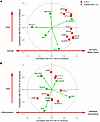 Figure 2
Factor maps in the N = 4,502 kidney transplant biopsy population showing the correlations between the input variables (red circles) and the principal components in the N = 4,502 kidney transplant biopsy population. AA groups are shown in green. The correlations between the PCA input variables and the PC scores are shown as factor maps in (A) PC2 vs. PC1 and (B) PC2 vs. PC3.
AA identified 5 archetype clusters, labeled normal, AKI1, AKI2, mild CKD, and CKDAKI based on their injury-related features as described below. This was similar to the earlier model (2) but with 5 rather than 6 clusters to simplify the classification.
We distributed all 4,502 biopsies in PCA based on the 10 injury scores in Figure 3A, coloring biopsies by their injury archetype class. PC1 (55% of variance) strongly separated all injury groups from normal and separated AKI2 from AKI1 and CKDAKI from mild CKD. PC2 (21% of variance) separated all AKI (negative) from CKD (positive). Positive PC3 separated AKI1 from AKI2 and CKDAKI from mild CKD (Figure 3B).
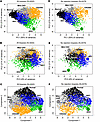 Figure 3
PCAs for biopsies. (A) PC2 vs. PC1 in all 4,502 biopsies, (B) PC2 vs. PC3 in all 4,502 biopsies, (D) PC2 vs. PC1 in 2,479 no rejection biopsies, (E) PC2 vs. PC3 in 2,479 no rejection biopsies, (C) UMAP visualization of the 4,502 population with variation compressed into 2 dimensions only, and (F) UMAP visualization of the 2,479 population of no rejection biopsies. PCAs and UMAP panels are colored by the 5-archetype injury model cluster assignments (normal, mild CKD, AKI1, AKI2, and CKDAKI). D–F show the no rejection samples within the original plots, rather than generating new PCAs/UMAPs using only the no rejection samples. MCAT, mast cell transcripts; IGT, immunoglobulin transcripts; ci>1Prob, ci lesion classifier; ct>1Prob, ct lesion classifier; ProtProb, proteinuria classifier; IRITD5, injury and repair induced transcripts day 5; IRITD3, injury and repair induced transcripts day 3; IRRAT, injury and repair associated transcripts; DAMP, damage-associated molecular pattern transcripts; lowGFRProb, probability of low GFR ≤ 30 cc/min/M2.
Note that although archetypal clustering assigns the biopsies to groups, the actual distribution of biopsies is continuous. This interpretation is supported by using uniform manifold approximation and projection (UMAP), which collapses all injury-related variance into 2 dimensions, with no separation into distinct groups (Figure 3C).
In PCA or UMAP, the distribution of no rejection biopsies (Figure 3, D–F) was similar to all 4,502 biopsies (Figure 3, A–C).
Relating molecular injury changes to the TxBx and eGFR. The 10 injury gene set (pathogenesis-based transcript sets, PBTs) scores used as input (y axis) are plotted as splines in Figure 4, A and B, and are strongly related to TxBx (x axis) as expected. The 5 AKI-related scores were highest early, fell to a trough at 1–2 years, and rose late (Figure 4A). The 4 CKD-related scores (MCAT, IGT, ci>1Prob, and ct>1Prob rose steadily with time, as did the histologic fibrosis (ci) score; the proteinuria (ProtProb) classifier score was high early and rose again late (Figure 4B).
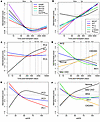 Figure 4
Relationships between injury principal component scores, injury archetypes, eGFR, and time posttransplant in all 4,502 biopsies with available data. (A) Restricted cubic splines showing the relationship between DAMP, IRITD3, IRITD5, IRRAT, and lowGFRProb and time posttransplant. (B) Restricted cubic splines showing the relationship between MCAT, IGT, ct>1Prob, ci>1Prob, ci lesion, and ProtProb. (C) Restricted cubic splines showing the relationship between injury PC1, PC2, PC3 and time posttransplant in the N = 4,502 biopsy population. (D) Restricted cubic splines showing the relationship between injury archetypes and time posttransplant. Scores were standardized before analysis so that they could be shown on the same scale. (E) Restricted cubic splines showing the relationship between injury PC1, PC2, PC3, and eGFR. (F) Restricted cubic splines showing the relationship between injury archetypes and eGFR.
The injury PC scores (Figure 4C) and archetype scores (Figure 4D) also correlated with TxBx (x axis). In Figure 4C, the relationship of injury PC1 score to time was U shaped: slightly higher early, lowest around 1 year, and rising late. Injury PC2 was strongly negative early and rose steadily with time. PC3 was higher at early times posttransplant but not strongly correlated with TxBx. In Figure 4D, the archetype scores (y axis) varied with TxBx. The normal score showed an inverted U shape with TxBx, the inverse of PC1: low early, peaking at about 1 year, and falling late. AKI1 and AKI2 archetype scores were high early (AKI2 > AKI1), decreased with TxBx, and never rose again (because late biopsies with AKI were in the CKDAKI cluster). Mild CKD and CKDAKI scores were low early and rose steadily with time.
The relationship to eGFR (x axis) is shown in Figure 4E for PC scores and Figure 4F for archetype scores. In Figure 4E, high injury PC1 and injury PC3 scores and low PC2 scores correlated with low eGFR. In Figure 4F, the eGFR also strongly correlated with the injury archetype scores; lowest with high AKI1, AKI2, and CKDAKI scores; and highest with high normal and mild CKD scores.
The TxBx and eGFR relationships in 2,479 no rejection biopsies were similar to those in all 4,502 biopsies (Supplemental Figure 1, A–D). The TxBx showed considerable overlap among the archetype groups (Supplemental Figure 1E).
Relating injury PC and AA scores to donor age. Donor age at transplantation correlated (ρ = correlation coefficient) with the PC scores: positively for PC1 (ρ = 0.10, P = 1 × 10⁻⁵); negatively for PC2 (ρ = –0.10, P = 2 × 10⁻⁵); and most strongly positively for PC3 (ρ = 0.20, P < 2 × 10–16) (Supplemental Table 3).
Donor age tended to be higher in AKI1 and CKDAKI, the groups with highest PC3 (Table 2). In all biopsies, compared with normal, mean donor age was older and percentage of donors aged ≥50 was higher in CKDAKI and AKI1 and lower in mild CKD. In early biopsies (≤42 days), AKI1 had older donor age than normal or AKI2 biopsies. In late biopsies, mean donor age and the percentage of donors aged ≥50 were higher in CKDAKI than normal.
Top genes and Gene Ontology terms correlated with injury PC scores. In Table 3, the top 10 transcripts correlating positively with injury PC1 were typical AKI-induced genes, potentially reflecting both recent injury and failed repair, e.g., VCAN. However, PC1 also correlated with some CKD features: For example, CXCL6 was highly correlated with PC1 (ρ = 0.75). We previously showed that CXCL6 correlates with CKD and is not AKI induced (24). VCAM1, a major feature of proximal convoluted tubule (PCT) failed repair cells in AKI (17, 18), also correlated strongly with PC1 (ρ = 0.70). The negative correlations with injury PC1 were related to decreased expression of genes related to metabolism or transport, e.g., KCl cotransporter SLC12A6. Injury PC2 negatively correlated genes were annotated as induced in early AKI, e.g., OLFM4 (4), whereas positively correlated genes were features of CKD, e.g., immunoglobulin and mast cell genes. Injury PC3 correlated positively with the expression of genes related to epithelial structure, e.g., PARD3, and negatively with genes expressed in inflammatory cells, e.g., LSP1. The results were similar in no rejection biopsies (Supplemental Table 4).
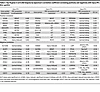 Table 3
Top 10 genes in all 4,502 biopsies by Spearman’s correlation coefficient correlating positively and negatively with injury PC1, PC2, and PC3
The Gene Ontology (GO) terms associated with the top 200 genes correlating positively or negatively with PC scores are shown in Tables 4, 5, and 6 (for all 4,502), and Supplemental Table 5 (for no rejection): PC1 positive, wound healing and inflammation; PC1 negative, metabolism and transport; PC2 positive, immunity (immunoglobulin genes); PC2 negative, mitosis; PC3 positive, epithelial organization; PC3 negative, inflammation and immunity.
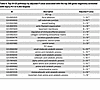 Table 4
Top 20 GO pathways by adjusted P value associated with the top 200 genes negatively correlated with injury PC1 in 4,502 biopsies
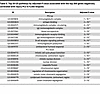 Table 5
Top 20 GO pathways by adjusted P value associated with the top 200 genes negatively correlated with injury PC2 in 4,502 biopsies
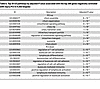 Table 6
Top 20 GO pathways by adjusted P value associated with the top 200 genes negatively correlated with injury PC3 in 4,502 biopsies
Top genes and GO terms correlated with injury archetype scores. As shown in Supplemental Table 12 (all biopsies) and Supplemental Table 6 (no rejection biopsies), correlates with the normal score were reciprocal to those of PC1. The AKI1 score correlated positively with epithelial structure-related genes (e.g., PARD3) and negatively with plasma cell genes (e.g., CD79A and immunoglobulin genes), whereas the AKI2 score correlated positively with injury-induced genes, such as S100A8, and negatively with genes expressed in normal kidneys. The mild CKD score correlated positively with immunoglobulin genes and negatively with injury-inducible and mitosis inhibitor gene CDKN1A. The CKDAKI score correlated positively with genes induced in CKD (e.g., CXCL6) or both CKD and AKI (e.g., MMP7) and negatively with genes associated with normal kidney function (e.g., SLA12A6).
Relating mitosis gene MKI67 with injury PC and AA scores. Since AKI triggers mitosis, we studied expression of the MKI67 gene mitosis-associated gene (probe set 11721143_a_at). MKI67 was increased in TCMR, so we studied its relationships to injury in no rejection biopsies. MKI67 was highest in the early biopsies and correlated strongly positively with injury PC1 (ρ = 0.24; P = 6.8 × 10⁻³⁴), negatively with injury PC2 (ρ = –0.30; P = 7.2 × 10–52), and weakly positively with injury PC3 (ρ = 0.07; P = 0.0008). MKI67 correlated negatively with the normal score (ρ = –0.29; P = 2.9 × 10–49) and most positively with the AKI2 score (ρ = 0.32; P = 1.1 × 10–61), weakly positively with the AKI1 score (ρ = 0.12; P = 5.8 × 10⁻⁹) and negatively with the mild CKD score (ρ = –0.18; P = 3.5 × 10⁻¹⁹), and did not correlate with the CKDAKI score (ρ = 0.003; P = 0.87).
Conventional and molecular features of the archetype groups. The timing, eGFR, molecular injury scores, and histologic fibrosis scores for each archetype group are summarized for all 4,502 biopsies in Table 7. AKI1 and AKI2 biopsies were both early, with low eGFR. AKI1 had lower macrophage and injury-induced molecular scores, less dedifferentiation (loss of kidney transcripts), and very low expression of immunoglobulin transcripts. CKDAKI and mild CKD were both late posttransplant, but CKDAKI had more fibrosis; more AKI-induced, mast cell, and macrophage transcripts; and lower eGFR, whereas mild CKD had more immunoglobulin transcripts. The features of the archetype groups were similar in the no rejection biopsies (Supplemental Table 7).
Relationships of model features to survival after biopsy. Figure 5A shows the actuarial 3-year survival for each archetype group (death censored, 1 random biopsy per kidney) in all cases with recorded follow-up. Postbiopsy 3-year graft survival was above 88% after normal biopsies; approximately 75% after AKI1, AKI2, or mild CKD biopsies; and less than 50% after CKDAKI biopsies.
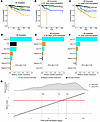 Figure 5
Visualizing the relationship between injury and 3-year postbiopsy death-censored survival (1 random biopsy per kidney) in all 4,502 biopsies. (A) Kaplan-Meier plots for the injury archetype groups in all 4,502 biopsies. (B) Kaplan-Meier plots for the injury archetype groups in biopsies ≤42 days. (C) Kaplan-Meier plots for the injury archetype groups in biopsies >1 year. (D–F) Relative variable importance plots from random survival forest analyses using injury PC1, PC2, and PC3; rejection PC1, PC2, and PC3; and time of biopsy posttransplant (TxBx) as predictors (D) in all 4,502 biopsies, (E) in biopsies ≤42 days posttransplant, (F) and in biopsies >1 year posttransplant. (G) Time-varying effects of injury PC1 and PC3 on the hazard of graft loss, estimated from a Cox proportional hazards model with interaction terms between time posttransplant and the injury PCs.
After early biopsies (Figure 5B), survival was lowest after AKI1 biopsies. (There were too few early biopsies with CKDAKI or mild CKD to analyze reliably.)
Graft survival after late biopsies (Figure 5C) was similar to that in all biopsies, with the lowest survival in CKDAKI.
In random survival forest models comparing injury scores with rejection scores and TxBx, the best predictor of graft survival after biopsy in all biopsies (Figure 5D) was injury PC1 followed by injury PC3. In early biopsies (Figure 5E), the only strong predictor was injury PC3. PC1 was also the best predictor of graft survival in late biopsies (Figure 5F). In these multivariable analyses, rejection activity had little impact on survival once injury was considered, though some injury is caused by rejection.
Time of biopsy was a factor among all biopsies, with late biopsies having higher failure rates. The relative impact of PC1 and PC3 on hazard differed by the TxBx. PC1 had little relative impact on survival after early biopsies but steadily increased as the time of biopsy increased. PC3 had a constant negative relative impact, early and late (Figure 5G).
The results in no rejection biopsies were similar to the results in all biopsies (Supplemental Figure 2).
Expression in transplants of gene sets representing epithelial cell failed repair states. We used the new transplant injury model to explore in transplant biopsies the expression of the new epithelial cell injury gene sets identified in single-nucleus transcriptome studies of native kidneys with AKI (Supplemental Table 1) (14, 16). As stated earlier, those studies found cells from various nephron segments to be in 1 of 4 distinct biological states: oxidative stress (New1), hypoxia (New2), interferon response (New3), and EMT (New4). For transplant studies, we selected new injury gene sets derived from single nuclei from cells localized in the proximal tubule (PT), thick ascending limb (TAL), and distal convoluted tubule (DCT). However, the TAL-New1 gene set had only 1 probe set, so we substituted the thin limb (tL)-New1 to have each biological state represented by 3 different segments. (We stress that the derivation of genes in various cell types does not imply that their expression in bulk transcriptomic data is necessarily attributable to that cell type.)
We studied the mean expression of the 12 gene sets (14) in the transplant model. Having established that injury changes were similar in all biopsies and no rejection biopsies, we used the full 4,502-transplant population. The heatmap in Figure 6 demonstrates the relationship between the mean expression for each set and that of the other 11 sets in the transplant biopsies. The gene set mean scores correlated strongly with the others in their biological state but not with their nephron segment of origin. (PT_New3 emerged as an outlier and is not discussed further.) The New4 sets strongly correlated with the New2 and New3 groups and anticorrelated with the New1 sets. Thus, the new gene sets annotated as biological states in native kidneys behaved as coherent sets in the transplant biopsies.
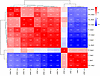 Figure 6
Heatmap showing pairwise Spearman correlations between the PBT scores of the 12 new gene sets in the N = 4,502 data set.
To see the relationship of the new gene sets to the PC scores, Figure 7 projects the 12 new scores (blue symbols) onto the factor map for the transplant injury model presented in Figure 2. The 10 transplant-derived input scores are red symbols; the 5 injury archetype scores are green arrows and symbols; and the new gene set means are blue symbols. In Figure 7A, The New2, New3, and New4 scores correlated positively with PC1, the strongest being the New4 groups representing EMT. They correlated positively with AKI-related gene sets defined in transplants (IRRAT, IRITD3, IRITD5, and DAMP) and injury classifier lowGFRProb. All correlated negatively with PC2. In contrast, the New1 gene sets correlated negatively with PC1, similar to the normal archetype score, with no association with PC2.
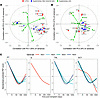 Figure 7
Factor maps in the N = 4,502 kidney transplant biopsy population showing the correlations between the input variables (red circles) and the principal components. Additional variables of interest (injury archetype scores in green and gene sets from ref. 14 as blue circles) were not used for the analysis but were projected as supplementary variables into the original PCA in (A) PC2 vs. PC1 and (B) PC2 vs. PC3. (C) Restricted cubic splines showing the relationship between the PBT scores for the 12 new gene sets and log(time posttransplant). N = 4,301 samples with TxBx available. MCAT, mast cell transcripts; IGT, immunoglobulin transcripts; ci>1Prob, ci lesion classifier; ct>1Prob, ct lesion classifier; ProtProb, proteinuria classifier; IRITD5, injury and repair induced transcripts day 5; IRITD3, injury and repair induced transcripts day 3; IRRAT, injury and repair associated transcripts; DAMP, damage-associated molecular pattern transcripts; GFR, probability of low GFR ≤ 30 cc/min/M2; New1, oxidative stress; New2, hypoxia; New3, inflammation; New4, EMT; PT, proximal tubule; TAL, thick ascending limb; tL, thin limb; DCT, distal convoluted tubule.
All 12 new gene sets, even the New1 sets, correlated positively with PC3 (Figure 7B).
The correlation coefficients of the new gene sets with PCA and archetype scores are shown in Supplemental Table 8.
Thus, new gene sets representing epithelial cell states derived in single epithelial cell nuclei from native kidneys with AKI strongly correlated with the injury dimensions in 4,502 kidney transplant biopsies, the strongest being the New4 EMT-related sets. The nephron segmental location of the single cells was not important.
The time courses of the new gene set scores in the 4,502 transplant biopsies indicated that all standardized scores were the highest initially and decreased in the first year posttransplant (Figure 7C). However, the New3 and New4 gene sets universally increased after 1 year posttransplant, similar to the AKI-related scores in Figure 4A. The New1 and New2 gene sets consistently decreased over time, except for in PT, which showed an increase after 1 year.
Association of mean new injury scores with graft survival, eGFR, and donor age. Table 8 presents the associations of each new injury gene set with 3-year death-censored graft survival (Cox analysis), with eGFR, and with donor age in the 4,502 kidney transplant biopsies. We included some injury gene sets derived from kidney transplants for comparison: IRRAT30, IRITD3, and IRITD5. In Table 8, the gene sets are ordered by their P value in the survival analysis. The injury PC scores are shown separately.
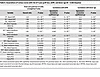 Table 8
Associations of various scores with risk of 3-year graft loss, eGFR, and donor age (N = 4,502 biopsies)
The 3 New4 gene set scores were the strongest predictors of graft survival, slightly better than the IRRAT gene set derived in transplant biopsies; injury PC1 was the strongest predictor. The New1 gene sets were protective, i.e., associated with decreased risk.
The New4 injury gene sets were the strongest correlates of depressed eGFR, stronger than the injury scores derived in kidney transplants, even injury PC1. The New1 gene sets correlated with higher eGFR.
The New4 gene sets all correlated positively with donor age. The New1 gene sets did not correlate with age. In this analysis, PC3 had the strongest correlation with donor age, as in our earlier analysis (7).
Similar results were found when the same analyses were done in the 2,479 no rejection biopsies (Supplemental Table 9).
We used random survival forests to examine the relative importance of the 12 new injury gene sets for predicting 3-year death-censored survival in kidney transplants (1,292 of the 4,502 kidney biopsies with available follow-up data; 1 random biopsy per transplant) (Figure 8). The forests included kidney transplant–derived injury measurements (injury PC scores and gene sets). In all biopsies, the best predictors of 3-year survival were injury PC1 and the New4 scores representing EMT (Figure 8A). Injury PC3 also affected survival. In kidneys having early biopsies, PC3 was the dominant predictor, but the new injury transcript sets also had some impact (Figure 8B). Findings in late biopsies (>1 year posttransplant, Figure 8C) were similar to findings in all biopsies.
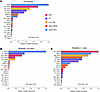 Figure 8
Relative variable importance plots for predicting 3-year survival after biopsy, using injury pathogenesis-based transcript set scores and injury principal component scores (using 1 randomly selected biopsy per transplant). (A) All 4,502 biopsies. (B) Biopsies >1 year. (C) Biopsies ≤42 days. Error rates are 1.0 minus the C statistic (which is the survival analysis equivalent of the AUC).
Correlations of selected individual new injury genes in the kidney transplant injury model. We examined the correlations of a sample of 13 new injury genes selected from the native kidney AKI studies in the kidney transplant model (Supplemental Table 10). These genes were selected because they were mentioned in the original paper (16). The genes annotated in the New4 gene sets such as IFITM3, VCAM1, HIF1A, and MET had strong associations with injury PC1, but many also correlated with injury PC3, e.g., MET, SPP1, and MYO5B. Genes associated with New1 states, such as ALDOB, LRP2, and NQO1, had negative correlations with injury PC1 but positive correlations with PC3. For NQO1, LRP2, and MYO5B, the strongest positive correlations were with PC3.


