
Abstract
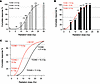
Single-dose radiotherapy (SDRT) is a highly curative modality that may transform radiotherapy practice. Unfortunately, only ~50% of oligometastatic lesions are SDRT treatable due to adjacent radiosensitive normal organs at risk. Here, we address the extent to which an antiangiogenic drug, VEGFR2-antagonist DC101, radiosensitizes SDRT using murine MCA/129 fibrosarcomas and Lewis lung carcinomas, which display a dose range for SDRT lesional eradication virtually identical to that employed clinically (10–30 Gy). SDRT induces unique tumor cure, stimulating rapid endothelial acid sphingomyelinase (ASMase)/ceramide signaling that yields marked vasoconstriction and perfusion defects in tumor xenografts and human oligometastases. Ensuing tumor parenchymal oxidative damage initiates a SUMO stress response (SSR), which inactivates multiple homologous recombination repair enzymes, radiosensitizing all tumor types. While VEGF inhibits neo-angiogenic ASMase, optimal radiosensitization occurs only upon antiangiogenic drug delivery at ~1 hour preceding SDRT. Obeying these principles, we find DC101 radiosensitizes SSR, DNA double-strand break unrepair, and tumor cure by 4–8 Gy at all clinically relevant doses. Critically, DC101 fails to sensitize small intestinal endothelial injury or lethality from the gastrointestinal–acute radiation syndrome. Whereas normal tissues appear not to be under VEGF regulation nor sensitized by our approach, its application might render many currently intractable oligometastatic lesions susceptible to SDRT eradication.
Authors
Jin Cheng, Liyang Zhao, Sahra Bodo, Prashanth K.B. Nagesh, Rajvir Singh, Adam O. Michel, Regina Feldman, Zhigang Zhang, Simon Powell, Zvi Fuks, Richard Kolesnick
This file is in Adobe Acrobat (PDF) format. If you have not installed and configured the Adobe Acrobat Reader on your system.
Having trouble reading a PDF?
PDFs are designed to be printed out and read, but if you prefer to read them online, you may find it easier if you increase the view size to 125%.
Having trouble saving a PDF?
Many versions of the free Acrobat Reader do not allow Save. You must instead save the PDF from the JCI Online page you downloaded it from. PC users: Right-click on the Download link and choose the option that says something like "Save Link As...". Mac users should hold the mouse button down on the link to get these same options.
Having trouble printing a PDF?
- Try printing one page at a time or to a newer printer.
- Try saving the file to disk before printing rather than opening it "on the fly." This requires that you configure your browser to "Save" rather than "Launch Application" for the file type "application/pdf", and can usually be done in the "Helper Applications" options.
- Make sure you are using the latest version of Adobe's Acrobat Reader.


