
Oncology
Abstract
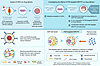
The tumor microenvironment plays a key role in cancer progression and therapy resistance, with cancer-associated fibroblasts (CAFs) contributing to desmoplasia, extracellular matrix (ECM) remodeling, and elevated interstitial fluid pressure, all of which hinder drug delivery. We investigated fibroblast activation protein–targeted (FAP-targeted) near-infrared photoimmunotherapy (NIR-PIT) as a strategy to improve drug penetration in CAF-rich tumors. In clinical esophageal cancer samples, FAP expression strongly correlated with increased collagen I, hyaluronic acid, and microvascular collapse. CAF-rich 3D spheroids demonstrated elevated ECM deposition and significantly impaired drug uptake compared with CAF-poor models. FAP-targeted NIR-PIT selectively reduced CAFs, reduced ECM components, and restored drug permeability. In vivo, FAP-targeted NIR-PIT enhanced the accumulation of panitumumab and Abraxane in CAF-rich tumors and improved antitumor efficacy when combined with chemotherapy. These findings highlight FAP-targeted NIR-PIT as a promising therapeutic approach to remodel the tumor stroma and overcome drug resistance in desmoplastic solid tumors.
Authors
Seitaro Nishimura, Kazuhiro Noma, Tasuku Matsumoto, Yasushige Takeda, Tatsuya Takahashi, Hijiri Matsumoto, Kento Kawasaki, Hotaka Kawai, Tomoyoshi Kunitomo, Masaaki Akai, Teruki Kobayashi, Noriyuki Nishiwaki, Hajime Kashima, Takuya Kato, Satoru Kikuchi, Shunsuke Tanabe, Toshiaki Ohara, Hiroshi Tazawa, Yasuhiro Shirakawa, Peter L. Choyke, Hisataka Kobayashi, Toshiyoshi Fujiwara
Abstract
BACKGROUND. Chimeric antigen receptor (CAR) T-cells are a leading immunotherapy for refractory B-cell malignancies; however, their impact is limited by toxicity and incomplete efficacy. Daily (circadian) rhythms in immune function may offer a lever to boost therapeutic success; however, their clinical relevance to CAR T-cell therapy remains unknown. METHODS. We retrospectively analyzed CAR T-cell survival and complications based on infusion time at two geographically distinct hospitals in St. Louis, Missouri (n=384), and Portland, Oregon (n=331) between 1/2018 and 3/2025. The primary outcome was 90-day overall survival (OS). Secondary outcomes included event-free survival (EFS), cytokine release syndrome (CRS), immune cell-associated neurotoxicity syndrome (ICANS), ICU admission, shock, respiratory failure, and infection. We quantified the independent relationship between infusion time and outcomes using multivariable mixed-effects logistic regression and time-to-event models, adjusting for patient, oncologic, and treatment characteristics. RESULTS. The therapeutic index of CAR-T cells inversely correlated with administration time, with later infusions associated with lower effectiveness and more adverse outcomes. For each hour that CAR T-cell treatment was delayed, the adjusted odds of 90-day mortality increased by 24% (aOR 0.64-0.88, p=<0.001), severe neurotoxicity by 17% (p=0.023), and mechanical ventilation by 27% (p=0.026). These temporal patterns were most pronounced in patients receiving CD19-targeting CAR T-cell products. In contrast, we did not find an association between infusion time and severe CRS (aOR 0.99, 95% CI 0.75–1.27, p=0.92). CONCLUSION. Time of day is a potent and easily modifiable factor that could optimize CAR T-cell clinical performance. FUNDING. National Institutes of Health.
Authors
Patrick G. Lyons, Emily Gill, Prisha Kumar, Melissa Beasley, Brenna Park-Egan, Zulfiqar A. Lokhandwala, Katie M. Lebold, Brandon Hayes-Lattin, Catherine L. Hough, Nathan Singh, Guy Hazan, Huram Mok, Janice M. Huss, Colleen A. McEvoy, Jeffrey A. Haspel
Abstract
Fusion-positive rhabdomyosarcoma (FP-RMS), driven by PAX-FOXO1, represents the subtype of RMS with the poorest prognosis. However, the oncogenic mechanisms and therapeutic strategies of PAX-FOXO1 remain incompletely understood. Here, we discovered that N-Myc, in addition to being a classic downstream target of PAX-FOXO1, can also activate its expression and form a transcriptional complex with PAX-FOXO1, thereby markedly amplifying oncogenic signaling. The reciprocal transcriptional activation of PAX3-FOXO1 and N-Myc is critical for FP-RMS malignancy. We further identified YOD1 as a deubiquitinating enzyme (DUB) that stabilizes both PAX-FOXO1 and N-Myc. Knocking down YOD1 or inhibiting it by G5 could suppress FP-RMS growth both in vitro and in vivo, through promoting the degradation of both PAX-FOXO1 and N-Myc. Collectively, our results identify that YOD1 promotes RMS progression by regulating the PAX3-FOXO1-N-Myc positive feedback loop, and highlight YOD1 inhibition as a promising therapeutic strategy that concurrently reduces the levels of both oncogenic proteins.
Authors
Wenwen Ying, Jiayi Yu, Xiaomin Wang, Jiayi Liu, Boyu Deng, Xuejing Shao, Jinhu Wang, Ting Tao, Ji Cao, Qiaojun He, Bo Yang, Yifan Chen, Meidan Ying
Abstract
HDAC8, an evolutionarily distinct, X-linked, zinc-dependent class I histone/protein deacetylase, is implicated in developmental disorders, parasitic infections, myopathy, and cancers. Our study demonstrates the important role of HDAC8 in immune cells by conditional targeting of HDAC8 in murine T cells and application of selective HDAC8 inhibitors. Using flow cytometry, RNA-seq and ChIP-seq analyses, we demonstrate that knocking down or inhibiting HDAC8 impaired murine Treg suppressive function in vitro and in vivo, but promoted conventional host T cell responses, thereby limiting syngeneic tumor growth. Mechanistically, HDAC8 knockout downregulated Foxp3 expression, enhanced H3K27 acetylation levels and promoted IL-2, IL-6, Fas, and FasL expression in both Treg and conventional T-effector cells. Thus, our combined genetic and pharmacologic studies establish the central importance of HDAC8 in T cell responses and suggest that selective HDAC8 inhibitors represent a potential therapeutic approach in immuno-oncology.
Authors
Fanhua Kong, Yan Xiong, Liqing Wang, Rongxiang Han, Hossein Fazelinia, Jennifer Roof, Lynn A. Spruce, Aaron B. Beeler, Wayne W. Hancock
Abstract
BACKGROUND. WP1066 is an orally bioavailable, small molecule inhibitor of activated p-STAT3 that has demonstrated preclinical efficacy in pediatric brain tumor models. METHODS. In a first-in-child, single-center, single-arm 3+3 design Phase I clinical trial, ten patients were treated with WP1066 twice daily, Monday-Wednesday-Friday, for 14 days of each 28-day cycle to determine the maximum tolerated dose (MTD)/maximum feasible dose (MFD) of WP1066. Compassionate use treatment with WP1066 in three pediatric patients with H3.3 G34R/V-mutant high-grade glioma (HGG) is also described. RESULTS. There was no significant toxicity and the MFD was determined to be 8 mg/kg. Treatment-related adverse events were Grade 1-2 (diarrhea and nausea most common); there were no dose-limiting toxicities. Median progression-free and overall survival were 1.8 months and 4.9 months, respectively. One partial response was observed in a patient with pontine glioma. Among the H3.3 G34R/V-mutant HGG patients not on study, WP1066 was administered after upfront radiation to one patient for 17 months. At all dose levels tested, WP1066 suppressed p-STAT3 expression by peripheral blood mononuclear cells (PBMCs). Single cell RNA-seq analysis of PBMCs demonstrated increased CD4+ and CD8+ T cells, pro-inflammatory TNFA signaling, differentiation activity in myeloid cells, and downregulation of Tregs after WP1066 treatment, consistent with systemically inhibited STAT3 activity. CONCLUSIONS. WP1066 is safe, has minimal toxicity, and induces anti-tumor immune responses in pediatric brain tumor patients. Phase II investigation of WP1066 at the MFD in this patient population is warranted. TRIAL REGISTRATION. ClinicalTrials.gov NCT04334863. FUNDING. CURE Childhood Cancer (TJM) and Peach Bowl, Inc. (TJM)
Authors
Robert C. Castellino, Hope L. Mumme, Andrea T. Franson, Bing Yu, M. Hope Robinson, Kavita Dhodapkar, Dolly Aguilera, Matthew J. Schniederjan, Rohali Keesari, Zhulin He, Manoj Bhasin, Waldemar Priebe, Amy B. Heimberger, Tobey J. MacDonald
Abstract
Pancreatic ductal adenocarcinoma (PDAC) has a dismal prognosis and current therapies show limited efficacy. Ligands and receptors of the TIGIT axis were analyzed using multicolor flow cytometry of tumor and blood samples, immunohistochemistry from primary tumors, and single-cell RNA sequencing from primary tumors and liver metastasis from patients with various stages of PDAC. The effect of soluble and plate-bound Nectin-4 on T cell function was tested in vitro. Further, patient-derived PDAC organoids were treated with the standard of care therapies FOLFIRINOX, gemcitabine plus paclitaxel, or the antibody-drug conjugate enfortumab vedotin. TIGIT expression was increased on tumor-infiltrating conventional and regulatory T cells compared with T cells from matched blood. Nectin-4, but not CD155 expression was associated with poor outcome. Nectin-4 was exclusively expressed by tumor cells and correlated with low immune infiltration. Notably, Nectin-4 inhibited T cell effector cytokine production in vitro. Targeting Nectin-4 with the antibody-drug conjugate enfortumab vedotin inhibited tumor growth in multiple patient-derived PDAC organoids. Collectively, our data underscores Nectin-4 as a novel therapeutic target and provides the rationale to test this agent in PDAC patients.
Authors
Max Heiduk, Carolin Beer, Sarah Cronjaeger, Emily A. Kawaler, Ulrich Sommer, Franziska Baenke, David Digomann, Loreen Natusch Bufe, Charlotte Reiche, Jessica Glück, Franziska Hoffmann, Sungsik Kim, Daniel E. Stange, Diane M. Simeone, Jürgen Weitz, Lena Seifert, Adrian M. Seifert
Abstract
Epigenetic macromolecular enzyme complexes tightly regulate gene expression at the chromatin level and have recently been found to colocalize with RNA splicing machinery during active transcription; however, the precise functional consequences of these interactions are uncertain. Here, we identify unique interactions of the CoREST repressor complex (LSD1-HDAC1-CoREST) with components of the RNA splicing machinery and their functional consequences in tumorigenesis. Using mass spectrometry, in vivo binding assays, and cryo-EM we find that CoREST complex-splicing factor interactions are direct and perturbed by the CoREST complex selective inhibitor, corin, leading to extensive changes in RNA splicing in melanoma and other malignancies. Moreover, these corin-induced splicing changes are shown to promote global effects on oncogenic and survival-associated splice variants leading to a tumor-suppressive phenotype. Using machine learning models, MHC IP-MS, and ELISpot assays we identify thousands of neopeptides derived from unannotated splice sites which generate corin-induced splice-neoantigens that are demonstrated to be immunogenic in vitro. Corin is further shown to reactivate the response to immune checkpoint blockade, effectively sensitizing tumors to anti-PD1 immunotherapy. These data position CoREST complex inhibition as a unique therapeutic opportunity which perturbs oncogenic splicing programs while also creating tumor-associated neoantigens that enhance the immunogenicity of current therapeutics.
Authors
Robert J. Fisher, Kihyun Park, Kwangwoon Lee, Katarina Pinjusic, Allison Vanasse, Christina S. Ennis, Parisa Farokh, Scott B. Ficarro, Jarrod A. Marto, Hanjie Jiang, Eunju Nam, Stephanie Stransky, Joseph Duke-Cohan, Melis A. Akinci, Anupa Geethadevi, Eric Raabe, Ana Fiszbein, Shadmehr Demehri, Simone Sidoli, Chad W. Hicks, Derin B. Keskin, Catherine J. Wu, Philip A. Cole, Rhoda M. Alani
Abstract
Enhanced lipid metabolism, which involves the active import, storage, and utilization of fatty acids from the tumor microenvironment, plays a contributory role in malignant glioma transformation; thereby, serving as an important gain of function. In this work, through studies initially designed to understand and reconcile possible mechanisms underlying the anti-tumor activity of a high-fat ketogenic diet, we discovered that this phenotype of enhanced lipid metabolism observed in glioblastoma may also serve as a metabolic vulnerability to diet modification. Specifically, exogenous polyunsaturated fatty acids (PUFA) demonstrate the unique ability of short-circuiting lipid homeostasis in glioblastoma cells. This leads to lipolysis-mediated lipid droplet breakdown, an accumulation of intracellular free fatty acids, and lipid peroxidation-mediated cytotoxicity, which was potentiated when combined with radiation therapy. Leveraging this data, we formulated a PUFA-rich modified diet that does not require carbohydrate restriction, which would likely improve long-term adherence when compared to a ketogenic diet. The modified PUFA-rich diet demonstrated both anti-tumor activity and potent synergy when combined with radiation therapy in mouse glioblastoma models. Collectively, this work offers both a mechanistic understanding and a potentially translatable approach of targeting this metabolic phenotype in glioblastoma through diet modification and/or nutritional supplementation that may be readily integrated into clinical practice.
Authors
Shiva Kant, Yi Zhao, Pravin Kesarwani, Kumari Alka, Jacob F. Oyeniyi, Ghulam Mohammad, Nadia Ashrafi, Stewart F. Graham, C. Ryan Miller, Prakash Chinnaiyan

Abstract
Glycolysis fuels cytotoxic allogeneic T cells in acute graft-versus-host disease (aGvHD), but the downstream role of glucose metabolism in modulating aGvHD remains unclear. Targeting glycolysis or glucose receptors is toxic. Therefore, we explored alternative glucose-dependent pathways, focusing on the pentose phosphate pathway (PPP). Single-cell RNA sequencing revealed PPP upregulation in allogeneic T cells during allogeneic hematopoietic cell transplantation (allo-HCT). We showed that donor T cell deficiency in 6-phosphogluconate dehydrogenase (6PGD), the second rate-limiting enzyme in the PPP, significantly reduced aGvHD severity and mortality in murine models. Functional assays demonstrated that PPP blockade led to proliferation arrest without inducing apoptosis. PPP blockade shifted T cell metabolism away from T cell dependency on glycolysis for rapid T cell proliferation. Pharmacological inhibition of the PPP through 6PGD blockade with 6-aminonicotinamide (6AN) effectively reduced aGvHD severity, like donor 6PGD-deficient T cells in an allogeneic aGvHD model. Similarly, 6AN reduced xenogeneic GvHD lethality. 6PGD inhibition preserved the graft-versus-tumor (GvT) effect, with the generation of a small subset of granzyme Bhi effector T cells with potent antitumor activity. These findings highlight the PPP as a key regulator of allogeneic T cell proliferation and differentiation and identify 6PGD as a promising therapeutic target to mitigate aGvHD severity while preserving beneficial GvT effects.
Authors
Saeed Daneshmandi, Eun Ko, Qi Yan, Jee Eun Choi, Prashant K. Singh, Richard M. Higashi, Andrew N. Lane, Teresa W.M. Fan, Jingxin Qiu, Sophia Hani, Keli L. Hippen, Jianmin Wang, Philip L. McCarthy, Bruce R. Blazar, Hemn Mohammadpour
Abstract
Over 95% of head and neck cancers are squamous cell carcinoma (HNSCC). HNSCC is mostly diagnosed late, causing a poor prognosis despite the application of invasive treatment protocols. Tumor-educated platelets (TEPs) have been shown to hold promise as a molecular tool for early cancer diagnosis. We sequenced platelet mRNA isolated from blood of 101 HNSCC patients and 101 propensity-score matched non-cancer controls. Two independent machine learning classification strategies were employed using a training and validation approach to identify a cancer predictor: a particle swarm optimized support vector machine (PSO-SVM) and a least absolute shrinkage and selection operator (LASSO) logistic regression model. The best performing PSO-SVM predictor consisted of 245 platelet transcripts and reached a maximum area under the curve (AUC) of 0.87. For the LASSO-based prediction model 1,198 mRNAs were selected, resulting in an median AUC of 0.84, independent of HPV status. Our data show that TEP RNA classification by different AI tools is promising in the diagnosis of HNSCC.
Authors
N.E. Wondergem, J.B. Poell, S.G.J.G In 't Veld, E. Post, S.W. Mes, M.G. Best, W.N. van Wieringen, T. Klausch, R.J. Baatenburg de Jong, C.H.J. Terhaard, R.P. Takes, J.A. Langendijk, I.M. Verdonck-de Leeuw, F. Lamers, C.R. Leemans, E. Bloemena, T. Würdinger, R.H Brakenhoff
No posts were found with this tag.


