
Endocrinology
Abstract
Maternal low thyroxine (T4) serum levels during the first trimester of pregnancy correlate with cerebral cortex volume and mental development of the progeny, but why neural cells during early fetal brain development are vulnerable to maternal T4 levels remains unknown. In this study, using iPSCs obtained from a boy with a loss-of-function mutation in MCT8—a transporter previously identified as critical for thyroid hormone uptake and action in neural cells—we demonstrate that thyroid hormones induce transcriptional changes that promote the progression of human neural precursor cells along the dorsal projection trajectory. Consistent with these findings, single-cell, spatial, and bulk transcriptomics from MCT8-deficient cerebral organoids and cultures of human neural precursor cells underscore the necessity for optimal thyroid hormone levels for these cells to differentiate into neurons. The controlled intracellular activation of T4 signaling occurs through the transient expression of the enzyme type 2 deiodinase, which converts T4 into its active form, T3, alongside the coordinated expression of thyroid hormone nuclear receptors. The intracellular activation of T4 in NPCs results in transcriptional changes important for their division mode and cell cycle progression. Thus, T4 is essential for fetal neurogenesis, highlighting the importance of adequate treatment for mothers with hypothyroidism.
Authors
Federico Salas-Lucia, Sergio Escamilla, Amanda Charest, Hanzi Jiang, Randy Stout, Antonio C. Bianco
Abstract
In vitro studies have implicated orphan receptor GPRC5B in β-cell survival, proliferation and insulin secretion, but its relevance for glucose homeostasis in vivo is largely unknown. Using tamoxifen-inducible, β-cell-specific GPRC5B knockout mice (Ins-G5b-KOs) we show here that loss of GPRC5B does not affect β-cell function in the lean state, but results in strongly reduced insulin secretion and disturbed glucose tolerance in mice subjected to high fat diet for 16 weeks. Flow cytometry and single-cell expression analyses in islets from obese mice show a reduced β-cell abundance and a less mature β-cell phenotype in Ins-G5b-KOs. Expression of β-cell-specific transcription factor MafA is reduced both on the RNA and protein level, as are transcripts of MafA target genes. Mechanistically, we show that phosphorylation of cAMP response element-binding protein (CREB), a major regulator of MafA expression, is reduced in islets of obese Ins-G5b-KOs, and that this phenotype precedes the downregulation of MafA and MafA target genes. Taken together, GPRC5B helps to maintain mature β-cell function in obesity through cAMP/CREB-dependent regulation of MafA expression.
Authors
Tianpeng Wang, Remy Bonnavion, Janett Piesker, Stefan Günther, Nina Wettschureck
Abstract
Authors
Yorihiro Iwasaki, Monica Reyes, Arnaud Molin, Mari Muurinen, Marie-Laure Kottler, Murat Bastepe, Harald Jüppner
Abstract
Adipose inflammation plays a key role in obesity-induced metabolic abnormalities. Epigenetic regulation, including DNA methylation, is a molecular link between environmental factors and complex diseases. Here we found that high fat diet (HFD) feeding induced a dynamic change of DNA methylome in mouse white adipose tissue (WAT) analyzed by reduced representative bisulfite sequencing. Interestingly, DNA methylation at the promoter of estrogen receptor α (Esr1) was significantly increased by HFD, concomitant with a down-regulation of Esr1 expression. HFD feeding in mice increased the expression of DNA methyltransferase 1 (Dnmt1) and Dnmt3a, and binding of DNMT1 and DNMT3a to Esr1 promoter in WAT. Mice with adipocyte-specific Dnmt1 deficiency displayed increased Esr1 expression, decreased adipose inflammation and improved insulin sensitivity upon HFD challenge; while mice with adipocyte-specific Dnmt3a deficiency showed a mild metabolic phenotype. Using a modified CRISPR/RNA-guided system to specifically target DNA methylation at the Esr1 promoter in WAT, we found that reducing DNA methylation at Esr1 promoter increased Esr1 expression, decreased adipose inflammation and improved insulin sensitivity in HFD-challenged mice. Our study demonstrated that DNA methylation at Esr1 promoter played an important role in regulating adipose inflammation, which may contribute to obesity-induced insulin resistance.
Authors
Rui Wu, Fenfen Li, Shirong Wang, Jia Jing, Xin Cui, Yifei Huang, Xucheng Zhang, Jose A. Carrillo, Zufeng Ding, Jiuzhou Song, Liqing Yu, Huidong Shi, Bingzhong Xue, Hang Shi
Abstract
Parathyroid hormone (PTH) regulates serum calcium and phosphate through its actions in bone and the kidney and is used to increase bone in osteoporosis treatment. In bone, PTH targets osteoblasts and osteocytes to regulate bone remodeling but also bone marrow stromal cells (BMSCs), regulating their differentiation in the osteoblast and/or the adipocyte lineages. PTH exerts its action through the PTH/PTH-related peptide (PTHrP) receptor (PTH1R), a G protein-coupled receptor (GPCR), activating adenylyl cyclase and phospholipase C (PLC). Although the effects of cAMP and PKA are well characterized, little is known about the effects of PLC activation or on the cross-talk between PTH signaling and other pathways. Here, bulk RNA-seq of PTH-treated murine BMSC line (W-20) revealed significant changes in the Hippo pathway. PTH stabilized YAP, a key target of Hippo, by decreasing YAP/LATS1 interaction, YAPS127 phosphorylation and YAP ubiquitination, leading to YAP nuclear translocation and expression of YAP target genes. Similar events occurred in osteocyte cell lines. This occurred via an increase in Src kinase activity: we identified YAPY428 as a key tyrosine residue phosphorylated by Src in response to PTH. Preventing YAP428 phosphorylation led to YAP instability, blocking both osteogenic and adipogenic differentiation of W-20 cells. These results demonstrate active crosstalk between the PTH/PTHrP and the Hippo signaling pathways and reveal that PTH signaling utilizes the PLC-Ca2+-Src tyrosine kinase signaling cascade to influence YAP stability, antagonizing Hippo signaling and favoring stromal cell differentiation. Thus, PTH signaling counteracts the effects of Hippo signaling in BMSCs to favor their differentiation.
Authors
Sara Monaci, Mengrui Wu, Hiroyuki Okada, Kedkanya Mesil, Byeong-Rak Keum, Maisa Monseff Rodrigues da Silva, Clifford J. Rosen, Francesca Gori, Roland Baron

Abstract
Pancreatic stellate cells (PSCs) are the origin of cancer-associated fibroblasts. Type 2 diabetes mellitus (T2D) may promote pancreatic ductal adenocarcinoma (PDAC), eliciting changes in the quiescent PSC (qPSC) population from the precancerous stage. However, the details are unknown. We evaluated the subpopulations of qPSCs and the impact of T2D. PSCs isolated from 8-week-old C57BL/6J mice and diabetic db/db mice were analyzed by single-cell RNA-seq. Sorted qPSCs and PDAC cells were transplanted into allogenic mice. The isolated qPSCs were broadly classified into mesothelial cell and pancreatic fibroblast (Paf) populations by single-cell RNA-seq. Pafs were subclassified into inflammatory Pafs, myofibroblastic Pafs (myPafs) and a small population named tumor immunity- and angiogenesis-promoting Pafs (tapPafs), expressing Cxcl13. In the subcutaneous transplantation model, the tumors transplanted with myPafs were significantly larger than the tumors transplanted with tapPafs. An increase in myPafs and a decrease in tapPafs were observed from the precancerous stage in human T2D, indicating the effects of tumor progression. This study revealed the subpopulation changes in qPSCs in T2D. A therapy that increases the number of tapPafs could be a therapeutic option for patients with PDAC and T2D and even those in a precancerous stage of T2D.
Authors
Yutaro Hara, Hiroki Mizukami, Takahiro Yamada, Shuji Shimoyama, Keisuke Yamazaki, Takanori Sasaki, Zhenchao Wang, Hanae Kushibiki, Masaki Ryuzaki, Saori Ogasawara, Hiroaki Tamba, Akiko Itaya, Norihisa Kimura, Keinosuke Ishido, Shinya Ueno, Kenichi Hakamada
Abstract
More than one in four men will undergo surgery for inguinal hernia, which is commonly associated with fibrotic degeneration of the lower abdominal muscle (LAM) in the groin region. Utilizing a male mouse model expressing the human aromatase gene (Aromhum), previous studies showed that locally produced estradiol acting via estrogen receptor alpha in LAM fibroblasts leads to fibrosis, myofiber atrophy, and hernia development. Here, we found that upregulation of progesterone receptor (PGR) in a LAM fibroblast population mediates this estrogenic effect. A PGR-selective progesterone antagonist in Aromhum mice decreased LAM fibrosis and atrophy, preventing hernia formation and stopping progression of existing hernias. Addition of progesterone to estradiol treatment was essential for early-onset development of LAM fibrosis and large hernias in wild type mice, which was averted by a progesterone antagonist. Single-nuclei multiomics sequencing of herniated LAM revealed a unique population of Pgr-expressing fibroblasts that promotes fibrosis and myofiber atrophy through transforming growth factor beta-2 signaling. Multiomics findings were validated in vivo in herniated LAM tissues of both mice and adult men. Our findings suggest an important and rare pathologic role of progesterone signaling in males and provide evidence for progesterone antagonists as a non-surgical alternative for inguinal hernia management.
Authors
Tianming You, Mehrdad Zandigohar, Tanvi Potluri, Natalie Piehl, John S. Coon V, Elizabeth Baker, Maya Kafali, Yang Dai, Jonah J. Stulberg, David J. Escobar, Richard L. Lieber, Hong Zhao, Serdar E. Bulun
Abstract
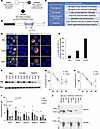
PDX1 mutations are associated with multiple forms of diabetes, including syndromic, neonatal, mature onset diabetes of the young (MODY), and type 2 diabetes. Two PDX1 missense mutations (Thr151Met and Asn196Thr) were identified in a pediatric female patient that cause permanent neonatal diabetes, pancreas hypoplasia, and a malformed gallbladder. We found that the mouse Pdx1 Asn197Thr variant (homologous to human PDX1 Asn196Thr), but not Pdx1 Thr152Met (homologous to human PDX1 Thr151Met), altered its nuclear localization and disrupted the PDX1-ONECUT1 interaction. Neither variant substantially affected PDX1 protein stability, but both reduced PDX1 binding to the Pdx1 gene promoter. Importantly, the Pdx1 Asn197Thr variant caused pancreas agenesis and reduced enteroendocrine cells in the duodenum in genetically engineered mice, due at least in part to reduced Pdx1 promoter binding and disrupted PDX1-ONECUT1 interaction.
Authors
Xiaodun Yang, Angela Zanfardino, Riccardo Schiaffini, Jeff Ishibashi, Bareket Daniel, Matthew W. Haemmerle, Novella Rapini, Alessia Piscopo, Emanuele Miraglia del Giudice, Maria Cristina Digilio, Raffaele Iorio, Mafalda Mucciolo, Stefano Cianfarani, Dario Iafusco, Fabrizio Barbetti, Doris A. Stoffers
Abstract
Under insulin-resistant conditions, such as obesity, pancreatic β cells adaptively proliferate and secrete more insulin to prevent blood glucose elevation. We previously reported hepatic ERK activation during obesity development to stimulate a neuronal relay system, consisting of afferent splanchnic nerves from the liver and efferent vagal nerves to the pancreas, thereby triggering adaptive β cell proliferation. However, the mechanism linking obesity with the interorgan system originating in hepatic ERK activation remains unclear. Herein, we clarified that colonic inflammation promotes β cell proliferation through this interorgan system from the liver to the pancreas. First, dextran sodium sulfate (DSS) treatment induced colonic inflammation and hepatic ERK activation as well as β cell proliferation, all of which were suppressed by blockades of the neuronal relay system by several approaches. In addition, treatment with anti–lymphocyte Peyer’s patch adhesion molecule-1 (anti-LPAM1) antibody suppressed β cell proliferation induced by DSS treatment. Importantly, high-fat diet (HFD) feeding also elicited colonic inflammation, and its inhibition by anti-LPAM1 antibody administration suppressed hepatic ERK activation and β cell proliferation induced by HFD. Thus, colonic inflammation triggers adaptive β cell proliferation via the interorgan mechanism originating in hepatic ERK activation. The present study revealed a potentially novel role of the gastrointestinal tract in the maintenance of β cell regulation.
Authors
Haremaru Kubo, Junta Imai, Tomohito Izumi, Masato Kohata, Yohei Kawana, Akira Endo, Hiroto Sugawara, Junro Seike, Takahiro Horiuchi, Hiroshi Komamura, Toshihiro Sato, Shinichiro Hosaka, Yoichiro Asai, Shinjiro Kodama, Kei Takahashi, Keizo Kaneko, Hideki Katagiri

Abstract
Glycine and β-alanine activate glycine receptors (GlyRs), with glycine known to enhance insulin secretion from pancreatic islet β cells, primarily through GlyR activation. However, the effects of GlyR activation on β cell proliferation have not been examined. Here, we aim to investigate the potential proliferative effects of glycine and β-alanine on islets. In vitro experiments on mouse and human islets revealed that glycine and β-alanine, via GlyR activation, stimulated the proliferation of β cells and α cells, without affecting insulin or glucagon secretion. Further analysis indicated the involvement of the PI3K/mTORC1/p70S6K signaling pathway in this process. Inhibition of GlyRs and PI3K/mTORC1/p70S6K signaling attenuated proliferative effects of glycine and β-alanine. In vivo and ex vivo studies supported these findings, showing increased β and α cell mass after 12 weeks of oral administration of glycine and β-alanine, with no changes in insulin secretion or glucose homeostasis under normal conditions. However, during an acute insulin resistance induced by insulin receptor antagonist S961, glycine and β-alanine enhanced insulin secretion and reduced blood glucose levels by increasing β cell secretory capacity. These findings demonstrate glycine and β-alanine in vivo and in vitro promote islet cell proliferation via GlyR activation and the PI3K/mTORC1/p70S6K pathway, potentially providing a target to enhance islet capacity.
Authors
Ziyi Zhang, Wenyue W. Ye, Anthony L. Piro, Dian-Shi Wang, Ashley Untereiner, Sulayman A. Lyons, Alpana Bhattacharjee, Ishnoor Singh, Jacqueline L. Beaudry, Beverley A. Orser, Feihan F. Dai, Michael B. Wheeler
No posts were found with this tag.


