
Submit a comment
Abstract
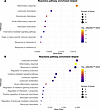
Increased consumption of ultra-processed foods (UPFs) is a risk factor for metabolic disorder–associated heart failure (HF). Here, we demonstrate that UPF-induced calpain-1 aggravated oxidative stress, thereby increasing high mobility group box 1–mediated (HMGB1-mediated) myocardial inflammation, which contributes to cardiac dysfunction. After illustrating the dysregulated inflammatory pathways in human and murine hearts upon metabolic stress, we revealed an increase in calpain-1 alongside profound oxidative stress and inflammation in the failing myocardium. Mechanistically, in neonatal rat cardiomyocytes and human induced pluripotent stem cell–derived cardiomyocytes, HMGB1 was upregulated by calpain-1 and reactive oxygen species (ROS) upon stress of saturated and trans fatty acids. Consequently, HMGB1 promoted a proinflammatory response in macrophages. In contrast, inhibition of calpain or ROS efficiently repressed HMGB1 in cardiomyocytes. Therapeutically, either recombinant adeno-associated virus 9–delivered inhibitor of calpain-1 or its pharmacological inhibitor attenuated ROS and HMGB1-induced inflammation in the myocardium and mitigated HF in both male and female mice fed with an ultra-processed diet. Collectively, we have demonstrated the effects of suppressing calpain-1 and oxidative stress on alleviating myocardial inflammation via blockage of HMGB1 and cardiac dysfunction. The results provide a promising therapeutic strategy for preventing or treating HF in metabolic disorders.
Authors
Claire Ross, Sanskruti Ravindra Gare, Nasser H.O. Alatawi, Oveena Fonseka, Xinyi Chen, Jiayan Zhang, Yihua Han, Andrea Ruiz-Velasco, Riham R.E. Abouleisa, Yingjuan Liu, Xiangjun Zhao, Han Xiao, Bernard D. Keavney, Gareth J. Howell, Tao Wang, Tamer M.A. Mohamed, Elizabeth J. Cartwright, Wei Liu
Guidelines
The Editorial Board will only consider comments that are deemed relevant and of interest to readers. The Journal will not post data that have not been subjected to peer review; or a comment that is essentially a reiteration of another comment.
- Comments appear on the Journal’s website and are linked from the original article’s web page.
- Authors are notified by email if their comments are posted.
- The Journal reserves the right to edit comments for length and clarity.
- No appeals will be considered.
- Comments are not indexed in PubMed.
Specific requirements
- Maximum length, 400 words
- Entered as plain text or HTML
- Author’s name and email address, to be posted with the comment
- Declaration of all potential conflicts of interest (even if these are not ultimately posted); see the Journal’s conflict-of-interest policy
- Comments may not include figures


