
Research ArticleNephrology
Open Access |  10.1172/jci.insight.205034
Lactate controls glomerular endothelial barrier integrity in lupus nephritis
Jiaxin Lei,1,2 Xingyu Zhai,1,2 Yixin Wang,1,2 Ying Li,1,2 Lei Li,3 Mengdi Liu,1,2 Jing Guo,1,2 Lingyi Li,1,2 Zhezhuyun Chen,4 Qinghua Cao,5 Zhichun Liu,3 Ting Liu,6 Lin Xu,7 and Zhenke Wen1,2,7
1Department of Pulmonary and Critical Care Medicine at the First Affiliated Hospital of Soochow University, Institutes of Biology and Medical Sciences, School of Basic Medical Sciences, Suzhou Medical College of Soochow University, Suzhou, China.
2Jiangsu Key Laboratory of Infection and Immunity, MOE Key Laboratory of Geriatric Diseases and Immunology, Biomedical Basic Research Center of Jiangsu Province, Soochow University, Suzhou, China,
3Department of Rheumatology, The Second Affiliated Hospital of Soochow University, Soochow University, Suzhou, China.
4School of Biomedical Sciences, University of Leeds, Leeds, United Kingdom.
5Renal Medicine, Kolling Institute of Medical Research, Royal North Shore Hospital, St Leonards, Sydney Medical School, University of Sydney, St Leonards, New South Wales, Australia.
6Department of Rheumatology, The Affiliated Wuxi People’s Hospital of Nanjing Medical University, Wuxi People’s Hospital, Wuxi Medical Center, Nanjing Medical University, Wuxi, China.
7Key Laboratory of Cancer Prevention and Treatment of Guizhou Province, Department of Immunology, Zunyi Medical University, Zunyi, China.
Address correspondence to: Zhenke Wen, Jiangsu Key Laboratory of Infection and Immunity, The First Affiliated Hospital of Soochow University, Institutes of Biology and Medical Sciences, Suzhou Medical College of Soochow University, Suzhou, Jiangsu 215123, China. Email: zkwen@suda.edu.cn. Or to: Lin Xu, Special Key Laboratory of Gene Detection & Therapy of Guizhou Province, Collaborative Innovation Center of Tissue Damage Repair and Regeneration Medicine, Department of Immunology, Zunyi Medical University, Zunyi, Guizhou 563000, China. Email: xulinzhouya@163.com. Or to: Ting Liu, Department of Rheumatology, The Affiliated Wuxi People’s Hospital of Nanjing Medical University, Wuxi People’s Hospital, Wuxi Medical Center, Nanjing Medical University, Wuxi, Jiangsu 214000, China. Email: ltwx@njmu.edu.cn. Or to: Zhichun Liu, Department of Rheumatology, The Second Affiliated Hospital of Soochow University, Soochow University, Suzhou, Jiangsu 215004, China. Email: zcliurheu@suda.edu.cn.
Authorship note: JL, XZ, YW, YL, and Lei Li contributed equally to this work.
Find articles by Lei, J. in: PubMed | Google Scholar
1Department of Pulmonary and Critical Care Medicine at the First Affiliated Hospital of Soochow University, Institutes of Biology and Medical Sciences, School of Basic Medical Sciences, Suzhou Medical College of Soochow University, Suzhou, China.
2Jiangsu Key Laboratory of Infection and Immunity, MOE Key Laboratory of Geriatric Diseases and Immunology, Biomedical Basic Research Center of Jiangsu Province, Soochow University, Suzhou, China,
3Department of Rheumatology, The Second Affiliated Hospital of Soochow University, Soochow University, Suzhou, China.
4School of Biomedical Sciences, University of Leeds, Leeds, United Kingdom.
5Renal Medicine, Kolling Institute of Medical Research, Royal North Shore Hospital, St Leonards, Sydney Medical School, University of Sydney, St Leonards, New South Wales, Australia.
6Department of Rheumatology, The Affiliated Wuxi People’s Hospital of Nanjing Medical University, Wuxi People’s Hospital, Wuxi Medical Center, Nanjing Medical University, Wuxi, China.
7Key Laboratory of Cancer Prevention and Treatment of Guizhou Province, Department of Immunology, Zunyi Medical University, Zunyi, China.
Address correspondence to: Zhenke Wen, Jiangsu Key Laboratory of Infection and Immunity, The First Affiliated Hospital of Soochow University, Institutes of Biology and Medical Sciences, Suzhou Medical College of Soochow University, Suzhou, Jiangsu 215123, China. Email: zkwen@suda.edu.cn. Or to: Lin Xu, Special Key Laboratory of Gene Detection & Therapy of Guizhou Province, Collaborative Innovation Center of Tissue Damage Repair and Regeneration Medicine, Department of Immunology, Zunyi Medical University, Zunyi, Guizhou 563000, China. Email: xulinzhouya@163.com. Or to: Ting Liu, Department of Rheumatology, The Affiliated Wuxi People’s Hospital of Nanjing Medical University, Wuxi People’s Hospital, Wuxi Medical Center, Nanjing Medical University, Wuxi, Jiangsu 214000, China. Email: ltwx@njmu.edu.cn. Or to: Zhichun Liu, Department of Rheumatology, The Second Affiliated Hospital of Soochow University, Soochow University, Suzhou, Jiangsu 215004, China. Email: zcliurheu@suda.edu.cn.
Authorship note: JL, XZ, YW, YL, and Lei Li contributed equally to this work.
Find articles by Zhai, X. in: PubMed | Google Scholar
1Department of Pulmonary and Critical Care Medicine at the First Affiliated Hospital of Soochow University, Institutes of Biology and Medical Sciences, School of Basic Medical Sciences, Suzhou Medical College of Soochow University, Suzhou, China.
2Jiangsu Key Laboratory of Infection and Immunity, MOE Key Laboratory of Geriatric Diseases and Immunology, Biomedical Basic Research Center of Jiangsu Province, Soochow University, Suzhou, China,
3Department of Rheumatology, The Second Affiliated Hospital of Soochow University, Soochow University, Suzhou, China.
4School of Biomedical Sciences, University of Leeds, Leeds, United Kingdom.
5Renal Medicine, Kolling Institute of Medical Research, Royal North Shore Hospital, St Leonards, Sydney Medical School, University of Sydney, St Leonards, New South Wales, Australia.
6Department of Rheumatology, The Affiliated Wuxi People’s Hospital of Nanjing Medical University, Wuxi People’s Hospital, Wuxi Medical Center, Nanjing Medical University, Wuxi, China.
7Key Laboratory of Cancer Prevention and Treatment of Guizhou Province, Department of Immunology, Zunyi Medical University, Zunyi, China.
Address correspondence to: Zhenke Wen, Jiangsu Key Laboratory of Infection and Immunity, The First Affiliated Hospital of Soochow University, Institutes of Biology and Medical Sciences, Suzhou Medical College of Soochow University, Suzhou, Jiangsu 215123, China. Email: zkwen@suda.edu.cn. Or to: Lin Xu, Special Key Laboratory of Gene Detection & Therapy of Guizhou Province, Collaborative Innovation Center of Tissue Damage Repair and Regeneration Medicine, Department of Immunology, Zunyi Medical University, Zunyi, Guizhou 563000, China. Email: xulinzhouya@163.com. Or to: Ting Liu, Department of Rheumatology, The Affiliated Wuxi People’s Hospital of Nanjing Medical University, Wuxi People’s Hospital, Wuxi Medical Center, Nanjing Medical University, Wuxi, Jiangsu 214000, China. Email: ltwx@njmu.edu.cn. Or to: Zhichun Liu, Department of Rheumatology, The Second Affiliated Hospital of Soochow University, Soochow University, Suzhou, Jiangsu 215004, China. Email: zcliurheu@suda.edu.cn.
Authorship note: JL, XZ, YW, YL, and Lei Li contributed equally to this work.
Find articles by Wang, Y. in: PubMed | Google Scholar
1Department of Pulmonary and Critical Care Medicine at the First Affiliated Hospital of Soochow University, Institutes of Biology and Medical Sciences, School of Basic Medical Sciences, Suzhou Medical College of Soochow University, Suzhou, China.
2Jiangsu Key Laboratory of Infection and Immunity, MOE Key Laboratory of Geriatric Diseases and Immunology, Biomedical Basic Research Center of Jiangsu Province, Soochow University, Suzhou, China,
3Department of Rheumatology, The Second Affiliated Hospital of Soochow University, Soochow University, Suzhou, China.
4School of Biomedical Sciences, University of Leeds, Leeds, United Kingdom.
5Renal Medicine, Kolling Institute of Medical Research, Royal North Shore Hospital, St Leonards, Sydney Medical School, University of Sydney, St Leonards, New South Wales, Australia.
6Department of Rheumatology, The Affiliated Wuxi People’s Hospital of Nanjing Medical University, Wuxi People’s Hospital, Wuxi Medical Center, Nanjing Medical University, Wuxi, China.
7Key Laboratory of Cancer Prevention and Treatment of Guizhou Province, Department of Immunology, Zunyi Medical University, Zunyi, China.
Address correspondence to: Zhenke Wen, Jiangsu Key Laboratory of Infection and Immunity, The First Affiliated Hospital of Soochow University, Institutes of Biology and Medical Sciences, Suzhou Medical College of Soochow University, Suzhou, Jiangsu 215123, China. Email: zkwen@suda.edu.cn. Or to: Lin Xu, Special Key Laboratory of Gene Detection & Therapy of Guizhou Province, Collaborative Innovation Center of Tissue Damage Repair and Regeneration Medicine, Department of Immunology, Zunyi Medical University, Zunyi, Guizhou 563000, China. Email: xulinzhouya@163.com. Or to: Ting Liu, Department of Rheumatology, The Affiliated Wuxi People’s Hospital of Nanjing Medical University, Wuxi People’s Hospital, Wuxi Medical Center, Nanjing Medical University, Wuxi, Jiangsu 214000, China. Email: ltwx@njmu.edu.cn. Or to: Zhichun Liu, Department of Rheumatology, The Second Affiliated Hospital of Soochow University, Soochow University, Suzhou, Jiangsu 215004, China. Email: zcliurheu@suda.edu.cn.
Authorship note: JL, XZ, YW, YL, and Lei Li contributed equally to this work.
Find articles by Li, Y. in: PubMed | Google Scholar
1Department of Pulmonary and Critical Care Medicine at the First Affiliated Hospital of Soochow University, Institutes of Biology and Medical Sciences, School of Basic Medical Sciences, Suzhou Medical College of Soochow University, Suzhou, China.
2Jiangsu Key Laboratory of Infection and Immunity, MOE Key Laboratory of Geriatric Diseases and Immunology, Biomedical Basic Research Center of Jiangsu Province, Soochow University, Suzhou, China,
3Department of Rheumatology, The Second Affiliated Hospital of Soochow University, Soochow University, Suzhou, China.
4School of Biomedical Sciences, University of Leeds, Leeds, United Kingdom.
5Renal Medicine, Kolling Institute of Medical Research, Royal North Shore Hospital, St Leonards, Sydney Medical School, University of Sydney, St Leonards, New South Wales, Australia.
6Department of Rheumatology, The Affiliated Wuxi People’s Hospital of Nanjing Medical University, Wuxi People’s Hospital, Wuxi Medical Center, Nanjing Medical University, Wuxi, China.
7Key Laboratory of Cancer Prevention and Treatment of Guizhou Province, Department of Immunology, Zunyi Medical University, Zunyi, China.
Address correspondence to: Zhenke Wen, Jiangsu Key Laboratory of Infection and Immunity, The First Affiliated Hospital of Soochow University, Institutes of Biology and Medical Sciences, Suzhou Medical College of Soochow University, Suzhou, Jiangsu 215123, China. Email: zkwen@suda.edu.cn. Or to: Lin Xu, Special Key Laboratory of Gene Detection & Therapy of Guizhou Province, Collaborative Innovation Center of Tissue Damage Repair and Regeneration Medicine, Department of Immunology, Zunyi Medical University, Zunyi, Guizhou 563000, China. Email: xulinzhouya@163.com. Or to: Ting Liu, Department of Rheumatology, The Affiliated Wuxi People’s Hospital of Nanjing Medical University, Wuxi People’s Hospital, Wuxi Medical Center, Nanjing Medical University, Wuxi, Jiangsu 214000, China. Email: ltwx@njmu.edu.cn. Or to: Zhichun Liu, Department of Rheumatology, The Second Affiliated Hospital of Soochow University, Soochow University, Suzhou, Jiangsu 215004, China. Email: zcliurheu@suda.edu.cn.
Authorship note: JL, XZ, YW, YL, and Lei Li contributed equally to this work.
Find articles by Li, L. in: PubMed | Google Scholar
1Department of Pulmonary and Critical Care Medicine at the First Affiliated Hospital of Soochow University, Institutes of Biology and Medical Sciences, School of Basic Medical Sciences, Suzhou Medical College of Soochow University, Suzhou, China.
2Jiangsu Key Laboratory of Infection and Immunity, MOE Key Laboratory of Geriatric Diseases and Immunology, Biomedical Basic Research Center of Jiangsu Province, Soochow University, Suzhou, China,
3Department of Rheumatology, The Second Affiliated Hospital of Soochow University, Soochow University, Suzhou, China.
4School of Biomedical Sciences, University of Leeds, Leeds, United Kingdom.
5Renal Medicine, Kolling Institute of Medical Research, Royal North Shore Hospital, St Leonards, Sydney Medical School, University of Sydney, St Leonards, New South Wales, Australia.
6Department of Rheumatology, The Affiliated Wuxi People’s Hospital of Nanjing Medical University, Wuxi People’s Hospital, Wuxi Medical Center, Nanjing Medical University, Wuxi, China.
7Key Laboratory of Cancer Prevention and Treatment of Guizhou Province, Department of Immunology, Zunyi Medical University, Zunyi, China.
Address correspondence to: Zhenke Wen, Jiangsu Key Laboratory of Infection and Immunity, The First Affiliated Hospital of Soochow University, Institutes of Biology and Medical Sciences, Suzhou Medical College of Soochow University, Suzhou, Jiangsu 215123, China. Email: zkwen@suda.edu.cn. Or to: Lin Xu, Special Key Laboratory of Gene Detection & Therapy of Guizhou Province, Collaborative Innovation Center of Tissue Damage Repair and Regeneration Medicine, Department of Immunology, Zunyi Medical University, Zunyi, Guizhou 563000, China. Email: xulinzhouya@163.com. Or to: Ting Liu, Department of Rheumatology, The Affiliated Wuxi People’s Hospital of Nanjing Medical University, Wuxi People’s Hospital, Wuxi Medical Center, Nanjing Medical University, Wuxi, Jiangsu 214000, China. Email: ltwx@njmu.edu.cn. Or to: Zhichun Liu, Department of Rheumatology, The Second Affiliated Hospital of Soochow University, Soochow University, Suzhou, Jiangsu 215004, China. Email: zcliurheu@suda.edu.cn.
Authorship note: JL, XZ, YW, YL, and Lei Li contributed equally to this work.
Find articles by Liu, M. in: PubMed | Google Scholar
1Department of Pulmonary and Critical Care Medicine at the First Affiliated Hospital of Soochow University, Institutes of Biology and Medical Sciences, School of Basic Medical Sciences, Suzhou Medical College of Soochow University, Suzhou, China.
2Jiangsu Key Laboratory of Infection and Immunity, MOE Key Laboratory of Geriatric Diseases and Immunology, Biomedical Basic Research Center of Jiangsu Province, Soochow University, Suzhou, China,
3Department of Rheumatology, The Second Affiliated Hospital of Soochow University, Soochow University, Suzhou, China.
4School of Biomedical Sciences, University of Leeds, Leeds, United Kingdom.
5Renal Medicine, Kolling Institute of Medical Research, Royal North Shore Hospital, St Leonards, Sydney Medical School, University of Sydney, St Leonards, New South Wales, Australia.
6Department of Rheumatology, The Affiliated Wuxi People’s Hospital of Nanjing Medical University, Wuxi People’s Hospital, Wuxi Medical Center, Nanjing Medical University, Wuxi, China.
7Key Laboratory of Cancer Prevention and Treatment of Guizhou Province, Department of Immunology, Zunyi Medical University, Zunyi, China.
Address correspondence to: Zhenke Wen, Jiangsu Key Laboratory of Infection and Immunity, The First Affiliated Hospital of Soochow University, Institutes of Biology and Medical Sciences, Suzhou Medical College of Soochow University, Suzhou, Jiangsu 215123, China. Email: zkwen@suda.edu.cn. Or to: Lin Xu, Special Key Laboratory of Gene Detection & Therapy of Guizhou Province, Collaborative Innovation Center of Tissue Damage Repair and Regeneration Medicine, Department of Immunology, Zunyi Medical University, Zunyi, Guizhou 563000, China. Email: xulinzhouya@163.com. Or to: Ting Liu, Department of Rheumatology, The Affiliated Wuxi People’s Hospital of Nanjing Medical University, Wuxi People’s Hospital, Wuxi Medical Center, Nanjing Medical University, Wuxi, Jiangsu 214000, China. Email: ltwx@njmu.edu.cn. Or to: Zhichun Liu, Department of Rheumatology, The Second Affiliated Hospital of Soochow University, Soochow University, Suzhou, Jiangsu 215004, China. Email: zcliurheu@suda.edu.cn.
Authorship note: JL, XZ, YW, YL, and Lei Li contributed equally to this work.
Find articles by Guo, J. in: PubMed | Google Scholar
1Department of Pulmonary and Critical Care Medicine at the First Affiliated Hospital of Soochow University, Institutes of Biology and Medical Sciences, School of Basic Medical Sciences, Suzhou Medical College of Soochow University, Suzhou, China.
2Jiangsu Key Laboratory of Infection and Immunity, MOE Key Laboratory of Geriatric Diseases and Immunology, Biomedical Basic Research Center of Jiangsu Province, Soochow University, Suzhou, China,
3Department of Rheumatology, The Second Affiliated Hospital of Soochow University, Soochow University, Suzhou, China.
4School of Biomedical Sciences, University of Leeds, Leeds, United Kingdom.
5Renal Medicine, Kolling Institute of Medical Research, Royal North Shore Hospital, St Leonards, Sydney Medical School, University of Sydney, St Leonards, New South Wales, Australia.
6Department of Rheumatology, The Affiliated Wuxi People’s Hospital of Nanjing Medical University, Wuxi People’s Hospital, Wuxi Medical Center, Nanjing Medical University, Wuxi, China.
7Key Laboratory of Cancer Prevention and Treatment of Guizhou Province, Department of Immunology, Zunyi Medical University, Zunyi, China.
Address correspondence to: Zhenke Wen, Jiangsu Key Laboratory of Infection and Immunity, The First Affiliated Hospital of Soochow University, Institutes of Biology and Medical Sciences, Suzhou Medical College of Soochow University, Suzhou, Jiangsu 215123, China. Email: zkwen@suda.edu.cn. Or to: Lin Xu, Special Key Laboratory of Gene Detection & Therapy of Guizhou Province, Collaborative Innovation Center of Tissue Damage Repair and Regeneration Medicine, Department of Immunology, Zunyi Medical University, Zunyi, Guizhou 563000, China. Email: xulinzhouya@163.com. Or to: Ting Liu, Department of Rheumatology, The Affiliated Wuxi People’s Hospital of Nanjing Medical University, Wuxi People’s Hospital, Wuxi Medical Center, Nanjing Medical University, Wuxi, Jiangsu 214000, China. Email: ltwx@njmu.edu.cn. Or to: Zhichun Liu, Department of Rheumatology, The Second Affiliated Hospital of Soochow University, Soochow University, Suzhou, Jiangsu 215004, China. Email: zcliurheu@suda.edu.cn.
Authorship note: JL, XZ, YW, YL, and Lei Li contributed equally to this work.
Find articles by Li, L. in: PubMed | Google Scholar
1Department of Pulmonary and Critical Care Medicine at the First Affiliated Hospital of Soochow University, Institutes of Biology and Medical Sciences, School of Basic Medical Sciences, Suzhou Medical College of Soochow University, Suzhou, China.
2Jiangsu Key Laboratory of Infection and Immunity, MOE Key Laboratory of Geriatric Diseases and Immunology, Biomedical Basic Research Center of Jiangsu Province, Soochow University, Suzhou, China,
3Department of Rheumatology, The Second Affiliated Hospital of Soochow University, Soochow University, Suzhou, China.
4School of Biomedical Sciences, University of Leeds, Leeds, United Kingdom.
5Renal Medicine, Kolling Institute of Medical Research, Royal North Shore Hospital, St Leonards, Sydney Medical School, University of Sydney, St Leonards, New South Wales, Australia.
6Department of Rheumatology, The Affiliated Wuxi People’s Hospital of Nanjing Medical University, Wuxi People’s Hospital, Wuxi Medical Center, Nanjing Medical University, Wuxi, China.
7Key Laboratory of Cancer Prevention and Treatment of Guizhou Province, Department of Immunology, Zunyi Medical University, Zunyi, China.
Address correspondence to: Zhenke Wen, Jiangsu Key Laboratory of Infection and Immunity, The First Affiliated Hospital of Soochow University, Institutes of Biology and Medical Sciences, Suzhou Medical College of Soochow University, Suzhou, Jiangsu 215123, China. Email: zkwen@suda.edu.cn. Or to: Lin Xu, Special Key Laboratory of Gene Detection & Therapy of Guizhou Province, Collaborative Innovation Center of Tissue Damage Repair and Regeneration Medicine, Department of Immunology, Zunyi Medical University, Zunyi, Guizhou 563000, China. Email: xulinzhouya@163.com. Or to: Ting Liu, Department of Rheumatology, The Affiliated Wuxi People’s Hospital of Nanjing Medical University, Wuxi People’s Hospital, Wuxi Medical Center, Nanjing Medical University, Wuxi, Jiangsu 214000, China. Email: ltwx@njmu.edu.cn. Or to: Zhichun Liu, Department of Rheumatology, The Second Affiliated Hospital of Soochow University, Soochow University, Suzhou, Jiangsu 215004, China. Email: zcliurheu@suda.edu.cn.
Authorship note: JL, XZ, YW, YL, and Lei Li contributed equally to this work.
Find articles by Chen, Z. in: PubMed | Google Scholar
1Department of Pulmonary and Critical Care Medicine at the First Affiliated Hospital of Soochow University, Institutes of Biology and Medical Sciences, School of Basic Medical Sciences, Suzhou Medical College of Soochow University, Suzhou, China.
2Jiangsu Key Laboratory of Infection and Immunity, MOE Key Laboratory of Geriatric Diseases and Immunology, Biomedical Basic Research Center of Jiangsu Province, Soochow University, Suzhou, China,
3Department of Rheumatology, The Second Affiliated Hospital of Soochow University, Soochow University, Suzhou, China.
4School of Biomedical Sciences, University of Leeds, Leeds, United Kingdom.
5Renal Medicine, Kolling Institute of Medical Research, Royal North Shore Hospital, St Leonards, Sydney Medical School, University of Sydney, St Leonards, New South Wales, Australia.
6Department of Rheumatology, The Affiliated Wuxi People’s Hospital of Nanjing Medical University, Wuxi People’s Hospital, Wuxi Medical Center, Nanjing Medical University, Wuxi, China.
7Key Laboratory of Cancer Prevention and Treatment of Guizhou Province, Department of Immunology, Zunyi Medical University, Zunyi, China.
Address correspondence to: Zhenke Wen, Jiangsu Key Laboratory of Infection and Immunity, The First Affiliated Hospital of Soochow University, Institutes of Biology and Medical Sciences, Suzhou Medical College of Soochow University, Suzhou, Jiangsu 215123, China. Email: zkwen@suda.edu.cn. Or to: Lin Xu, Special Key Laboratory of Gene Detection & Therapy of Guizhou Province, Collaborative Innovation Center of Tissue Damage Repair and Regeneration Medicine, Department of Immunology, Zunyi Medical University, Zunyi, Guizhou 563000, China. Email: xulinzhouya@163.com. Or to: Ting Liu, Department of Rheumatology, The Affiliated Wuxi People’s Hospital of Nanjing Medical University, Wuxi People’s Hospital, Wuxi Medical Center, Nanjing Medical University, Wuxi, Jiangsu 214000, China. Email: ltwx@njmu.edu.cn. Or to: Zhichun Liu, Department of Rheumatology, The Second Affiliated Hospital of Soochow University, Soochow University, Suzhou, Jiangsu 215004, China. Email: zcliurheu@suda.edu.cn.
Authorship note: JL, XZ, YW, YL, and Lei Li contributed equally to this work.
Find articles by Cao, Q. in: PubMed | Google Scholar
1Department of Pulmonary and Critical Care Medicine at the First Affiliated Hospital of Soochow University, Institutes of Biology and Medical Sciences, School of Basic Medical Sciences, Suzhou Medical College of Soochow University, Suzhou, China.
2Jiangsu Key Laboratory of Infection and Immunity, MOE Key Laboratory of Geriatric Diseases and Immunology, Biomedical Basic Research Center of Jiangsu Province, Soochow University, Suzhou, China,
3Department of Rheumatology, The Second Affiliated Hospital of Soochow University, Soochow University, Suzhou, China.
4School of Biomedical Sciences, University of Leeds, Leeds, United Kingdom.
5Renal Medicine, Kolling Institute of Medical Research, Royal North Shore Hospital, St Leonards, Sydney Medical School, University of Sydney, St Leonards, New South Wales, Australia.
6Department of Rheumatology, The Affiliated Wuxi People’s Hospital of Nanjing Medical University, Wuxi People’s Hospital, Wuxi Medical Center, Nanjing Medical University, Wuxi, China.
7Key Laboratory of Cancer Prevention and Treatment of Guizhou Province, Department of Immunology, Zunyi Medical University, Zunyi, China.
Address correspondence to: Zhenke Wen, Jiangsu Key Laboratory of Infection and Immunity, The First Affiliated Hospital of Soochow University, Institutes of Biology and Medical Sciences, Suzhou Medical College of Soochow University, Suzhou, Jiangsu 215123, China. Email: zkwen@suda.edu.cn. Or to: Lin Xu, Special Key Laboratory of Gene Detection & Therapy of Guizhou Province, Collaborative Innovation Center of Tissue Damage Repair and Regeneration Medicine, Department of Immunology, Zunyi Medical University, Zunyi, Guizhou 563000, China. Email: xulinzhouya@163.com. Or to: Ting Liu, Department of Rheumatology, The Affiliated Wuxi People’s Hospital of Nanjing Medical University, Wuxi People’s Hospital, Wuxi Medical Center, Nanjing Medical University, Wuxi, Jiangsu 214000, China. Email: ltwx@njmu.edu.cn. Or to: Zhichun Liu, Department of Rheumatology, The Second Affiliated Hospital of Soochow University, Soochow University, Suzhou, Jiangsu 215004, China. Email: zcliurheu@suda.edu.cn.
Authorship note: JL, XZ, YW, YL, and Lei Li contributed equally to this work.
Find articles by Liu, Z. in: PubMed | Google Scholar
1Department of Pulmonary and Critical Care Medicine at the First Affiliated Hospital of Soochow University, Institutes of Biology and Medical Sciences, School of Basic Medical Sciences, Suzhou Medical College of Soochow University, Suzhou, China.
2Jiangsu Key Laboratory of Infection and Immunity, MOE Key Laboratory of Geriatric Diseases and Immunology, Biomedical Basic Research Center of Jiangsu Province, Soochow University, Suzhou, China,
3Department of Rheumatology, The Second Affiliated Hospital of Soochow University, Soochow University, Suzhou, China.
4School of Biomedical Sciences, University of Leeds, Leeds, United Kingdom.
5Renal Medicine, Kolling Institute of Medical Research, Royal North Shore Hospital, St Leonards, Sydney Medical School, University of Sydney, St Leonards, New South Wales, Australia.
6Department of Rheumatology, The Affiliated Wuxi People’s Hospital of Nanjing Medical University, Wuxi People’s Hospital, Wuxi Medical Center, Nanjing Medical University, Wuxi, China.
7Key Laboratory of Cancer Prevention and Treatment of Guizhou Province, Department of Immunology, Zunyi Medical University, Zunyi, China.
Address correspondence to: Zhenke Wen, Jiangsu Key Laboratory of Infection and Immunity, The First Affiliated Hospital of Soochow University, Institutes of Biology and Medical Sciences, Suzhou Medical College of Soochow University, Suzhou, Jiangsu 215123, China. Email: zkwen@suda.edu.cn. Or to: Lin Xu, Special Key Laboratory of Gene Detection & Therapy of Guizhou Province, Collaborative Innovation Center of Tissue Damage Repair and Regeneration Medicine, Department of Immunology, Zunyi Medical University, Zunyi, Guizhou 563000, China. Email: xulinzhouya@163.com. Or to: Ting Liu, Department of Rheumatology, The Affiliated Wuxi People’s Hospital of Nanjing Medical University, Wuxi People’s Hospital, Wuxi Medical Center, Nanjing Medical University, Wuxi, Jiangsu 214000, China. Email: ltwx@njmu.edu.cn. Or to: Zhichun Liu, Department of Rheumatology, The Second Affiliated Hospital of Soochow University, Soochow University, Suzhou, Jiangsu 215004, China. Email: zcliurheu@suda.edu.cn.
Authorship note: JL, XZ, YW, YL, and Lei Li contributed equally to this work.
Find articles by Liu, T. in: PubMed | Google Scholar
1Department of Pulmonary and Critical Care Medicine at the First Affiliated Hospital of Soochow University, Institutes of Biology and Medical Sciences, School of Basic Medical Sciences, Suzhou Medical College of Soochow University, Suzhou, China.
2Jiangsu Key Laboratory of Infection and Immunity, MOE Key Laboratory of Geriatric Diseases and Immunology, Biomedical Basic Research Center of Jiangsu Province, Soochow University, Suzhou, China,
3Department of Rheumatology, The Second Affiliated Hospital of Soochow University, Soochow University, Suzhou, China.
4School of Biomedical Sciences, University of Leeds, Leeds, United Kingdom.
5Renal Medicine, Kolling Institute of Medical Research, Royal North Shore Hospital, St Leonards, Sydney Medical School, University of Sydney, St Leonards, New South Wales, Australia.
6Department of Rheumatology, The Affiliated Wuxi People’s Hospital of Nanjing Medical University, Wuxi People’s Hospital, Wuxi Medical Center, Nanjing Medical University, Wuxi, China.
7Key Laboratory of Cancer Prevention and Treatment of Guizhou Province, Department of Immunology, Zunyi Medical University, Zunyi, China.
Address correspondence to: Zhenke Wen, Jiangsu Key Laboratory of Infection and Immunity, The First Affiliated Hospital of Soochow University, Institutes of Biology and Medical Sciences, Suzhou Medical College of Soochow University, Suzhou, Jiangsu 215123, China. Email: zkwen@suda.edu.cn. Or to: Lin Xu, Special Key Laboratory of Gene Detection & Therapy of Guizhou Province, Collaborative Innovation Center of Tissue Damage Repair and Regeneration Medicine, Department of Immunology, Zunyi Medical University, Zunyi, Guizhou 563000, China. Email: xulinzhouya@163.com. Or to: Ting Liu, Department of Rheumatology, The Affiliated Wuxi People’s Hospital of Nanjing Medical University, Wuxi People’s Hospital, Wuxi Medical Center, Nanjing Medical University, Wuxi, Jiangsu 214000, China. Email: ltwx@njmu.edu.cn. Or to: Zhichun Liu, Department of Rheumatology, The Second Affiliated Hospital of Soochow University, Soochow University, Suzhou, Jiangsu 215004, China. Email: zcliurheu@suda.edu.cn.
Authorship note: JL, XZ, YW, YL, and Lei Li contributed equally to this work.
Find articles by Xu, L. in: PubMed | Google Scholar
1Department of Pulmonary and Critical Care Medicine at the First Affiliated Hospital of Soochow University, Institutes of Biology and Medical Sciences, School of Basic Medical Sciences, Suzhou Medical College of Soochow University, Suzhou, China.
2Jiangsu Key Laboratory of Infection and Immunity, MOE Key Laboratory of Geriatric Diseases and Immunology, Biomedical Basic Research Center of Jiangsu Province, Soochow University, Suzhou, China,
3Department of Rheumatology, The Second Affiliated Hospital of Soochow University, Soochow University, Suzhou, China.
4School of Biomedical Sciences, University of Leeds, Leeds, United Kingdom.
5Renal Medicine, Kolling Institute of Medical Research, Royal North Shore Hospital, St Leonards, Sydney Medical School, University of Sydney, St Leonards, New South Wales, Australia.
6Department of Rheumatology, The Affiliated Wuxi People’s Hospital of Nanjing Medical University, Wuxi People’s Hospital, Wuxi Medical Center, Nanjing Medical University, Wuxi, China.
7Key Laboratory of Cancer Prevention and Treatment of Guizhou Province, Department of Immunology, Zunyi Medical University, Zunyi, China.
Address correspondence to: Zhenke Wen, Jiangsu Key Laboratory of Infection and Immunity, The First Affiliated Hospital of Soochow University, Institutes of Biology and Medical Sciences, Suzhou Medical College of Soochow University, Suzhou, Jiangsu 215123, China. Email: zkwen@suda.edu.cn. Or to: Lin Xu, Special Key Laboratory of Gene Detection & Therapy of Guizhou Province, Collaborative Innovation Center of Tissue Damage Repair and Regeneration Medicine, Department of Immunology, Zunyi Medical University, Zunyi, Guizhou 563000, China. Email: xulinzhouya@163.com. Or to: Ting Liu, Department of Rheumatology, The Affiliated Wuxi People’s Hospital of Nanjing Medical University, Wuxi People’s Hospital, Wuxi Medical Center, Nanjing Medical University, Wuxi, Jiangsu 214000, China. Email: ltwx@njmu.edu.cn. Or to: Zhichun Liu, Department of Rheumatology, The Second Affiliated Hospital of Soochow University, Soochow University, Suzhou, Jiangsu 215004, China. Email: zcliurheu@suda.edu.cn.
Authorship note: JL, XZ, YW, YL, and Lei Li contributed equally to this work.
Find articles by
Wen, Z.
in:
PubMed
|
Google Scholar
|

Published August 18, 2026 - More info
JCI Insight. 2026;11(18):e205034. https://doi.org/10.1172/jci.insight.205034.
© 2026 Lei et al. This work is licensed under the Creative Commons Attribution 4.0 International License. To view a copy of this license, visit http://creativecommons.org/licenses/by/4.0/.
Received: January 27, 2026; Accepted: July 30, 2026


-
Results
Plasma from patients with SLE disrupts TJ barriers and elevates permeability in HRGECs. To explore the possible correlations between the integrity of the glomerular paracellular permeability barrier and LN progression, we analyzed clinical data from the NCBI’s Gene Expression Omnibus (GEO). Notably, we observed a negative correlation between renal cell junction–related protein expression levels and SLE disease activity index (SLEDAI) scores, implying that altered paracellular permeability may play a critical role in LN pathogenesis (Figure 1A). Since plasma isolated from patients with SLE recapitulates pathological phenotypes in renal cells in vitro (2), we assessed the permeability of HRGECs — cells directly exposed to circulating plasma — via FITC-dextran Transwell permeability assays. Our results showed a marked increase in fluorescence in the lower chamber of wells treated with SLE patient–derived plasma compared with healthy controls (HCs) (Figure 1, B and C), indicating an enhanced paracellular leakage. Importantly, cell confluency and viability did not differ between the 2 plasma treatment groups (Supplemental Figure 1, A and B; supplemental material available online with this article; https://doi.org/10.1172/jci.insight.205034DS1), ruling out potential broad cytotoxicity or growth interference. Next, we separately examined the expression of genes related to TJs, adherens junctions, and fenestration and found that ECs treated with SLE plasma exhibited selective downregulation of TJ-related proteins including claudin5, occludin, and ZO-1, whereas VE-cadherin (a core adherens junctions component) and plasmalemma vesicle-associated protein (PLVAP, the key mediator of endothelial fenestration) remained unchanged (Figure 1, D–F, and Supplemental Figure 1, C–E). This phenomenon was validated in HUVECs, confirming the reliability of our conclusion that SLE patient–derived plasma impairs the TJ barrier (Supplemental Figure 1, F–H).
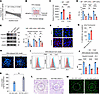 Figure 1
SLE plasma impairs the TJ barrier in HRGECs. (A) The correlation between the expression of TJ-related genes and SLEDAI scores in patients with SLE. (B) Schematic diagram for experimental design. (C) HRGECs were treated with plasma from HCs or patients with SLE for 24 hours. The fluorescence intensity of 4 kDa and 70 kDa FITC-dextran in the lower chamber was measured using a microplate reader. Mean ± SEM from 6 individuals in each group. (D–F) ECs were cultured with 10% or 20% plasma from HCs and patients with SLE. TJ-associated mRNA and protein levels were assessed by qPCR (D, 10%/20% plasma), Western blot (E, 10%/20% plasma), and immunofluorescence staining (F, 10% plasma). Data are mean ± SEM (n = 4 individuals per group for D–E). Scale bar: 10 μm (F). (G) Urinary 4 kDa FITC-dextran fluorescence intensity normalized to creatinine was measured via microplate reader in healthy and SLE model mice. Values are presented as mean ± SEM; 4 mice per group. (H) Localization of 70 kDa FITC-dextran in the glomeruli of healthy mice and SLE model mice was visualized by immunofluorescence microscopy. Scale bar: 50 μm. (I and J) Expression of TJ-associated proteins in glomerular ECs in vivo from healthy and SLE model mice. Data are presented as mean ± SEM; 4 mice per group. (K–M) Healthy mice were subjected to treatment with AAV2-GEC-shZO-1 or negative control shRNA. (K) Urinary protein levels. (L) Periodic acid–Schiff (PAS) staining of renal tissues. (M) Renal IgG deposition. Data are mean ± SEM (n = 4 mice per group for K). Scale bar: 20 μm. *P < 0.05, **P < 0.01, ***P < 0.001, and ****P < 0.0001 with unpaired 2-tailed t test (G and K), 2-way ANOVA plus Tukey’s method (C–E, and J), and Pearson’s correlation statistical analysis (A).
In order to investigate alterations in HRGEC permeability during LN pathogenesis in vivo, we established a murine LN model via self-DNA immunization as previously reported (13). These mice exhibited typical LN manifestations, including elevated serum anti-dsDNA antibodies, proteinuria, albuminuria, glomerular lesions, and renal IgG deposition (Supplemental Figure 2, A–E). Notably, we detected markedly increased urinary leakage of 4 kDa FITC-dextran and prominent glomerular accumulation of 70 kDa FITC-dextran, indicating impaired glomerular endothelial barrier function during disease progression (Figure 1, G and H). We further isolated renal glomeruli using the differential adhesion assay (18) and performed immunostaining for the endothelial marker CD31, as well as the TJ proteins ZO-1, occludin, and claudin5. Consistent with our in vitro findings, glomerular endothelial TJ architecture was severely disrupted as SLE progressed (Figure 1, I and J). These results provide direct in vivo evidence that TJ barrier dysfunction occurs in HRGECs during LN.
To further clarify the pathogenic role of TJ barrier disruption in LN progression, we generated AAV2 vectors modified with the glomerular endothelium–targeted peptide QVLVYRE (19). ZO-1 shRNA was packaged into these vectors to achieve specific ZO-1 knockdown in glomerular ECs in vivo. After glomerular isolation, we validated the knockdown efficiency of ZO-1 via flow cytometry using CD31 and ZO-1 costaining (Supplemental Figure 2F). Functional assays demonstrated that disruption of endothelial TJs induced by ZO-1 silencing alone was sufficient to recapitulate hallmark SLE pathologies, including severe proteinuria, renal IgG deposition, and extensive glomerular injury (Figure 1, K–M).
SLE patient–derived plasma reprograms HRGEC metabolism to glycolysis, thereby increasing endothelial permeability. To explore why plasma from patients with SLE increases permeability in HRGECs, we conducted RNA-seq analysis comparing HRGECs pretreated with patients’ plasma versus those exposed to HC samples. Our results showed that SLE plasma considerably upregulated the glycolytic metabolism pathway (Figure 2, A and B). Further analysis revealed that SLE plasma upregulated glycolysis-related genes while suppressing oxidative phosphorylation (OXPHOS) (Figure 2C and Supplemental Figure 3). We next assessed glycolytic capacity in HRGECs after SLE plasma pretreatment by measuring the extracellular acidification rate (ECAR). Cells exposed to SLE plasma exhibited notably enhanced glycolytic capacity compared with those treated with HC plasma (Figure 2, D and E). To quantify cellular glucose uptake and pinpoint altered glycolytic influx, we performed 2-(N-(7-nitrobenz-2-oxa-1,3-diazol-4-yl) amino)-2-deoxyglucose (2-NBDG) uptake assays; 2-NBDG is a fluorescent glucose analog that competes with native glucose for transmembrane transport and accumulates intracellularly upon uptake (20). Accordingly, elevated fluorescent intensity in SLE plasma–pretreated ECs (Figure 2F) indicates enhanced glucose import, reflecting upregulated glycolytic substrate influx. Pyruvate, a central glycolytic node, showed divergent metabolic fates: its conversion to lactate was augmented, while acetyl-CoA production was constrained in SLE plasma–treated ECs (Figure 2, G–I). This metabolic shift correlated with downregulated expression of pyruvate dehydrogenase complex components (Figure 2J).
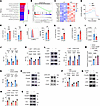 Figure 2
SLE plasma impairs the TJ barrier in HRGECs through glycolytic shift–driven lactate accumulation. (A and B) Gene Set Enrichment Analysis (GSEA) and Kyoto Encyclopedia of Genes and Genomes (KEGG) pathway analysis were performed on RNA-seq data derived from HRGECs treated with 10% plasma from HCs or patients with SLE. NES, normalized enrichment score. (C–E) ECs were treated with 10% plasma from HCs or patients with SLE for 24 hours. qPCR was performed to detect the mRNA expression of glycolysis-related genes (C), and Seahorse assay was used to measure ECAR (D and E). Data are mean ± SEM (3 individuals/group for E). (F) ECs were treated with 10% plasma derived from HCs or patients with SLE for 24 hours, and 2-NBDG levels were determined by flow cytometry. Mean ± SEM (6 individuals/group). (G–I) After 24 hours of treatment with SLE- or HC-derived plasma (10%), ECs were analyzed for pyruvate (G), lactate (H), and acetyl-CoA (I) using corresponding assay kits. Mean ± SEM (5–6 individuals/group). (J) After treatment with HC or SLE plasma (10%), gene expression of pyruvate dehydrogenase complex components in ECs was detected by qPCR. Mean ± SEM (5 individuals/group). (K and L) mRNA and protein levels of TJ-related proteins after SLE plasma treatment (10%) with or without 2-DG (1 mM) for 24 hours analyzed by qPCR (K) and Western blot (L). Mean ± SEM (5–6 individuals/group). (M) ECs were treated with 40 mM lactate or 10 mM lactic acid for 24 hours. Fluorescence intensity of 4 kDa FITC-dextran in the lower chamber was quantified via a microplate reader. Mean ± SEM (6 independent experiments/group). (N and O) After treatment with lactate (40 mM) or lactic acid (10 mM), mRNA and protein levels of TJ-related proteins in ECs were assessed by qPCR (N) and Western blot (O), respectively. Mean ± SEM (5 independent experiments/group). (P and Q) ECs were transfected with siRNA targeting LDHA and treated with 10% SLE plasma for 24 hours. mRNA and protein levels of TJ-related proteins were analyzed by qPCR (P) and Western blot (Q). Mean ± SEM (5 individuals/group). (R and S) ECs were treated with 10% SLE plasma with GSK2837808A (40 μM), and corresponding mRNA and protein levels were determined by qPCR (R) and Western blot (S), respectively. Mean ± SEM (5 individuals/group). *P < 0.05, **P < 0.01, ***P < 0.001, and ****P < 0.0001 with unpaired 2-tailed t test (E–I), 1-way (M) or 2-way ANOVA plus Tukey’s method (J–L, N, P, and R).
Pharmacological inhibition of glycolysis with 2-deoxy-d-glucose (2-DG) reversed the SLE plasma–induced downregulation of TJ genes (Figure 2, K and L). To explore the effect of lactic acid accumulation resulting from this metabolic shift, we observed that exogenous supplementation with either sodium lactate or lactic acid was sufficient to downregulate TJ gene expression (Figure 2, M–O). Importantly, both genetic lactate dehydrogenase A (LDHA) knockdown and pharmacological inhibition of LDHA (GSK2837808A) restored TJ levels (Figure 2, P–S). These results suggest that SLE plasma reprograms EC metabolism to mimic aerobic glycolysis, thereby inducing endothelial barrier dysfunction. Of note, although patients on corticosteroids were not excluded, our analysis confirmed that corticosteroid treatment did not affect plasma or HRGEC lactate levels (Supplemental Figure 4, A and B).
SLE plasma drives endothelial barrier dysfunction via glycolysis-mediated EZH2 degradation and H3K27me3 reduction. In line with the evidence that histone methylation is linked to heterochromatin formation and the repression of transcription across multiple genes (21), our mass spectrometry analysis demonstrated that plasma from patients with SLE substantially altered histone methylation patterns in ECs. Specifically, we observed higher levels of H3K4me2, H3K9me2, H3K36me, and H3K79me3, alongside lower levels of H3K27me3 and H4K20me2 (Supplemental Figure 5A), findings that were consistently confirmed by Western blot (Figure 3A). To elucidate the potential correlation between metabolic reprogramming induced by SLE plasma and abnormal histone methylation, we utilized 2-DG and GSK2837808A, respectively, and detected histone methylation levels. Our results showed that both 2-DG and GSK2837808A restored H3K27me3 levels, supporting that H3K27me3 is involved in the increased glycolysis of ECs (Figure 3, B and C). To further examine the role of H3K27me3 in regulating TJ genes, we employed EED226, a selective allosteric inhibitor of polycomb repressive complex 2 (PRC2) that directly binds to the H3K27me3 binding pocket of the EED subunit (22), leading to reduced H3K27me3 levels (Figure 3D). Our results demonstrated that inhibition of H3K27me3 mimicked the effect of SLE plasma on TJ genes, reducing their expression at both the mRNA and protein levels (Figure 3, E and F).
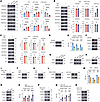 Figure 3
Abnormal glycolysis and subsequent lactate accumulation trigger EZH2 degradation, leading to diminished H3K27me3 abundance. (A) Western blot analysis of histone methylation levels in HRGECs after treatment with HC- or SLE-derived plasma (10% or 20%; 24 hours). Mean ± SEM (4–6 individuals/group). (B and C) ECs were treated with 10% SLE plasma together with 2‑DG (1 mM) or GSK2837808A (40 μM), with quantification of histone methylation levels via Western blot. Mean ± SEM (5–6 individuals/group). (D) Western blot analysis of H3K27me3 levels in HRGECs after 24 hours’ treatment with or without EED226 (50 nM). (E and F) qPCR (E) and Western blot (F) analyses of TJ-related protein expression in HRGECs after 24 hours’ treatment with or without EED226 (50 nM). Mean ± SEM (n = 4 per group). (G) ECs were treated for 24 hours with plasma from HCs or patients with SLE at 10% or 20% concentration. Protein levels of EZH1 and EZH2 were analyzed by Western blot. (H) Levels of H3K27me3 in ECs assessed by Western blot after EZH2 knockdown. (I) ECs were treated with 10% SLE plasma for 24 hours in the presence or absence of EZH2 overexpression. Levels of H3K27me3 were assessed by Western blot. (J and K) Western blot analysis of EZH2 protein levels in ECs treated with 10% SLE plasma for 24 hours in the presence or absence of 2‑DG (1 mM) or GSK2837808A (40 μM). (L) EZH2 protein levels in ECs exposed to lactate (40 mM) or lactic acid (10 mM) for 24 hours assessed by Western blot. (M and N) qPCR (M) and Western blot (N) analysis of TJ-related protein expression in ECs after EZH2 knockdown. Mean ± SEM (4 independent experiments/group) (M). (O and P) TJ-related protein expression analyzed by qPCR (O) and Western blot (P) in ECs upon treatment with 10% SLE plasma with or without EZH2 overexpression. Mean ± SEM, 5 individuals (O). (Q and R) qPCR (Q) and Western blot (R) analysis of TJ-related protein expression in ECs after lactic acid treatment (10 mM) with or without EZH2 overexpression. Mean ± SEM, 5 independent experiments (Q). *P < 0.05, **P < 0.01, ***P < 0.001, and ****P < 0.0001 with 2‑tailed paired t test (B and C) and 1‑way (A) and 2‑way ANOVA plus Tukey’s method (E, M, O, and Q).
Although with different expression patterns, EZH1 and EZH2 are both responsible for catalyzing trimethylation of H3K27 (23). To elucidate why SLE plasma lowers H3K27me3 levels, we measured EZH1 and EZH2 expression at both the mRNA and protein levels. Interestingly, although the mRNA levels of both enzymes stayed the same, SLE plasma treatment reduced EZH2 protein expression in a dose-dependent way (Figure 3G and Supplemental Figure 5, B and C). H3K27me3 levels varied with EZH2 expression: levels were reduced upon EZH2 knockdown and elevated after EZH2 overexpression (Figure 3, H and I, and Supplemental Figure 5, D–G). These results demonstrated that plasma from patients with SLE regulates H3K27me3 levels by modulating EZH2 protein expression.
To connect the glycolytic shift induced by SLE plasma to the downregulation of EZH2 protein, we examined EZH2 levels under conditions where glycolysis and lactate were modulated. As expected, both 2-DG and GSK2837808A reversed the SLE plasma–induced downregulation of EZH2 (Figure 3, J and K, and Supplemental Figure 5, H and I), and exogenous lactate supplementation (sodium lactate or lactic acid) produced effects comparable to those of SLE plasma (Figure 3L). We next directly manipulated EZH2 expression in endothelial cells in the absence of exogenous plasma or lactate stimulation. Knockdown of EZH2 alone was sufficient to downregulate TJ gene expression (Figure 3, M and N, and Supplemental Figure 5J), phenocopying the effect of SLE plasma. Conversely, EZH2 overexpression not only restored the TJ barrier disruption induced by SLE plasma (Figure 3, O and P, and Supplemental Figure 5K) but also rescued the impairment caused by lactic acid supplementation (Figure 3, Q and R). This highlights the key role of EZH2 in regulating HRGEC permeability.
Lactate induces ubiquitin-dependent degradation of EZH2 in HRGECs. Given that SLE plasma reduced EZH2 protein abundance without altering its mRNA expression, we further explored the underlying protein degradation mechanisms in ECs. Two primary cellular proteolytic systems govern protein turnover: the ubiquitin/proteasome and autophagy/lysosome pathways (17). Pharmacological blockade of the proteasome with MG132, which inhibits the proteolytic activity of the 26S proteasome, fully restored EZH2 expression and reversed the downregulation of TJ transcripts (Figure 4, A and B, and Supplemental Figure 6A). In contrast, lysosomal inhibition with bafilomycin A1 (BafA1), which blocks autophagosome-lysosome fusion, exerted no detectable effect on EZH2 levels (Figure 4C). We next used IP to assess EZH2 ubiquitination and found that SLE plasma treatment markedly increased this posttranslational modification (Figure 4D and Supplemental Figure 6B). Importantly, exogenous lactic acid addition recapitulated this effect, markedly enhancing EZH2 ubiquitination (Figure 4E and Supplemental Figure 6C). In contrast, treatment with GSK2837808A reversed the effect of SLE plasma on EZH2 (Figure 4F). These results establish lactate as the key mediator of EZH2 ubiquitination.
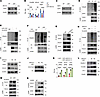 Figure 4
Lactate accumulation induces the ubiquitination of EZH2 in HRGECs. (A and B) ECs were treated with 10% plasma from HCs or patients with SLE for 24 hours, with or without the addition of MG132 (2 μM) during the final 4 hours of culture. EZH2 protein levels (A) and mRNA levels of TJ-related proteins (B) were analyzed by Western blot and qPCR, respectively. Mean ± SEM from 6 individuals in each group (B). (C) ECs were treated with 10% plasma from HCs or patients with SLE for 24 hours, with or without bafilomycin A1 (BafA1, 100 nM, 4 hours). EZH2 protein levels were assessed by Western blot. (D) IP analysis of EZH2 ubiquitination was performed in ECs after 24 hours’ treatment with 10% plasma from HC or SLE individuals. (E) HA-EZH2 stable ECs were cultured with or without lactic acid (10 mM) for 24 hours, followed by IP analysis of EZH2 ubiquitination. (F) IP analysis of EZH2 ubiquitination was performed in HA-EZH2 stable ECs stimulated with 10% plasma from HCs or patients with SLE for 24 hours, with or without 40 μM GSK2837808A cotreatment. (G) Co-IP was performed to assess the interaction between EZH2 and RACK1 in HRGECs. (H) HA-EZH2 stable ECs were transfected with RACK1-targeting siRNA or control siRNA, then treated with 10% SLE plasma for 24 hours. Subsequent IP analysis evaluated EZH2 ubiquitination in these cells. (I and J) HRGECs were transfected with RACK1-targeting siRNA or control siRNA, followed by 24 hours’ treatment with 10% SLE plasma. Western blot analysis was used to determine the protein levels of EZH2 (I) and H3K27me3 (J). H3 was used as the loading control for normalization (J). (K and L) HRGECs were transfected with RACK1-targeting siRNA or control siRNA, followed by 24 hours’ stimulation with 10% SLE plasma. The expression levels of TJ-associated proteins were examined via qPCR (K) and Western blot (L). Data are mean ± SEM (5 individuals per group for K). (M) Co-IP assays were conducted in HA-EZH2 stable ECs treated with 10% plasma from HC or SLE individuals to evaluate the interaction between HA-EZH2 and RACK1. (N) Co-IP was performed to assess the interaction of EZH2 with RACK1 in HRGECs after culture with or without lactate (40 mM). *P < 0.05, **P < 0.01, ***P < 0.001, and ****P < 0.0001 with 2-way ANOVA plus Tukey’s method (B and K).
E3 ubiquitin ligases catalyze ubiquitin conjugation onto target substrates (24). To pinpoint the specific E3 responsible for EZH2 ubiquitination, we first screened candidate regulators via the UbiBrowser database, yielding 20 predicted hits (Supplemental Figure 6D), with RACK1 as the top candidate in HRGECs (Supplemental Figure 6E). Subsequent co-IP validated endogenous physical binding between RACK1 and EZH2 (Figure 4G). Subsequently, we used siRNAs to knock down RACK1 expression (Supplemental Figure 6F) and found that RACK1 depletion consistently reduced EZH2 ubiquitination (Figure 4H), thereby preventing EZH2 protein degradation (Figure 4I). This, in turn, restored H3K27me3 levels and alleviated SLE plasma–mediated TJ impairment (Figure 4, J–L). These findings identify RACK1 as the critical E3 ligase for EZH2 in HRGECs. However, neither SLE plasma nor lactate altered RACK1 expression levels (Supplemental Figure 6G). We next examined the binding of EZH2 to RACK1, and our results showed that both SLE plasma and lactate enhanced the binding capacity of EZH2 to RACK1 (Figure 4, M and N), suggesting that lactate may alter the binding between EZH2 and RACK1 in ECs.
EZH2 lactylation drives its ubiquitination in HRGECs under lactate stress. Growing evidence suggests that lactate, a ubiquitous metabolic intermediate, mediates a specific posttranslational modification in a wide range of proteins known as lactylation (25). To investigate the mechanism by which lactate accumulation induced by SLE plasma treatment promotes EZH2 ubiquitination, we performed IP of EZH2 to detect its lactylation level. Our results demonstrated that both SLE plasma and lactate markedly increased EZH2 lactylation, a phenomenon accompanied by decreased EZH2 protein levels (Figure 5, A and B, and Supplemental Figure 7A). Canonical histone acetyltransferases are known to dynamically regulate enzyme-dependent lactylation. To identify the specific enzyme responsible for EZH2 lactylation, we systematically overexpressed 5 common acetyltransferases and found that p300/CBP-associated factor (PCAF) selectively enhances EZH2 lactylation (Figure 5C) (26). Co-IP assays further confirmed a direct physical interaction between PCAF and EZH2 in HRGECs (Figure 5D). Using mass spectrometry, we identified K245, K270, and K318 as lactylation sites on EZH2 (Supplemental Figure 7B). Subsequent site-directed mutagenesis revealed that K245 is the primary lactylation residue critical for lactylation of EZH2 (Figure 5E).
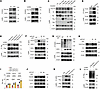 Figure 5
Lactate-induced EZH2 lactylation facilitates its ubiquitination through enhanced RACK1 interaction. (A) IP analysis was performed to detect EZH2 lactylation in HRGECs after 24 hours’ treatment with 10% plasma from HC or SLE individuals. (B) HRGECs were cultured in the presence or absence of lactate (40 mM) for 24 hours, and EZH2 lactylation was subsequently analyzed via IP. (C) IP analysis was conducted to assess EZH2 lactylation in HEK293T cells cotransfected with HA-EZH2 and the indicated acetyltransferase. (D) Co-IP analysis was used to examine the interaction between EZH2 and PACF in HRGECs. (E) IP analysis was conducted to assess EZH2 lactylation in HEK293T cells transfected with Flag-EZH2 (WT) or the indicated EZH2 mutants. (F–J) HRGECs were transfected with shRNA targeting PCAF or nontargeting control shRNA, then treated with SLE plasma for 24 hours. (F) Co-IP analysis was used to examine the interaction between EZH2 and RACK1. (G) IP analysis was conducted to assess EZH2 ubiquitination. (H) Western blot was employed to evaluate H3K27me2 levels. qPCR (I) and Western blot (J) were conducted to assess the expression levels of TJ-related proteins. Mean ± SEM from 6 independent individuals (I). (K) Co-IP analysis was conducted to assess the interaction between EZH2 and RACK1 in HEK293T cells transfected with Flag-EZH2 (WT) or Flag-EZH2K245R mutants. (L) IP was performed to evaluate EZH2 ubiquitination in 40 mM lactate-treated HEK293T cells transfected with Flag-EZH2 (WT) or the Flag-EZH2 (K245R) mutant. ***P < 0.001 and ****P < 0.0001 with 2-way ANOVA plus Tukey’s method (I).
To clarify the mechanistic link between lactate-induced EZH2 lactylation and its subsequent ubiquitination, we knocked down PCAF using 2 independent shRNAs (Supplemental Figure 7C). This intervention effectively disrupted the EZH2-RACK1 interaction (Figure 5F), which in turn reduced EZH2 ubiquitination (Figure 5G and Supplemental Figure 7D), restored H3K27me3 levels (Figure 5H), and rescued TJ gene expression (Figure 5, I and J). We next transfected WT and EZH2K245R mutant into HEK293T cells and observed that the EZH2K245R mutant lost the ability to bind RACK1 (Figure 5K), leading to a subsequent reduction in ubiquitination (Figure 5L and Supplemental Figure 7E). Collectively, these findings establish a sequential regulatory axis: PCAF-mediated lactylation at EZH2K245R facilitates RACK1-dependent ubiquitination, which ultimately controls endothelial barrier integrity.
Sensing of SLE circulating DNA by cGAS initiates endothelial barrier dysfunction. In circulation, self-DNA released from apoptotic cells is highly oxidized and plays a crucial role in SLE pathogenesis: it triggers the production of IgG anti-dsDNA antibodies, leading to the formation of pathogenic ICs and subsequent organ damage (15). Our prior work has demonstrated that such DNA-containing ICs represent the critical bioactive component in SLE patient plasma, directly driving pathological mesangial cell proliferation (2). To clarify whether circulating ICs mediate TJ disruption in LN, we treated ECs with ICs isolated from SLE plasma and analyzed the expression of key TJ components. Our results showed that IC pretreatment substantially downregulated the expression of TJ-related genes, confirming that ICs play a critical role in inducing endothelial barrier dysfunction (Figure 6, A and B). Intriguingly, enzymatic removal of the DNA moiety with DNase I completely abrogated this inhibitory effect (Figure 6C), whereas depletion of the IgG backbone only partially rescued TJ expression (Figure 6C), pointing to the nucleic acid cargo as the predominant active factor. These findings align with the coexistence of IgG-complexed DNA and cell-free circulating DNA in peripheral blood of patients with SLE. To further verify the independent regulatory effect of SLE plasma–derived circulating DNA, exogenous DNA was supplemented into EC culture medium separately. Notably, oxidized DNA rather than native fresh DNA recapitulated the inhibitory effect on TJ-related gene transcription in these cells (Figure 6, D and E, and Supplemental Figure 8, A and B). These results indicate that the SLE circulating DNA is the critical component mediating SLE plasma–induced endothelial barrier dysfunction. In addition, exogenous oxidized DNA follows the same pathway as SLE plasma, inducing a metabolic shift in HRGECs toward glycolysis (Figure 6, F and G) and increasing lactate production (Figure 6H). This accumulated lactate then promotes EZH2 lactylation (Figure 6I), which in turn facilitates EZH2 ubiquitination and degradation (Figure 6J).
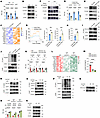 Figure 6
Sensing of oxidized DNA derived from SLE plasma by cGAS serves as the initiator of metabolic perturbation and TJ barrier damage in HRGECs. (A and B) ECs were incubated with IgG from HCs or SLE-derived ICs (80 IU/mL) for 24 hours. Expression levels of TJ-related proteins were analyzed by qPCR (A) and Western blot (B). Mean ± SEM (6 individuals/group) (A). (C) SLE plasma was preincubated with or without protein A/G (1:100 protein A/G/plasma) or DNase I (1:10 DNase I/plasma) before treating HRGECs; HC plasma received no pretreatment. TJ-associated protein expression was detected by Western blot. (D–J) ECs were cultured with fresh DNA or circulating oxidized DNA derived from SLE patient plasma for 24 hours. TJ-related protein expression was detected by qPCR (D) and Western blot (E). Data are mean ± SEM (5 individuals/group, D). (F) Glycolysis-related gene expression was examined by qPCR. (G) ECAR was measured using a Seahorse assay kit. Mean ± SEM; 3 individuals per group. (H) Lactate concentrations were quantified using an assay kit. Mean ± SEM; 5 individuals per group. (I) IP analysis was conducted to assess EZH2 lactylation. (J) IP analysis was conducted to detect EZH2 ubiquitination. (K) HRGECs were pretreated with RU320521 (RU.521, 10 μM), E6446 (100 nM), or MCC950 (100 nM) for 24 hours, followed by 24 hours’ treatment with 10% SLE plasma. mRNA levels of TJ-related proteins were measured by qPCR. Mean ± SEM (8 individuals/group). (L–S) HRGECs were transfected with cGAS-targeting shRNAs or nontargeting control shRNAs, then cultured with SLE plasma. (L) Glycolysis-related gene expression was examined by qPCR. (M) Lactate concentrations were quantified using an assay kit. Mean ± SEM (6 individuals/group). (N) IP analysis was conducted to assess EZH2 lactylation. (O) Co-IP analysis was performed to examine the interaction between EZH2 and RACK1. (P) IP analysis was used to detect EZH2 ubiquitination. (Q) H3K27me3 levels were evaluated by Western blot. H3 was used as the loading control for normalization. Expression of TJ-related proteins analyzed by qPCR (R) and Western blot (S). Mean ± SEM (6 individuals/group) (R). *P < 0.05, **P < 0.01, ***P < 0.001, and ****P < 0.0001 with unpaired 2-tailed t test (G and H) and 1-way (A) and 2-way ANOVA plus Tukey’s method (D, K, M, and R).
DNA sensing is associated with cellular metabolic reprogramming (27). cGAS, NLRP3 inflammasome, and TLR9 are the most classic receptors that mediate DNA immune responses (14). To identify the key DNA sensor responsible for SLE-DNA–triggered TJ breakdown in HRGECs, we pharmacologically blocked canonical DNA sensors with selective small-molecule inhibitors: RU320521 (RU.521) for cGAS, MCC950 for NLRP3 inflammasome, and E6446 for TLR9 (16). Notably, our results indicate that only inhibition of cGAS effectively blocked the oxidized DNA-induced TJ impairment in HRGECs (Figure 6K). Genetic depletion of cGAS (Supplemental Figure 8C) effectively attenuated oxidized DNA-induced glycolytic activation (Figure 6L). This metabolic normalization subsequently reduced lactate accumulation (Figure 6M), which in turn diminished EZH2 lactylation (Figure 6N). Decreased lactylation impaired the interaction between EZH2 and RACK1 (Figure 6O), leading to reduced EZH2 ubiquitination (Figure 6P). Consequently, stabilized EZH2 protein levels restored H3K27me3 deposition (Figure 6Q) and ultimately rescued TJ barrier integrity (Figure 6, R and S, and Supplemental Figure 8D). These results demonstrate that cGAS-dependent DNA-sensing orchestrates endothelial barrier dysfunction through the sequential EZH2 lactylation/ubiquitination axis.
Targeting cGAS-mediated sensing of self-DNA and inhibiting lactic acid accumulation suppress LN progression in SLE models. To evaluate the therapeutic effect of targeting both cGAS activation and lactate accumulation in vivo, we implemented a targeted intervention strategy in a self-DNA–induced SLE mouse model. Starting 1 week after disease induction, mice were administered either the cGAS inhibitor RU.521 to specifically block DNA-sensing pathways or the LDHA inhibitor sodium oxamate to selectively suppress lactate production. After cGAS inhibitor RU.521 or oxamate pretreatment, levels of 4 kDa FITC-dextran in urine and 70 kDa FITC-dextran in glomeruli were substantially reduced (Figure 7, A–D), both indicators of improved endothelial permeability. Additionally, LN symptoms in mice were alleviated, as evidenced by decreased serum anti-dsDNA antibodies, reduced proteinuria and albuminuria, restored glomerular morphology, and attenuated renal IgG deposition (Figure 7, E–N). These findings provide direct in vivo evidence that circulating oxidized DNA-induced lactic acid accumulation contributes to endothelial barrier dysfunction in LN.
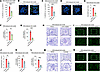 Figure 7
RU.521 and oxamate exert a therapeutic effect by restoring TJ barrier damage and ameliorating LN-related symptoms. (A) Urinary 4 kDa FITC-dextran fluorescence intensity normalized to creatinine was measured via microplate reader in SLE model mice treated with or without RU.521. Data shown as mean ± SEM (n = 4 per group). (B) Glomerular localization of 70 kDa FITC-conjugated dextran in SLE model mice (with or without RU.521 treatment) was visualized by immunofluorescence microscopy. Scale bar: 50 μm. (C) Urinary 4 kDa FITC-dextran fluorescence intensity normalized to creatinine was measured via microplate reader in SLE model mice treated with or without oxamate. Data shown as mean ± SEM (n = 4 per group). (D) Immunofluorescence microscopy was used to visualize the glomerular localization of 70 kDa FITC-conjugated dextran in SLE model mice (with or without oxamate treatment). Scale bar: 50 μm. (E–I) SLE model mice were treated with or without RU.521. (E) Plasma levels of anti-dsDNA IgG were measured using an ELISA kit. (F) Proteinuria normalized to creatinine was quantified via Bradford protein assay. (G) Albuminuria normalized to creatinine was quantified via BCG albumin assay kit. (H) Glomerular pathological changes were visualized by periodic acid–Schiff (PAS) staining. Scale bar: 20 μm. (I) Glomerular localization of IgG was detected by immunofluorescence. Scale bar: 20 μm. Mean ± SEM from 4 mice per group (E–G). (J–N) SLE model mice were administered with or without oxamate. (J) Plasma concentrations of anti-dsDNA IgG were determined using an ELISA kit. (K) Proteinuria normalized to creatinine was quantified via Bradford protein assay. (L) Albuminuria normalized to creatinine was quantified via BCG albumin assay kit. (M) Pathological alterations in glomeruli were observed via PAS staining. Scale bar: 20 μm. (N) Localization of IgG in glomeruli was visualized through immunofluorescence. Scale bar: 20 μm. Mean ± SEM from 4 mice per group (J–L). **P < 0.01, ***P < 0.001, and ****P < 0.0001 with unpaired 2-tailed t test (A, C, E–G, and J–L).
To verify the generalizability of our findings in a classic spontaneous SLE model, we performed additional in vivo experiments using MRL/lpr mice. Pharmacological inhibition of either cGAS or LDHA (via oxamate) markedly ameliorated LN-related pathological phenotypes in MRL/lpr mice, including attenuated serum anti-dsDNA antibodies and proteinuria, improved renal histology, and reduced glomerular IgG deposition (Supplemental Figure 9, A–D).


