
Review
Open Access |  10.1172/jci.insight.199953
A double-edged sword: iron regulation in alveolar lung epithelial repair
Ugonna Mbaekwe,1,2 Sarah Kenny,3 Suzanne M. Cloonan,3 and Corrine R. Kliment1,2
1Division of Pulmonary, Allergy, Critical Care Medicine, and
2Department of Cellular and Molecular Pathology, University of Pittsburgh School of Medicine, Pittsburgh, Pennsylvania, USA.
3School of Medicine, Trinity Biomedical Sciences Institute, Trinity College Dublin, Dublin, Ireland.
Address correspondence to: Corrine Kliment, University of Pittsburgh School of Medicine, Division of Pulmonary, Allergy, Critical Care and Sleep Medicine, 200 Lothrop Street, Biomedical Science Tower W1254, Pittsburgh, Pennsylvania 15213, USA. Email: ckliment@pitt.edu.
Find articles by Mbaekwe, U. in: PubMed | Google Scholar
1Division of Pulmonary, Allergy, Critical Care Medicine, and
2Department of Cellular and Molecular Pathology, University of Pittsburgh School of Medicine, Pittsburgh, Pennsylvania, USA.
3School of Medicine, Trinity Biomedical Sciences Institute, Trinity College Dublin, Dublin, Ireland.
Address correspondence to: Corrine Kliment, University of Pittsburgh School of Medicine, Division of Pulmonary, Allergy, Critical Care and Sleep Medicine, 200 Lothrop Street, Biomedical Science Tower W1254, Pittsburgh, Pennsylvania 15213, USA. Email: ckliment@pitt.edu.
Find articles by
Kenny, S.
in:
PubMed
|
Google Scholar
|

1Division of Pulmonary, Allergy, Critical Care Medicine, and
2Department of Cellular and Molecular Pathology, University of Pittsburgh School of Medicine, Pittsburgh, Pennsylvania, USA.
3School of Medicine, Trinity Biomedical Sciences Institute, Trinity College Dublin, Dublin, Ireland.
Address correspondence to: Corrine Kliment, University of Pittsburgh School of Medicine, Division of Pulmonary, Allergy, Critical Care and Sleep Medicine, 200 Lothrop Street, Biomedical Science Tower W1254, Pittsburgh, Pennsylvania 15213, USA. Email: ckliment@pitt.edu.
Find articles by
Cloonan, S.
in:
PubMed
|
Google Scholar
|
1Division of Pulmonary, Allergy, Critical Care Medicine, and
2Department of Cellular and Molecular Pathology, University of Pittsburgh School of Medicine, Pittsburgh, Pennsylvania, USA.
3School of Medicine, Trinity Biomedical Sciences Institute, Trinity College Dublin, Dublin, Ireland.
Address correspondence to: Corrine Kliment, University of Pittsburgh School of Medicine, Division of Pulmonary, Allergy, Critical Care and Sleep Medicine, 200 Lothrop Street, Biomedical Science Tower W1254, Pittsburgh, Pennsylvania 15213, USA. Email: ckliment@pitt.edu.
Find articles by
Kliment, C.
in:
PubMed
|
Google Scholar
|
Published May 8, 2026 - More info
JCI Insight. 2026;11(9):e199953. https://doi.org/10.1172/jci.insight.199953.
© 2026 Mbaekwe et al. This work is licensed under the Creative Commons Attribution 4.0 International License. To view a copy of this license, visit http://creativecommons.org/licenses/by/4.0/.

-
The alveolar epithelium
The lungs maintain the largest surface area of any organ in the human body, ranging from 70 to 100 square meters (1), and are constantly exposed to external damaging stimuli, which can cause injury and subsequent disease. The lung has inherent repair processes in place to respond to damage and promote regeneration. The alveolar epithelium is a specialized layer of epithelial cells crucial for gas exchange and lung health. Alveoli are composed of a monolayer of flattened, squamous alveolar type 1 (AT1) cells that cover 95% of the surface and cuboidal alveolar type 2 (AT2) cells (2). AT2 cells produce surfactant to reduce surface tension, preventing lung collapse during exhalation. AT2 cells also serve as self-renewing progenitors that, after lung injury, differentiate into AT1 cells, which regulate gas exchange and ion transport (3).
Other less abundant cell types, including mesenchymal, endothelial, and immune cells, contribute to the dynamic and spatially organized alveolar structure and defense (4–6) (Figure 1). Fibroblasts produce and remodel the ECM and alveolar architecture (6). Alveolar macrophages (AMs) serve as crucial immune cells that combat inhaled pathogens through phagocytosis and respond to environmental signals to stave off persistent inflammation and infection (7, 8). While these cell types are important in lung function, this Review will primarily focus on alveolar epithelial cells.
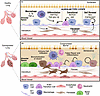 Figure 1
AT2 dysfunction in the lung. A schematic overview of the main interactions and signaling pathways involved in AT2 self-renewal, proliferation, and differentiation into AT1 cells. In a self-renewing state, WNT canonical and FGFR/AKT pathways primarily maintain AT2 identity and function. During differentiation, AT2 cell transition is marked by Krt8+ cells (also called damage-associated transient progenitor [DATP] cells). In this state, metabolic changes occur, along with integrated stress responses (ISR) and increased Notch signaling. Activation of YAP/Taz signaling promotes differentiation, and the secretion of TGF-β and IL-1β from AT2 cells in specific contexts can interact with macrophages and fibroblasts to produce factors, such as FGF7 and FGF10, that support AT2 identity. Macrophages release cytokines, such as IL-1β and TNF-α, to enhance AT2 cell proliferation and differentiation. Disruptions in the alveolar epithelial repair process can cause pathological outcomes, including bronchiolization of the alveoli, immune infiltration, increased barrier permeability, failed repair and regeneration, and the development of senescence and fibrosis within the alveolar space. Created in BioRender.
-
Iron homeostasis and regulation
Iron is an essential metal that supports multiple processes, including oxygen transport (48), DNA repair, and synthesis of heme and iron-sulfur (Fe-S) clusters, with approximately 2% of human genes encoding an iron-protein (55). However, excess free labile iron is highly toxic owing to the production of ROS (56). Thus, iron’s function is a double-edged sword, emphasizing the importance of maintaining iron balance at both systemic and cellular levels.
Systemic iron regulation involves a multiorgan network overseeing absorption, recycling, and distribution to maintain balance (Figure 2). In mammals, iron is obtained from the diet and recycled internally, mainly absorbed in the duodenum as heme and nonheme iron (57). Heme iron is transported across the plasma membrane by heme carrier protein 1 (HCP1) (58) and broken down internally by heme-oxygenase 1 (HMOX1) (59, 60). Nonheme iron is reduced from ferric (Fe3+) to ferrous (Fe2+) iron by duodenal cytochrome B and imported via divalent metal transporter 1 (DMT1) (57). Iron is exclusively exported by ferroportin (FPN), while ferroxidases such as hephaestin and ceruloplasmin oxidize iron to facilitate binding to plasma transferrin and transport to other tissues (61). Macrophages recycle iron from senescent erythrocytes in the spleen, providing a significant source of iron (62). Hepatocytes regulate iron balance via hepcidin (HAMP)/FPN, adjusting distribution as needed. HAMP, a liver hormone, binds FPN, leading to its degradation and decreasing iron release and serum iron levels (63, 64).
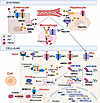 Figure 2
General iron homeostasis. A schematic diagram showing systemic (top) and cellular iron regulation (bottom). Systemic iron control involves various organs managing absorption, recycling, and distribution to keep levels balanced. In mammals, iron is mainly absorbed in the duodenum as both heme and nonheme iron and then transported across cell membranes and transferred in the blood to other tissues. Macrophages and hepatocytes are vital for recycling iron from red blood cells and adjusting systemic iron levels. Cellular iron regulation includes controlling iron import, export, storage, and use. Low oxygen levels and iron deficiency activate transcription factors and regulatory proteins to boost iron absorption, while iron overload triggers protective pathways to sequester, detoxify, and maintain balance. The key proteins discussed in this Review are shown at the bottom of the figure, including heme carrier protein 1 (HCP1), heme-oxygenase 1 (HMOX1), duodenal cytochrome B (DCYTB), divalent metal transporter 1 (DMT1), ferroportin (FPN), ceruloplasmin (CP), hephaestin (HEPH), transferrin receptor 1 (TfR1), lipocalin (LCN2), poly(rC)-binding protein 1 (PCBP1), mitoferrin-1 and mitoferrin-2 (MFRN1/2), leukemia virus subgroup C cellular receptor 1 (FLVCR1), hypoxia-inducible factor 2 α (HIF2α), hypoxia response element (HRE), iron-sensing E3 ligase (FBXL5), iron regulatory proteins (IRP), nuclear receptor coactivator 4 (NCOA4), and nuclear factor erythroid 2–related factor 2 (NRF2). Created in BioRender.
Cellular iron homeostasis involves the regulation of iron import, export, storage, and utilization (Figure 2). Iron import involves several different mechanisms. Transferrin-bound iron is taken up through transferrin receptor 1 (TfR1) (65), which mediates receptor-dependent endocytosis followed by iron reduction by STEAP3 and endosomal iron release through DMT1 (66). Non-transferrin-bound iron can be imported through divalent metal transporters, such as DMT1 and ZIP family members ZIP8 and ZIP14, which import iron in metabolically active and inflammatory contexts (67, 68). HCP1 internalizes heme iron, while SLC22A17 mediates the uptake of lipocalin-bound (LCN2-bound) iron during immune activation (69). Iron export is mediated by FPN, while iron storage is primarily achieved through ferritin, which buffers iron. Efficient iron delivery to ferritin is accomplished by the cytosolic iron chaperone poly(rC)-binding proteins (70). Iron utilization is primarily driven by mitochondrial processes. Mitochondrial iron import is mediated by mitoferrin-1 and mitoferrin-2 (MFRN1/2) (49, 71, 72), which deliver iron for heme biosynthesis, Fe-S cluster assembly, and metabolic enzyme function. Excess heme can be exported from the cell via feline leukemia virus subgroup C cellular receptor 1 (FLVCR1) (73, 74) to maintain heme-iron balance.
Cellular iron levels are regulated at the level of gene expression. During hypoxia or iron deficiency, stabilization of HIF2α (75) activates transcription of hypoxia response element–containing genes that enhance iron uptake and utilization. Ubiquitin ligase HERC2 posttranscriptionally degrades iron-sensing ligase (FBXL5), leading to stabilization of iron regulatory proteins (IRPs) (76). In low iron states, IRP1 lacks its Fe-S cluster and switches to its iron response element–binding (IRE-binding) form (77). IRP1 stabilizes iron import protein-encoding mRNAs and represses translation of ferritin to reduce iron storage (78). IRP2, normally degraded by FBXL5, stabilizes when FBXL5 is degraded, increasing iron uptake and reducing storage (79, 80). Nuclear receptor coactivator 4–mediated (NCOA4-mediated) ferritinophagy is enhanced to liberate stored iron through ferritin degradation in lysosomes (81). Conversely, in conditions of iron overload, activation of the nuclear factor erythroid 2–related factor 2 antioxidant pathway induces the expression of genes involved in iron sequestration, detoxification, and redox defense., FBXL5 is posttranscriptionally stabilized and promotes degradation of IRPs. When bound to a Fe-S cluster, IRP1 converts into a cytosolic aconitase and loses the ability to bind IREs. IRP2 is degraded by FBXL5, while HERC2 degrades NCOA4 to limit ferritinophagy (82).
Tight regulation of cellular iron is important for meeting metabolic needs and controlling redox balance (Figure 3). Unregulated Fe2+ reacts with ROS through a Fenton reaction to generate highly reactive hydroxyl radicals (83–85) and catalyzes the oxidation of polyunsaturated fatty acids in membranes to form lipid hydroperoxides (86). This process sensitizes cells to an iron-dependent form of cell death called ferroptosis. Ferroptosis is driven by the lethal accumulation of lipid peroxides (87). When antioxidant defenses, especially glutathione peroxidase 4 (GPX4), are overwhelmed or impaired, lipid peroxides accumulate unchecked, triggering cell death. Ferroptosis is particularly relevant in tissues with high oxidative stress and iron turnover, like the lung, where dysregulated redox balance and iron overload contribute to both acute and chronic injury (88).
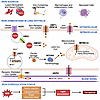 Figure 3
Lung iron homeostasis. A schematic illustrating lung iron sources and regulation (top) and how iron dysregulation triggers ferroptosis (bottom) in lung epithelial cells affected by disease. The lung depends on endogenous sources, like cellular recycling, and exogenous sources, such as particulate matter, which increases oxidative stress and inflammation. Excess iron results in ROS, lipid peroxidation, and ferroptosis when antioxidants are overwhelmed. Created in BioRender.
-
Iron as a determinant of alveolar epithelial fate and repair
Numerous lung cells contribute to the development of lung disease; still, there is increasing evidence that iron homeostasis influences AT2 renewal, differentiation, and repair capacity through mitochondrial dysfunction, ferroptosis, and senescence (Figure 4). Given that AT2s are progenitor cells, evidence from broader themes of stem cell research can be informative. A study from Kao and colleagues shows that labile iron levels serve as a rheostat for cellular quiescence in mitotic hematopoietic stem cells (HSCs), suggesting that iron is crucial for determining stem cell fate (119). Variations in cytoplasmic iron levels influence the equilibrium between self-renewal and differentiation in adult stem cells, determining HSC state. Low intracellular iron favors quiescence and self-renewal, preserving long-term regenerative capacity, while high iron triggers metabolic and oxidative stress pathways, pushing HSCs toward differentiation or exhaustion (119).
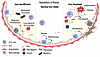 Figure 4
Role of iron regulation in alveolar repair. A schematic illustrating how iron levels influence cell fate and lung repair in the alveoli. In iron deficiency, alveolar epithelial cells experience metabolic stress, resulting in mitochondrial dysfunction and decreased surfactant production. This stress reduces their capacity to self-renew and differentiate. In alveolar macrophages, stress triggers premature senescence and impairs iron recycling, which weakens phagocytosis and immune responses, leading to immune exhaustion during chronic iron deficiency. Conversely, under normal iron levels, alveolar cells manage iron flux, reducing senescence and ferroptosis, while maintaining immune function. Iron overload causes oxidative stress, mitochondrial dysfunction, ferroptosis, epithelial loss, and tissue damage, impairing regeneration and differentiation. Excess iron in macrophages hampers antimicrobial activity, promotes inflammation and fibrosis, and raises the risk of chronic lung disease. Created in BioRender.
A 2025 study by Zhuang et al. shows that iron homeostasis regulates AT2 cell renewal, differentiation, and lung repair in lung adenocarcinoma cancer models. Aging-related functional iron deficiency in AT2 cells reduces self-renewal and regenerative abilities (52). Although the precise intracellular iron pools and trafficking routes in isolated AT2 cells have not been fully assessed, the study shows that aging rewires iron handling in AT2 cells by inducing nuclear protein 1 (NUPR1), which upregulates LCN2, lowering bioavailable iron, limiting stemness, and inhibiting tumorigenesis. Knocking out the NUPR1/LCN2 axis or iron supplementation in aged AT2 cells can enhance renewal and rescue stemness but also promote tumorigenesis in aged lungs (52). Collectively, these studies emphasize the importance of maintaining an appropriate iron balance for effective AT2 cell–mediated lung repair. Disruptions in iron homeostasis directly impair epithelial cell regeneration, ultimately hindering alveolar repair in chronic lung diseases.
-
Iron dysregulation in chronic lung disease
Iron dysregulation is linked to chronic lung disorders, including IPF and COPD, in which excess iron leads to oxidative stress, ongoing epithelial damage, impaired regeneration, and accelerated disease progression. Exposure to exogenous iron increases susceptibility to respiratory diseases, as seen in individuals working in iron ore mines, who often develop persistent respiratory symptoms even after exposure ends (120).
While iron dysregulation affects lung epithelial repair and lung disease progression in several lung diseases (Table 1), this Review focuses specifically on COPD and IPF. Even though COPD and IPF have distinct pathologies, the role of iron homeostasis in epithelial lung repair is well documented, with evidence of sustained imbalances in iron metabolism. These imbalances compromise AT2 regenerative capacity, promote oxidative stress, induce epithelial ferroptosis (121, 122), and disrupt epithelial barrier integrity, ultimately impairing effective alveolar regeneration and perpetuating disease.
IPF. IPF is a chronic, progressive interstitial lung disease of unknown etiology, characterized by irreversible fibrosis and a rapid decline in lung function (123, 124). Iron accumulation has been observed in lung tissue and BALF of individuals with IPF, with increased iron levels negatively correlating with disease severity (109). Additionally, mitochondrial ROS levels in whole lung tissue from individuals with IPF are substantially increased (125). Iron overload is increasingly linked to the development of fibrosis in the lung and other organs, such as the kidney (109, 126). Genetically, a higher frequency of polymorphisms in the HFE gene, which underlies hereditary hemochromatosis, has been observed in individuals with IPF and is associated with increased iron-dependent ROS generation in BALF-derived cells (127).
BLM administration is a standard experimental model of pulmonary fibrosis; however, the role of iron in BLM-induced injury is complex and context dependent. BLM itself functions as an iron chelator and requires iron to generate ROS and induce DNA damage (128). This property of BLM does not preclude the possibility that exogenous or dysregulated iron levels can modulate the severity of lung injury. In support of this notion, Maus et al. demonstrated that intratracheal administration of iron alone can induce acute lung injury and fibrosis in mice (126). Unfortunately, the literature on the effects of iron in BLM-induced injury is not entirely consistent. For example, systemic iron overload, via a high-iron diet, in HAMP-knockout mice did not exacerbate BLM-induced fibrosis (129), but fibrotic responses were reduced in iron-deficient hamsters subjected to BLM (130). Tfr2-mutant mice, which exhibit systemic iron overload, have markedly worsened fibrosis following intratracheal BLM exposure (109). Treatment with iron chelators at the time of BLM injury onset mitigated lung fibrosis, further implicating iron as a pathogenic factor in this model (53). These findings suggest that the source, compartmentalization, and timing of iron availability — rather than total body iron status — may critically influence disease outcomes. This variability underscores the importance of the experimental context when interpreting iron’s contribution to fibrosis.
As noted above, AMs are the predominant iron+ cells in IPF (131, 132). In the BLM-induced pulmonary fibrosis mouse model, intracellular iron levels are increased not only in AMs, but in AT2 cells and fibroblasts (49, 53, 133, 134). Studies of the alveolar epithelium suggest that cellular and mitochondrial iron accumulation in AT2 cells promote ferroptosis (53) and mitochondrial dysfunction (49), respectively. However, AT2 cell iron status was evaluated in immortal murine AT2-like MLE-12 cells or whole lung tissue, limiting specific conclusions on AT2 cell iron status. Nonetheless, given the high lipid content in AT2 cells and their role in surfactant production, it is plausible that disruptions in AT2 cell iron could heighten lipid peroxidation. Notably, Pei et al. demonstrated that iron chelation and inhibition of ferroptosis with liproxstatin inhibited the development of BLM-induced fibrosis in a mouse model (135). However, the use of intraperitoneal liproxstatin administration does not allow definitive conclusions about the local cell types targeted by the treatment.
Despite emerging research on the role of iron in fibrotic lung remodeling, current knowledge centers on fibroblasts and immune cells (134), with a relatively limited understanding of how iron dysregulation directly affects alveolar epithelial cells, particularly AT2 cells. This represents a critical gap, as AT2 cell dysfunction and failed repair are both hallmarks of IPF. Additional studies are needed to understand how iron-induced cell fates, such as ferroptosis and impaired iron trafficking, compromise alveolar epithelial repair and reveal potential therapeutic targets.
COPD. COPD is characterized by chronic inflammation, airway epithelial remodeling, destruction of alveolar epithelium, and dysfunctional repair processes. The most prominent risk factors for COPD include CS or other inhaled environmental exposures, age, and genetic factors. GWAS have identified significant SNPs in IREB2 (which encodes IRP2), in severe COPD cases, suggesting IREB2 as a COPD susceptibility gene (136). IRP2 levels are increased in lung tissues from patients with COPD (136). In lung epithelial cells, upregulation of IREB2 via circular RNA circSAV1 increased cellular iron and subsequent ferroptosis (137). IRP2-deficient mice are protected against CS exposure–induced experimental COPD as a result of limited mitochondrial iron loading (54) and from developing pulmonary inflammation in a tracheal banding surgery airway obstruction model (138). Porphyria, a genetic disease of dysregulated iron metabolism, is associated with an increased risk of COPD (139).
Systemic iron dysregulation is present in COPD, with elevated intracellular iron deposits detected in lung tissues from patients with very severe COPD (GOLD 4 stage) compared with healthy individuals acting as controls (140). Both current and former smokers exhibit elevated iron and ferritin levels in BALF (90) and AMs (141–144) compared with nonsmoking individuals acting as controls. COPD exhibited an increase in the quantity of iron and percentage of iron+ AMs, and this increase correlated with disease severity and airflow obstruction (144). Within the COPD cohort of the Subpopulations and Intermediate Outcome Measures in COPD Study (SPIROMICS), iron and ferritin were elevated in the BALF of both patients with COPD and smokers without COPD (110). This increase in iron markers in BALF correlated with disease exacerbation risk; however, the same correlation was not observed with plasma markers. Serum levels of HAMP were increased in individuals with mild-to-moderate COPD and those with COPD exacerbations (145, 146); however, HAMP was decreased in severe (GOLD 3/4) COPD (147).
While iron overload appears to be present at the cellular and tissue level in COPD, systemic iron overload is more variable. Several studies have demonstrated higher serum iron, ferritin and LCN2 in individuals with COPD compared with individuals acting as controls (91,146, 148), while other reports have not observed similar changes (149) or demonstrated systemic anemia (89). Studies suggest that systemic iron deficiency is present in a proportion of patients with COPD (10%–40%) (145, 148, 150, 151), despite possible iron overload at the lung tissue or cellular level.
In CS-exposed mice and other experimental COPD models, iron is increased in lung tissue and BALF (81, 138). In mice, exposure to environmental iron powder intensifies lung inflammation, oxidative stress, and remodeling, which are more pronounced when underlying lung damage is present (152). Given the presence of cellular iron overload, ferroptosis has been implicated in COPD pathogenesis, as evidenced in human COPD lung tissues (153) and AT2 cells (154). Additionally, CS exposure in both in vivo and in vitro models induces labile iron accumulation and ferroptotic cell death (122, 155). Furthermore, CS-induced ferroptosis was inhibited both by iron chelators, such as deferoxamine (DFO), and ferroptosis inhibitors, ferrostatin-1 and liproxstatin-1 (122).
Comparisons between COPD and IPF highlight both shared and distinct mechanisms of alveolar injury and repair. In both diseases, iron loading occurs in lung tissue and BALF, with strong evidence of localization to AMs. While ferroptosis signatures have been suggested in AT2 cells, direct evidence in primary cells in either condition is lacking. Both diseases feature transitional epithelial states, with AT2 cells consistently described as senescent, suggesting that iron accumulation and senescence may interact to impair regenerative and repair capacity. While iron regulation shows therapeutic promise, its direct effect on AT2 function remains poorly defined. Clarifying how iron overload alters AT2 behavior over time may uncover intervention points to prevent irreversible lung damage.

Article tools
- Download citation information
- Send a comment
- Terms of use
- Standard abbreviations
- Need help? Email the journal
Metrics
Go to
- Top
- Abstract
- The alveolar epithelium
- Alveolar epithelium renewal and repair processes
- Dysregulation of alveolar renewal and repair
- Iron homeostasis and regulation
- Alteration in iron homeostasis and regulation in the lung
- Iron as a determinant of alveolar epithelial fate and repair
- Iron dysregulation in chronic lung disease
- Therapeutic opportunities targeting iron pathways for lung regeneration
- Future directions and gaps
- Conflict of interest
- Funding support
- Footnotes
- References
- Version history


