
Abstract
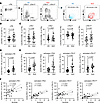
Cellular metabolism plays a key role in T cell biology. Increased glycolysis and mitochondrial respiration have been identified in CD4+ helper T cells from both patients with systemic lupus erythematosus (SLE) and lupus mouse models. Inhibiting this metabolic activity can reduce T cell activation and ameliorate disease symptoms in lupus mice. However, the metabolic differences among circulating follicular helper T (cTfh) cell subsets in patients with SLE versus healthy controls (HCs) have not been thoroughly studied. While the frequencies of cTfh cells and their subsets were similar between patients with SLE and HCs, patients exhibited a higher proportion of activated ICOS+ programmed cell death 1–positive cells, which correlated with disease activity. cTfh17 cells from both patients with SLE and HCs demonstrated heightened glycolytic activity and expression of glycolysis-related genes compared with cTfh1 and cTfh2. Glucose deprivation significantly diminished costimulatory molecule expression and cytokine production, including IL-17A, IL-10, IL-2, and TNF-α. Glycolysis inhibition reduced the B cell activation capacity of cTfh17 cells. This glucose dependence was more pronounced in cTfh17 than cTfh2 from patients with SLE, but it similarly affected both cTfh2 and cTfh17 cells from HCs. These findings highlight distinct metabolic dependencies among cTfh subsets and the critical role of glycolysis in cTfh17-mediated B cell activation in SLE.
Authors
Vera Kim, Takaya Misao, Hong Tian, Meggan Mackay, Cynthia Aranow, Sun Jung Kim
This file is in Adobe Acrobat (PDF) format. If you have not installed and configured the Adobe Acrobat Reader on your system.
Having trouble reading a PDF?
PDFs are designed to be printed out and read, but if you prefer to read them online, you may find it easier if you increase the view size to 125%.
Having trouble saving a PDF?
Many versions of the free Acrobat Reader do not allow Save. You must instead save the PDF from the JCI Online page you downloaded it from. PC users: Right-click on the Download link and choose the option that says something like "Save Link As...". Mac users should hold the mouse button down on the link to get these same options.
Having trouble printing a PDF?
- Try printing one page at a time or to a newer printer.
- Try saving the file to disk before printing rather than opening it "on the fly." This requires that you configure your browser to "Save" rather than "Launch Application" for the file type "application/pdf", and can usually be done in the "Helper Applications" options.
- Make sure you are using the latest version of Adobe's Acrobat Reader.


