
Comments for:
Abstract
Bronchopulmonary dysplasia (BPD) remains a debilitating disease in premature infants. The chronic pathogenesis of BPD with complex prenatal and postnatal programming challenges attempts at precisely defining or treating disease. While existing BPD definitions categorize disease severity, a lack of consideration of disease heterogeneity and endotypes has contributed to the failure of clinical trials to improve BPD outcomes. Recent studies have used advanced lung imaging techniques, echocardiography, and lung function tests to identify airway, parenchymal, and vascular BPD endotypes. These endotypes carry different prognoses and require endotype-specific treatment strategies to optimize infant outcomes. In this Review, we focus on the pathogenic mechanisms that specify individual BPD endotypes and discuss how combining biomarkers, functional studies, and artificial intelligence–based characterization of endotypes can inform precision therapies for BPD.
Authors
Megha Sharma, Gangaram Akangire, Noah H. Hillman, Winston M. Manimtim, Mark Ivan Attard, Venkatesh Sampath
Endotypes and Phenotypes of Bronchopulmonary Dysplasia
Submitter: Eduardo Villamor | e.villamor@mumc.nl
Authors: Elke van Westering-Kroon, Maria Pierro, and Steven H Abman
Division of Neonatology, MosaKids Children’s Hospital, Maastricht University Medical Center (MUMC+), School for Oncology and Developmental Biology (GROW), Maastricht, The Netherlands
Published December 8, 2025
We congratulate Sharma et al. for their efforts in summarizing the information on endotypes of bronchopulmonary dysplasia (BPD)[1]. However, we disagree with their use of the term clinical endotype. In our view, the clinical categories they propose should be designated as clinical phenotypes.
An endotype is defined by a distinct pathobiological mechanism, often identified by molecular, genetic, or biomarker evidence. In contrast, a phenotype is defined by observable clinical characteristics, without necessarily implying a specific underlying mechanism [2, 3]. The term "clinical endotype" is imprecise and potentially misleading, as it conflates the mechanistic basis of endotypes with the descriptive nature of phenotypes. Endotypes may have associated clinical features, but their definition is rooted in biology, not clinical observation. For example, asthma phenotypes include observable traits like allergic or late-onset asthma, while endotypes relate to inflammatory mechanisms (type 2-high or -low asthma)[2]. Some phenotypes (e.g., allergic asthma) are strongly associated with certain endotypes (e.g., Type 2-high), but the relationship is not absolute [2].
The pathogenesis of BPD can only be understood in the context of its association with extreme prematurity. The two main pathophysiological pathways, or endotypes, associated with extreme prematurity are 1) infection-inflammation and 2) dysfunctional placentation [4-6]. These endotypes influence lung development differently, primarily through an inflammatory response in the first endotype and through chronic hypoxia and imbalance of angiogenic factors in the second one [4, 5, 7]. We recently showed an association between the dysfunctional placentation endotype and the vascular phenotype of BPD, defined by pulmonary hypertension [5].
Although endotype is a pathogenetic term, in the scheme proposed by Sharma et al., both infection-inflammation and placental dysfunction are included in BPD pathogenesis but not labeled as endotypes [1]. The third pathogenic group (oligohydramnios/pulmonary hypoplasia) identified by Sharma et al. could represent a third endotype. This endotype may be considered specific to BPD, while the infection/inflammation and the placental dysfunction endotypes may apply to a broader range of non-pulmonary complications associated with extreme prematurity [6, 8, 9].
In summary, as a heterogeneous condition of multifactorial origin, BPD can have distinct clinical characteristics among patients with the same diagnosis. The use of endotypes and phenotypes allows for mechanism-based diagnosis, prognosis, and therapy selection. Consensus on BPD endotypes and phenotypes remains elusive. However, it is essential to make a clear distinction between these two concepts to enhance our understanding of BPD pathobiology, natural history, response to therapies and the design of more informative clinical trials.
1. Sharma M, et al. Defining endotypes of bronchopulmonary dysplasia in preterm infants to improve precision-based therapies. JCI insight. 2025; 10(20).
2. Kuruvilla M E, et al. Understanding asthma phenotypes, endotypes, and mechanisms of disease. Clin Rev Allergy Immunol. 2019; 56(2):219-233.
3. Agustí A, et al. What does endotyping mean for treatment in chronic obstructive pulmonary disease? Lancet. 2017; 390(10098):980-987.
4. Pierro M, et al. Endotypes of prematurity and phenotypes of bronchopulmonary dysplasia: toward personalized neonatology. J Pers Med, 2022; 12(5): 687.
5. Pierro M, et al. Association of the dysfunctional placentation endotype of prematurity with bronchopulmonary dysplasia: a systematic review, meta-analysis and meta-regression. Thorax. 2022. 77(3):268-275.
6. Hundscheid TM et al. Association between endotype of prematurity and mortality: a systematic review, meta-analysis, and meta-regression. Neonatology. 2023. 120(4):407-416.
7. Parsons A et al. Understanding the role of placental pathophysiology in the development of bronchopulmonary dysplasia. Am J Physiol Lung Cell Mol Physiol. 2022; 323(6): L651-L658.
8. Villamor E, et al. Association of patent ductus arteriosus with fetal factors and endotypes of prematurity. Semin Perinatol. 2023; 47(2):151717.
9. Lissone NP, et al. Association Between Endotype of Prematurity and Cystic Periventricular Leukomalacia: A Bayesian Model-Averaged Meta-Analysis. Children. 2025; 12(8):1065.
Authors: Eduardo Villamor1, Elke van Westering-Kroon1, Maria Pierro2, and Steven H Abman3
1Division of Neonatology, MosaKids Children’s Hospital, Maastricht University Medical Center (MUMC+), School for Oncology and Developmental Biology (GROW), Maastricht, The Netherlands'
2Division of Neonatology, Department of Paediatrics, University Maternity Hospital Limerick, Ireland.
3Pediatric Heart Lung Center, Department of Pediatrics, University of Colorado Anschutz School of Medicine and Children’s Hospital Colorado, Aurora, CO, USA.
Conflicts of Interest: The authors declare no conflicts of interest.
Response to Villamor et al.
Submitter: Megha Sharma | MSharma@uams.edu
Authors: Megha Sharma, Gangaram Akangire, and Venkatesh Sampath
University of Arkansas for Medical Sciences
Published December 8, 2025
We thank Villamor-Martinez E et al for their thoughtful comment regarding terminology on endotypes, phenotypes, or sub-phenotypes of bronchopulmonary dysplasia (BPD). We truly value the foundational groundwork laid by their team in defining the endotypes of prematurity and pioneering the discussion around its relation with anatomically-based phenotypes (1,2). We agree that standardizing terminology is essential for advancing a unified framework for characterizing complex diseases. However, our work (3) was intentionally conceptualized to describe the disease from a risk factor to pathophysiology to clinical presentation continuum, placing pathophysiological basis at the core of both bench/clinical research and clinical care of infants with BPD. Current definitions of BPD (4) are based on respiratory support parameters, and by extension, describe phenotypes in terms of level of support as a proxy of severity. More recently, attempts to delineate sub-types have used clinical features to define broad phenotypes that serve as indirect indicators of lung compartmental (anatomical) injury (5) We took a more forward-looking view challenging the field to go beyond the existing clinical phenotypes and toward a more organic endotype view so therapy and management can be focused on early definition of endotypes.
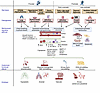
There are emerging data based on pathophysiology, some biomarkers, and functional assessments suggesting that endotypes of BPD do exist (6). The pathophysiology section of our paper sets the foundation for defining these endotypes. While Figure 2 outlines the associated clinical features of each endotype, many tests and tools currently in use – imaging/endoscopy for airway malacia, echocardiography and biomarkers such as pro-BNP for pulmonary vascular disease - already attempt to characterize “what lies within,” that is, the compartmental injury and physiologic derangements underlying the clinical presentations (i.e., phenotypes). We believe that clinical phenotypes represent the observable manifestations of underlying endotypes with both shared and distinct pathophysiological mechanisms.
We acknowledge that genetic/genomic basis of BPD endotypes remain yet to be delineated. Compared with other complex pulmonary diseases, such as asthma, the field of BPD is earlier in its trajectory of integrating genetic, molecular, and mechanistic data into endotypes. Nonetheless emerging efforts such as in the Long-term Endotypes of Prematurity Associated Respiratory Disease (LEOPARD) study are beginning to close this gap by investigating genetic and physiologic determinants of prematurity-associated respiratory disease endotypes (7). We believe that a significant contribution to advancing this field requires pathophysiology-linked-‘typing’ to advance the field toward the goal of early endotype definition, rather than relying solely on observable traits (clinical phenotypes).
We acknowledge that nuances in terminology allow room for interpretation. Nevertheless, we cautiously believe that an endotype-driven approach offers a rigorous foundation for advancing research and clinical care in BPD.
References:
1. Pierro M, Van Mechelen K, van Westering-Kroon E, Villamor-Martínez E, Villamor E. Endotypes of Prematurity and Phenotypes of Bronchopulmonary Dysplasia: Toward Personalized Neonatology. J Pers Med. Apr 26 2022;12(5)doi:10.3390/jpm12050687
2. Pierro M, Villamor-Martinez E, van Westering-Kroon E, Alvarez-Fuente M, Abman SH, Villamor E. Association of the dysfunctional placentation endotype of prematurity with bronchopulmonary dysplasia: a systematic review, meta-analysis and meta-regression. Thorax. 2022;77(3):268-275. doi:10.1136/thoraxjnl-2020-216485
3. Sharma M, Akangire G, Hillman NH, Manimtim WM, Attard MI, Sampath V. Defining endotypes of bronchopulmonary dysplasia in preterm infants to improve precision-based therapies. JCI Insight. 10/22/ 2025;10(20)doi:10.1172/jci.insight.193975
4. Jensen EA, Dysart K, Gantz MG, et al. The Diagnosis of Bronchopulmonary Dysplasia in Very Preterm Infants. An Evidence-based Approach. Am J Respir Crit Care Med. Sep 15 2019;200(6):751-759. doi:10.1164/rccm.201812-2348OC
5. Wu KY, Jensen EA, White AM, et al. Characterization of Disease Phenotype in Very Preterm Infants with Severe Bronchopulmonary Dysplasia. Am J Respir Crit Care Med. Jun 1 2020;201(11):1398-1406. doi:10.1164/rccm.201907-1342OC
6. Ambalavanan N, Cotten CM, Page GP, et al. Integrated genomic analyses in bronchopulmonary dysplasia. J Pediatr. Mar 2015;166(3):531-7.e13. doi:10.1016/j.jpeds.2014.09.052
7. Long-term Endotypes of Prematurity Associated Respiratory Disease (LEOPARD). Accessed 11/19/2025, https://reporter.nih.gov/search/RcY30RuDLkuKvFFE6sb5Iw/project-details/11168722


