
Abstract
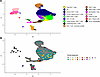
Identifying and monitoring autoreactive T cells that drive β cell destruction remains a major obstacle to developing effective immunotherapies for type 1 diabetes (T1D). These cells are extremely rare in peripheral blood and cannot be accessed directly from the pancreas. We used intradermal injection of glutamic acid decarboxylase (GAD)-alum to recruit GAD-specific T cells to accessible sites in the skin and skin-draining lymph nodes (LNs), sampled by skin suction blisters and ultrasound-guided LN aspiration. Peripheral blood samples obtained before GAD injection were restimulated with GAD in vitro to detect reactive CD4+ T cells. Single-cell RNA sequencing (scRNA-seq) followed by re-expression of selected T cell receptors (TCRs) confirmed antigen specificity. Up to 70% of T cells at the skin injection site were clonally expanded and 4 of 14 (28%) re-expressed TCRs were GAD reactive. In LNs, 1 of 14 (4%) clonally expanded TCRs was GAD reactive, representing approximately 0.08% of all T cells. GAD-reactive cells across compartments displayed Th1- and Th17-associated transcription signatures. These results demonstrate that intradermal autoantigen challenge and scRNA-seq enable direct identification and molecular profiling of autoreactive T cells in vivo. This minimally invasive approach provides a powerful platform for tracking antigen-specific T cells to monitor disease activity and evaluate immune interventions in T1D.
Authors
Stephanie J. Hanna, Emma J.S. Robinson, Terri C. Thayer, Maki Nakayama, Laurie Landry, Robert Andrews, Garry Dolton, Joanne Davies, Evangelia Williams, James A. Pearson, Andrew K. Sewell, Parth Narendran, David C. Wraith, Alexandra Howell, Philippa Young, Mary Hart, Anton Lindqvist, F. Susan Wong, Tim I.M. Tree, Colin M. Dayan, Danijela Tatovic
This file is in Adobe Acrobat (PDF) format. If you have not installed and configured the Adobe Acrobat Reader on your system.
Having trouble reading a PDF?
PDFs are designed to be printed out and read, but if you prefer to read them online, you may find it easier if you increase the view size to 125%.
Having trouble saving a PDF?
Many versions of the free Acrobat Reader do not allow Save. You must instead save the PDF from the JCI Online page you downloaded it from. PC users: Right-click on the Download link and choose the option that says something like "Save Link As...". Mac users should hold the mouse button down on the link to get these same options.
Having trouble printing a PDF?
- Try printing one page at a time or to a newer printer.
- Try saving the file to disk before printing rather than opening it "on the fly." This requires that you configure your browser to "Save" rather than "Launch Application" for the file type "application/pdf", and can usually be done in the "Helper Applications" options.
- Make sure you are using the latest version of Adobe's Acrobat Reader.


