
Abstract
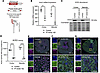
ACE2 is a membrane-bound monocarboxypeptidase strongly expressed in the renal proximal tubule (PT) with high affinity to degrade the vasopressor angiotensin II (AngII). We employed a mouse model of PT-specific ACE2 deletion (PT ACE2–KO) to demonstrate that the renal PT is a critical site for ACE2 regulation of blood pressure (BP) via modulation of the intrarenal renin-angiotensin system (RAS). While deletion of ACE2 from the PT had a minimal effect on baseline physiology, PT ACE2–KO mice were more susceptible to AngII hypertension than control mice. At day 5 of AngII infusion, the enhanced BP response was associated with cardiac hypertrophy, increased renal AngII levels, failure to suppress epithelial sodium channel (ENaC) γ cleavage, and increased sodium pump activity in PT ACE2–KO mice. Control mice instead increased renal ACE2 expression to reduce renal AngII accumulation and suppress intrarenal RAS activation, which offered protection from hypertension and complications. Transcriptional analysis corroborated changes in intrarenal RAS components and revealed alterations in distinct physiological pathways during AngII hypertension in PT ACE2–KO mice. Our studies provide evidence for alterations in ENaC regulation to contribute to the development of AngII hypertension and support PT-derived ACE2 as an integral member of the intrarenal RAS.
Authors
Jacqueline M. Emathinger, Zhidan Xiang, Jonathan W. Nelson, Matthew W. Hagen, Nakyung Kim, David I. Ortiz-Melo, Natalie Mattocks, Jorge F. Giani, Dexter L. Lee, Hannah Hartman-Houstman, Donna L. Ralph, Alicia A. McDonough, Brianna Chen, Stan G. Louie, Thomas M. Coffman, Susan B. Gurley
This file is in Adobe Acrobat (PDF) format. If you have not installed and configured the Adobe Acrobat Reader on your system.
Having trouble reading a PDF?
PDFs are designed to be printed out and read, but if you prefer to read them online, you may find it easier if you increase the view size to 125%.
Having trouble saving a PDF?
Many versions of the free Acrobat Reader do not allow Save. You must instead save the PDF from the JCI Online page you downloaded it from. PC users: Right-click on the Download link and choose the option that says something like "Save Link As...". Mac users should hold the mouse button down on the link to get these same options.
Having trouble printing a PDF?
- Try printing one page at a time or to a newer printer.
- Try saving the file to disk before printing rather than opening it "on the fly." This requires that you configure your browser to "Save" rather than "Launch Application" for the file type "application/pdf", and can usually be done in the "Helper Applications" options.
- Make sure you are using the latest version of Adobe's Acrobat Reader.


